Home > Back to Search Results >
Daniel Webster’s historically pivotal speech...
Daniel Webster’s historically pivotal speech...
Item # 715692
March 08, 1850
NATIONAL INTELLIGENCER, Washington, D.C., March 8, 1850
* Abolitionist-leaning Daniel Webster
* His historic call for unity before Congress
* His historic call for unity before Congress
* He shockingly (?) supports the "Compromise of 1850"
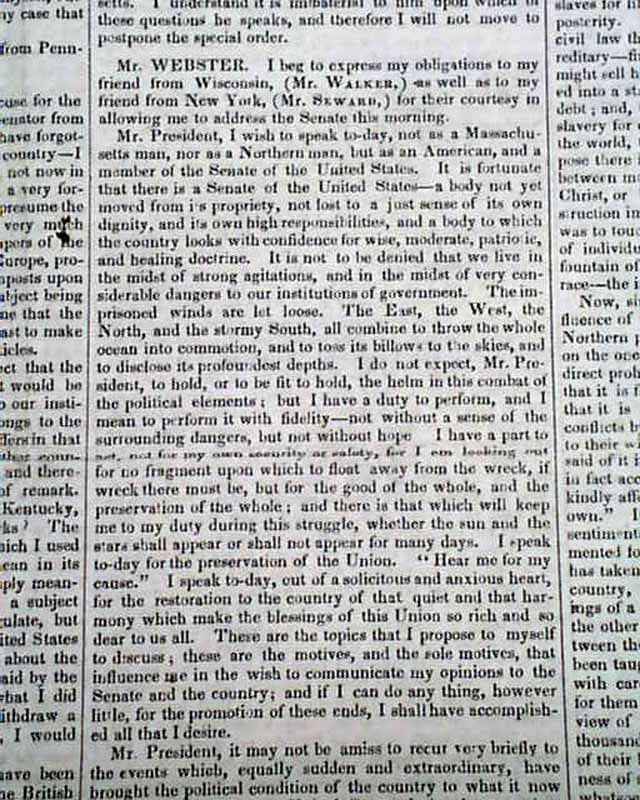
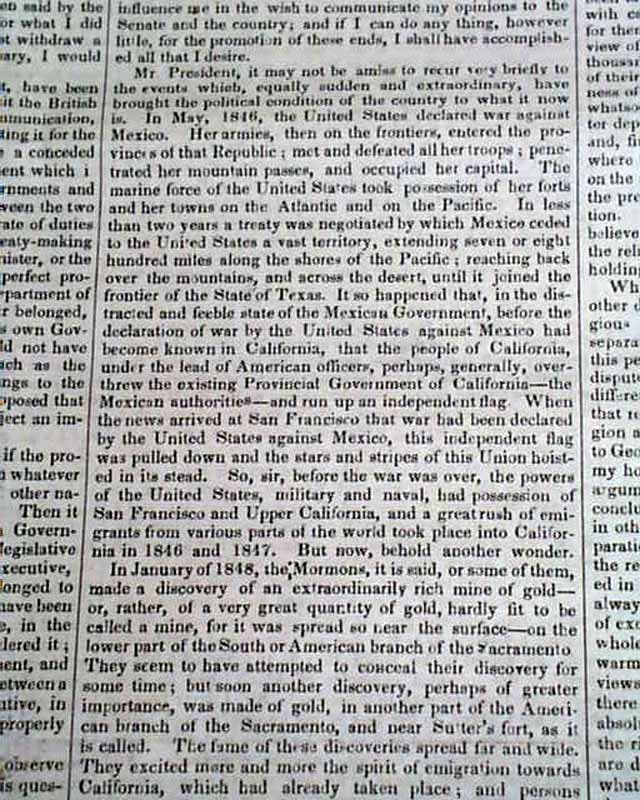
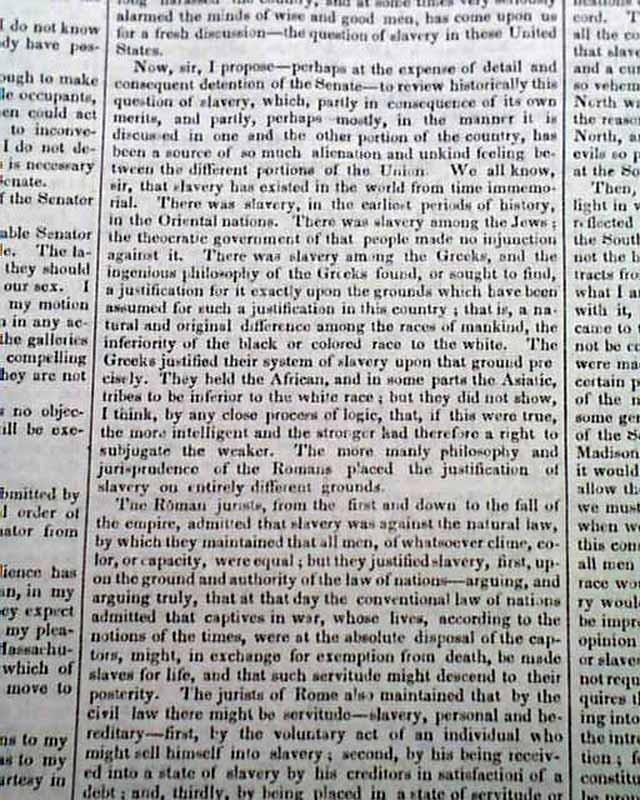
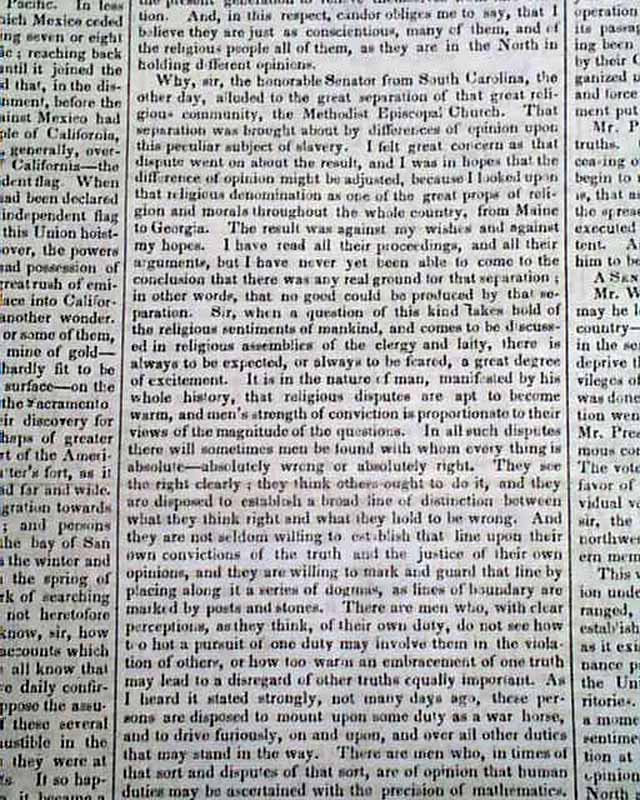
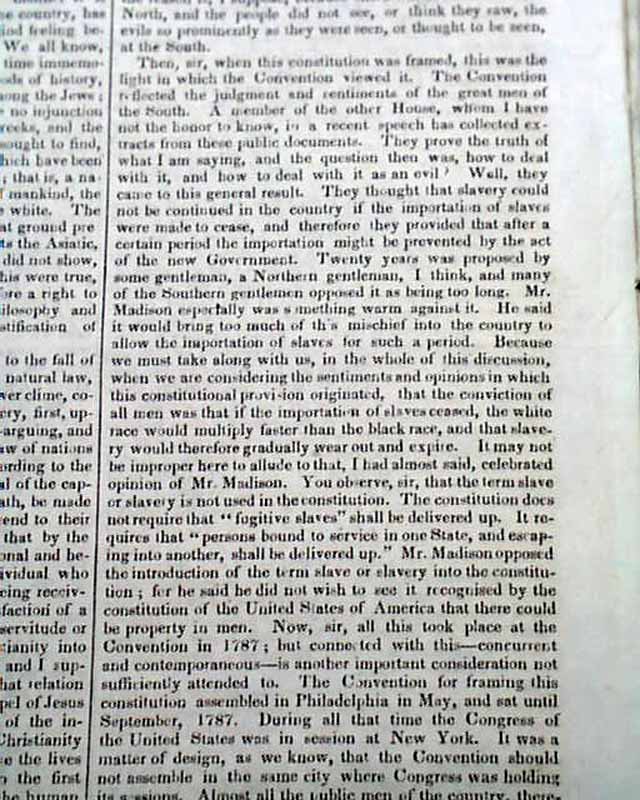
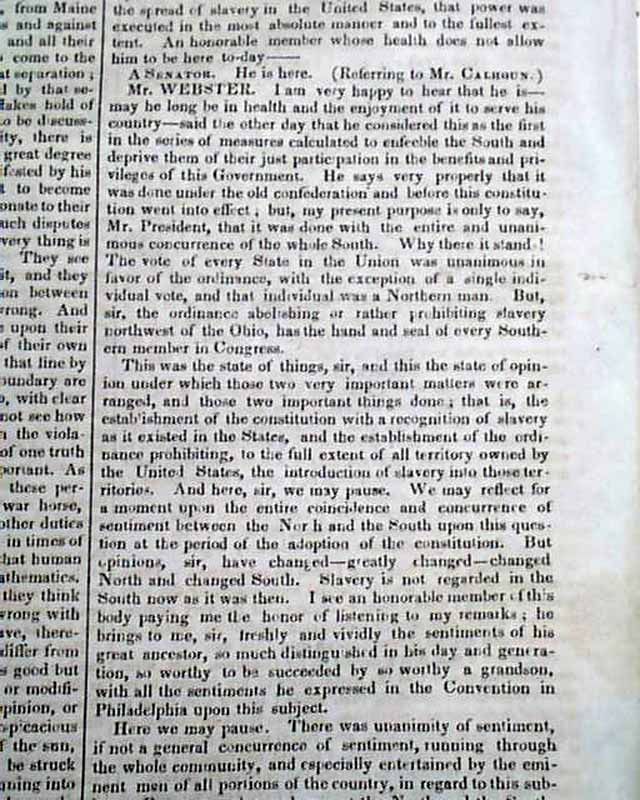
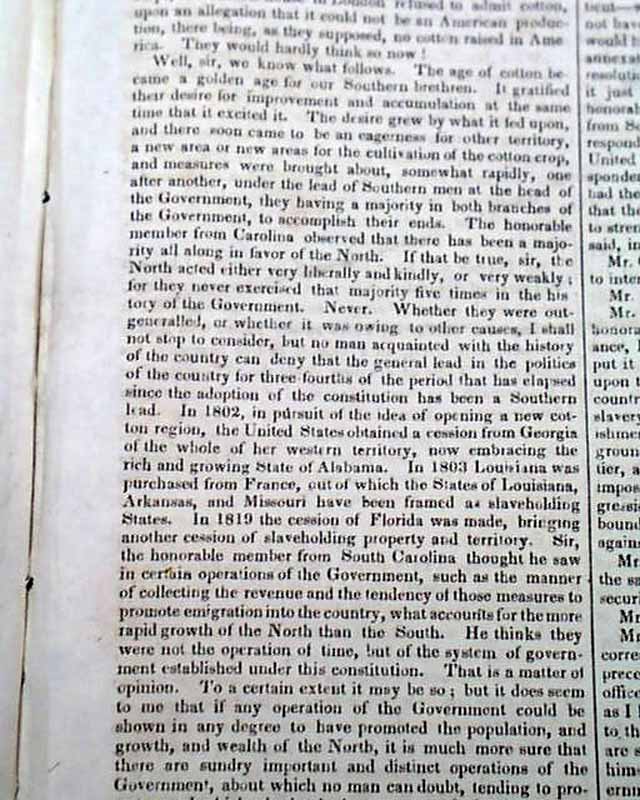
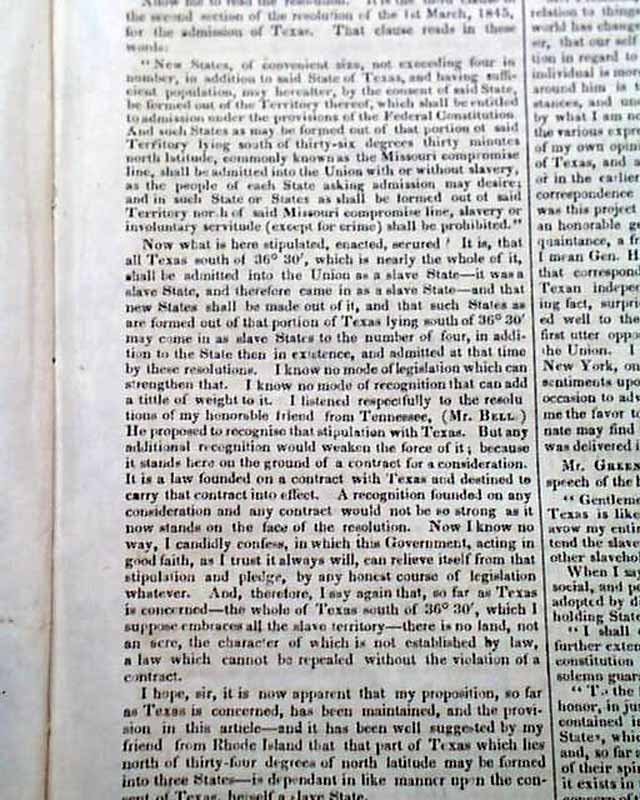
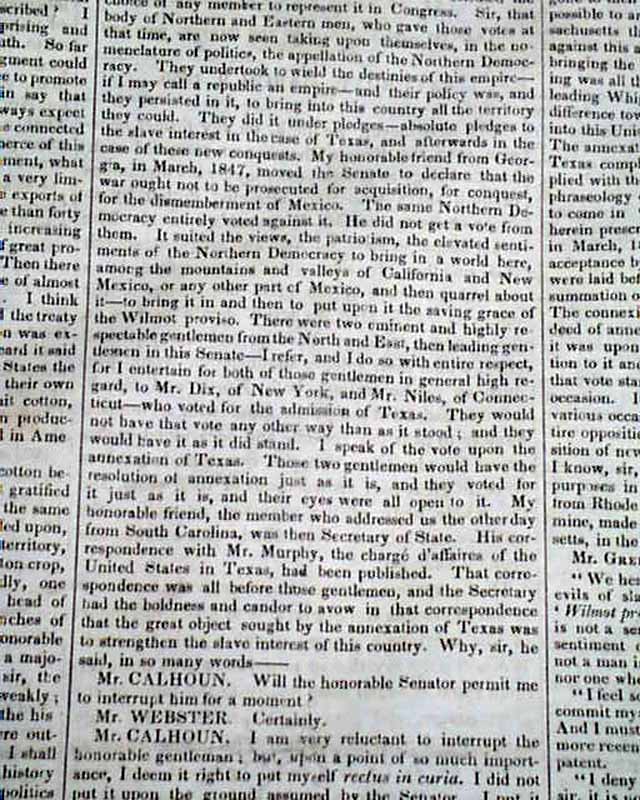
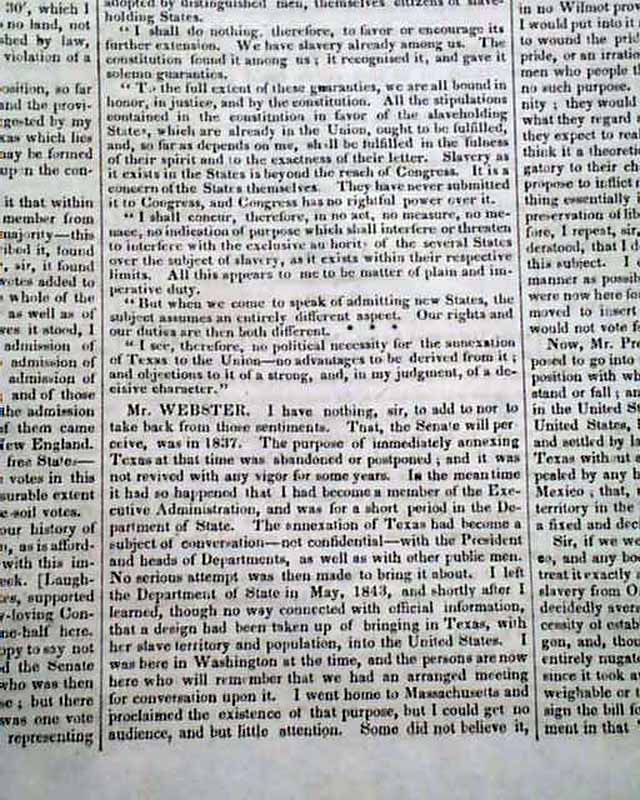
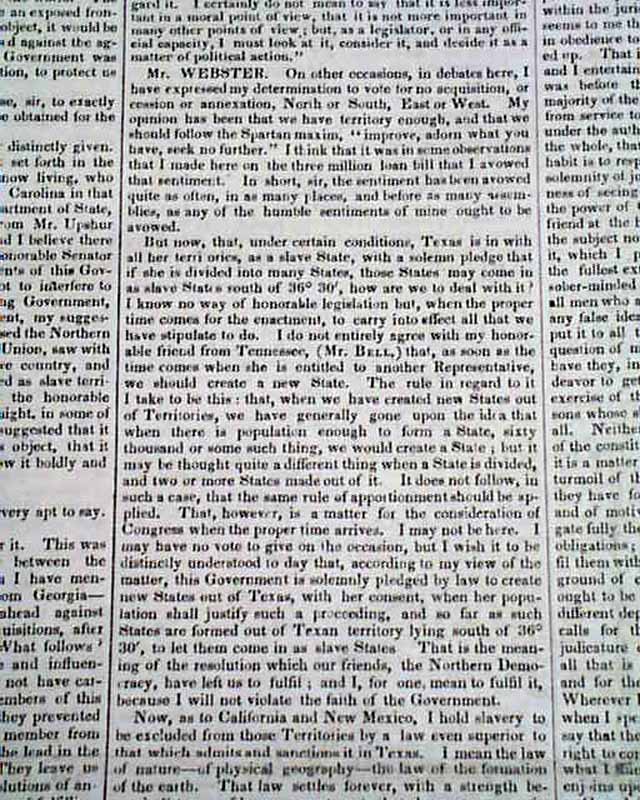
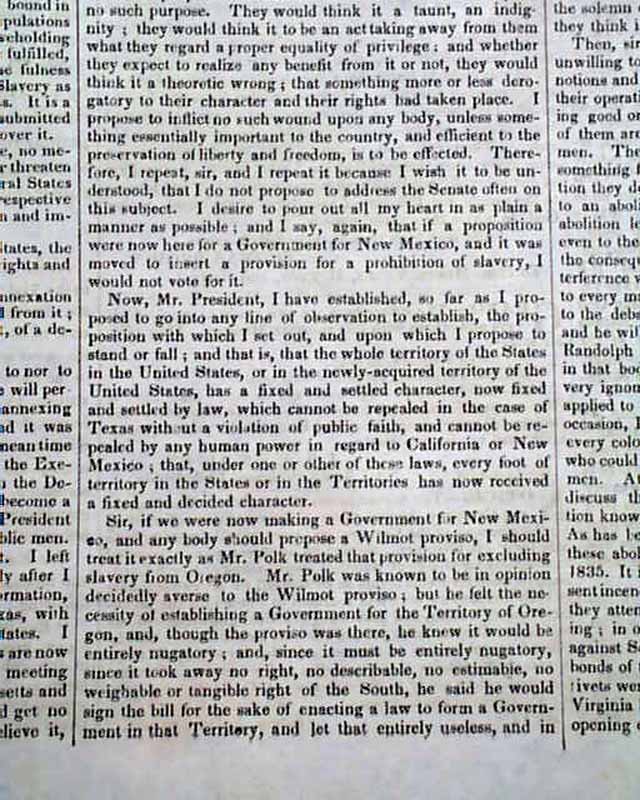
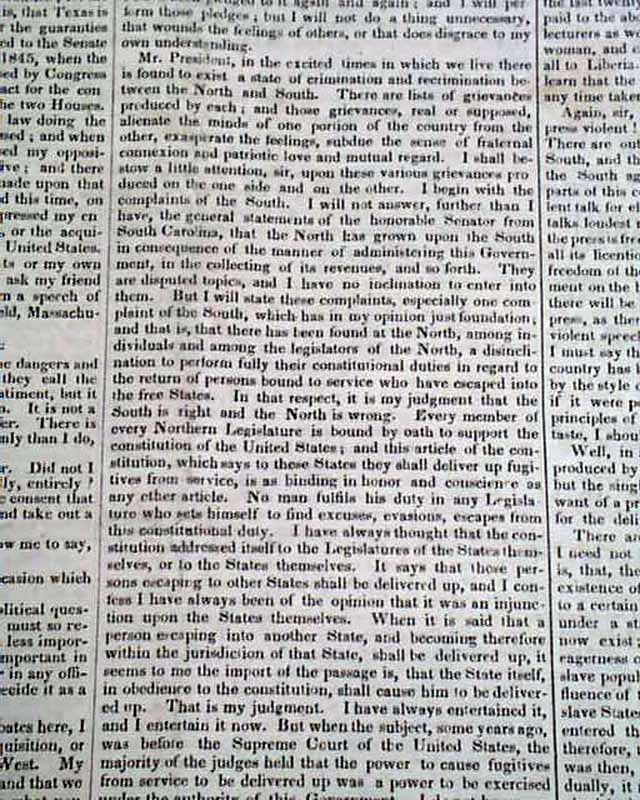
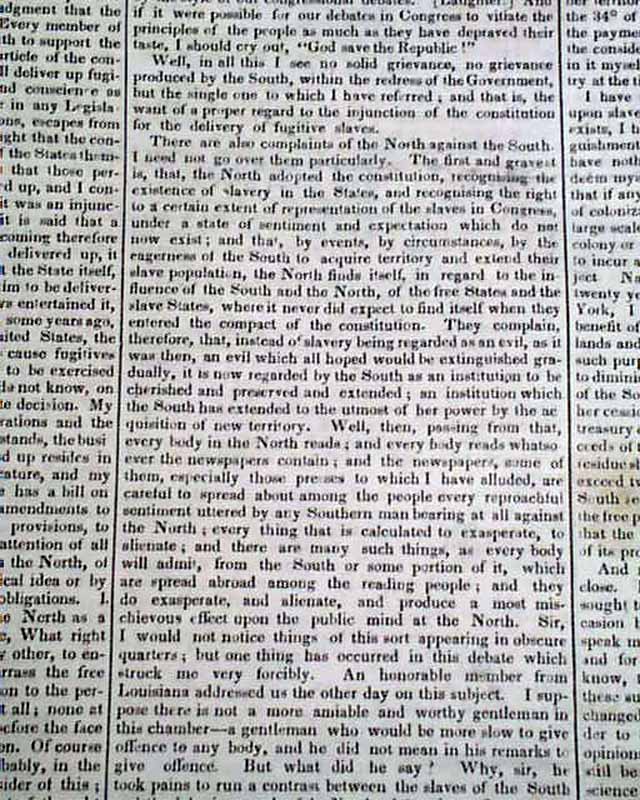
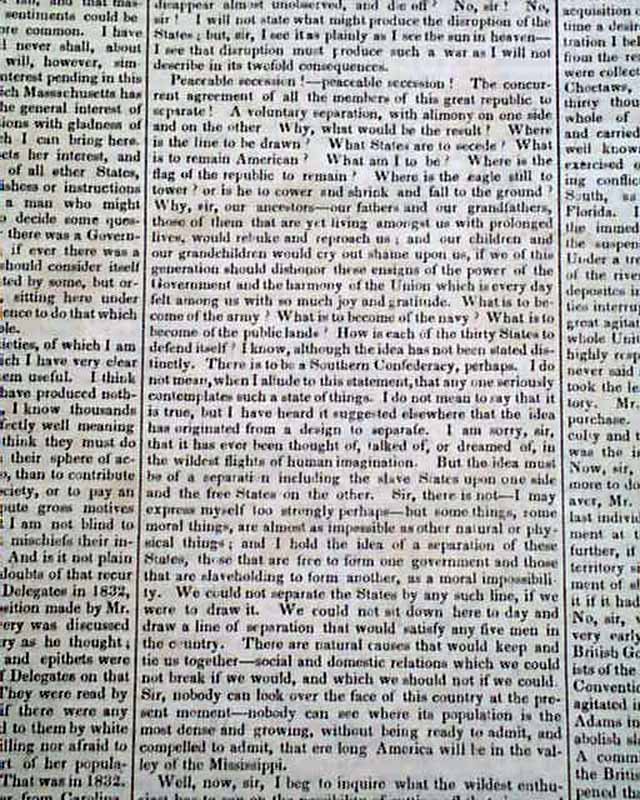
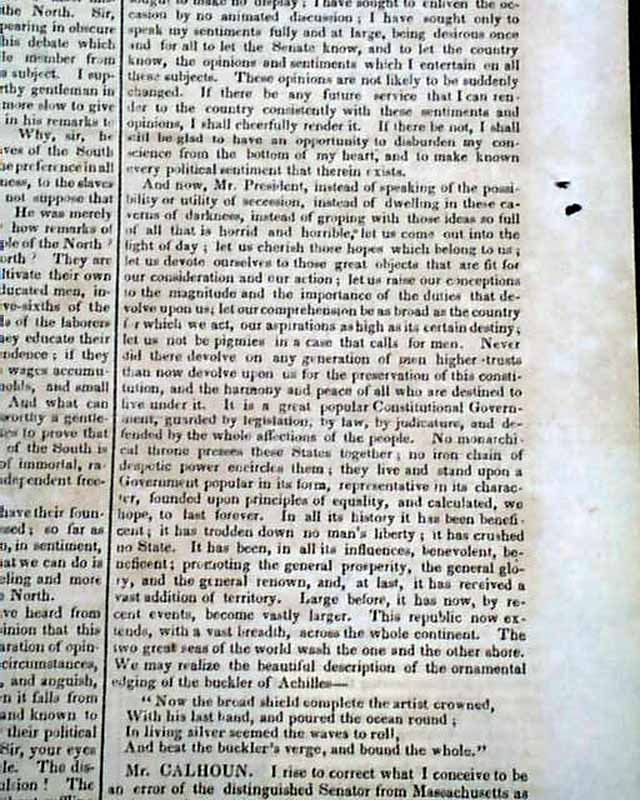
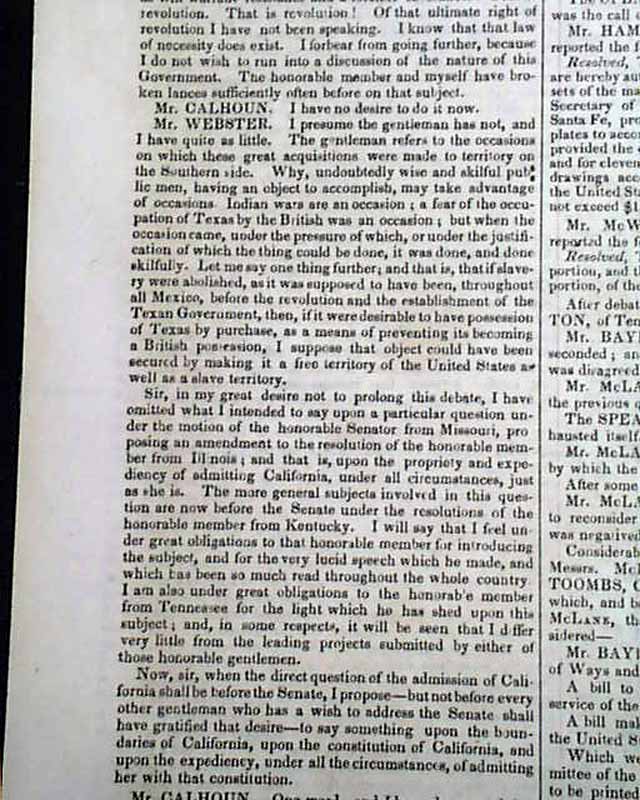
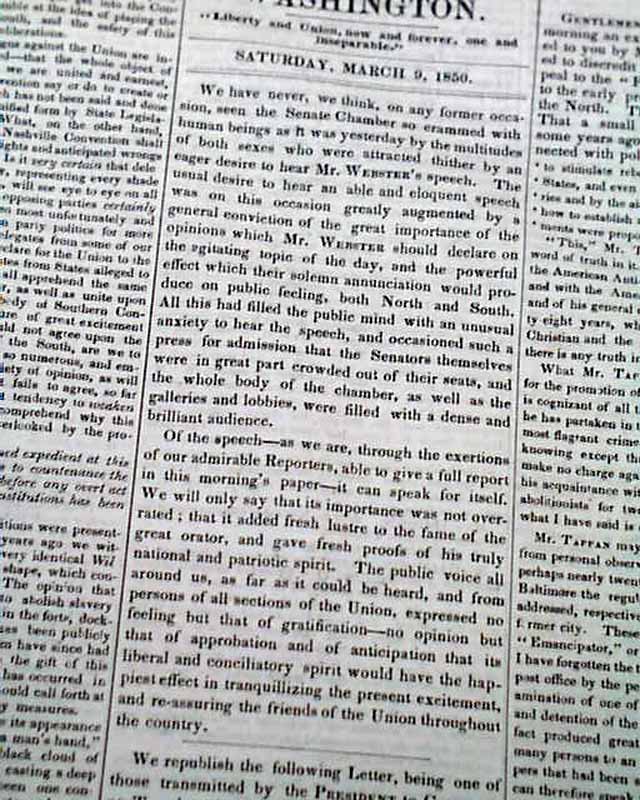
Starting on page 2 and continuing on pages 3 and 4 is the full text of Daniel Webster's pivotal, historic, "March 7th Speech" before Congress. An excerpt includes: "I wish to speak today, not as a Massachusetts man, nor as a Northern man, but as an American… I speak today for the preservation of the Union. ‘Hear me for my cause.’ I speak today out of concern for the whole country. I speak today for the Constitution and the Union, which are threatened. I speak today against disunion—with all my heart and soul."
Other news of the day and period advertising are found throughout.
Complete in 4 pages, one slight archival mend to an unrelated column, very nice condition.
Background:
What was the significance of Daniel Webster’s speech before Congress on March 7, 1850?
His speech before Congress on March 7, 1850—known as the “Seventh of March Speech”—was significant because it represented a major effort to preserve the Union during a time of growing sectional conflict over slavery. In the speech, Webster endorsed the Compromise of 1850, a package of legislation intended to ease tensions between the North and South following the Mexican-American War.
Here are key points of significance:
1. Support for the Compromise: Webster supported Senator Henry Clay’s compromise proposals, which included admitting California as a free state, strengthening the Fugitive Slave Act, and allowing new territories to decide on slavery through popular sovereignty.
2. Appeal for Unity: He urged both Northern and Southern leaders to put aside their differences for the sake of national unity, famously declaring, “I wish to speak today, not as a Massachusetts man, nor as a Northern man, but as an American.”
3. Controversial Stance on Slavery: Webster’s support for the Fugitive Slave Act and concessions to the South angered many in the North, especially abolitionists. He was accused of betraying his anti-slavery principles, which damaged his political reputation in the North.
4. Impact on the Compromise’s Passage: His influence helped rally support for the Compromise of 1850, which delayed the outbreak of civil war for a decade.
Overall, Webster’s speech was a pivotal moment in the debate over slavery and union, showcasing the limits of compromise in an increasingly divided nation.
So, was he an abolitionist?
Daniel Webster's stance on abolition was complex and evolving. While he publicly opposed slavery, his primary focus remained on preserving the Union. He believed slavery was wrong but also that its eradication was impractical and potentially destabilizing, especially given the compromises made in the Constitution. He supported measures like the Missouri Compromise and the Fugitive Slave Act, which, while not abolitionist, aimed to maintain national unity.
Daniel Webster's stance on abolition was complex and evolving. While he publicly opposed slavery, his primary focus remained on preserving the Union. He believed slavery was wrong but also that its eradication was impractical and potentially destabilizing, especially given the compromises made in the Constitution. He supported measures like the Missouri Compromise and the Fugitive Slave Act, which, while not abolitionist, aimed to maintain national unity.
Category: Pre-Civil War
Available Now
$225.00