

Lincoln accepts the Republican nomination...
Item # 713888
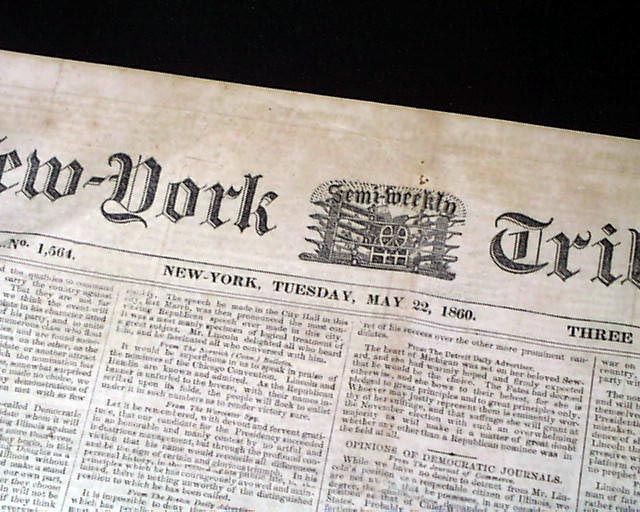
May 22, 1860
NEW-YORK SEMI-WEEKLY TRIBUNE, May 22, 1860
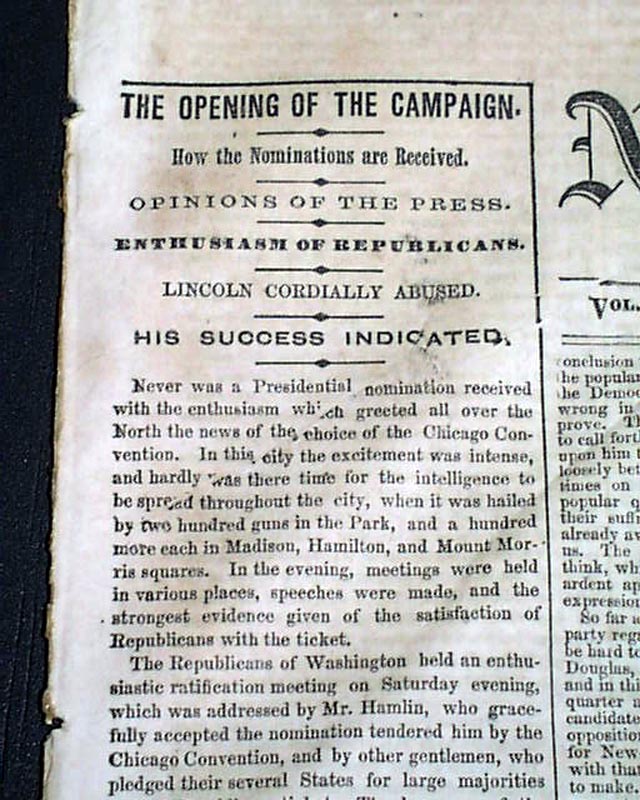
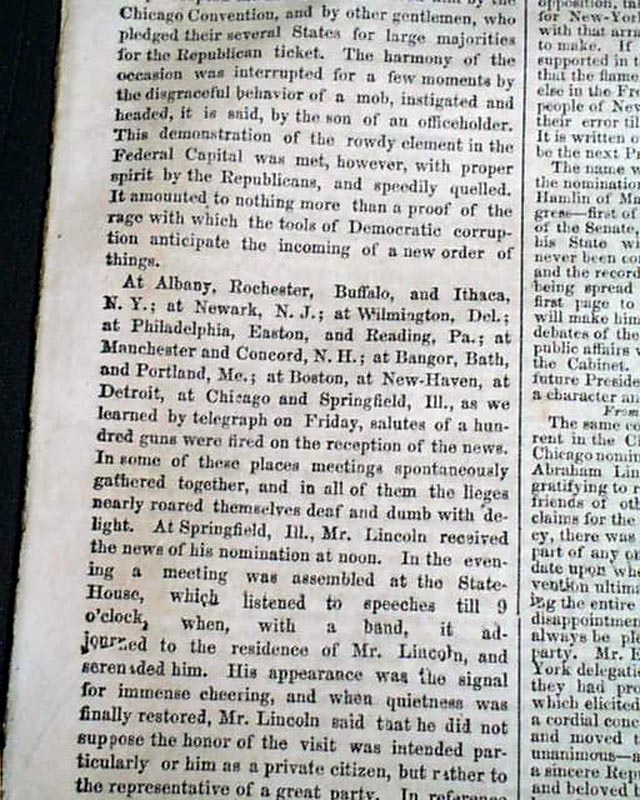
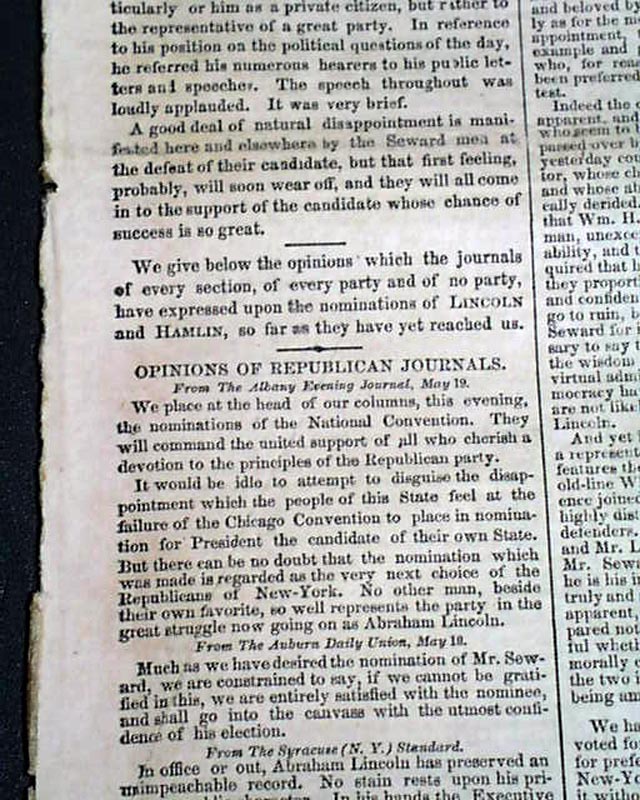
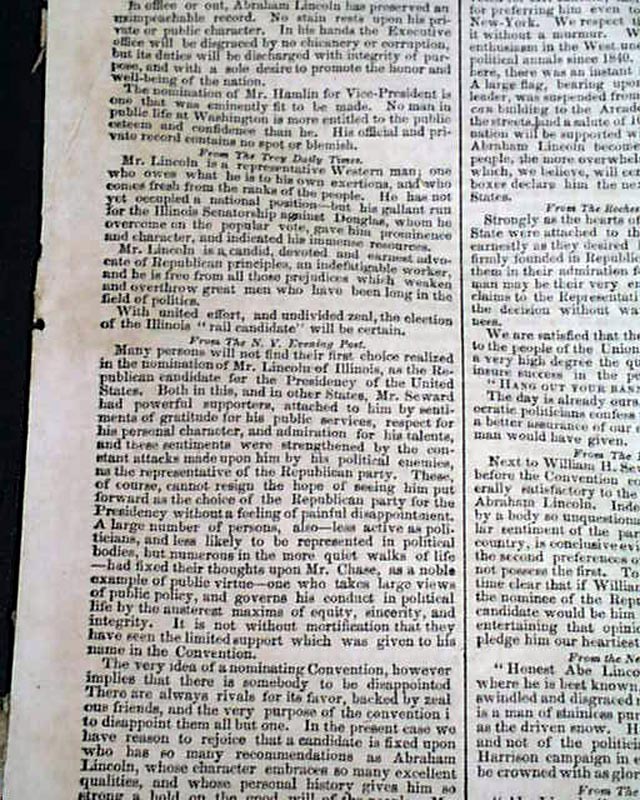
* Abraham Lincoln accepts the nomination for President
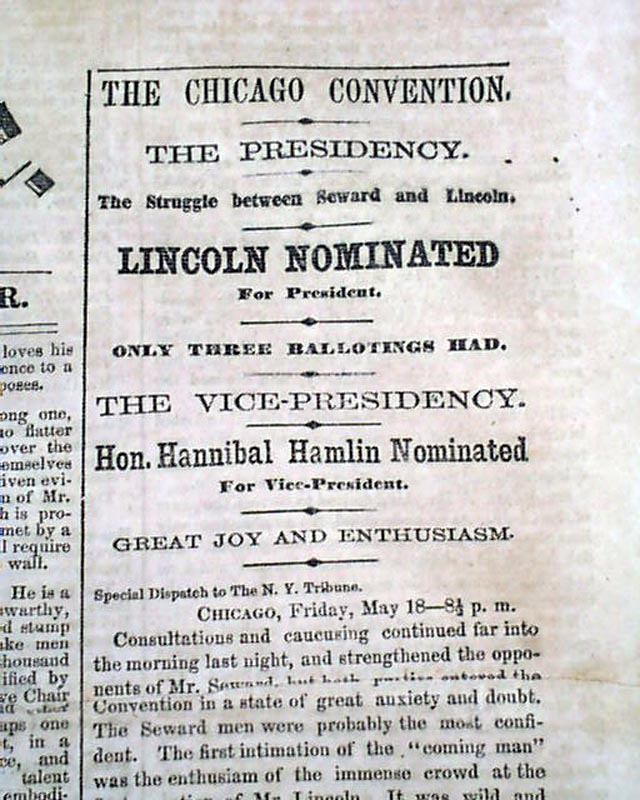
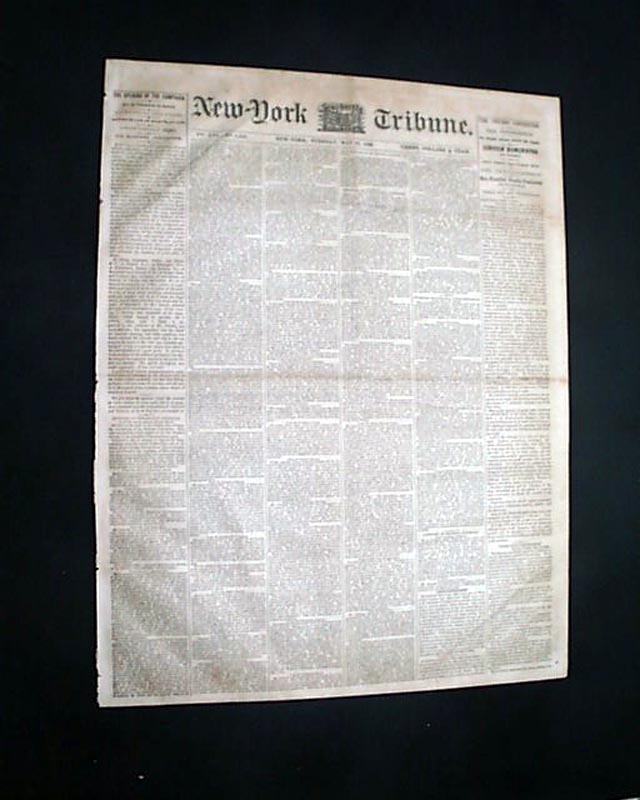
The last column of the front page has very nice heads: "THE CHICAGO CONVENTION" "The Presidency" "The Struggle Between Seward and Lincoln" "LINCOLN NOMINATED For President" "Only Three Ballotings Had" "The Vice-Presidency" "Hon. Hannibal Hamlin Nominated for Vice President" "Great Joy & Enthusiasm".
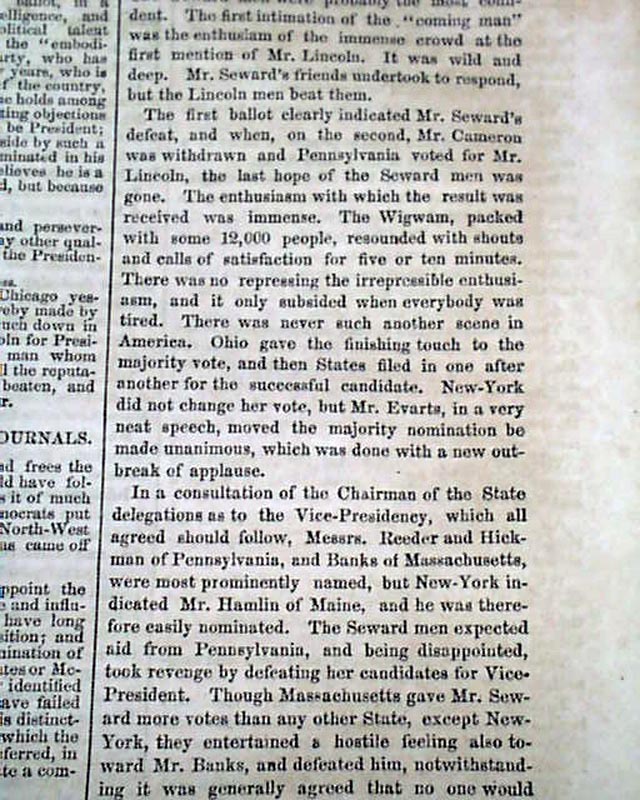
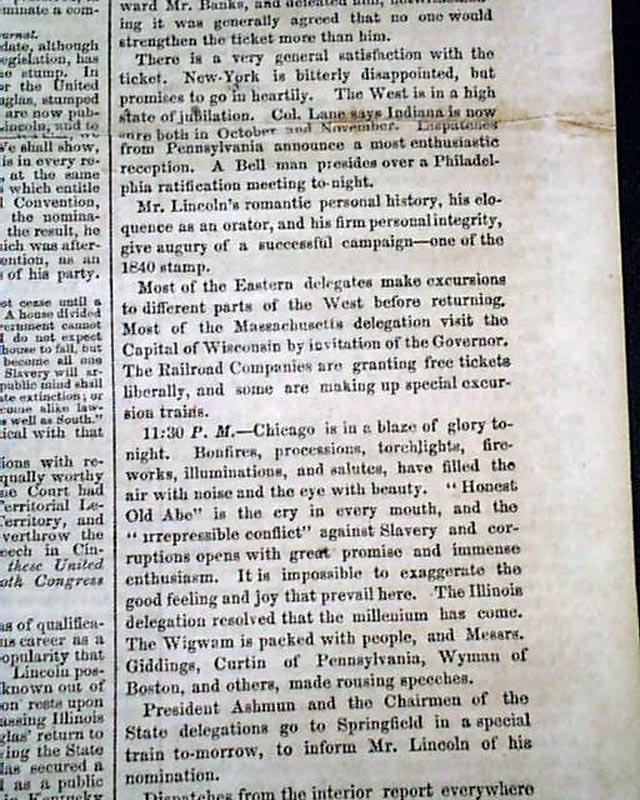
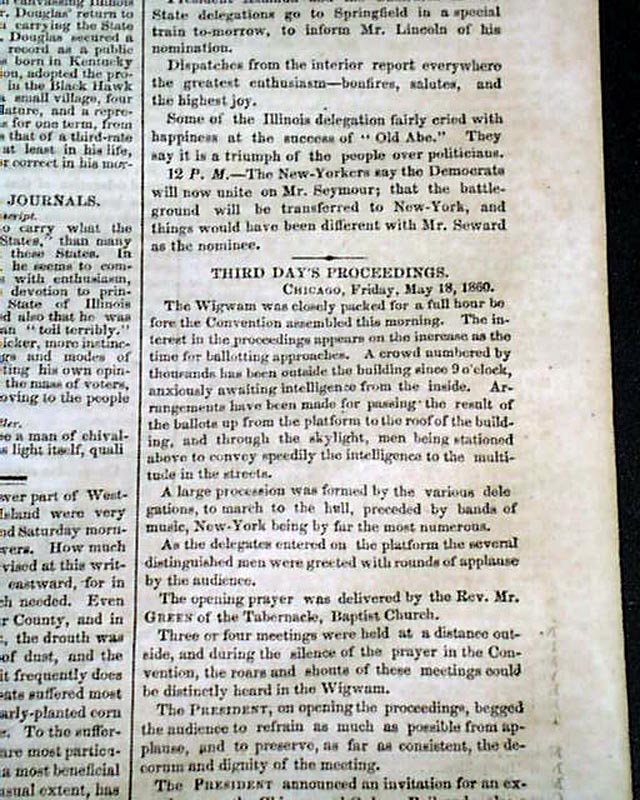
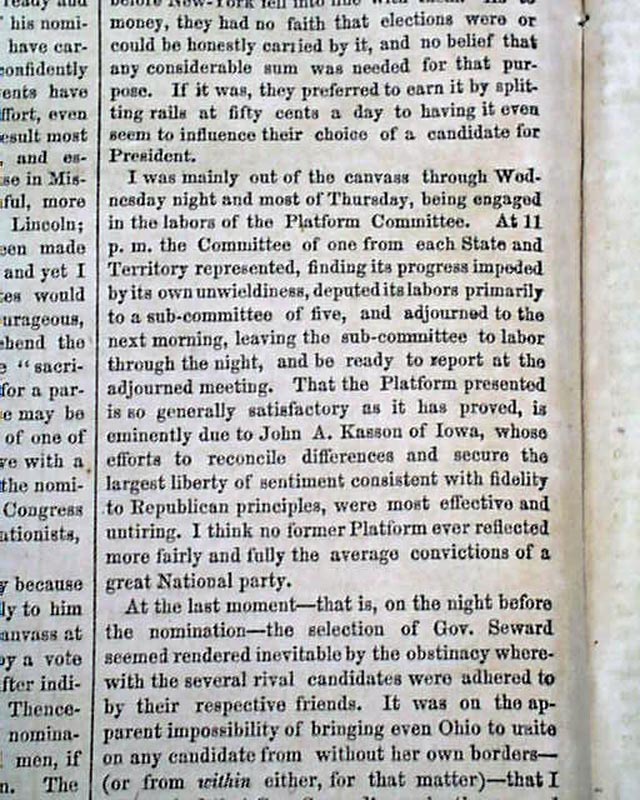
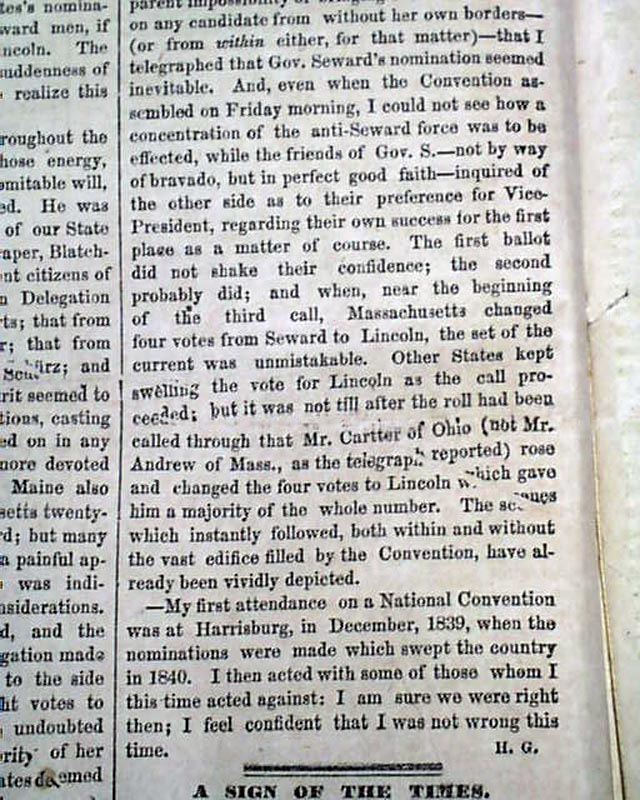
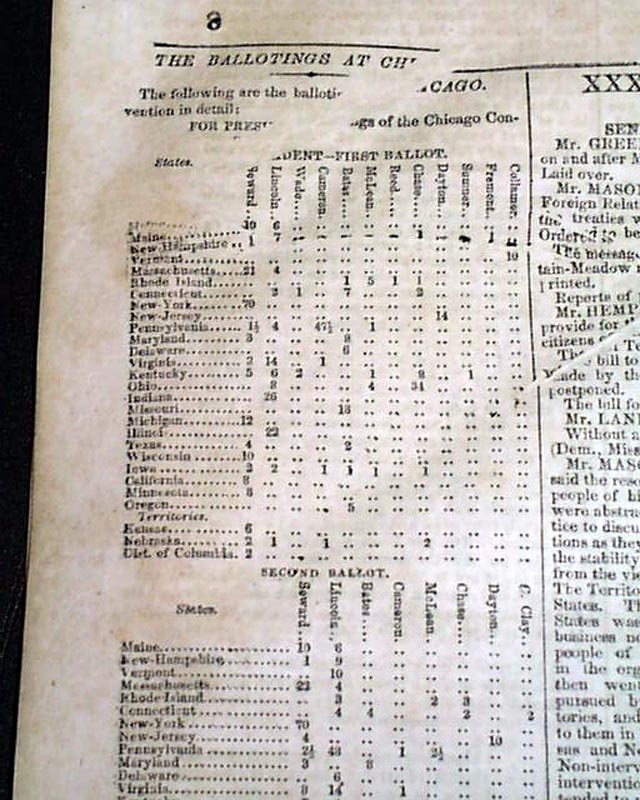
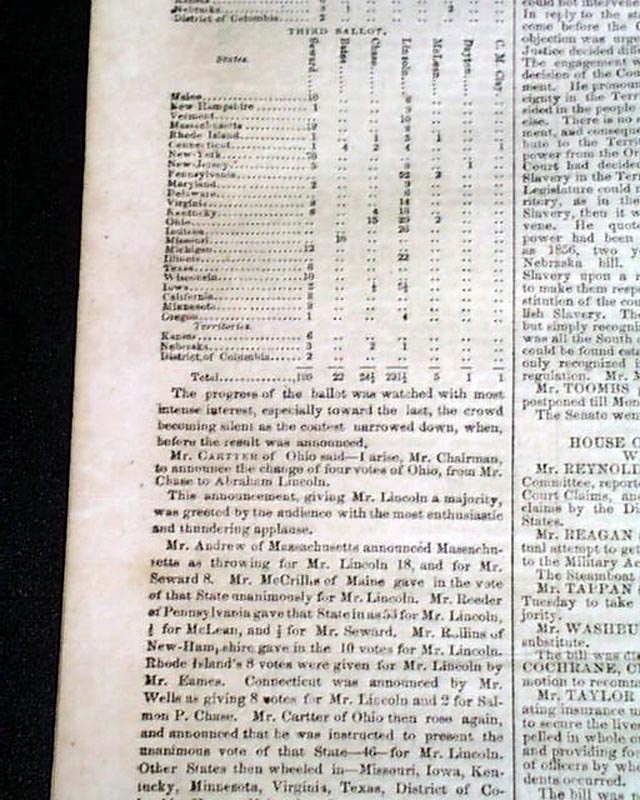
Included is considerable verbatim reporting on the convention with all the details as to how the voting happened. This reporting carries over to take nearly 3 columns on page 2.
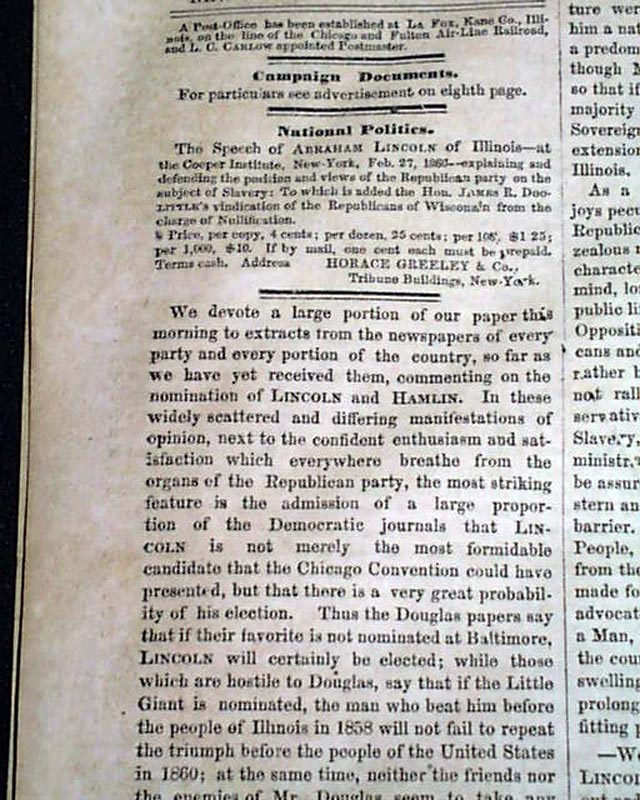
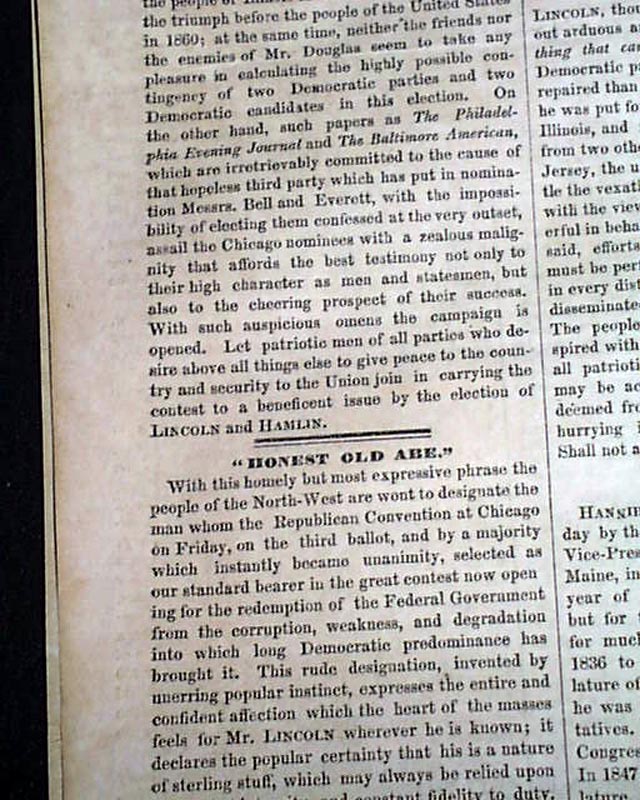
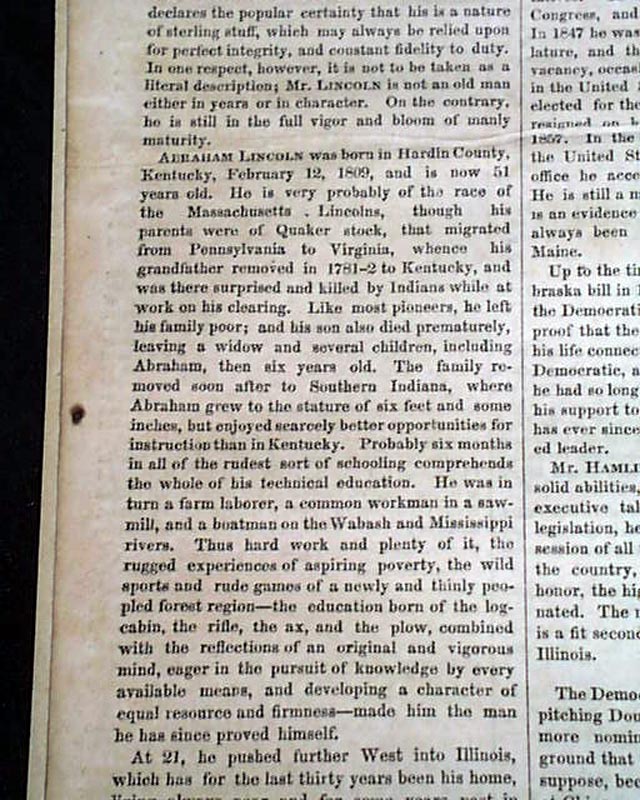
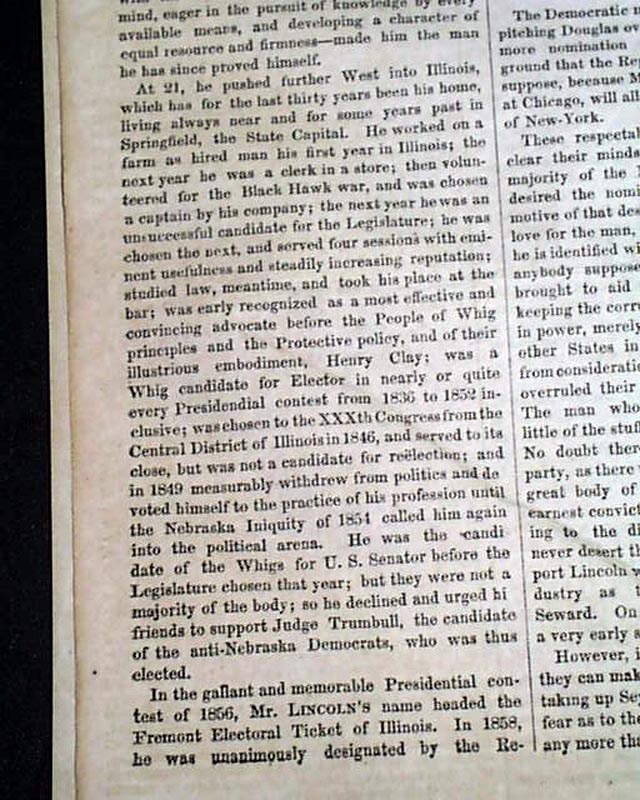
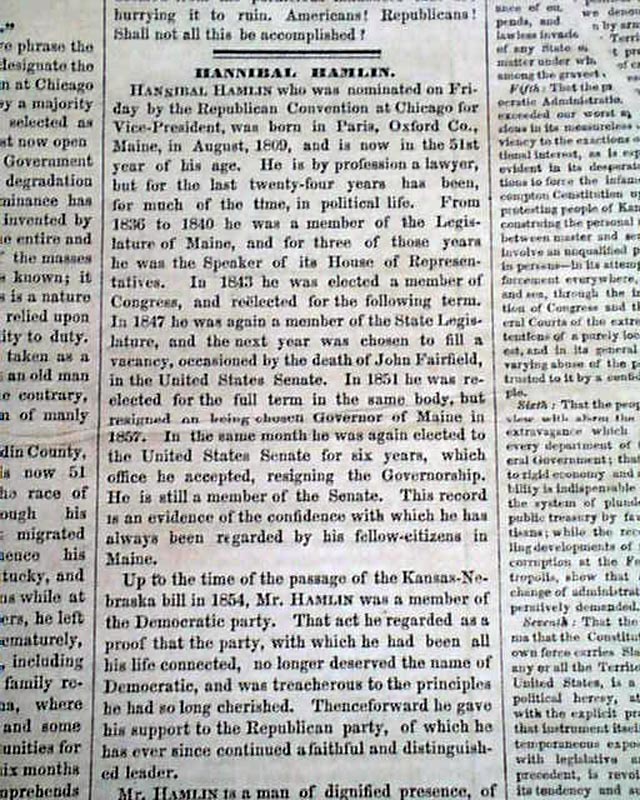
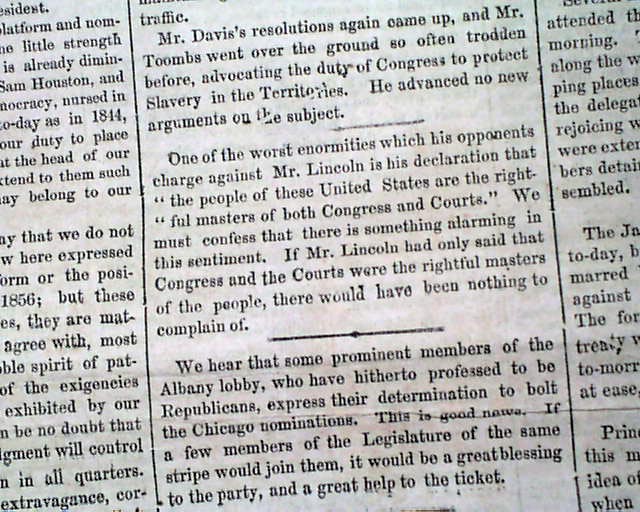
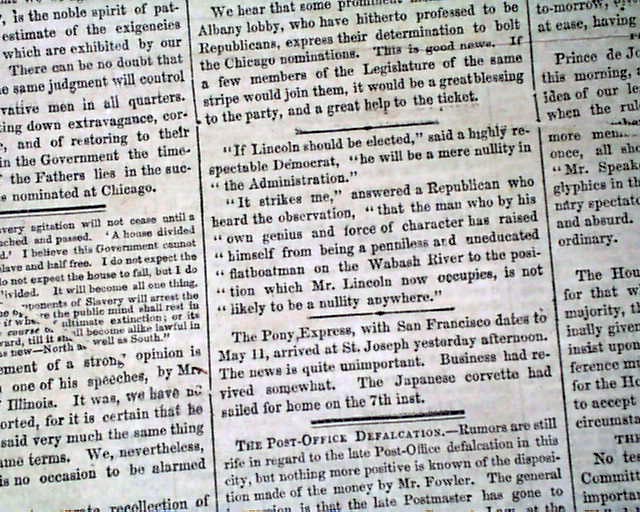
Others articles within the issue continue with related content, including a nice editorial headed: "Honest Old Abe" which has much on his life. Also a report headed: "Hannibal Hamlin". Page 5 has: "The Nominations In Washington--Serenade to Hon. Hannibal Hamlin--Speech By Mr. Hamlin--Attack On the Meeting".
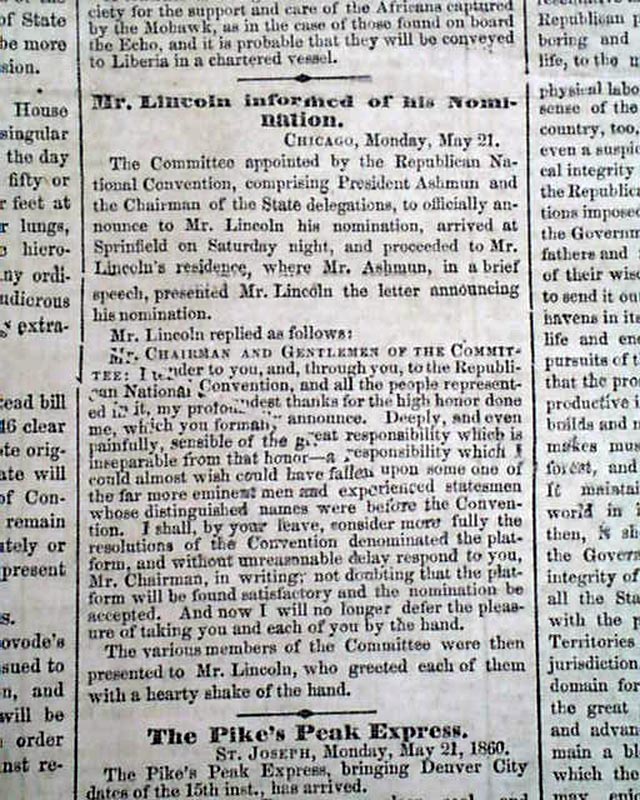
Of special note is a page 5 article: "Mr. Lincoln Informed of his Nomination" which includes in part Lincoln's reply: "Mr. Chairman & gentlemen of the Committee: I tender to you...to the Republican National Convention...my profoundest thanks for the high honor done me, which you formally announce..." with more.
It is worth noting that the daily edition of this newspaper contains the same information, however it is related to page 5 rather than beginning on the front page as found here. Plus the column heads are much nicer in this edition.
Eight pages, nice condition.
AI notes: Abraham Lincoln was formally nominated as the Republican candidate for president on May 18, 1860, at the Republican National Convention in Chicago, a pivotal moment in American political history. The convention followed a heated contest among leading contenders, including William H. Seward, Salmon P. Chase, and Edward Bates, with Lincoln emerging as a compromise candidate acceptable to multiple factions within the party. His nomination reflected his moderate stance on slavery: he opposed its expansion into new territories while avoiding immediate calls for abolition, which helped him appeal to both radical and more conservative Republicans. Lincoln’s acceptance, delivered through a carefully crafted written statement rather than an in-person speech, emphasized the preservation of the Union, the enforcement of the Constitution, and the prevention of slavery’s spread, framing him as a principled yet pragmatic leader. This nomination set the stage for the election of November 1860, ultimately triggering a national crisis as Southern states reacted to the prospect of a Republican presidency, foreshadowing the secession crisis and the Civil War.
* Abraham Lincoln accepts the nomination for President
The last column of the front page has very nice heads: "THE CHICAGO CONVENTION" "The Presidency" "The Struggle Between Seward and Lincoln" "LINCOLN NOMINATED For President" "Only Three Ballotings Had" "The Vice-Presidency" "Hon. Hannibal Hamlin Nominated for Vice President" "Great Joy & Enthusiasm".
Included is considerable verbatim reporting on the convention with all the details as to how the voting happened. This reporting carries over to take nearly 3 columns on page 2.
Others articles within the issue continue with related content, including a nice editorial headed: "Honest Old Abe" which has much on his life. Also a report headed: "Hannibal Hamlin". Page 5 has: "The Nominations In Washington--Serenade to Hon. Hannibal Hamlin--Speech By Mr. Hamlin--Attack On the Meeting".
Of special note is a page 5 article: "Mr. Lincoln Informed of his Nomination" which includes in part Lincoln's reply: "Mr. Chairman & gentlemen of the Committee: I tender to you...to the Republican National Convention...my profoundest thanks for the high honor done me, which you formally announce..." with more.
It is worth noting that the daily edition of this newspaper contains the same information, however it is related to page 5 rather than beginning on the front page as found here. Plus the column heads are much nicer in this edition.
Eight pages, nice condition.
AI notes: Abraham Lincoln was formally nominated as the Republican candidate for president on May 18, 1860, at the Republican National Convention in Chicago, a pivotal moment in American political history. The convention followed a heated contest among leading contenders, including William H. Seward, Salmon P. Chase, and Edward Bates, with Lincoln emerging as a compromise candidate acceptable to multiple factions within the party. His nomination reflected his moderate stance on slavery: he opposed its expansion into new territories while avoiding immediate calls for abolition, which helped him appeal to both radical and more conservative Republicans. Lincoln’s acceptance, delivered through a carefully crafted written statement rather than an in-person speech, emphasized the preservation of the Union, the enforcement of the Constitution, and the prevention of slavery’s spread, framing him as a principled yet pragmatic leader. This nomination set the stage for the election of November 1860, ultimately triggering a national crisis as Southern states reacted to the prospect of a Republican presidency, foreshadowing the secession crisis and the Civil War.
Category: Pre-Civil War


