Home >
Unusual broadsheet "Extra" issue on Jefferson's final annual address...
Unusual broadsheet "Extra" issue on Jefferson's final annual address...
Item # 711100
Currently Unavailable. Contact us if you would like to be placed on a want list or to be notified if a similar item is available.
November 16, 1808
REPUBLICAN ARGUS--EXTRA, Northumberland, (Pennsylvania), November 16 (printed as October in error), 1808
* President Thomas Jefferson (1808)
* Final State of the Union Address
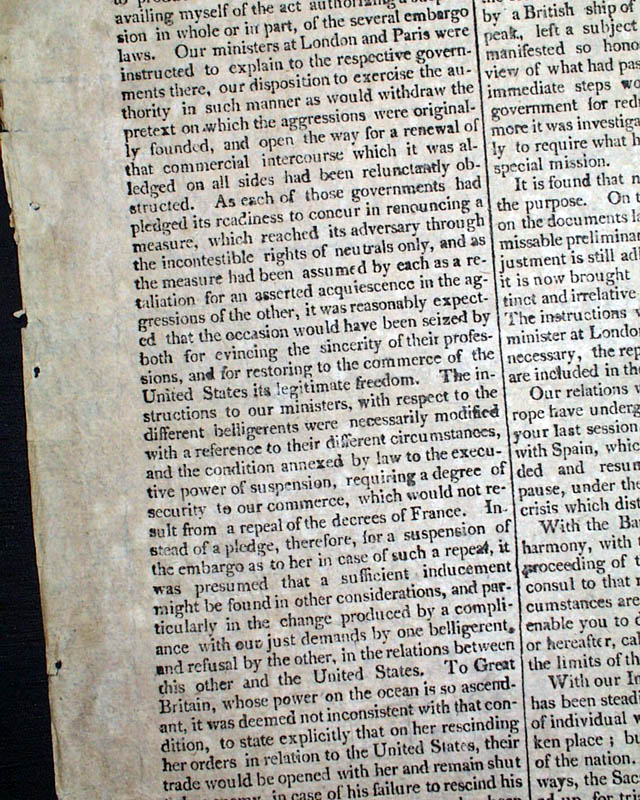
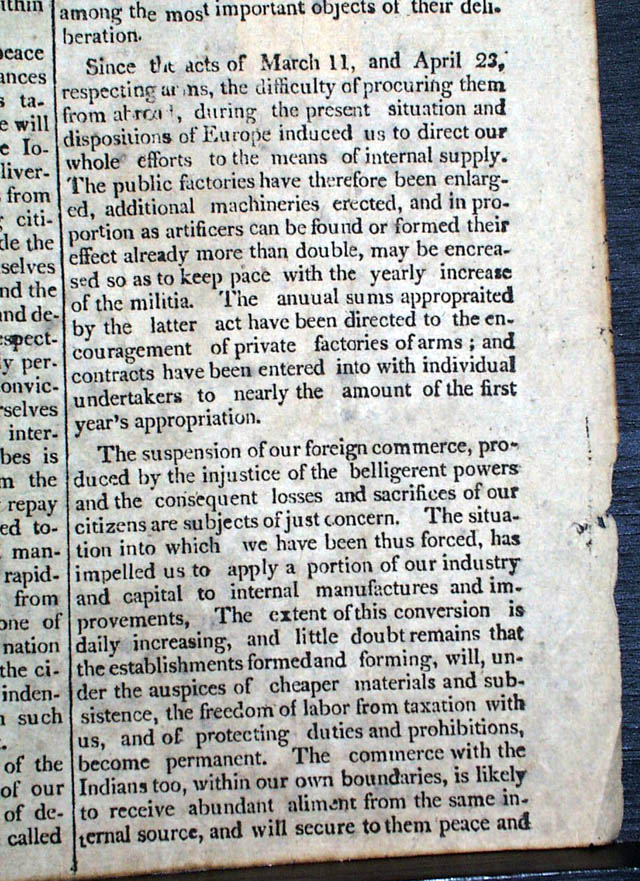
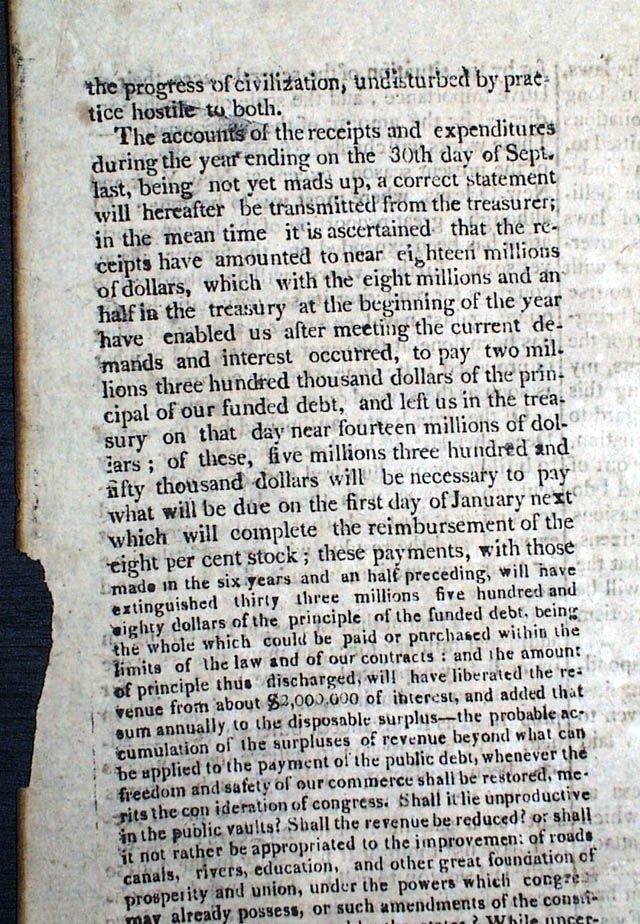
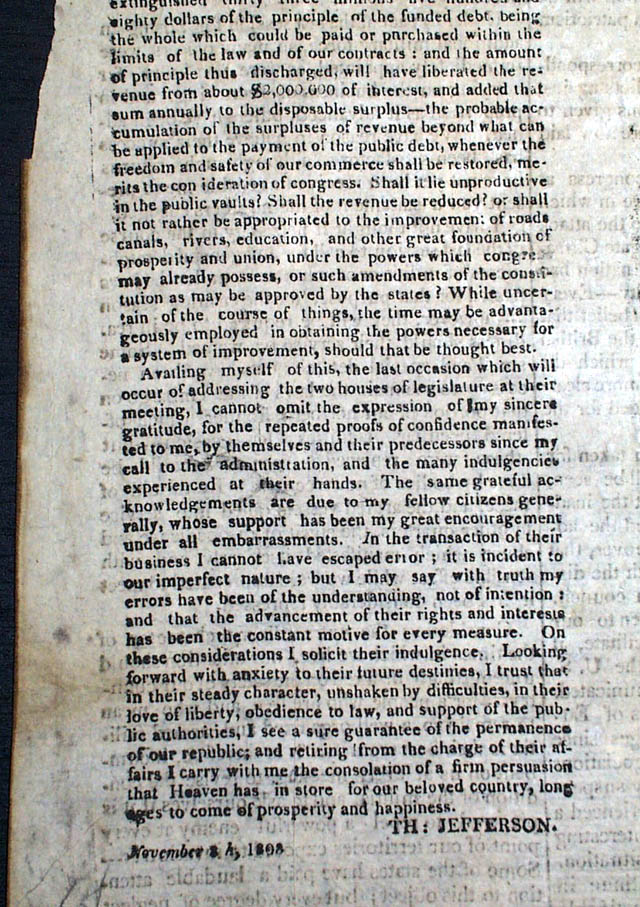
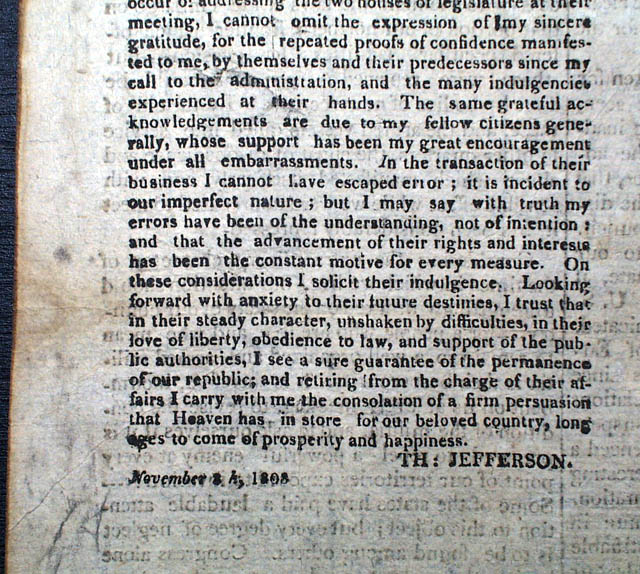
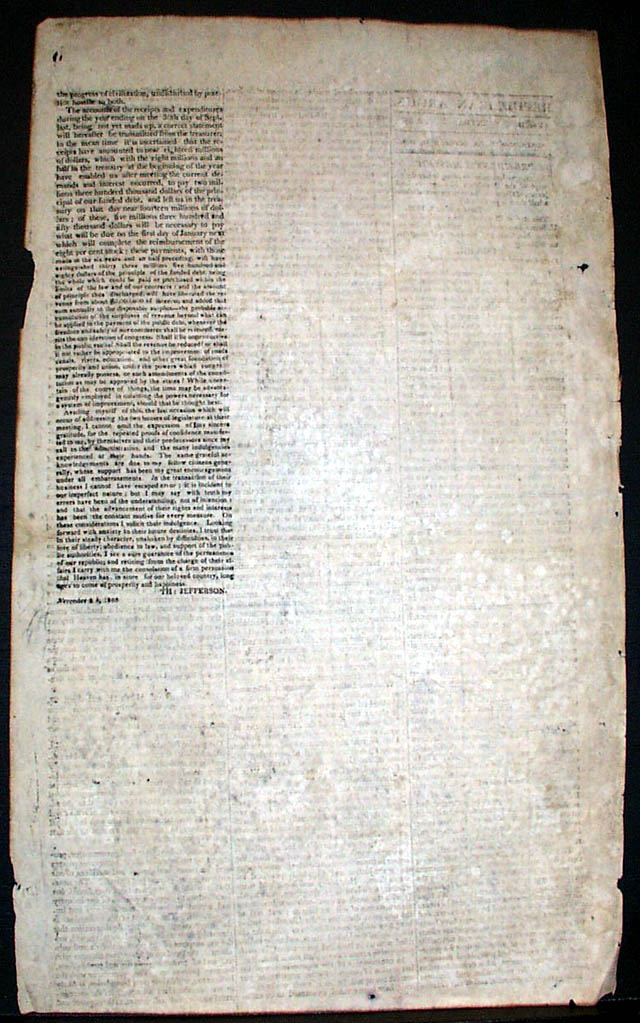
This is a broadsheet "Extra" edition, with just a small portion of Jefferson's Message appearing on the reverse (see photos).
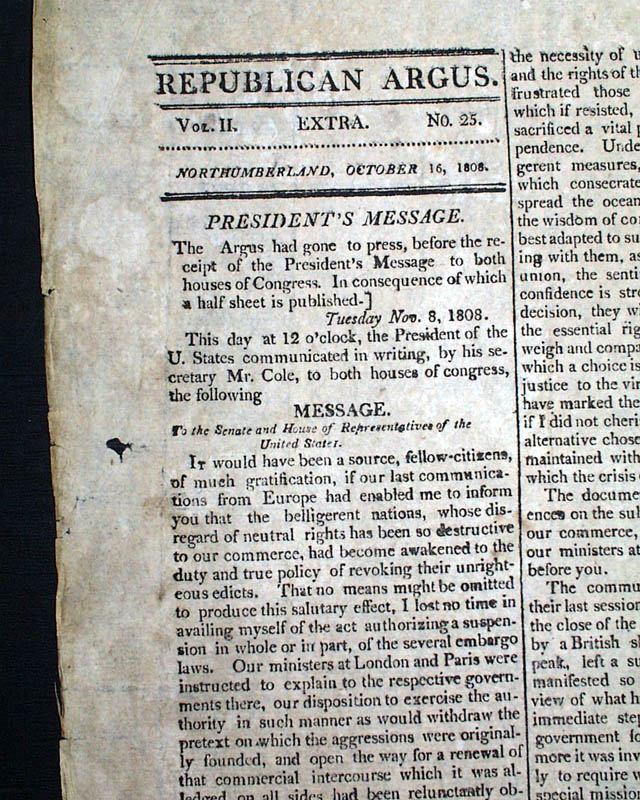
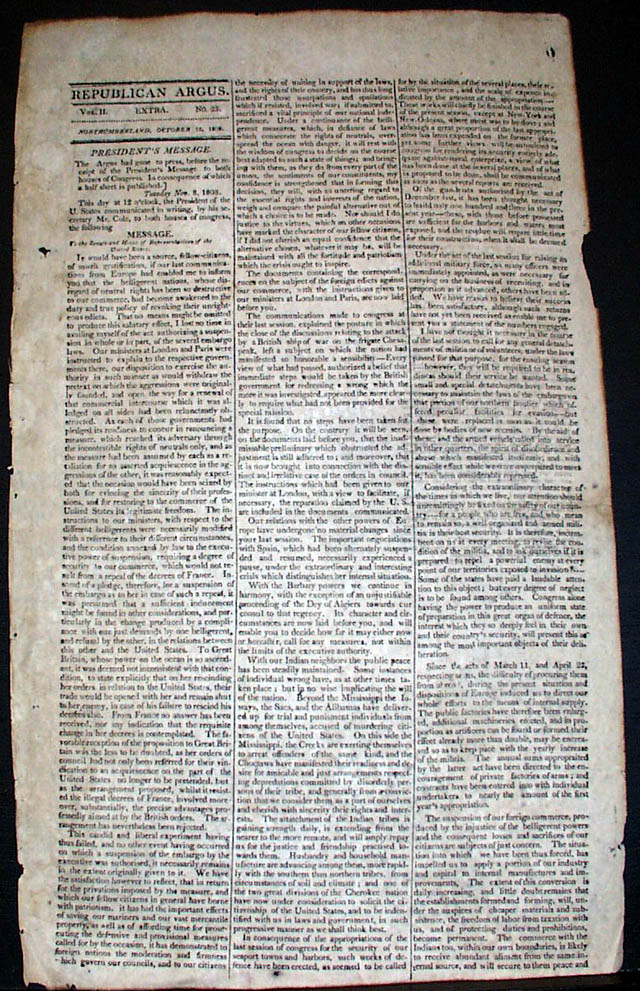
This was Jefferson's last state of the union address, and is headed: "PRESIDENT'S MESSAGE" followed by the publisher's note: "The Argus had gone to press before the receipt of the President's Message to both houses of Congress. In consequence of which a half sheet is published".
Then, with a dateline of Tuesday Nov. 8, 1808, it is introduced: "This day at 12 o'clock the President of the U. States communicated in writing, by his secretary Mr. Cole, to both houses of congress, the following MESSAGE..." followed by the address, carrying over slightly to the reverse side.
Jefferson's final S.O.U., while often overlooked, had historical significance and, although not expressed overtly, helped to establish the tradition of a two-term limit.
Complete as a single sheet, 10 1/2 by 18 inches, slightly irregular at the blank margins, good condition.
AI notes: Thomas Jefferson’s last annual message to Congress, delivered in writing on November 8, 1808, reflected his final reflections as president, emphasizing prudence, peace, and limited government. He focused on maintaining American neutrality amid the Napoleonic Wars, defending the Embargo Act of 1807 as a necessary, though economically burdensome, measure to protect U.S. commerce without resorting to war. Jefferson highlighted the importance of military preparedness through coastal defenses rather than a large standing army, and he noted the continued reduction of the national debt as a cornerstone of fiscal responsibility. He praised the Louisiana Purchase for its contributions to national growth and encouraged orderly governance of the territories while supporting internal improvements like lighthouses and navigable roads under a restrained federal role. Overall, the message combined cautious optimism with pragmatic advice, aiming to preserve peace, strengthen commerce, and ensure the nation’s security while adhering to Jeffersonian principles of limited government and fiscal restraint.
Category: Pre-Civil War
No Longer Available