Home > Back to Search Results >
Mention of Newfoundland and the West Indies in a 1697 newspaper...

Mention of Newfoundland and the West Indies in a 1697 newspaper...
Item # 709899
July 05, 1697
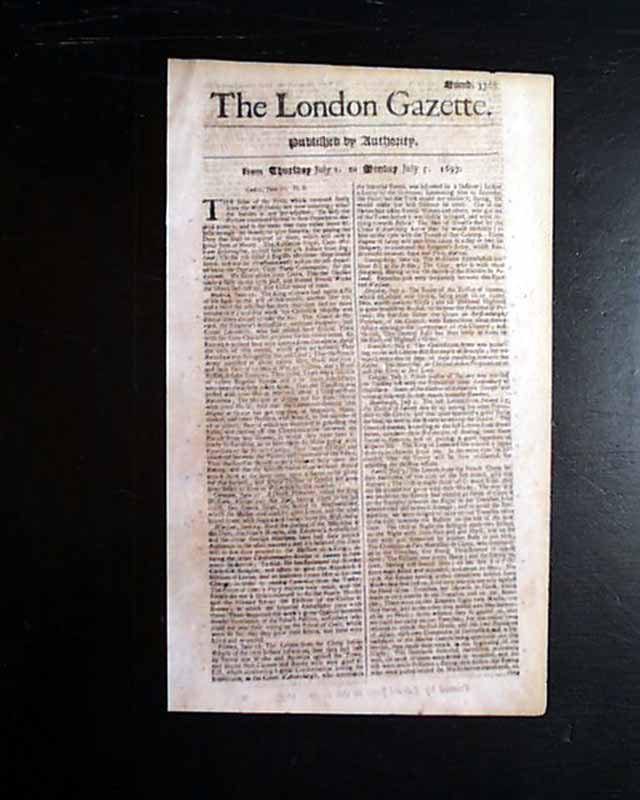
THE LONDON GAZETTE, England, July 5, 1697
* Among the earliest of English language newspapers to be had
* Hold something in your hands from the 7th century
* Unique gift idea for that history buff
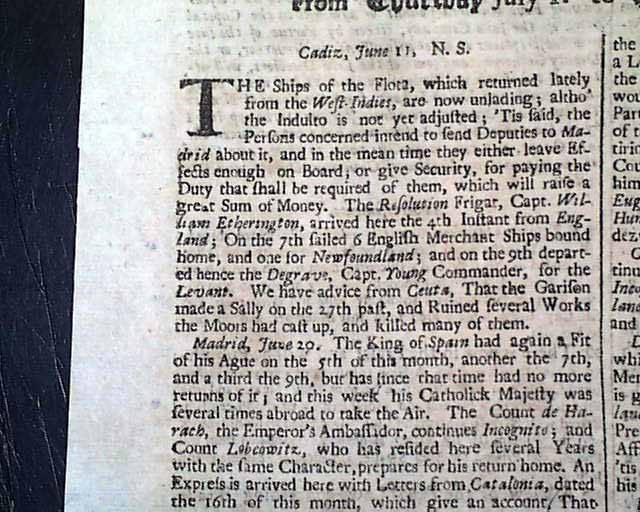
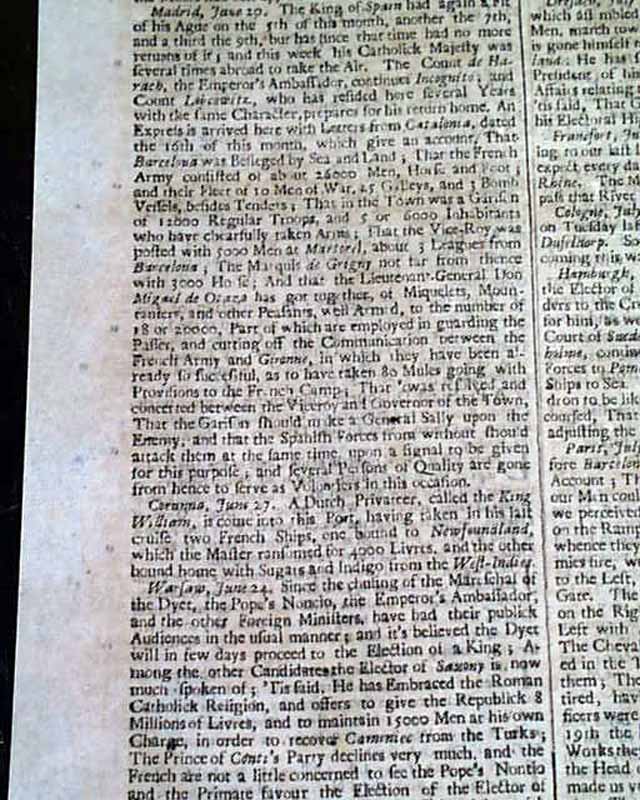
The first column of the front page has a few mentions of the "new world" amongst shipping notices, including: "The ships of the Flora, which returned lately from the West Indies, are now unlading...6 English merchant ships bound home and one for Newfoundland..." and then further on: "...two French ships, one bound to Newfoundland, which the master ransomed for 4,000 livres and the other bound home with sugars and indigo from the West Indies."
A single sheet issue, 7 by 11 1/2 inches, very nice condition.
background: This 1697 entry in The London Gazette serves as a stark primary source for the Transatlantic trade system, illustrating a world where the "New World" was viewed primarily as a resource to be extracted and defended. The mention of sugars and indigo highlights the staggering profitability of the West Indies, which fueled European industrial growth and high-society luxuries at the cost of a brutal plantation economy. Meanwhile, the dual focus on Newfoundland underscores the strategic necessity of the North Atlantic fisheries, which functioned as both a vital food source and a "nursery" for training the sailors who manned the Royal Navy. Perhaps most telling is the nonchalant reference to a ship being ransomed for 4,000 livres; this reflects the reality of the Nine Years' War, where maritime commerce was a high-stakes gamble against privateers, and the "freedom of the seas" was essentially a commodity that could be bought, sold, or seized in the name of imperial expansion.
Category: The 1600's and 1700's
Available Now
$46.00