Home >
Should the U.S. boycott the 1936 Olympics?
Should the U.S. boycott the 1936 Olympics?
Item # 709892
December 09, 1935
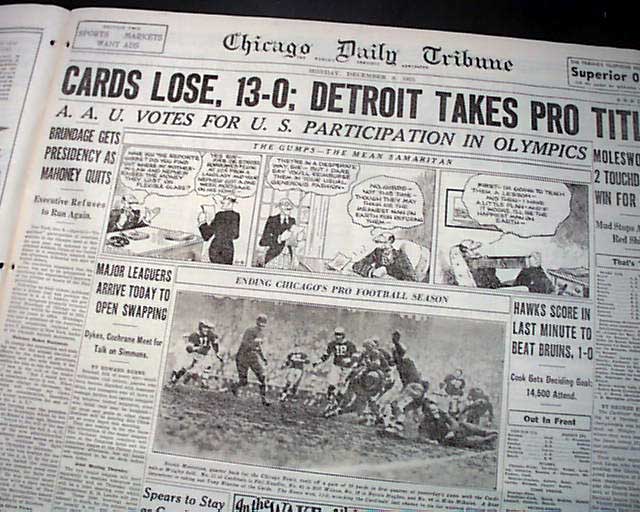
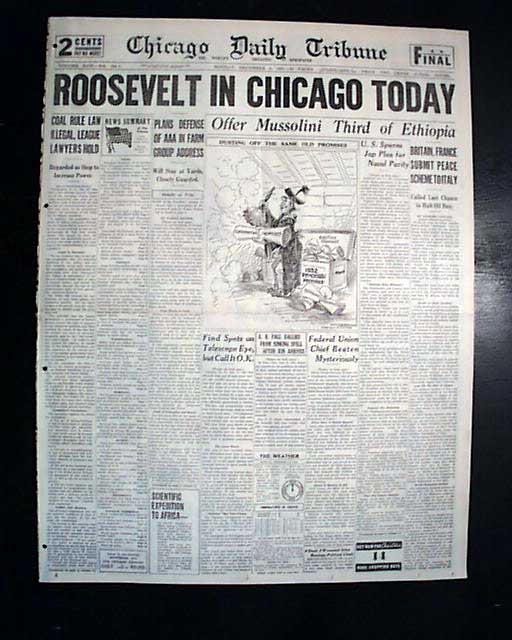
CHICAGO DAILY TRIBUNE, Dec. 9, 1935
* Movement to boycott the Berlin Olympics
* Jewish Holocaust - plight of the Jews
* Adolph Hitler & Nazi Germany
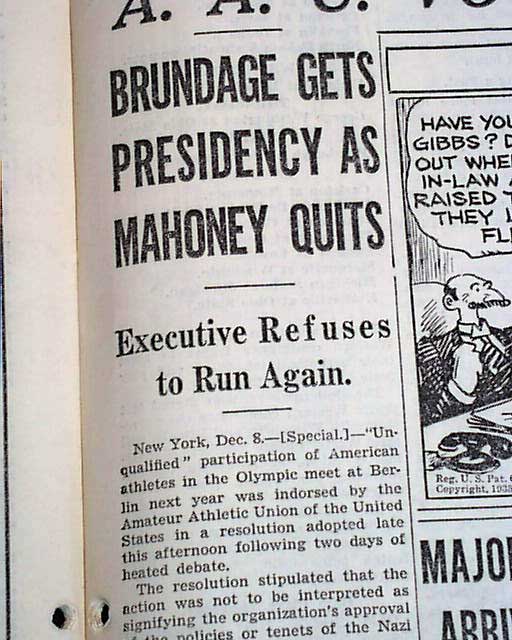
* Amateur Athletic Union votes for participation
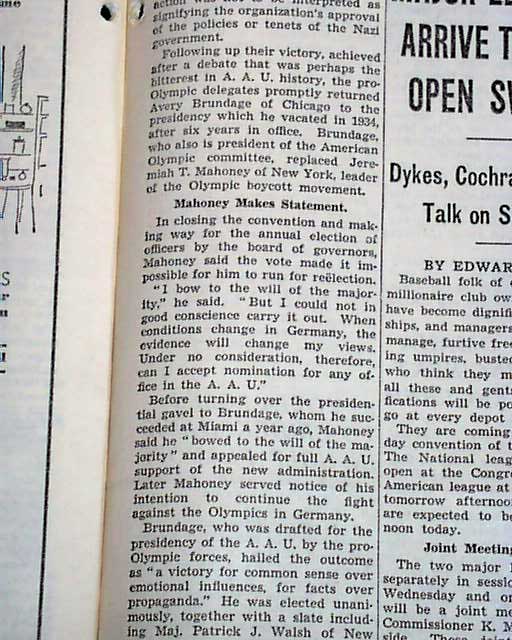
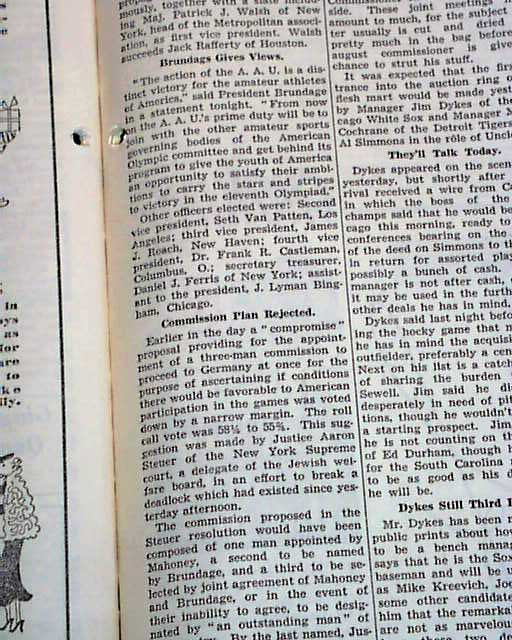
There was considerable controversy in the United States preceding the 1936 Olympics as to whether the games should be boycotted due to Hitler's Nazi regime and its treatment of Jews and non-Ayran races. There were many individual and groups vigorously arguing for a boycott, while other felt politics should play no part in the Olympic games.
It wasn't until the Amateur Athletic Union voted to attend that the tipping point had been reached, deciding for U.S. participation. Other countries--as many were also considering a boycott--then fell in line for attendance as well.
The front page of the sport's section reports this historic decision with a seven column headline: "A.A.U. VOTES FOR U. S. PARTICIPATION IN OLYMPICS" with related subheads. This was a very notable decision which would lead to one of the more memorable of all Olympic Games bringing international fame to Jesse Owens & others, particularly in light of Hitler's attendance and his belief in inferior races.
Complete in 32 pages, this is the rare rag edition, printed on very high quality newprint meant for institutional holdings.
background: The narrow decision by the Amateur Athletic Union on December 8, 1935, to reject a boycott of the Berlin Games stands as a pivotal moment where the ideal of "sports as a bridge" collided with the reality of state-sponsored persecution. Led by Avery Brundage, proponents of participation argued that the Olympic arena should remain a sanctuary from global politics, a stance that inadvertently handed Adolf Hitler a massive propaganda platform to showcase a sanitized, disciplined Germany to the world. However, the American presence—specifically the 18 African American athletes dubbed the "Black Auxiliaries" by the Nazi press—offered a physical refutation of Aryan supremacy that no diplomatic boycott could have achieved. Jesse Owens’ four gold medals became the ultimate symbol of this defiance, though the historical irony remains sharp: while these athletes shattered racial myths on the world stage, they returned to a United States where they were still denied basic civil rights and avoided by their own president.
Category: The 20th Century
Available Now
$52.00