Home > Back to Search Results >
Financial Panic of 1873...
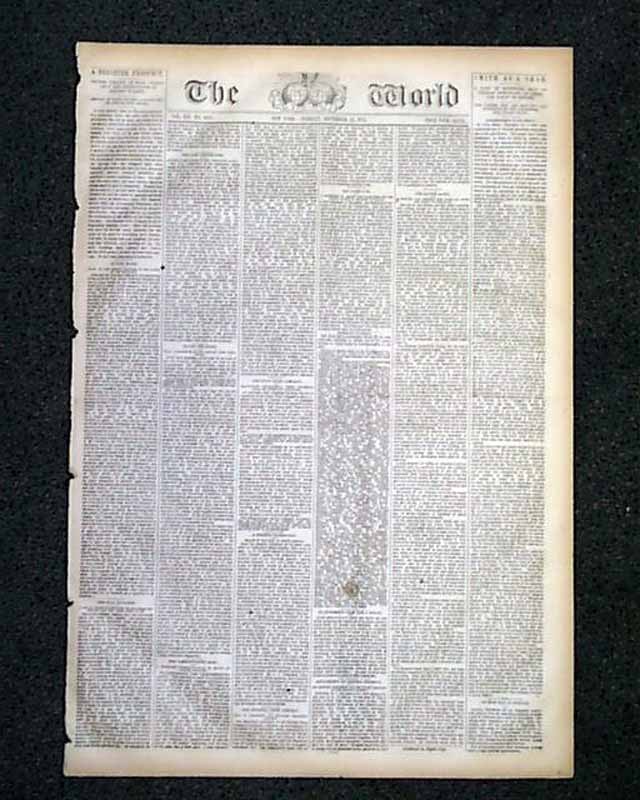
Financial Panic of 1873...
Item # 709890
September 23, 1873
THE WORLD, NEW YORK, Sept. 23, 1873
* Financial crisis - panic of 1873
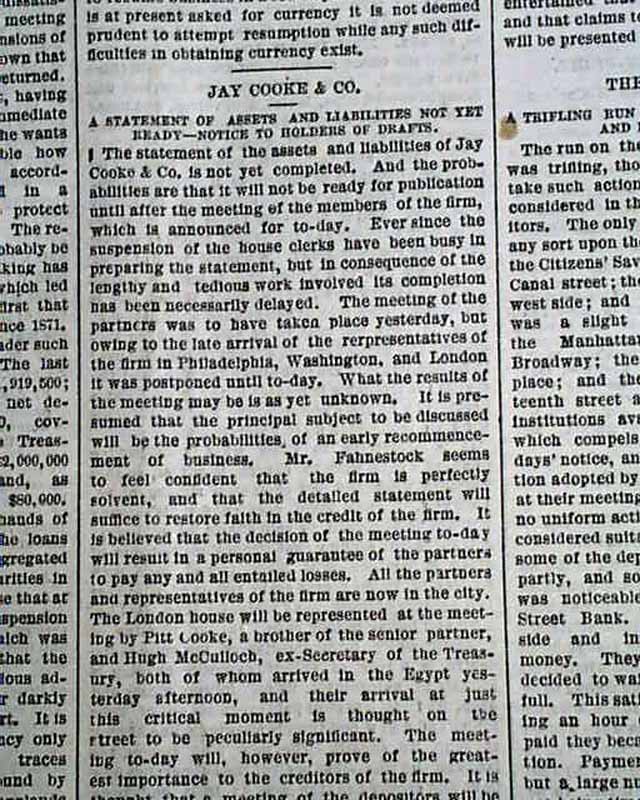
* Collapse of Jay Cooke & Company
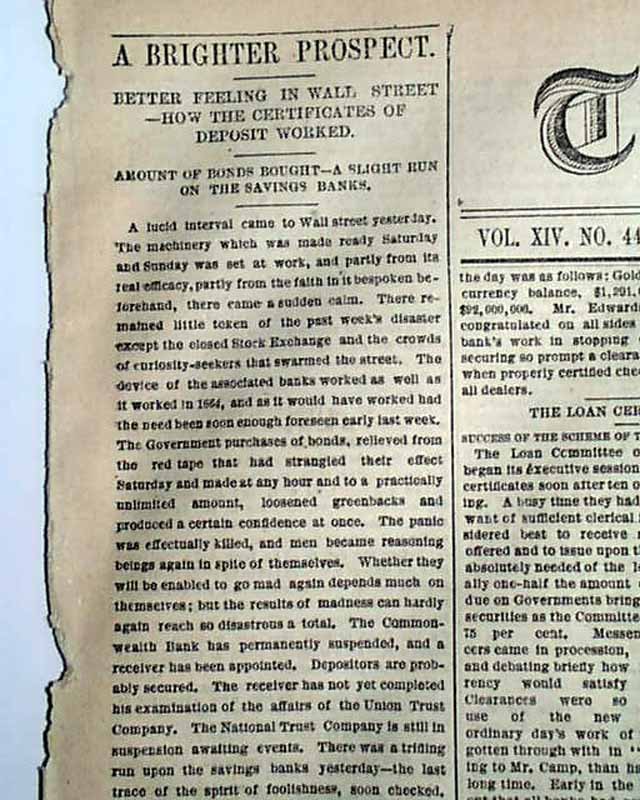
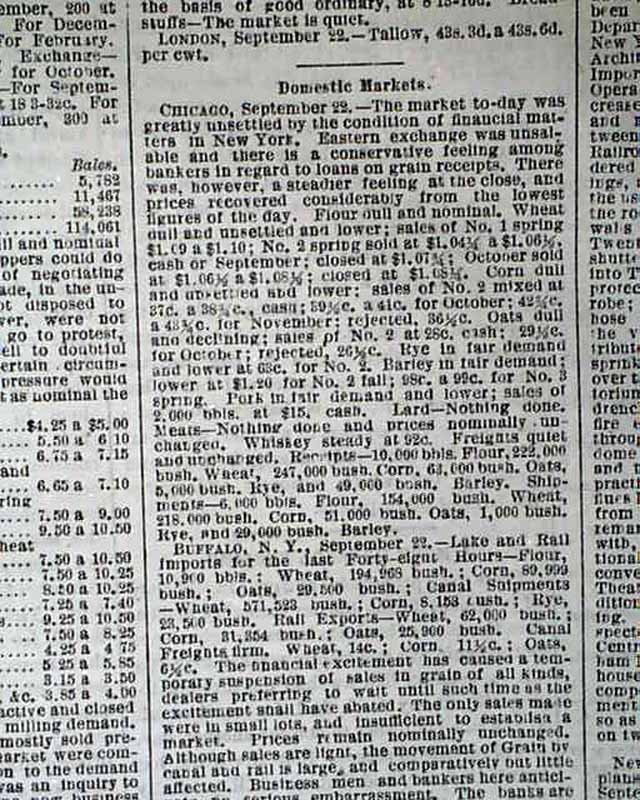
This issue has fine follow up coverage on what became known as: "The Panic of 1873", which was precipitated by the bankruptcy of the banking firm of Jay Cooke and Company.
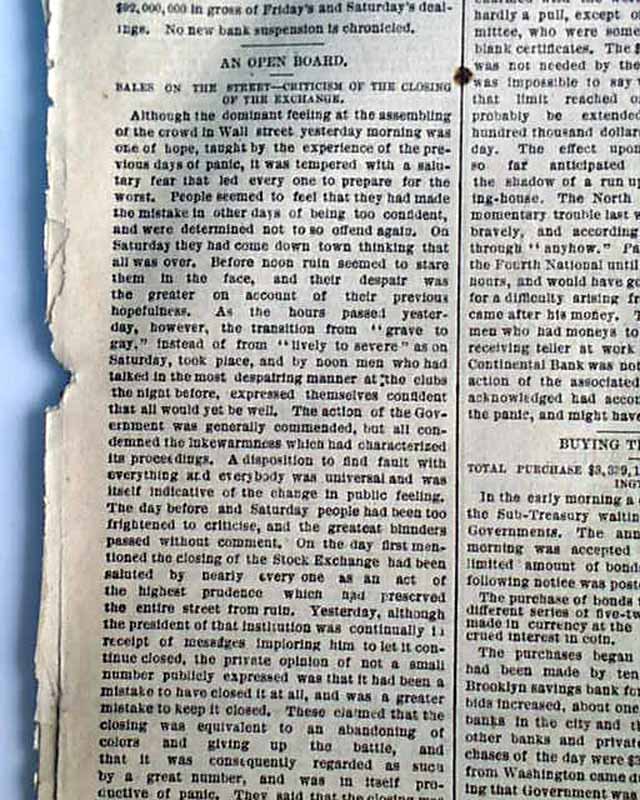
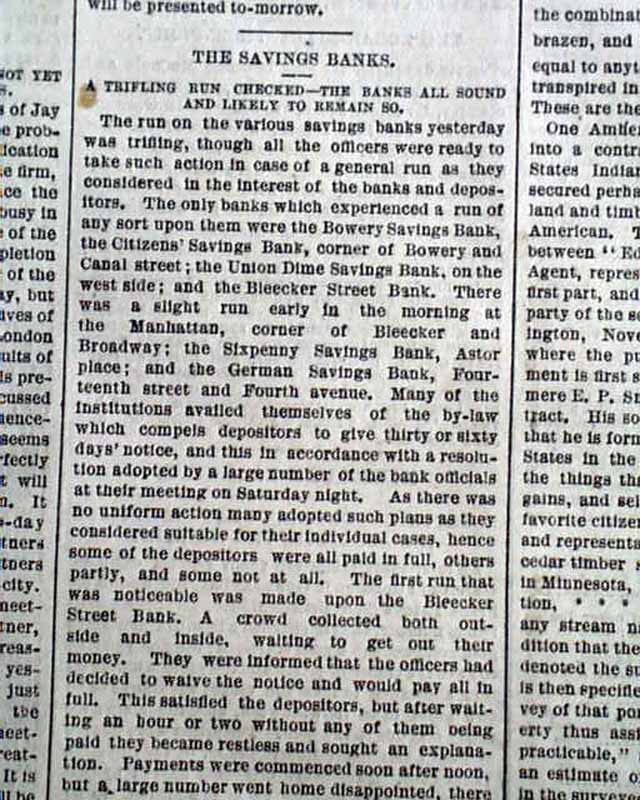
There are several reports with one column heads including: "A Brighter Prospect--Better Feeling In Wall Street..." "Jay Cooke & Co.--A Statement Of Assets and Liabilities Not Yet Ready--Notice To Holders of Drafts" "The Savings Banks--A Trifling Run Checked--The Banks All Sound And Likely To Remain So".
Eight pages, somewhat pulpish, but in overall nice condition.
Background: The collapse of Jay Cooke & Company on September 18, 1873, acted as the detonator for a systemic financial explosion because it shattered the public's blind faith in the post-Civil War "railroad boom." As the primary financier for the Northern Pacific Railway, Cooke’s firm had become dangerously illiquid, tied to thousands of miles of unfinished track that could not generate immediate returns. When the firm shuttered its doors, it triggered a domino effect that forced the New York Stock Exchange to close for ten days—an unprecedented move—and revealed a fragile banking system over-leveraged on speculative industrial debt. The "brighter prospects" and "trifling runs" reported in The World on September 23 were largely optimistic propaganda meant to stem a tide of panic that eventually led to the failure of over 10000 businesses and a grueling six-year economic contraction known as the Long Depression. This era effectively ended the rapid Reconstruction-period expansion and shifted the American psyche toward a deep-seated distrust of unregulated corporate monopolies and speculative banking.
Category: Post-Civil War
Available Now
$39.00