Home >
Nat Turner's slave insurrection...
Nat Turner's slave insurrection...
Item # 708033
Currently Unavailable. Contact us if you would like to be placed on a want list or to be notified if a similar item is available.
September 03, 1831
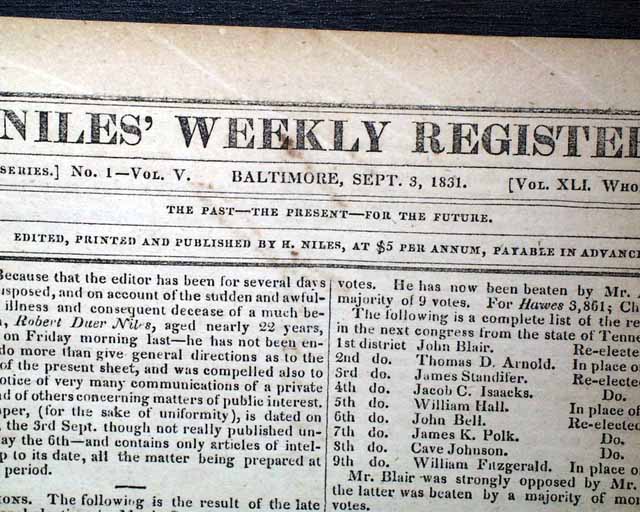
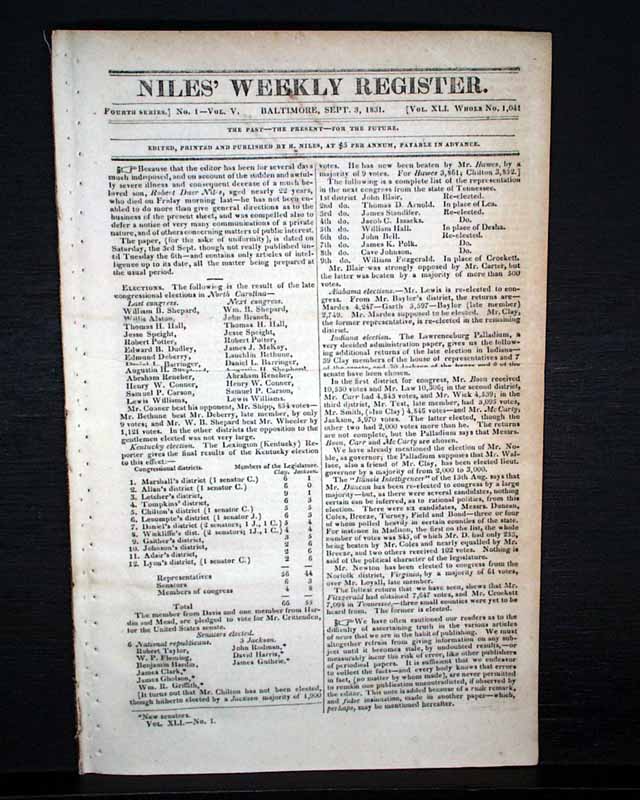
NILES' WEEKLY REGISTER, Baltimore, Sept. 3, 1831
* Nathaniel 'Nat' Turner - American slave
* Slave rebellion - insurrection
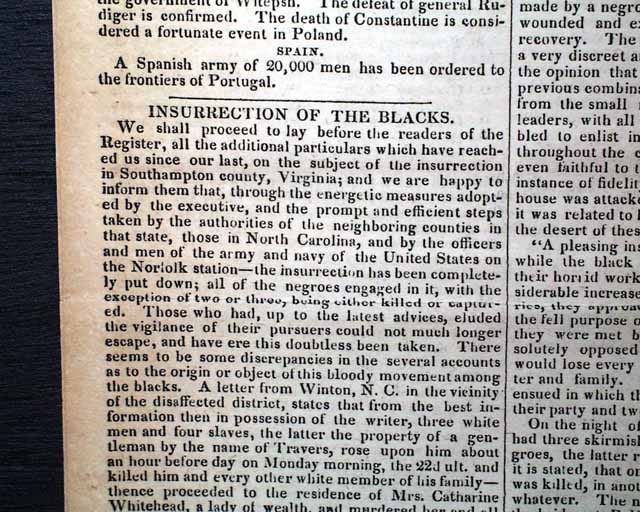
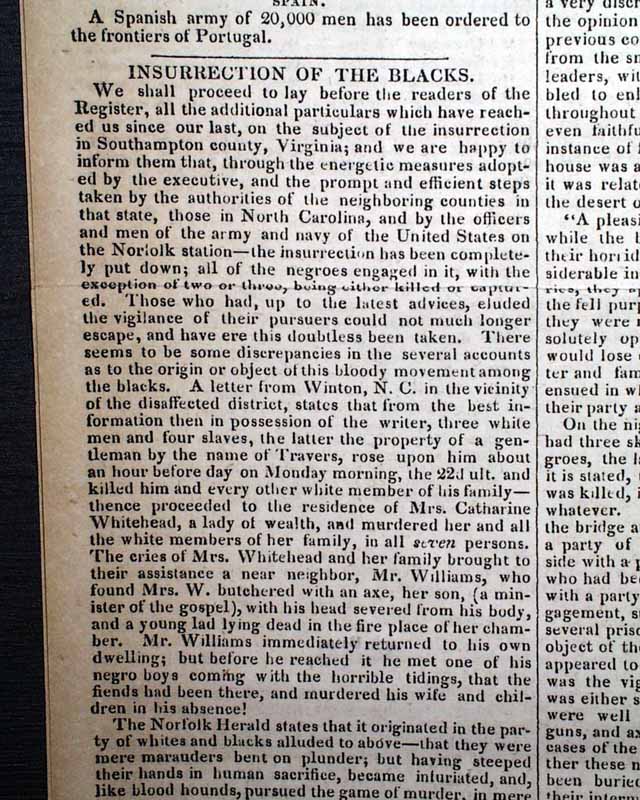
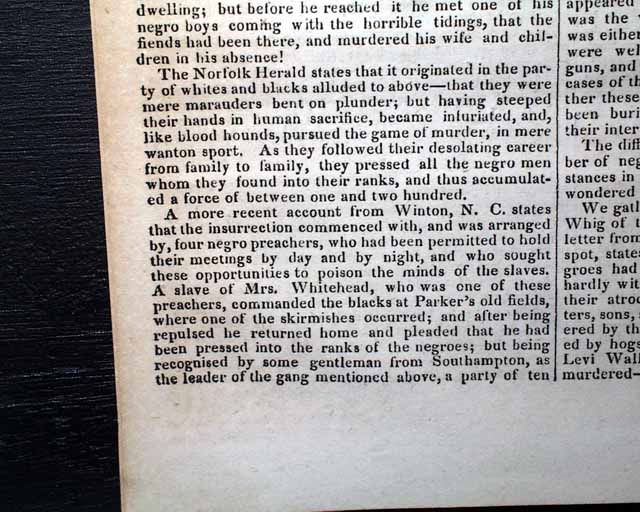
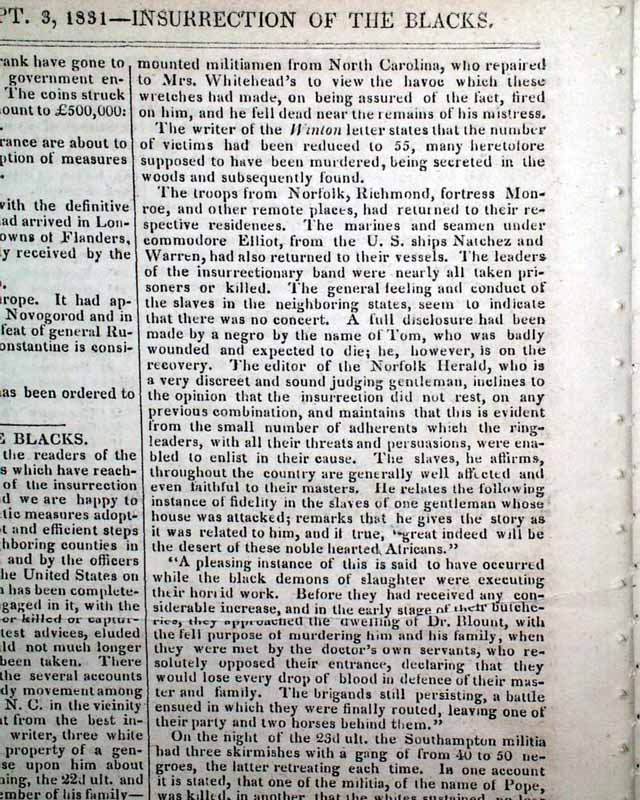
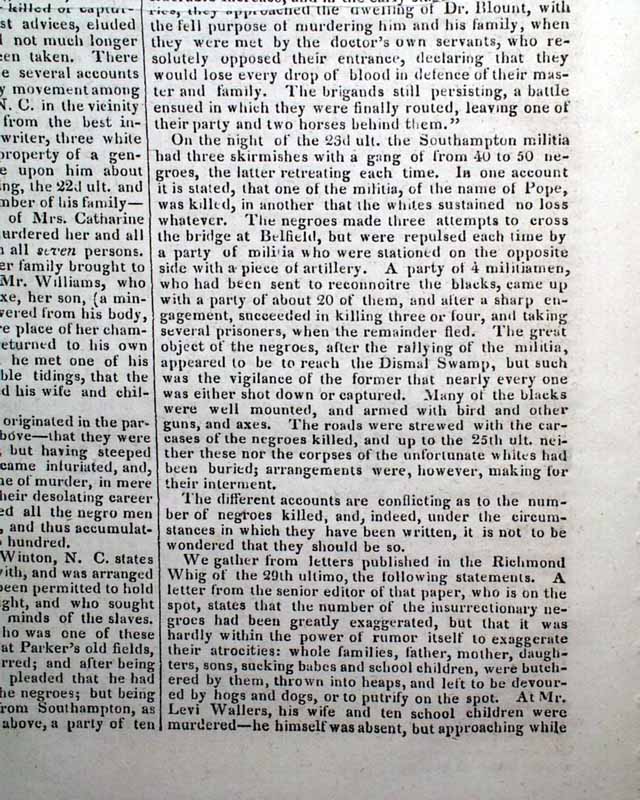
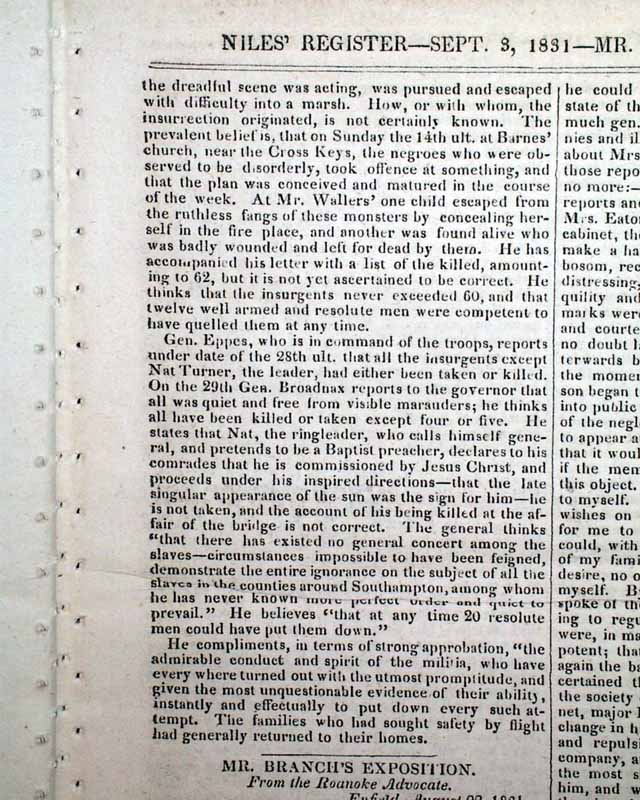
Certainly the most significant report in this issue is an excellent and detailed account of the slave insurrection in Virginia, let by Nat Turner.
The report is headed: "Insurrection Of The Blacks" and takes over a full page with the details, one report noting: "...they were mere marauders bent on plunder, but having steeped their hands in human sacrifice, became infuriated and, like blood hounds, pursued the game of murder in mere wanton sport. As they followed their desolating career from family to family they pressed all the negro men whom they found into their ranks..." with much more.
Sixteen pages, 6 1/4 by 9 1/2 inches, very nice condition.
AI notes: In August 1831, Nat Turner, an enslaved African American preacher in Southampton County, Virginia, led a carefully planned insurrection that became one of the most notable slave revolts in U.S. history. Believing he was divinely chosen to liberate his people, Turner and a small group of followers began their uprising on the night of August 21, moving from plantation to plantation and killing around 55 white men, women, and children over the course of two days. The rebellion was quickly suppressed by local militias, but in retaliation, more than 100 Black people, many uninvolved in the revolt, were killed by white mobs. Turner evaded capture for several weeks before being arrested on October 30, tried, and executed. The uprising sent shockwaves throughout the South, leading to stricter slave codes, including bans on education, assembly, and religious gatherings for enslaved people, and heightened national tensions over slavery, cementing Turner’s legacy as both a symbol of resistance and a catalyst for harsher repression.
As noted in Wikipedia, this title: "...(was) one of the most widely-circulated magazines in the United States...Devoted primarily to politics...considered an important source for the history of the period."
Category: Pre-Civil War
No Longer Available