Home >
Nice issue on Uncle Tom's Cabin...




Nice issue on Uncle Tom's Cabin...
Item # 707416
June 03, 1852
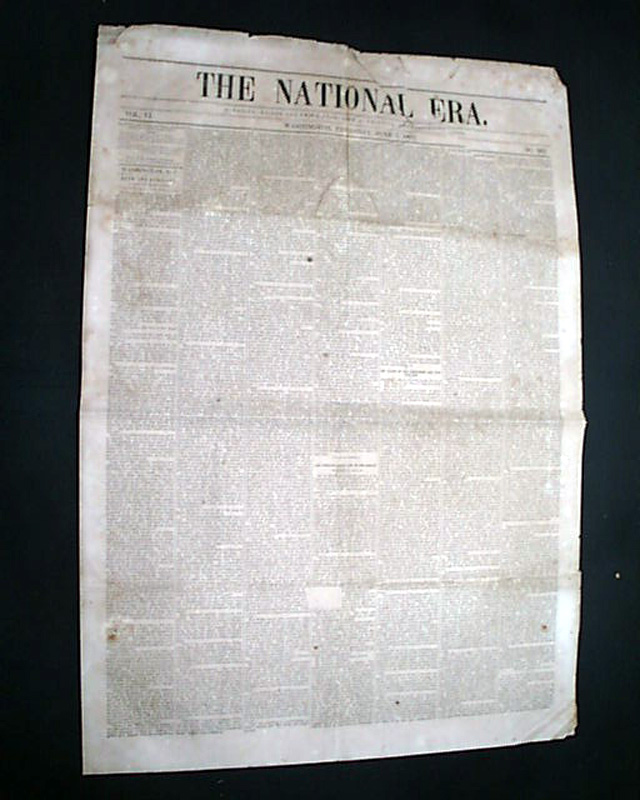
THE NATIONAL ERA, Washington, D.C., June 3, 1852
* Uncle Tom's Cabin
* Harriet Beecher Stowe
* Book becomes mainstream
* Anti-slavery publication
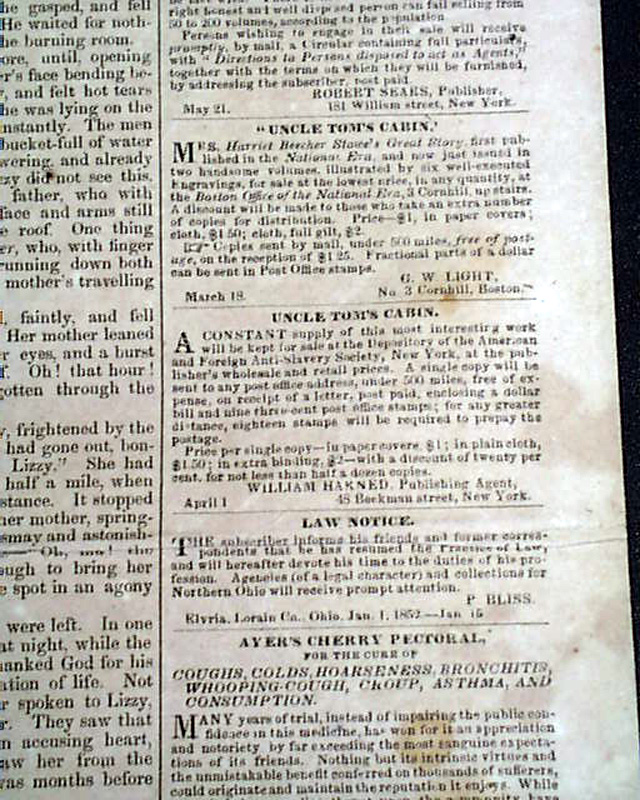
The back page has not one, but two advertisements for the sale of: "Uncle Tom's Cabin". One ad begins: "A constant supply of this most interesting work will be kept for sale..." and the other begins: "Mrs. Harriet Beecher Stowe's Great Story, first published in the 'National Era' and now just issued in two handsome volumes..." with more.
A page 2 article from the editor begins: "It is with great pleasure that we announce to our readers that we have succeeded in engaging Mrs. Harriet Beecher Stowe as a regular contributor to the columns of the Era. She may not be able, for some time, to commence another work of the character of that lately completed, and of which more than 50,000 copies have already been sold..." which is nice reference to Uncle Tom's Cabin.
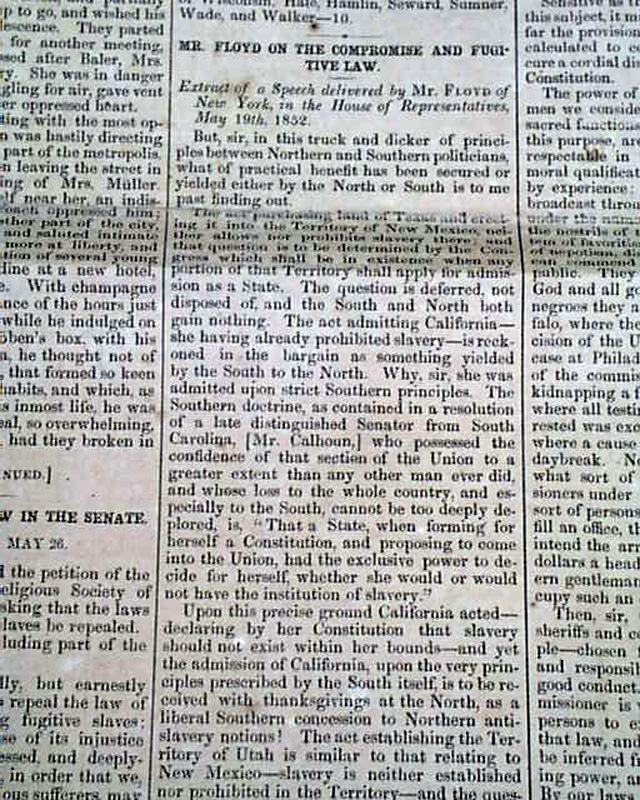
Also in this issue is a front page article: "The Fugitive Slave Law in the Senate" & also: "Mr. Floyd on the Compromise & Fugitive Law".
The "National Era" was the newspaper which introduced the famed "Uncle Tom's Cabin" to the world, being serialized in this newspaper before the published book was available.
Four pages, never bound nor trimmed, various wrinkling near the top, evenly toned. Folder size noted is for the issue folded in half.
background: The June 3, 1852, issue of The National Era serves as a definitive artifact of the moment Harriet Beecher Stowe’s narrative shifted from a regional serial to a national catalyst for the abolitionist movement. By featuring advertisements for the "two handsome volumes" alongside an editorial announcement of Stowe’s permanent recruitment, the paper highlights the immense commercial success of a work that had already moved 50,000 copies in a mere ten weeks. The placement of these literary milestones adjacent to somber political reports on the Fugitive Slave Law underscores the newspaper's dual role as a cultural engine and a political provocateur; it illustrates how Uncle Tom’s Cabin was not merely a story, but a direct, visceral response to the very legislation being debated in the Senate columns on the front page. This convergence of commerce, art, and activism within a single issue captures the precise historical "tipping point" where serialized fiction became a powerful enough force to dominate the national discourse on slavery.
Category: Pre-Civil War
Available Now
$98.00