Home >
Robert E. Lee at Harper's Ferry... Infamous slave ship...
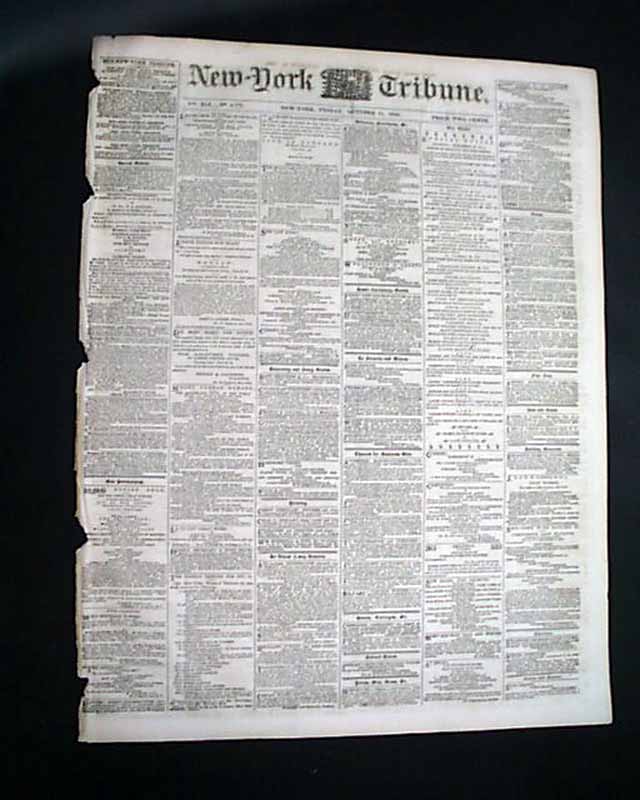
Robert E. Lee at Harper's Ferry... Infamous slave ship...
Item # 707022
Currently Unavailable. Contact us if you would like to be placed on a want list or to be notified if a similar item is available.
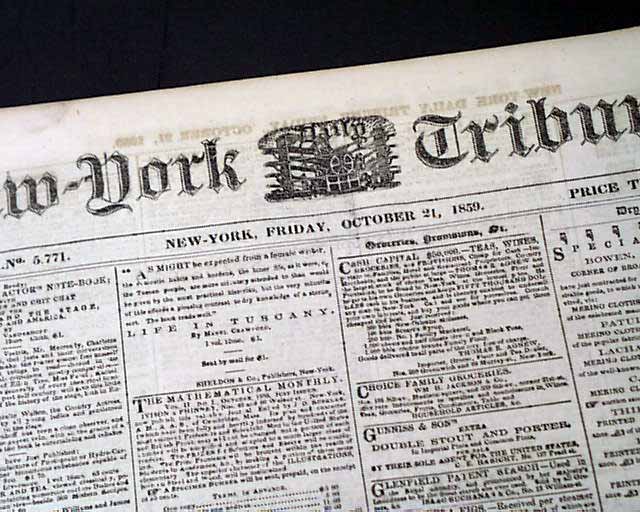
October 21, 1859
NEW YORK TRIBUNE, Oct. 21, 1859
* John Brown's insurrection - invasion - raid
* Harpers Ferry WV West Virginia
* Early Colonel Robert E. Lee mention
* Infamous slaver - slave ship "Wanderer"
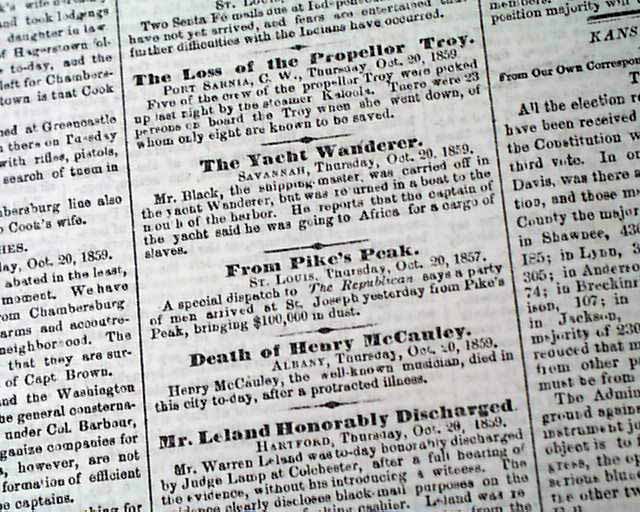
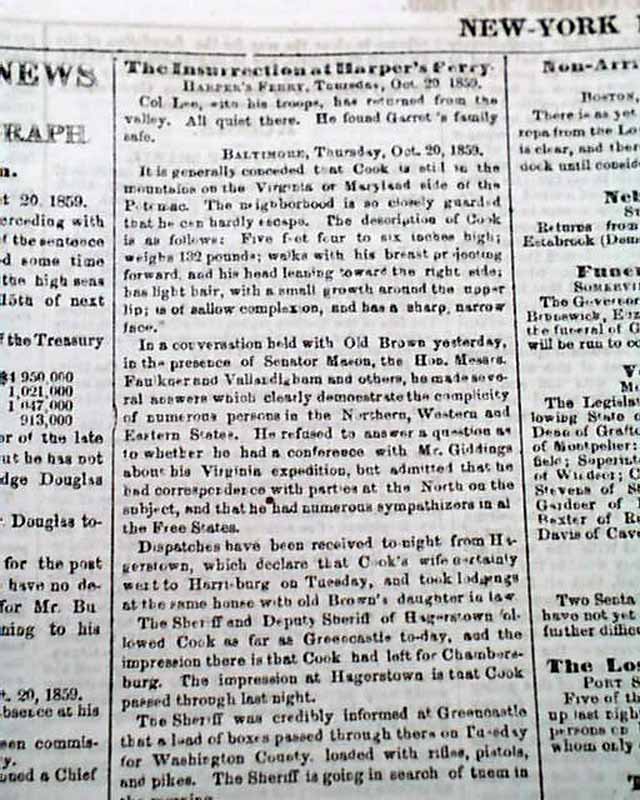
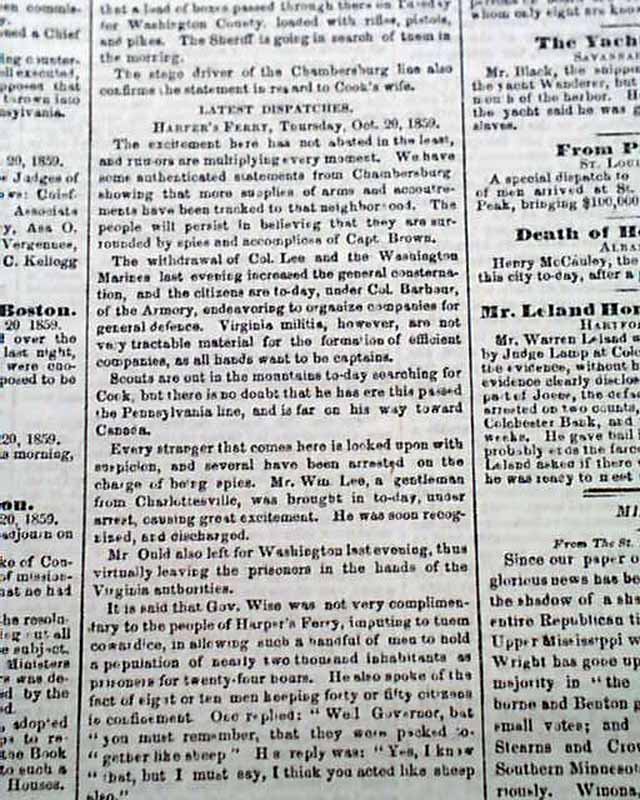
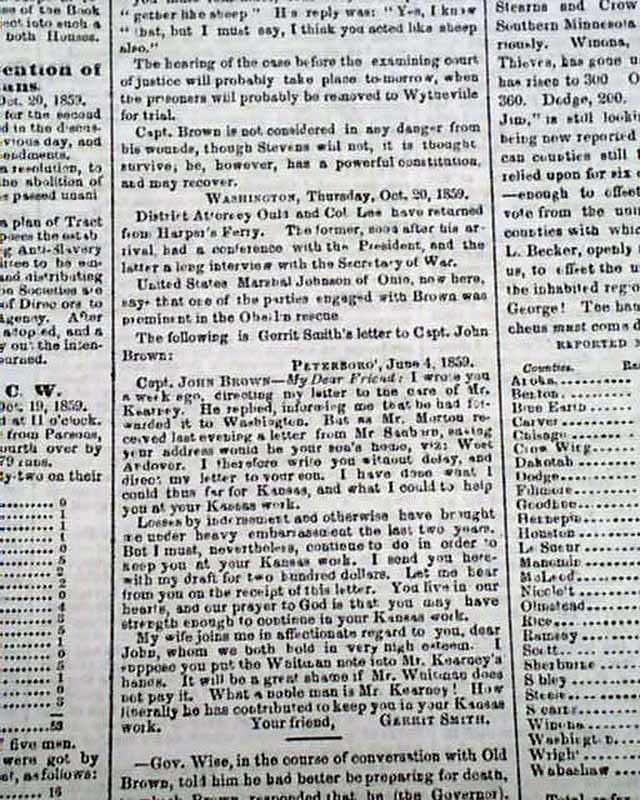
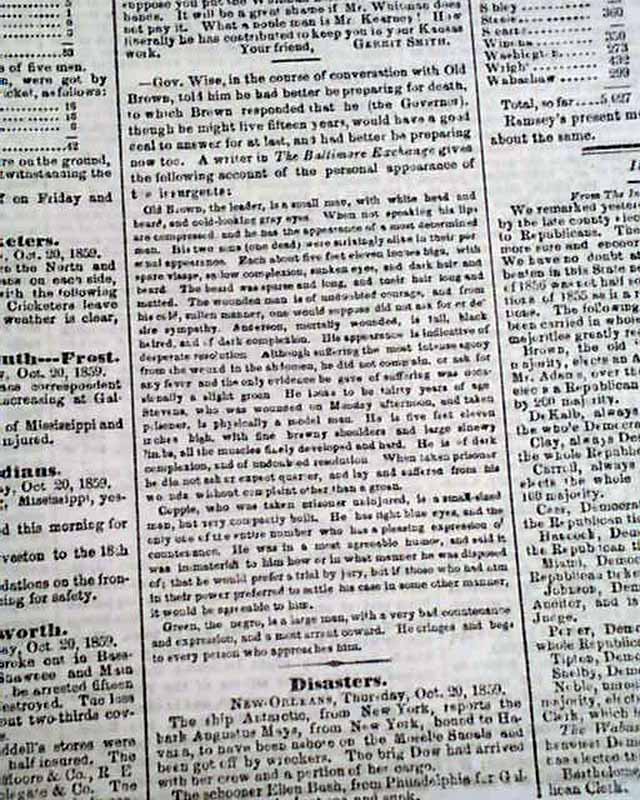
Page 5 has nearly a full column reporting on the slave insurrection at Harper's Ferry, Virginia, led by John Brown. The top of a column has: "The Insurrection at Harper's Ferry".
The report begins: "Col. Lee, with his troops, has returned from the valley. All quiet there. He found Garrett's family safe..." followed by several other reports. Note: The Col. Lee reference is none other than Robert E. Lee. Uncommon to find Lee's name in most Harper's Ferry reports.
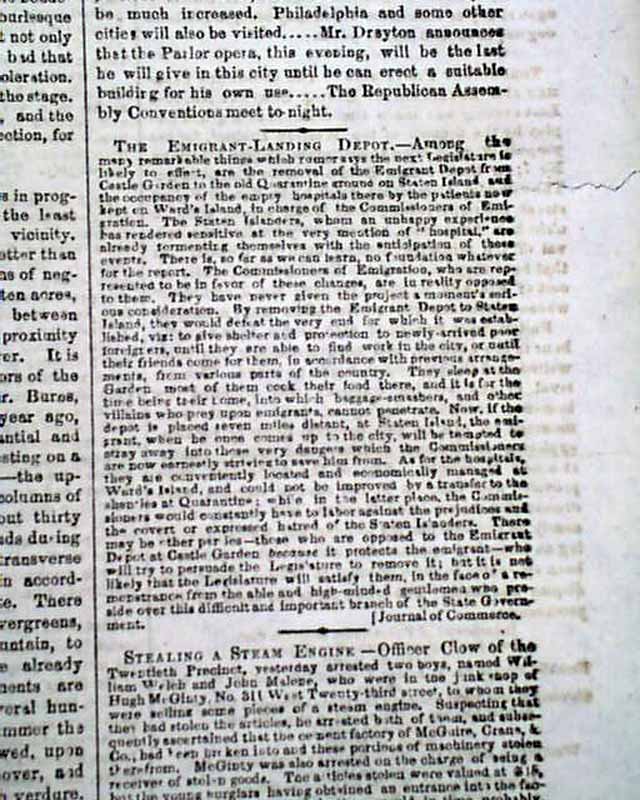
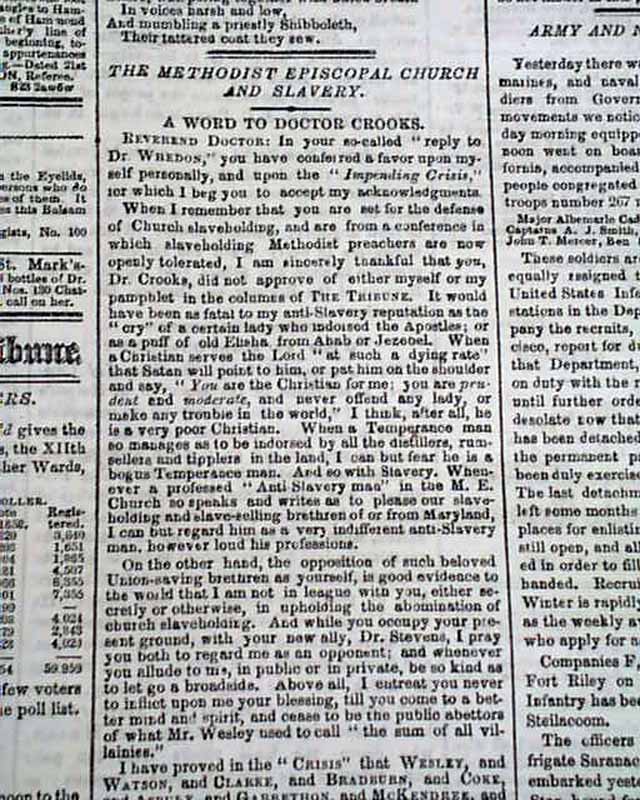
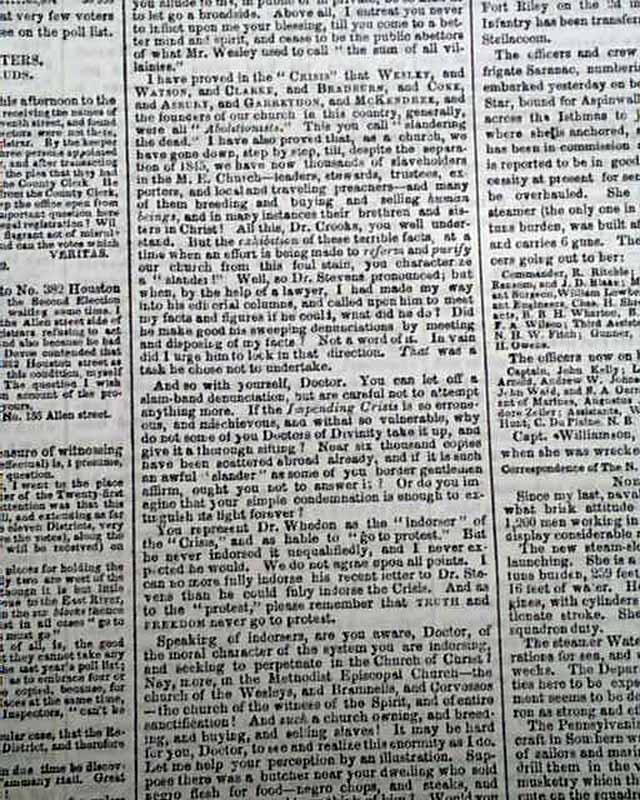
Also within: "The Methodist Episcopal Church & Slavery" and a brief item headed: "The Yacht Wanderer" noting: "...that the captain of the yacht said he is going to Africa for a cargo of slaves." This was an infamous slave ship, which transported the last documented cargo of slaves to the United States in 1860.
Eight pages, irregular at the spine due to disbinding, good condition.
background: The October 21, 1859, issue of the New York Tribune serves as a grim harbinger of the American Civil War, capturing a moment where the legal, military, and moral foundations of the United States were simultaneously fracturing. The casual mention of Colonel Robert E. Lee returning from the "valley" highlights a pivotal crossover in history: a future Confederate icon acting as the hand of the Federal government to crush an abolitionist uprising. This military action at Harper’s Ferry was mirrored by the ideological warfare seen in the "Methodist Episcopal Church" report, reflecting a religious schism over slavery that had already split the country's largest denominations. Perhaps most sinister is the mention of the Yacht Wanderer; as a vessel built for pleasure but converted for the illegal human trafficking of the Atlantic slave trade, its brazen operations—despite federal prohibition—demonstrated a total collapse of the rule of law. Together, these reports illustrate a nation no longer able to resolve its "peculiar institution" through debate, as the violence of John Brown’s raid and the lawlessness of the slave-running elite signaled that the transition from ink to blood was nearly complete.
Category: Pre-Civil War
No Longer Available