Home >
Abraham Lincoln's Gettysburg Address...
Abraham Lincoln's Gettysburg Address...
Item # 705939
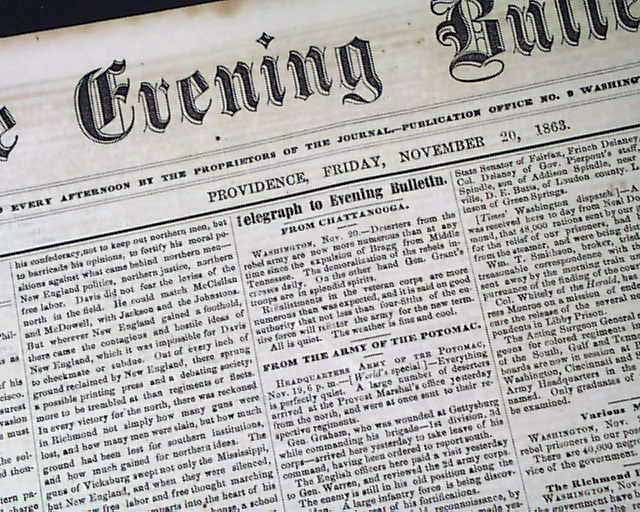
November 20, 1863
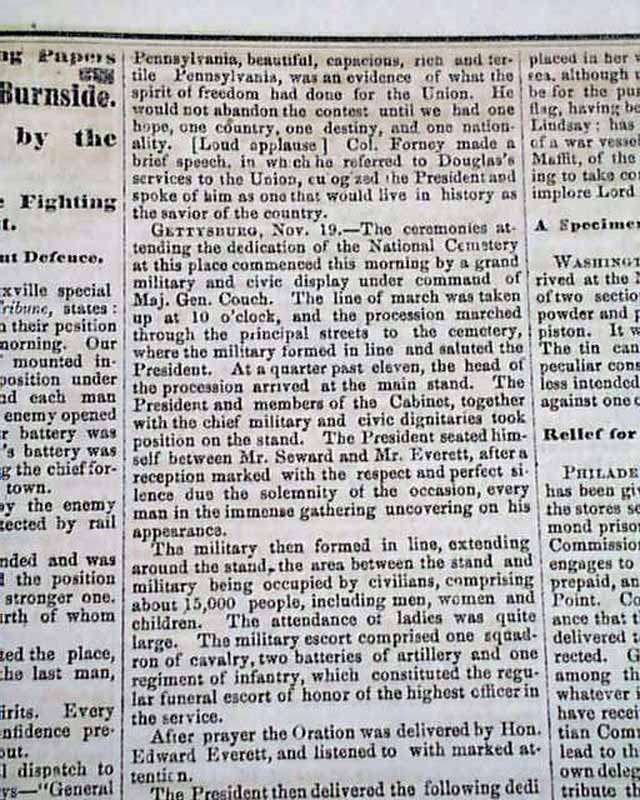
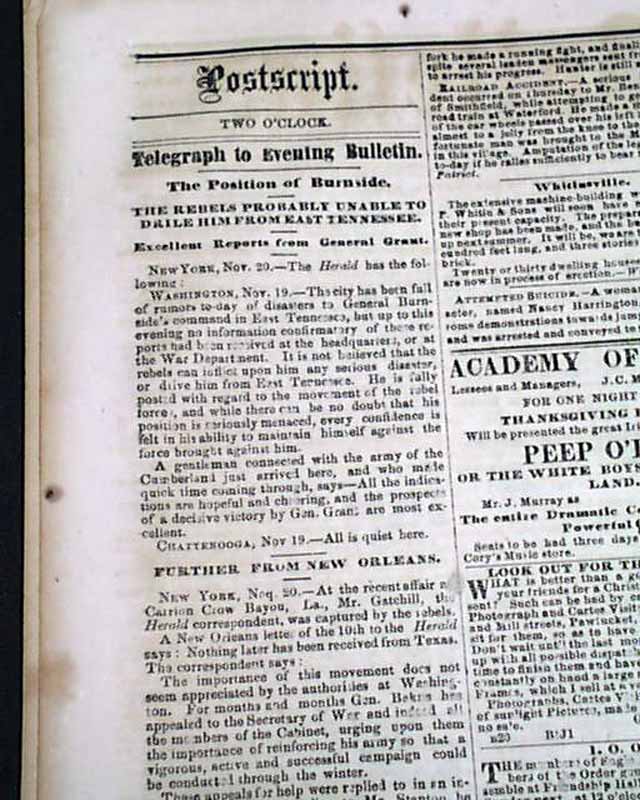
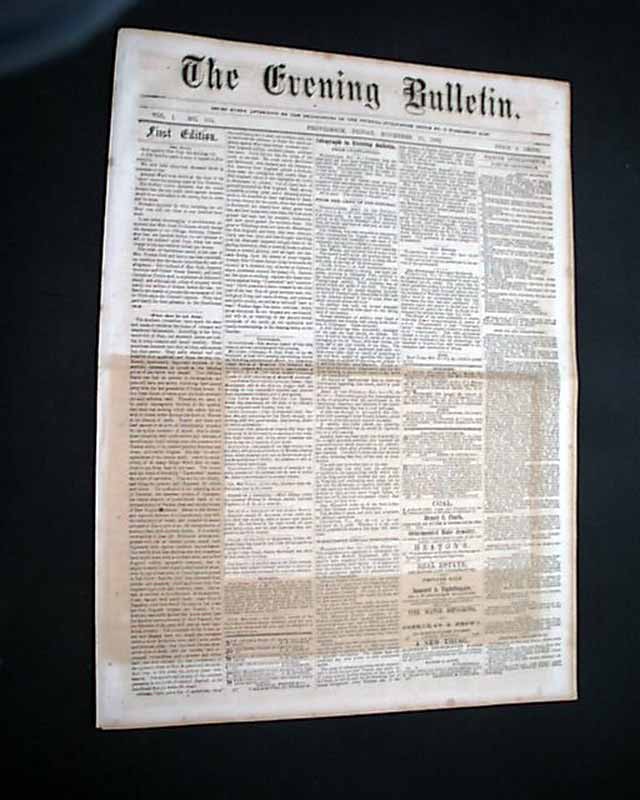
THE EVENING BULLETIN, Providence, Rhode Island, Nov. 20, 1863
* Abraham Lincoln's "Gettysburg Address"
* Historic American Civil War speech
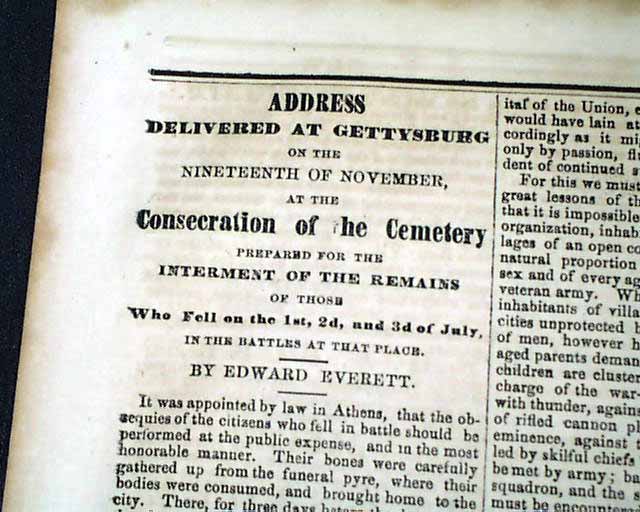
* Edward Everett's "keynote" on battlefield
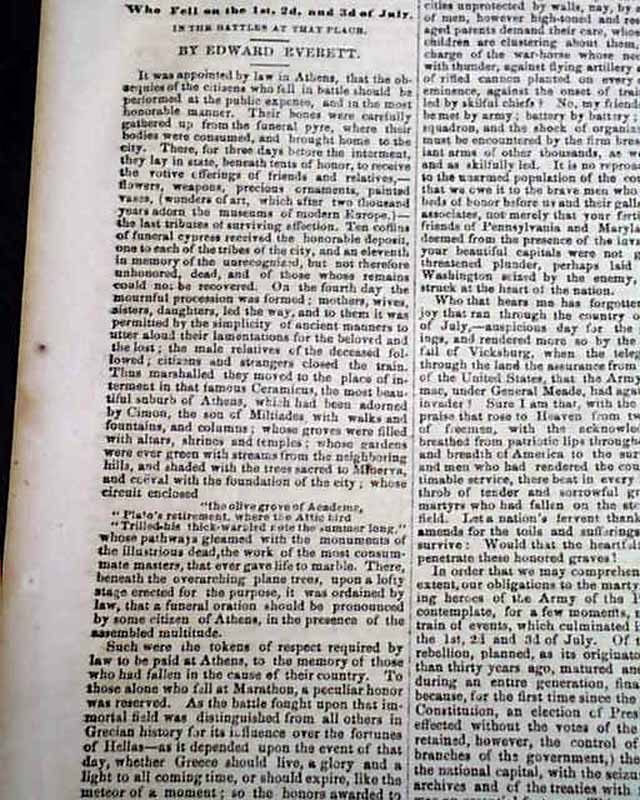
At the dedication of the cemetery at Gettysburg Edward Everett was the featured speaker, and all of pages 4, 5 & a portion of page 6 are taken up with his very lengthy speech.
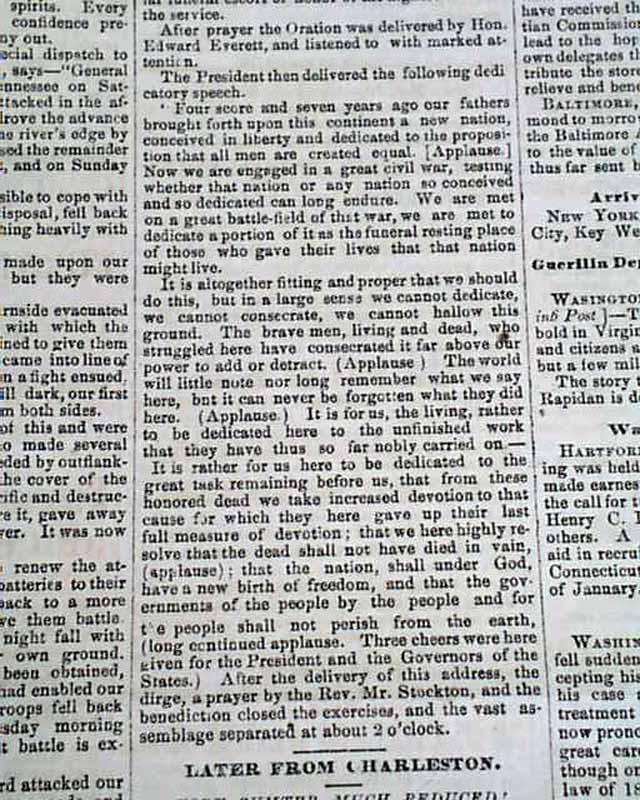
Lincoln's talk was not the focus of the ceremony, but history would prove his speech would be perhaps the most famous by any President of the United States. Indeed, some newspapers of the day did not even print Lincoln's Gettysburg Address.
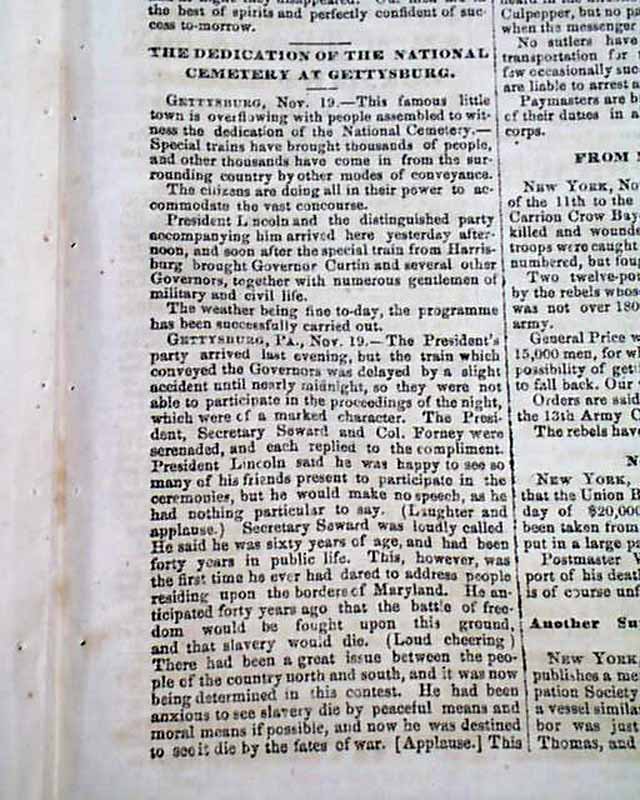
But this newspaper did, on page 7 under the heading: "The Dedication Of The National Cemetery at Gettysburg" which includes the ceremonial details, then comes: "...The President then delivered the following dedicatory speech. 'Four score and seven years ago our fathers brought forth..." with the balance of Lincoln's famous address. Then some concluding comments by the writer: "...long continued applause. Three cheers were here given for the President & the Governors of the states. After the delivery of this address, the dirge, a prayer by the Rev. Mr. Stockton, and the benediction closed the exercises, and the vast assemblage separated at about 2 o'clock."
Eight pages, of smaller folio size, foxing to portions of the front page, very nice condition.
background: On November 20, 1863, The Evening Bulletin inadvertently documented one of history’s greatest pivots in public memory, relegating Abraham Lincoln’s Gettysburg Address to page 7 while dedicating three full pages to the classical, two-hour oration of Edward Everett. This editorial choice reflected the 19th-century standard of "oratory as entertainment," where Everett’s exhaustive retelling of the battle was the expected centerpiece and Lincoln’s 272-word "dedicatory remarks" were viewed as a brief ceremonial formality. However, the Bulletin's inclusion of the "long continued applause" and the cheers for the President serves as a vital historical correction to the myth that the speech was met with a cold or confused silence. While the newspaper's layout prioritized the quantity of Everett's prose, its transcript captured the precise moment the American narrative shifted from a factual account of war to a spiritual definition of democracy, tucked quietly between the ceremonial dirge and the benediction.
Category: Yankee
Available Now
$2,695.00