Home > Back to Search Results >
On Lincoln's seminal speech which lead to the famous Lincoln-Douglas debates...
On Lincoln's seminal speech which lead to the famous Lincoln-Douglas debates...
Item # 705620
July 06, 1857
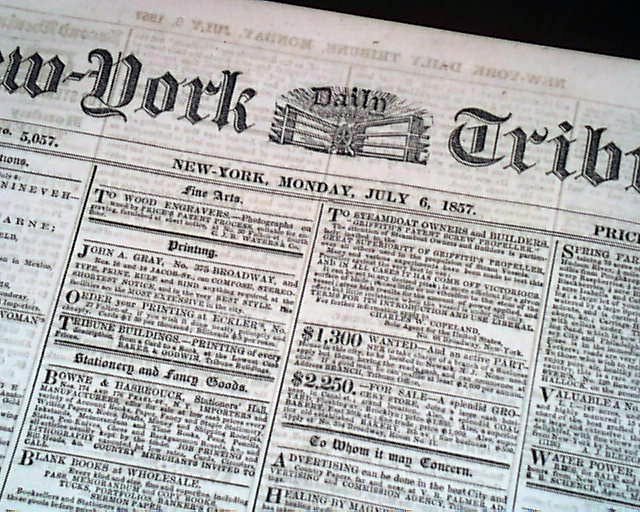
NEW YORK TRIBUNE, July 6, 1857
* Abraham Lincoln speech
* Springfield, Illinois
* Lincoln-Douglas debates prelude
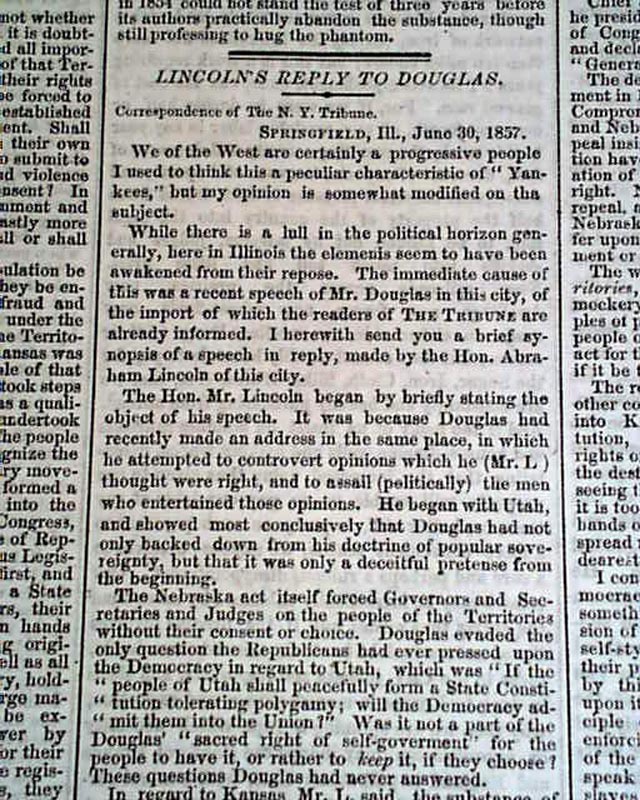
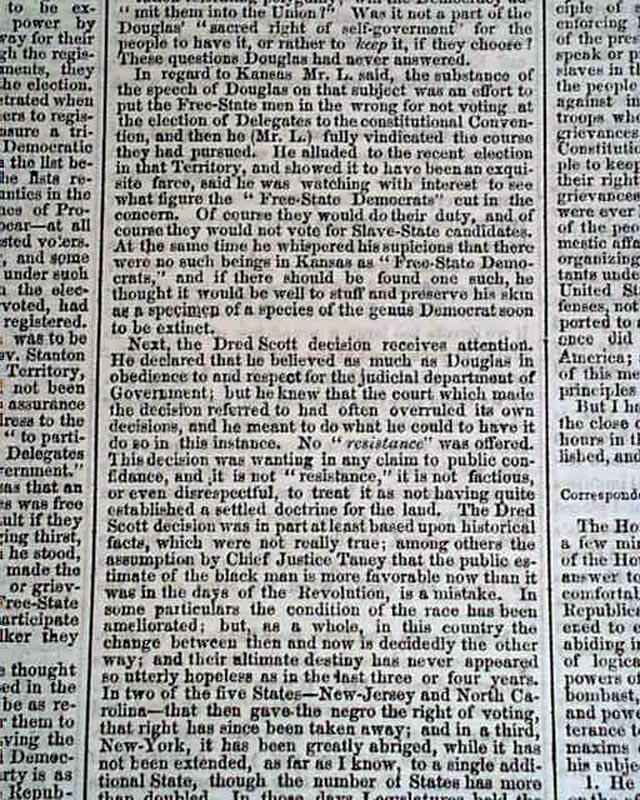
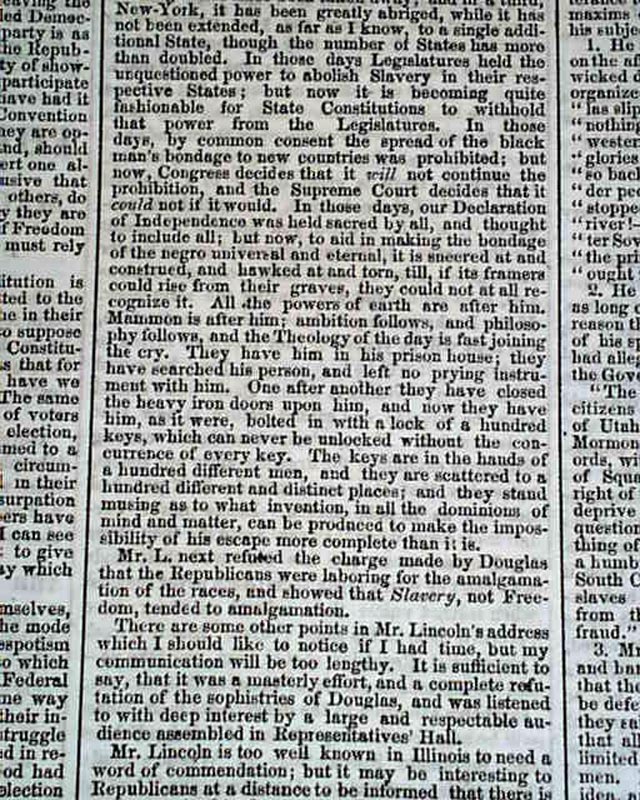
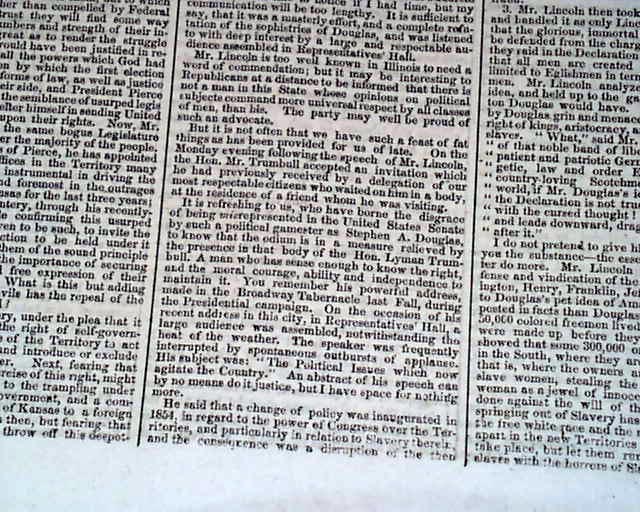
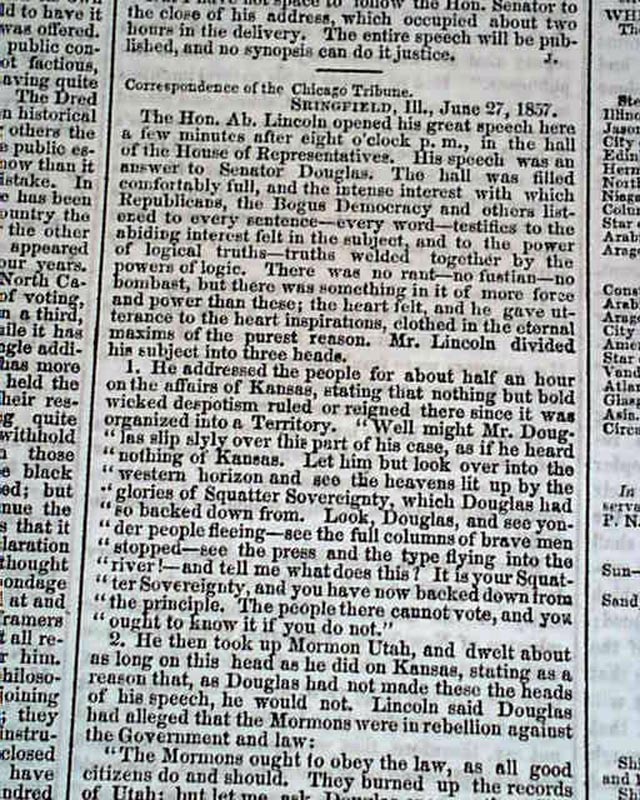
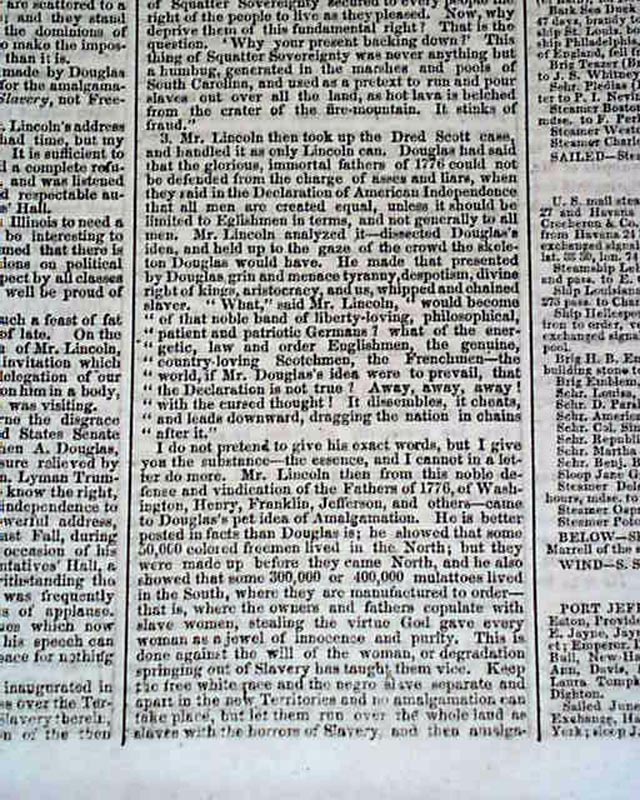
Page 3 has nearly 2 columns taken up with a seminal report on Lincoln's political career. Lincoln had been in the audience when Stephen Douglas made his June 12 speech defending the Dred Scott Decision of 3 months prior. Lincoln gave a speech on June 26 in which he eloquently replied to Douglas, criticizing the Red Scot Decision, and also countering Douglas' thoughts on Kansas and the Mormon War in Utah.
Page 3 has over a column headed: "Lincoln's Reply to Douglas" with the author reporting on Lincoln's speech. This is followed by a report datelined: "Springfield, Ill., June 27, 1857" which begins: "The Hon. Ab. Lincoln opened his great speech here...in the hall of the House of Representatives. His speech was an answer to Senator Douglas...There was no rant--no fustian--no bombast, but there was something in it of more force & power than these; the heart Feld, and he gave utterance to the heart inspirations...Mr. Lincoln divided his subject Ito three heads..." and the balance of this half column article reports on Lincoln's speech.
It is generally believed that Lincoln's speech on June 26 propelled him toward his famous run for the Senate against Stephen Douglass the following year and gave rise to the famous Lincoln-Douglas debates.
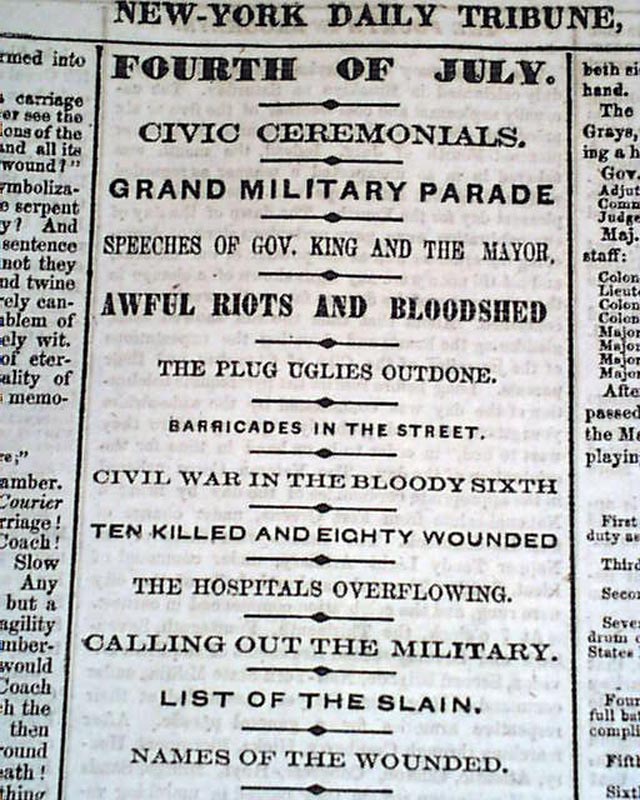
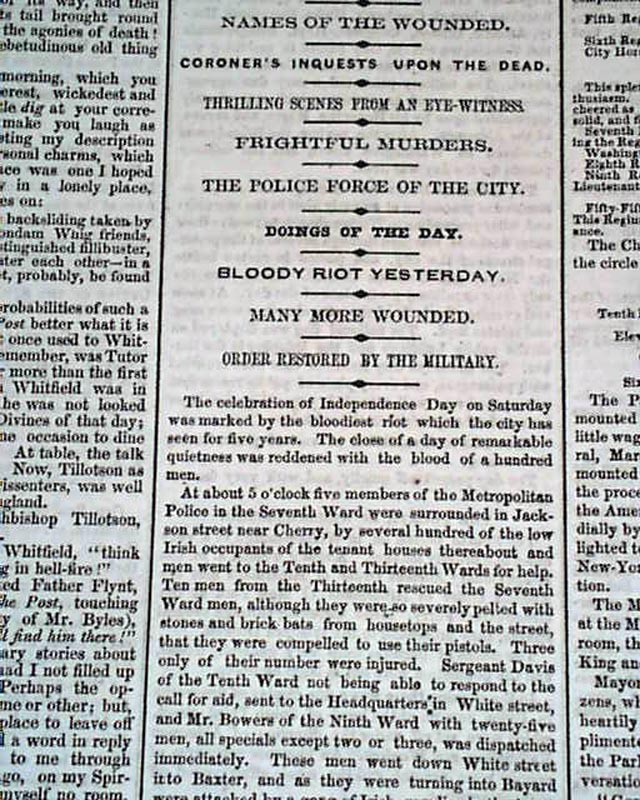
Page 6 has reporting on the gangs of New York and the Dead Rabbits Riot of 1857.
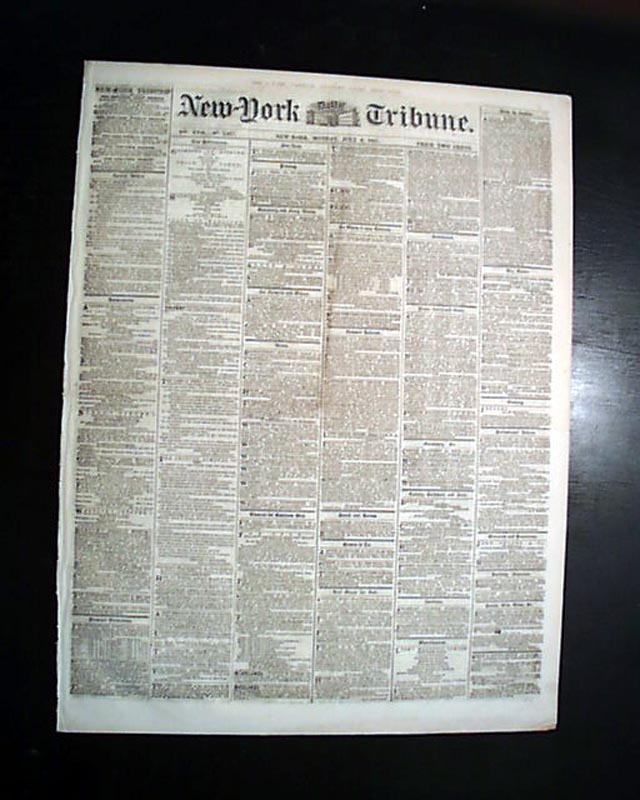
Complete with 8 pages, nice condition.
AI notes: Abraham Lincoln’s June 26, 1857 speech in Springfield, Illinois, delivered in response to the recent Dred Scott Supreme Court decision, stands as a seminal articulation of his moral and political philosophy regarding slavery and equality. In this address, Lincoln criticized the Court’s ruling that African Americans could not be citizens and that Congress lacked authority to restrict slavery in the territories, arguing that such reasoning distorted the principles of the Declaration of Independence, which he interpreted as asserting the universal ideal that “all men are created equal” as a guiding standard rather than a historical fact. Lincoln emphasized that the Declaration set a moral benchmark for society, and he contended that the Dred Scott decision ignored both history and justice by undermining this principle. While showing respect for judicial authority, he stressed that the decision was not “fully settled” and therefore should not dictate the moral or political course of the nation. He also challenged Stephen Douglas’s endorsement of popular sovereignty as insufficient to reconcile slavery with the Constitution’s higher ideals. By framing the debate in terms of enduring principles rather than mere legal technicalities, Lincoln’s speech not only countered pro-slavery arguments but also laid the intellectual groundwork for his later “House Divided” speech of 1858, establishing him as a leading voice in the Republican Party and a national figure in the struggle over slavery’s expansion.
Category: Pre-Civil War
Available Now
$445.00