Home >
Death of Chairman Mao in a Beijing, China, newspaper...
Death of Chairman Mao in a Beijing, China, newspaper...
Item # 705351
September 10, 1976
PEOPLE'S DAILY, Peking (Beijing), China, Sept., 10, 1976
* People's Republic of China founder
* Mao Zedong death (1st report)
* Best publication to be had ? (rare)
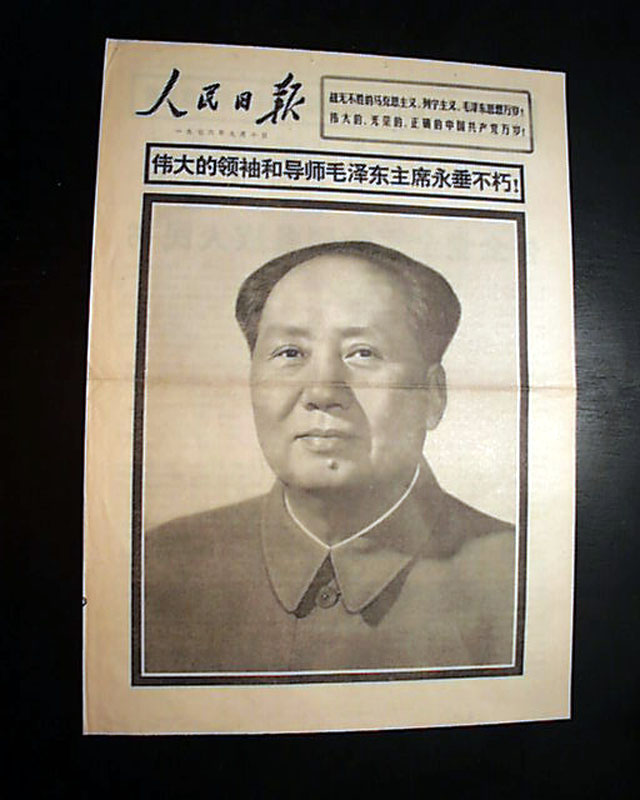
This is likely the most notable issue reporting the death of Chairman Mao Tse Tung (Zedong) of the People's Republic of China who died Sept. 9.
The full front page is taken up with his black-bordered photo headed (in translation): "Eternal Glory To The Great Leader And Great Teacher Chairman Mao Testung!" Within the box at the upper right of the front page is: "Long live invincible Marxism-Leninism--Mao Tsetung Thought!" and: "Long live the great, glorious and correct Communist Part of China!"
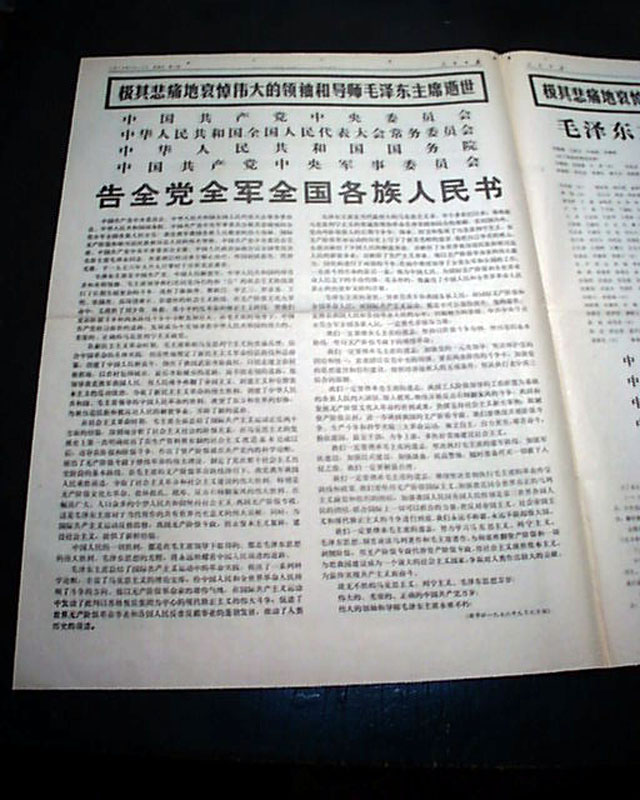
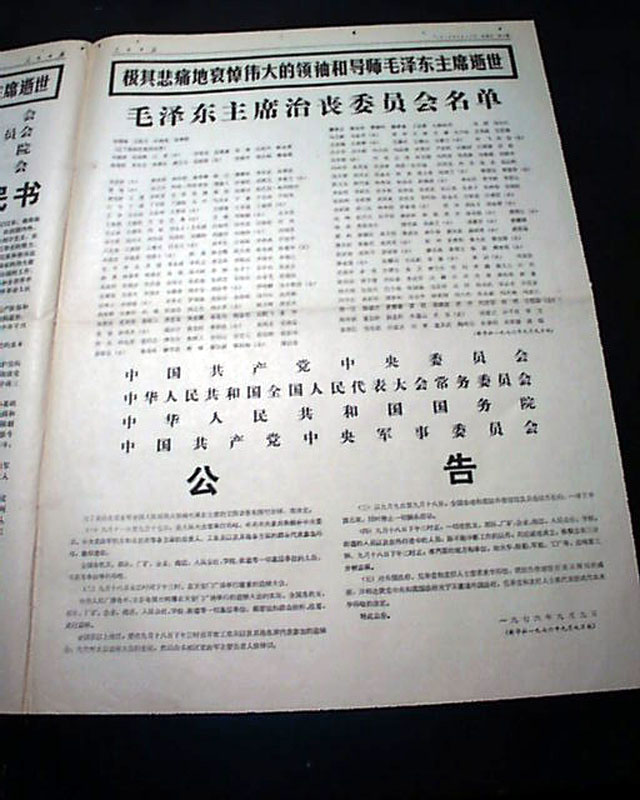
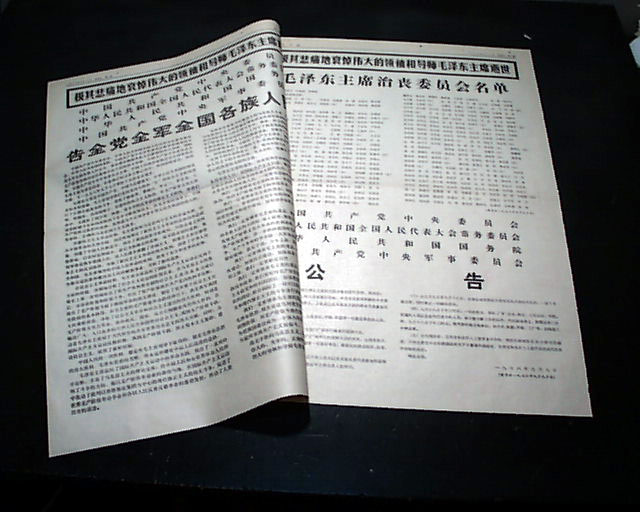
All of page 2 is devoted to the complete text of the death announcement, the black-bordered head at the top: "Mourning with deepest grief the passing away of the Great Leader and Great Teacher, Chairman Mao Tsetung."
Collectors prize notable events reported in newspaper at or close to where the event happened. Mao died in Beijing.
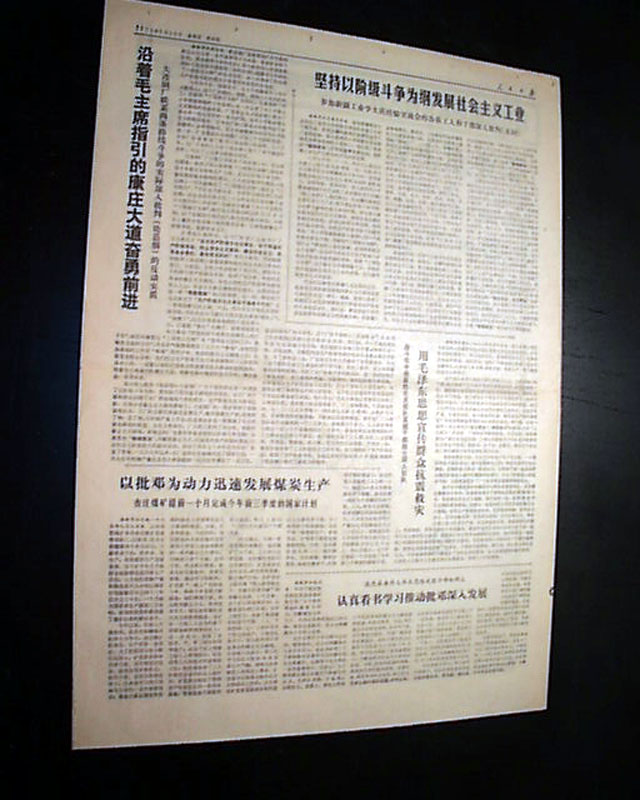
We believe this issue to be complete in 4 pages, however another source mentions a 6 page edition, which we think may have been issued later in the day, but we cannot verify.
Very nice condition.
background: The People’s Daily issue of September 10, 1976, published the day after Mao Zedong’s death, marked one of the most politically significant moments in modern Chinese history. As the official mouthpiece of the Chinese Communist Party, the newspaper served not only to announce Mao’s passing but also to initiate a period of national mourning and reinforce political unity. The front page likely featured a bold headline announcing the Chairman's death, accompanied by a portrait of Mao and a solemn editorial urging the people to uphold his revolutionary legacy. The editorial tone would have emphasized unwavering loyalty to the Party, called for continued adherence to Mao Zedong Thought, and likely foreshadowed the coming political transition amid uncertainty. Behind the scenes, key figures such as members of the Gang of Four were already maneuvering for control, making this issue a critical piece of propaganda aimed at stabilizing public sentiment and ensuring that Mao’s ideological line appeared unbroken.
Category: The 20th Century
Available Now
$58.00