Home > Back to Search Results >
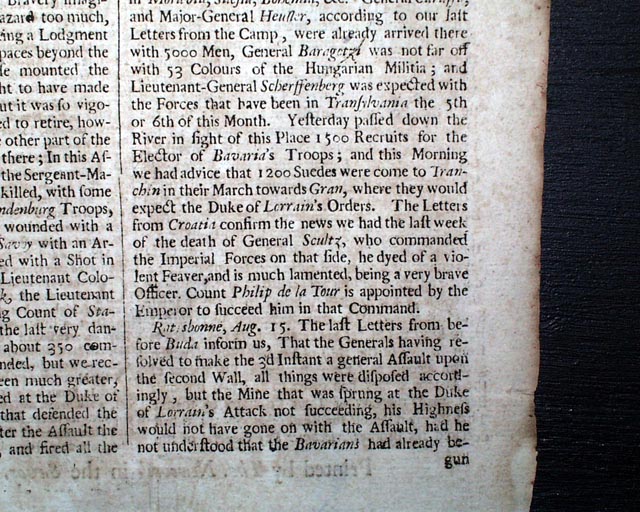
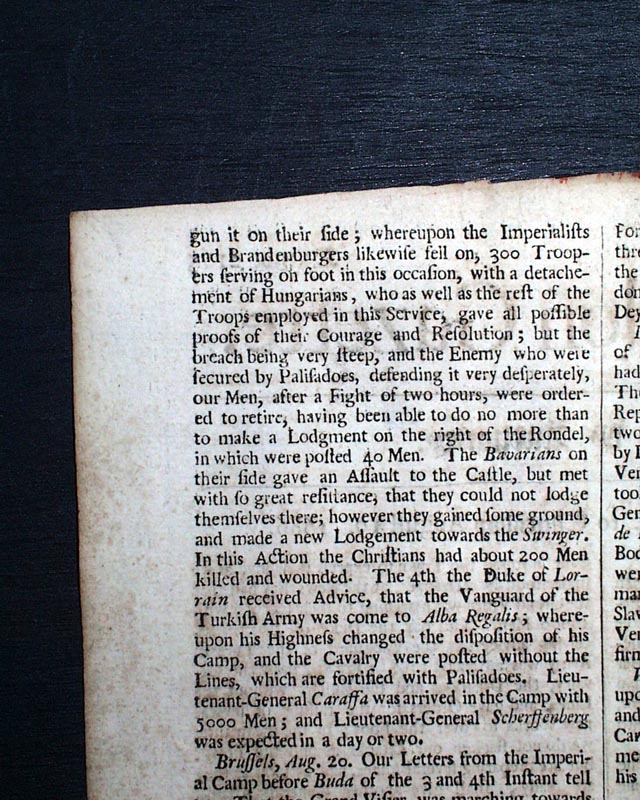
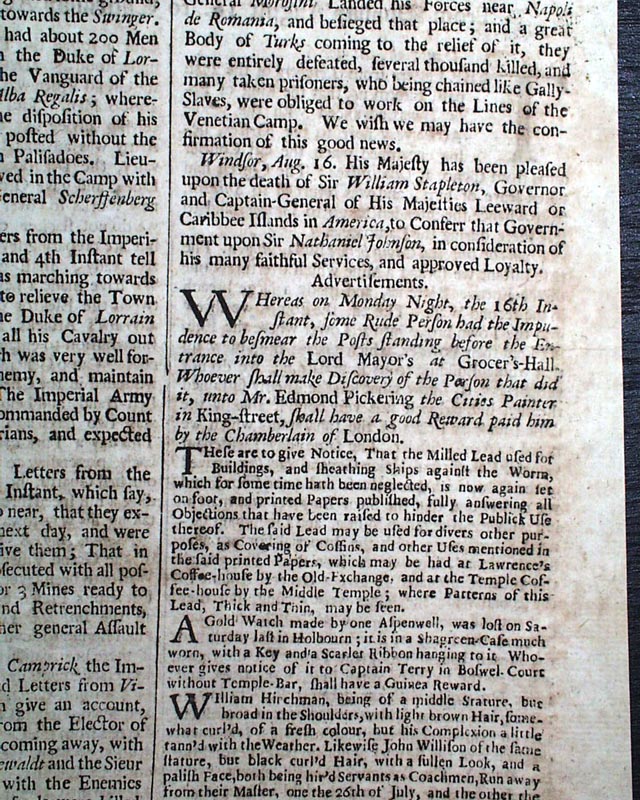
Battle of Buda... King James II appoints a new Caribbean governor...

Battle of Buda... King James II appoints a new Caribbean governor...
Item # 705228
August 19, 1686
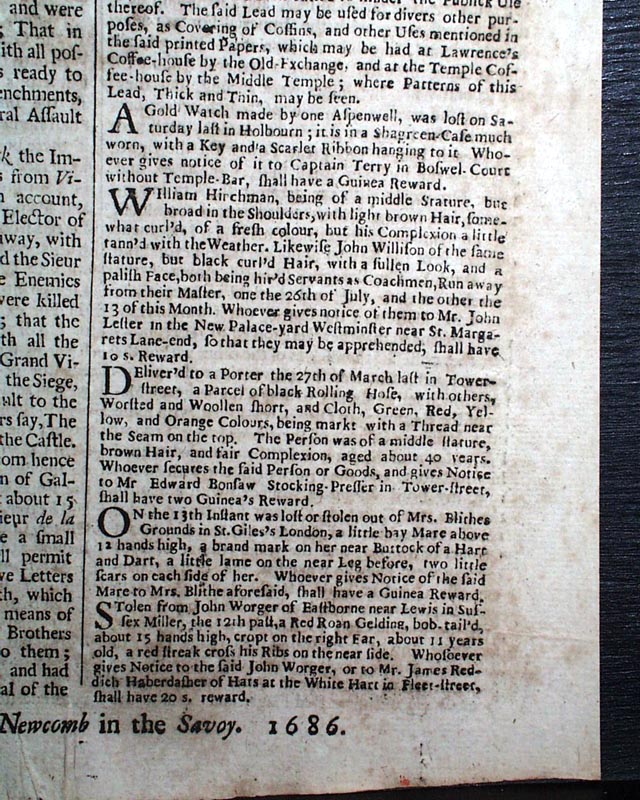
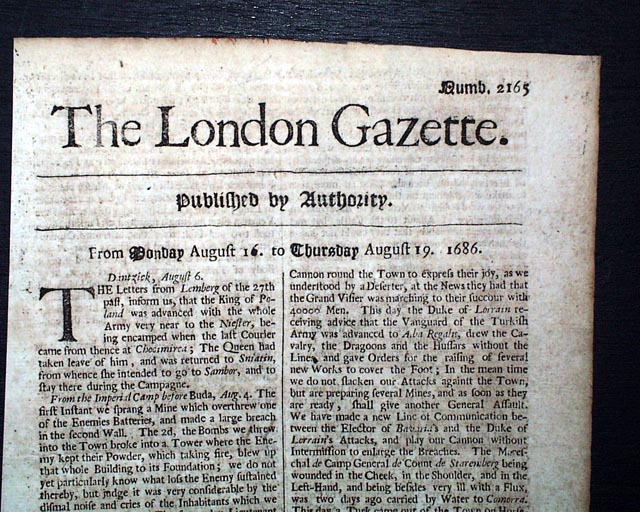
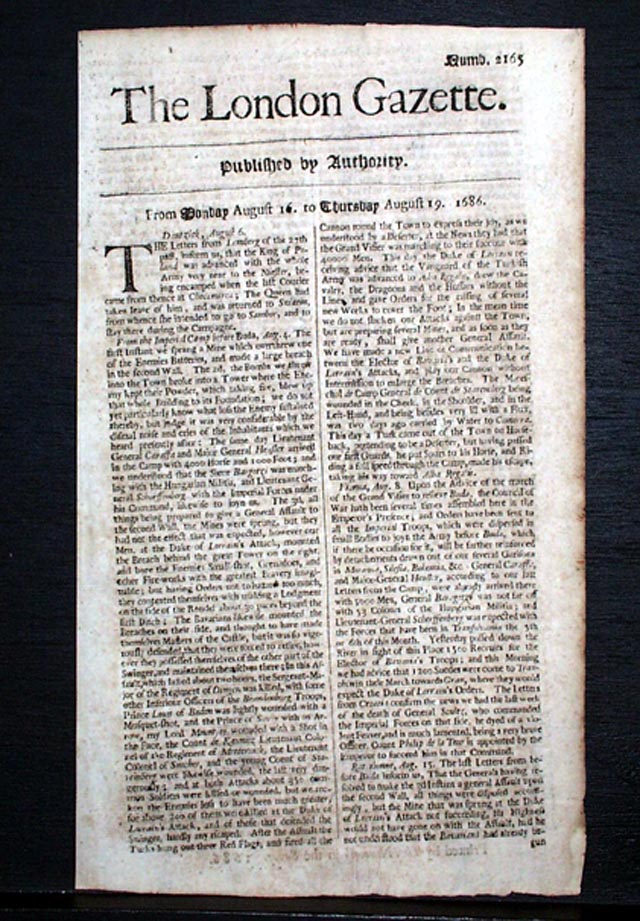
THE LONDON GAZETTE, England, Aug. 19, 1686
* The Battle of Buda (modern day Budapest)
The front page has a report from Vienna noting: "Upon the advice of the march of the Grand Viper to relieve Buda, the council of war hath been several times assembled here in the Emperor's presence; and orders have been sent to all the Imperial troops, which were dispersed in small bodies to join the army before Buda..." with more, continuing to take about half a column. The report is in regards to the Siege of Buda.
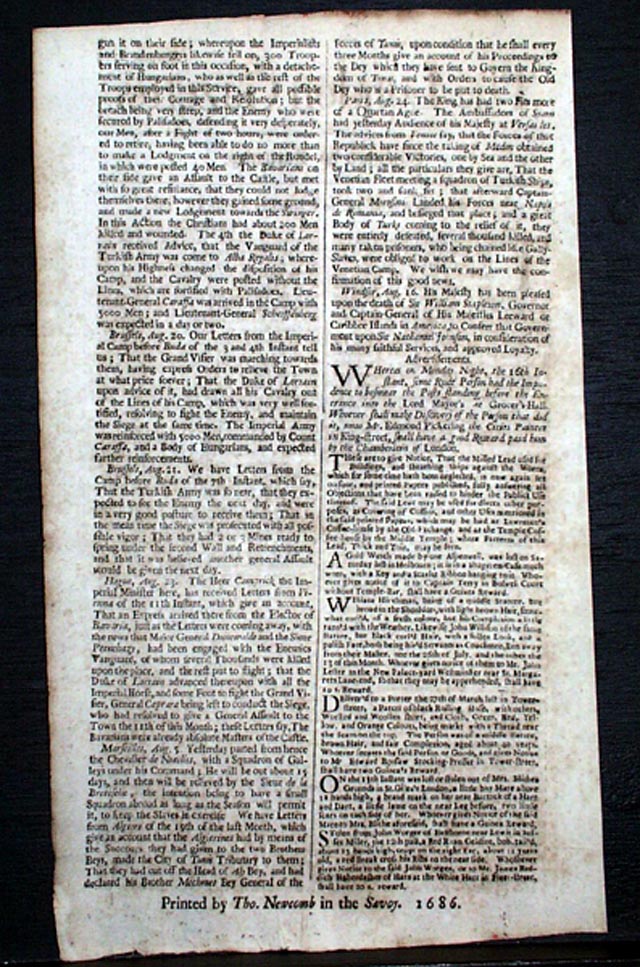
The back page has a report from Windsor: "His Majesty has been pleased upon the death of Sir William Stapleton, Governor and Captain-General of his Majesties Leeward or Caribbee [Caribbean] Islands in America, to confer that government upon Sir Nathaniel Johnson in consideration of his many faithful services and approved loyalty."
A single sheet issue, 6 1/2 by 11 inches, nice condition.
AI notes: The Battle of Buda in 1686 was the climactic siege during the Great Turkish War in which a massive Holy League army, led by Charles V, Duke of Lorraine, recaptured Buda from the Ottomans after 145 years of Turkish rule. Comprising Habsburg, Bavarian, Saxon, and Polish forces, the coalition laid siege to the city in the summer, employing heavy artillery to batter the formidable Ottoman defenses and engaging in intense, close-quarters combat in the streets. After weeks of relentless fighting, the city fell on September 2, 1686, marking a decisive turning point in the Habsburg-Ottoman struggle and enabling the Habsburgs to consolidate control over Hungary. The siege was notoriously bloody: much of the Ottoman garrison was killed, civilians suffered greatly, and the city was partially destroyed, reflecting the brutal nature of 17th-century siege warfare. Buda’s fall signaled the decline of Ottoman influence in Central Europe and the rise of coordinated European military efforts against Ottoman expansion.
Category: The 1600's and 1700's
Available Now
$98.00