Home > Back to Search Results >
Over half of Thomas Paine's "American Crisis" Essay #2...
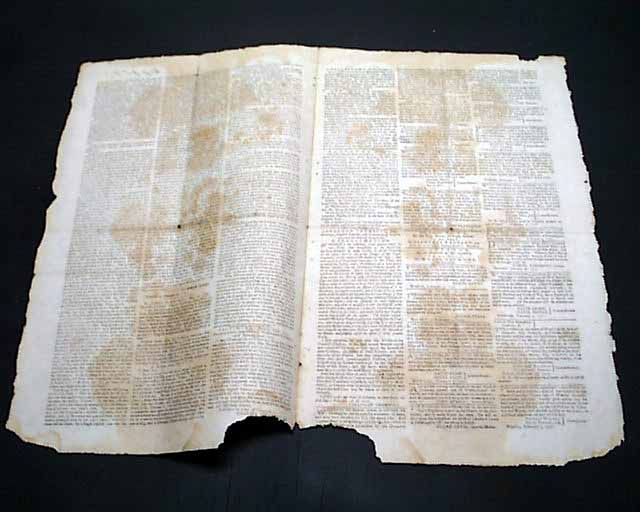
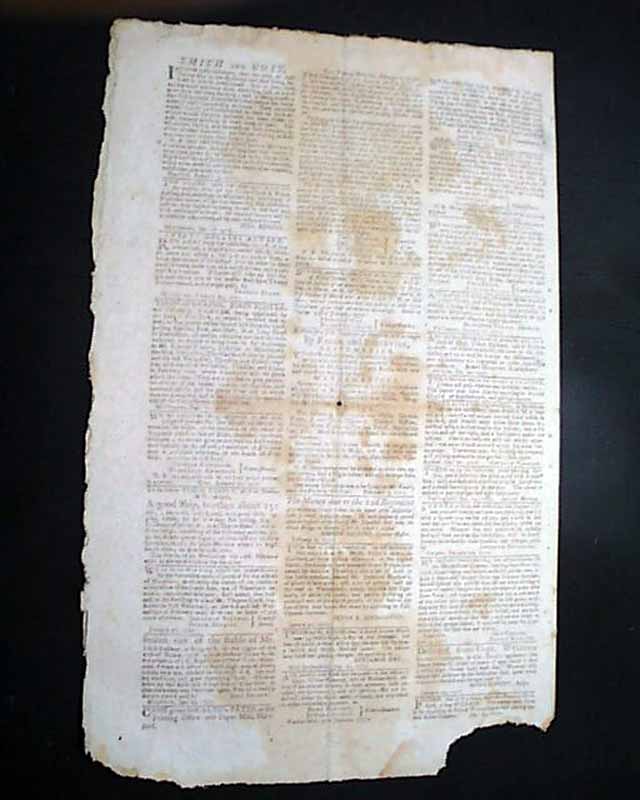
Over half of Thomas Paine's "American Crisis" Essay #2...
Item # 703307
February 10, 1777
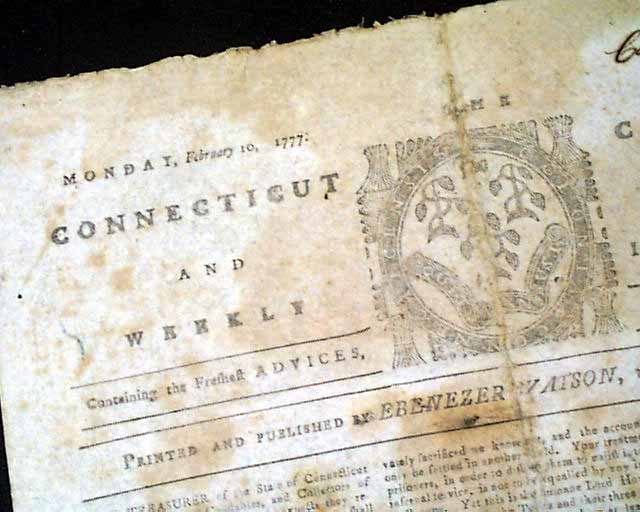
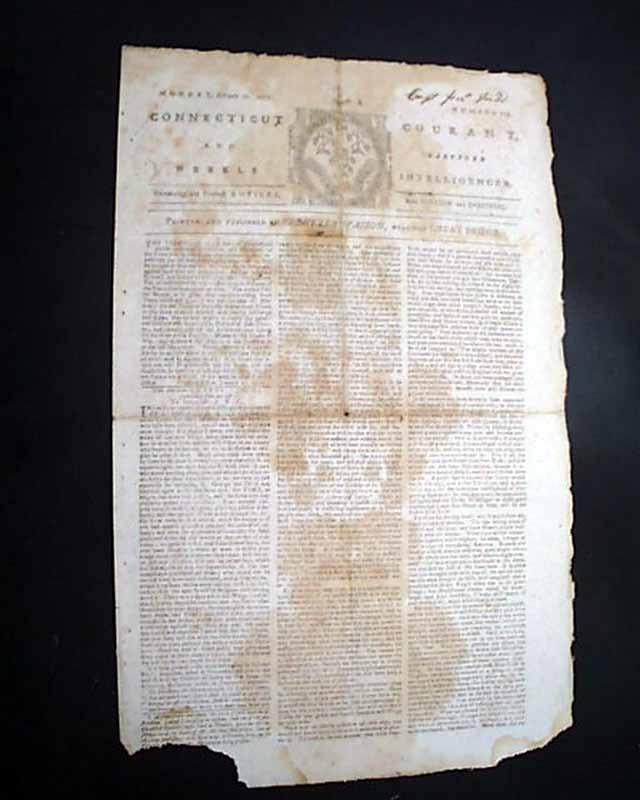
THE CONNECTICUT COURANT & WEEKLY INTELLIGENCER, Hartford, Feb. 10, 1777
* Thomas Paine's "American Crisis"
* Essay # 2 re. Revolutionary War
* Intended to bolster American morale
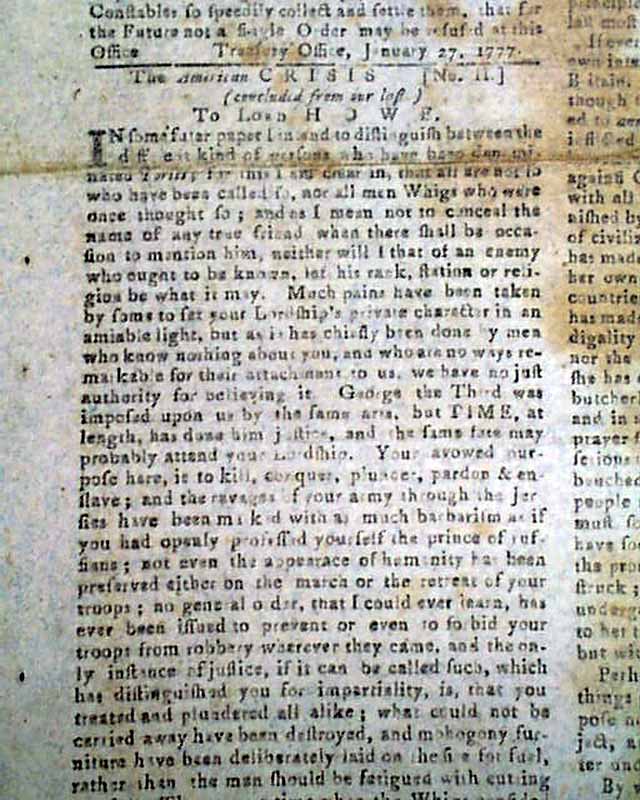
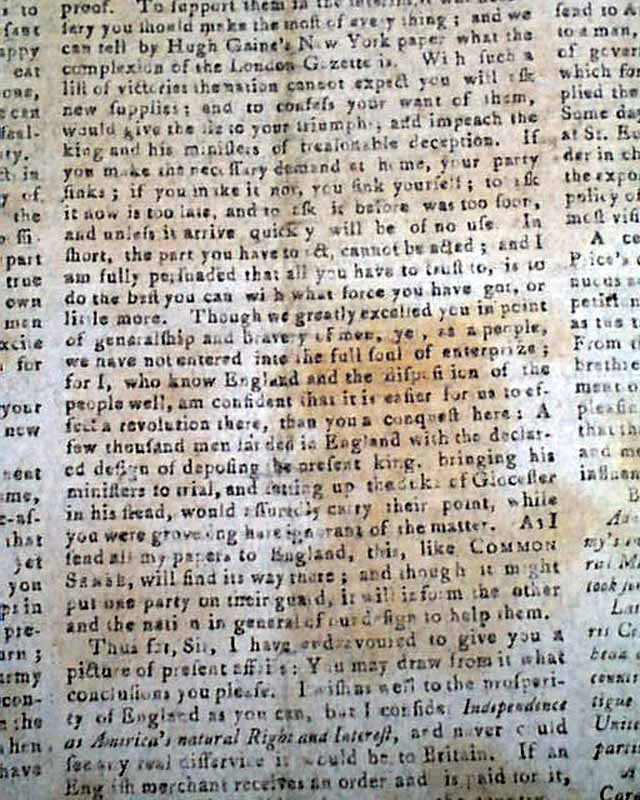
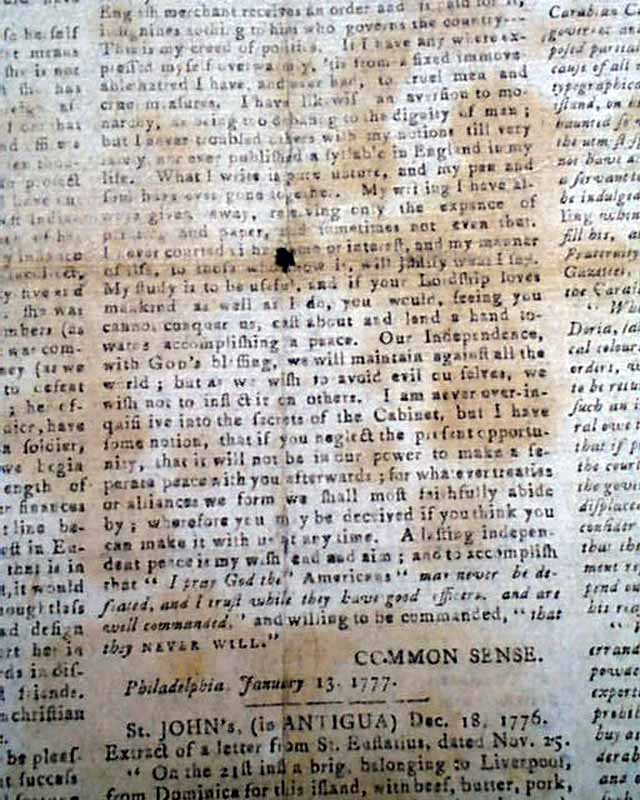
Almost the entire front page is taken up with the continuation of Thomas Paine's essay #2 of his famous "American Crisis" series, a collection of 13 essays written by Paine during the American Revolutionary War.
In 1776 Paine wrote Common Sense, an extremely popular and successful pamphlet arguing for Independence from England. The essays collected here constitute Paine's ongoing support for an independent and self-governing America through the many severe crises of the Revolutionary War.
General Washington found the first essay so inspiring, that he ordered that it be read to the troops at Valley Forge.
This is about 60% of this essay, the earlier portion having appeared in an earlier issue of this title. It continues to take over half of page 2 where it is signed in type "Common Sense" and dated at Philadelphia, January 13, 1777. Included with this issue is a printing of the entire text of Essay #2 which includes that portion lacking in this newspaper.
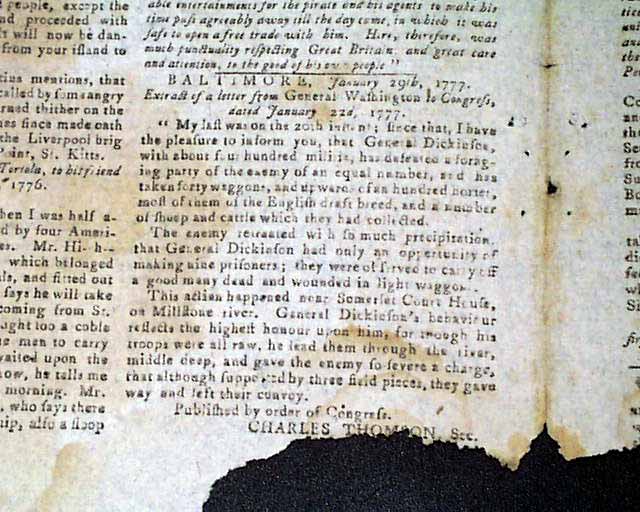
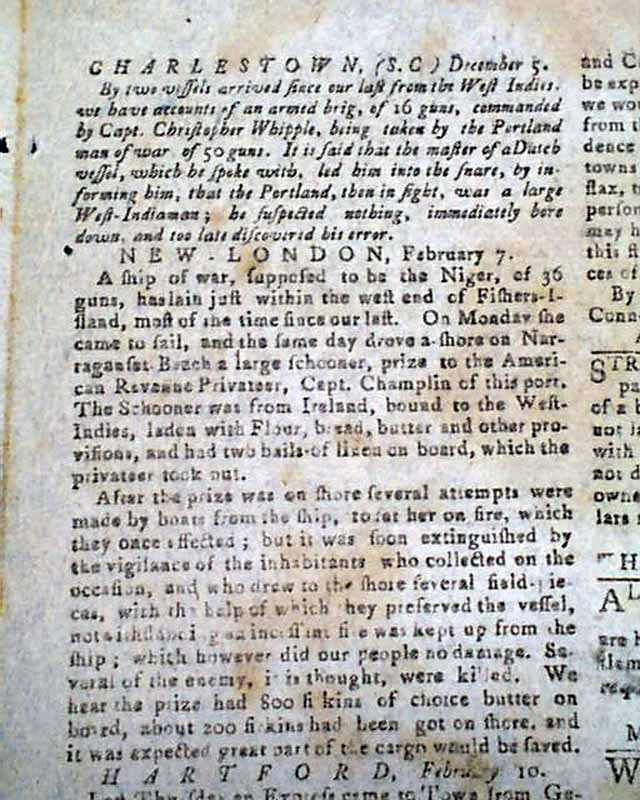
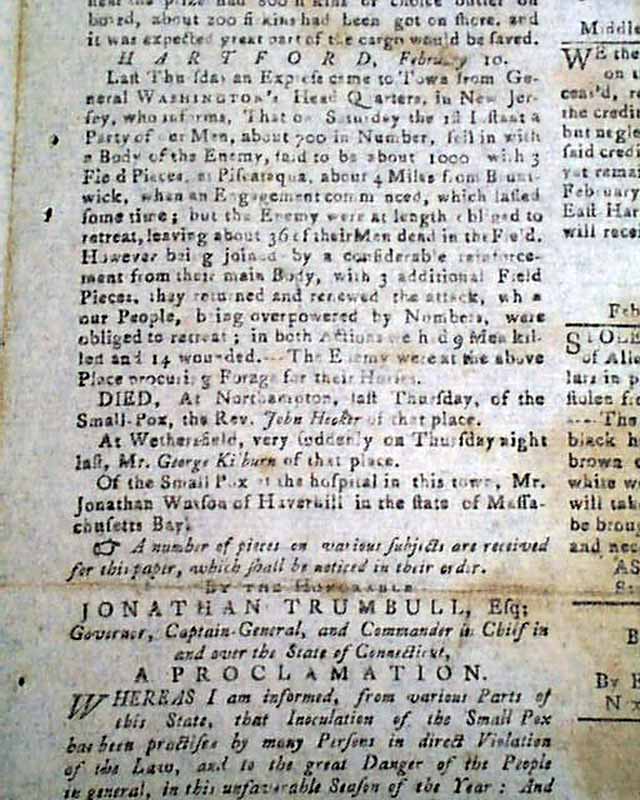
As if this content was not sufficient, pages 2 and 3 have war-related content as well including a report from George Washington.
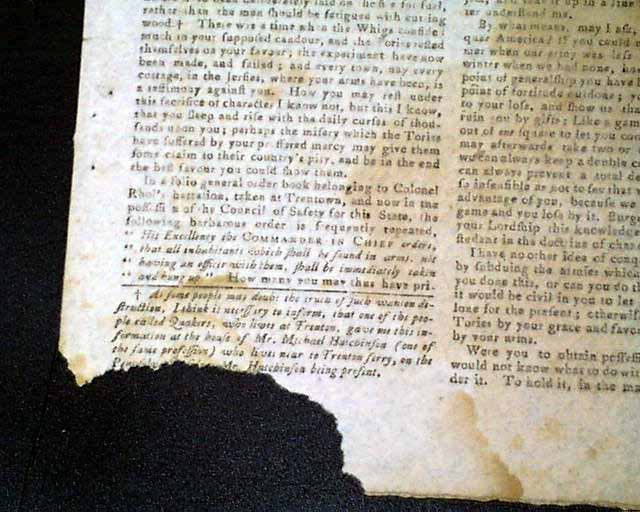
Four pages, never bound nor trimmed with wide margins, a piece from the bottom left does affect some letters but not causing loss of readability, scattered foxing, rubbing at folds cause a tiny hole at the fold juncture.
AI notes: Thomas Paine’s “The American Crisis, No. 2”, published in late December 1776, was written to bolster American morale during one of the darkest moments of the Revolutionary War, following a series of defeats and amid widespread fear and uncertainty. In this essay, Paine emphasizes the necessity of perseverance and courage, warning against despair and urging Americans to remain steadfast in their fight for liberty. He criticizes those who advocate surrender or compromise, portraying them as morally weak and detrimental to the cause of freedom, and frames the Revolution not only as a political struggle but as a moral imperative to resist tyranny. Paine underscores the importance of unity among the colonies, encouraging citizens to support the Continental Army and each other, and reassures them that their sacrifices, though difficult, are justified by the ultimate reward of independence. With stirring rhetoric, he calls on readers to maintain hope and faith, reminding them that true freedom requires enduring hardship and confronting fear, portraying the revolutionary effort as both necessary and righteous.
Category: Revolutionary War
Available Now
$1,485.00