Home > Back to Search Results >
Two more victories over the Creek Indians...
Two more victories over the Creek Indians...
Item # 703070
February 22, 1814
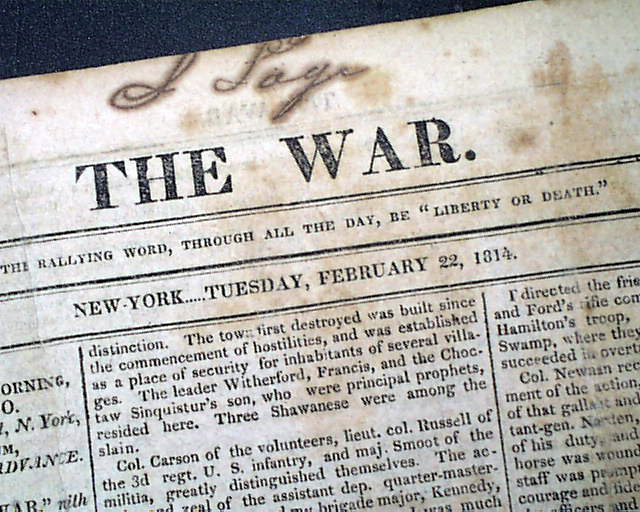
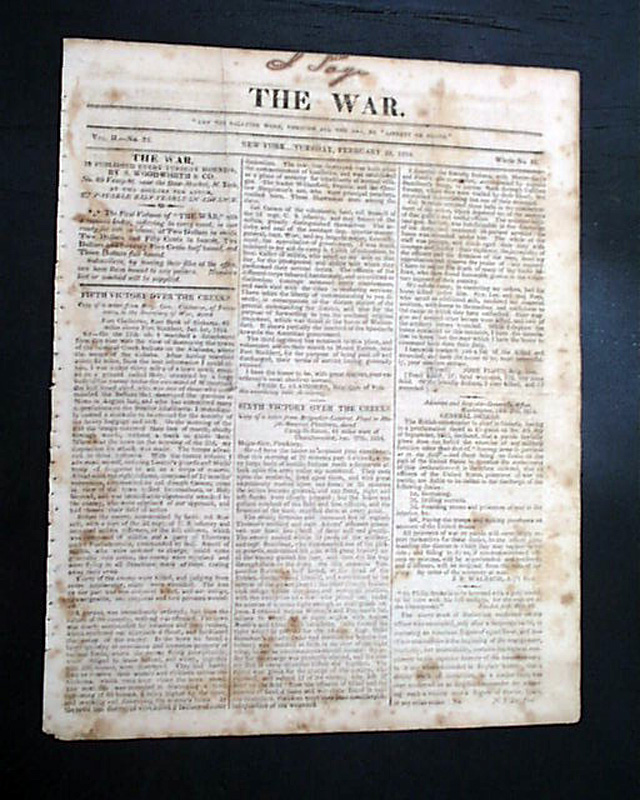
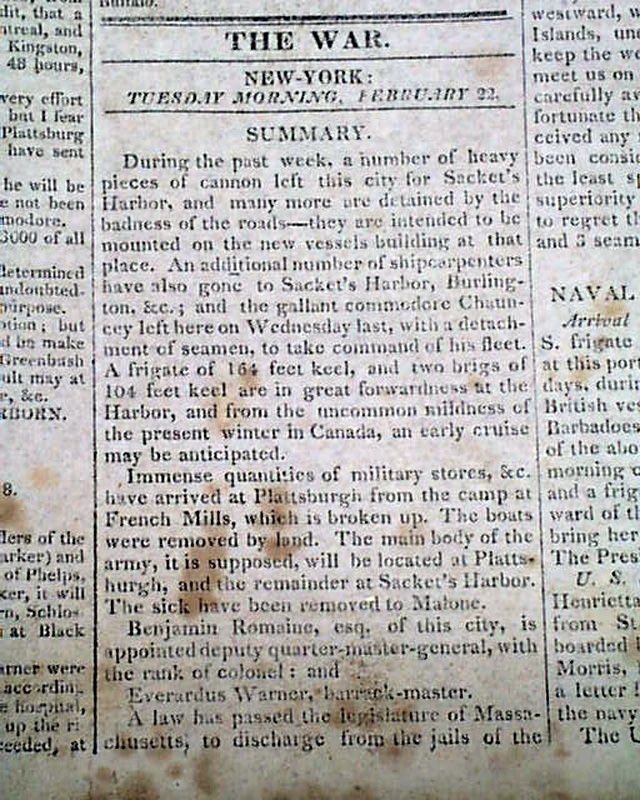
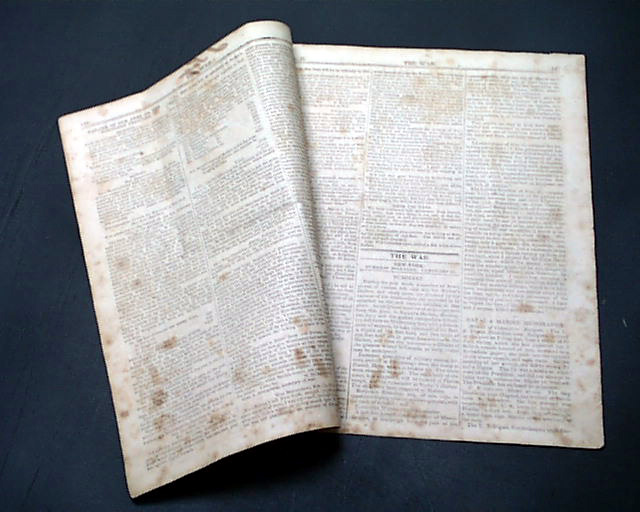
THE WAR, New York, Feb. 22, 1814
* Battles of Emuckfaw & Enotachopo Creek
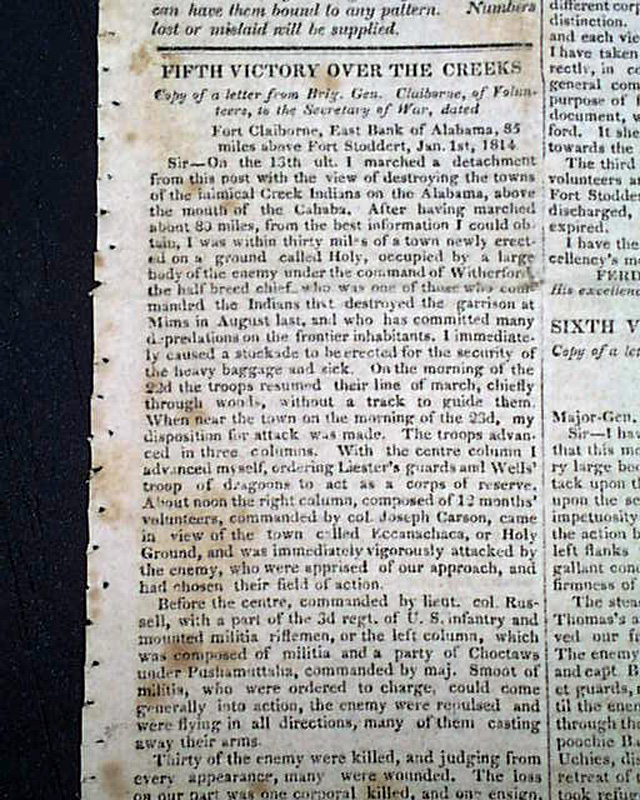
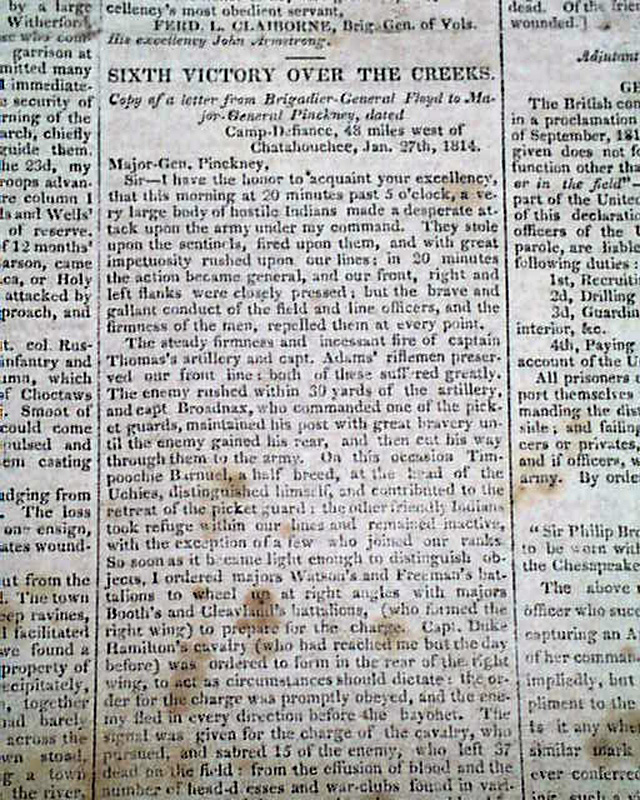
Most of the front page is taken up with: "Fifth Victory Over the Creeks" as well as: "Sixth Victory Over the Creeks".
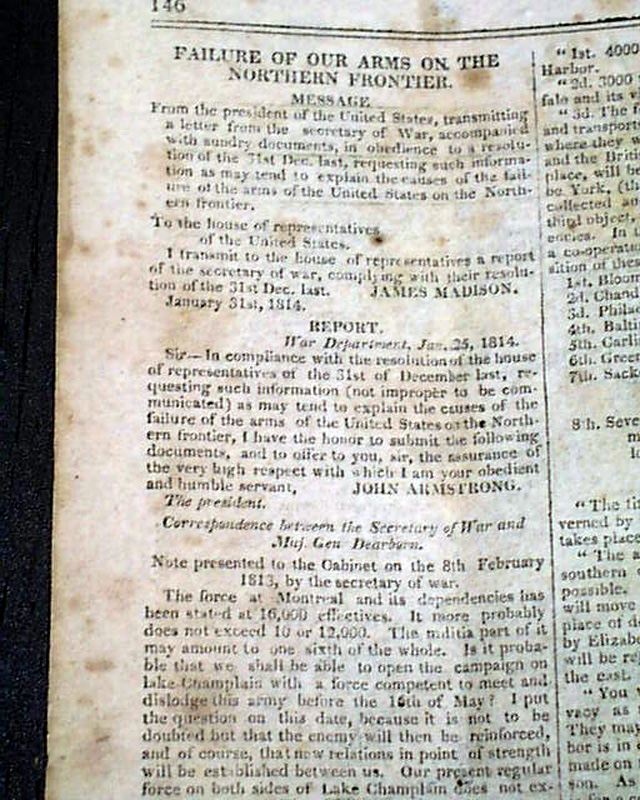
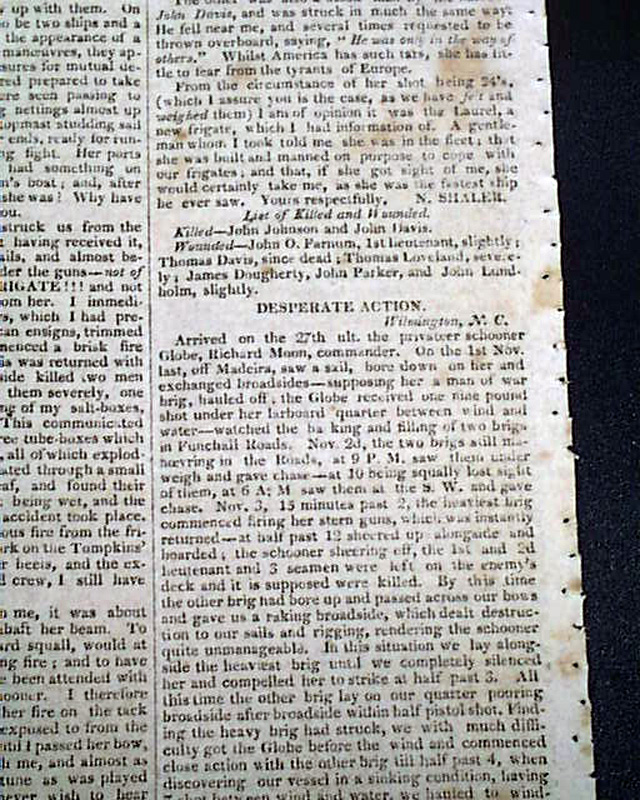
Notable content inside includes: "Failure of Our Arms on the Northern Frontier" which is prefaced with a "Message" signed in type: James Madison and which includes documents signed by H. Dearborn and John Armstrong. Also within: "Fortunate Escape" "Desperate Action" which is a report of a naval encounter datelined Wilmington, North Carolina
Four pages, 9 by 11 1/4 inches, tiny binding holes at the blank spine, good condition.
background: This issue of The War captures the United States at a precarious crossroads in 1814, balancing the rising military prestige of Andrew Jackson in the South against the systemic collapse of the Canadian invasion in the North. The front-page "Fifth" and "Sixth" victories over the Creeks detail the brutal January 1814 battles of Emuckfaw and Enotachopo Creek, where Jackson’s Tennessee militia and 39th U.S. Infantry fought off Red Stick ambushes during their "mud and hunger" march—victories that were strategically shaky but politically vital for a war-weary public. In stark contrast, the internal "Failure of Our Arms" segment serves as an official post-mortem on the disastrous St. Lawrence campaign of late 1813; by printing James Madison’s message alongside the defensive correspondence of General Henry Dearborn and Secretary John Armstrong, the paper documents the administration’s attempt to manage a massive political scandal following the defeat at Crysler’s Farm and the loss of Fort Niagara. Meanwhile, the Wilmington-datelined "Desperate Action" provides a visceral look at the "war of the coasts," likely recounting a high-stakes skirmish between an American privateer and a British blockader, a common occurrence as the Royal Navy’s "anaconda" grip tightened on Southern ports like the Cape Fear River.
background: This issue of The War captures the United States at a precarious crossroads in 1814, balancing the rising military prestige of Andrew Jackson in the South against the systemic collapse of the Canadian invasion in the North. The front-page "Fifth" and "Sixth" victories over the Creeks detail the brutal January 1814 battles of Emuckfaw and Enotachopo Creek, where Jackson’s Tennessee militia and 39th U.S. Infantry fought off Red Stick ambushes during their "mud and hunger" march—victories that were strategically shaky but politically vital for a war-weary public. In stark contrast, the internal "Failure of Our Arms" segment serves as an official post-mortem on the disastrous St. Lawrence campaign of late 1813; by printing James Madison’s message alongside the defensive correspondence of General Henry Dearborn and Secretary John Armstrong, the paper documents the administration’s attempt to manage a massive political scandal following the defeat at Crysler’s Farm and the loss of Fort Niagara. Meanwhile, the Wilmington-datelined "Desperate Action" provides a visceral look at the "war of the coasts," likely recounting a high-stakes skirmish between an American privateer and a British blockader, a common occurrence as the Royal Navy’s "anaconda" grip tightened on Southern ports like the Cape Fear River.
This is a fascinating, short-lived newspaper, having begun in 1812 for the exclusive purpose of reporting on the War of 1812 (hence the title) with no advertisements. When the war ended, so did this newspaper.
Category: War of 1812
Available Now
$43.00