Home > Back to Search Results >
Ben Franklin's lightning rod experiment... "Long Meg and her Daughters"...
Ben Franklin's lightning rod experiment... "Long Meg and her Daughters"...
Item # 701438
THE GENTLEMAN'S MAGAZINE, London, July, 1752
* Benjamin Franklin
* Electricity experiments
* Lightning rod
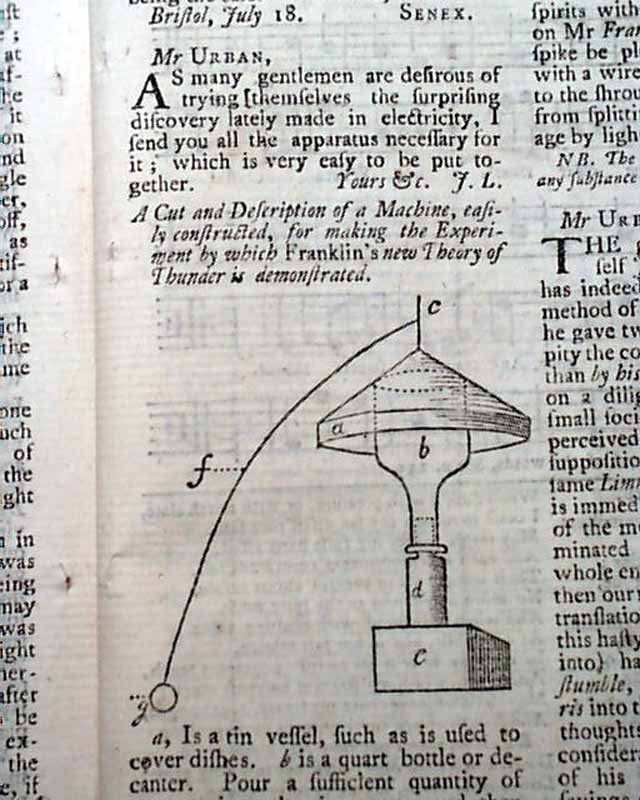
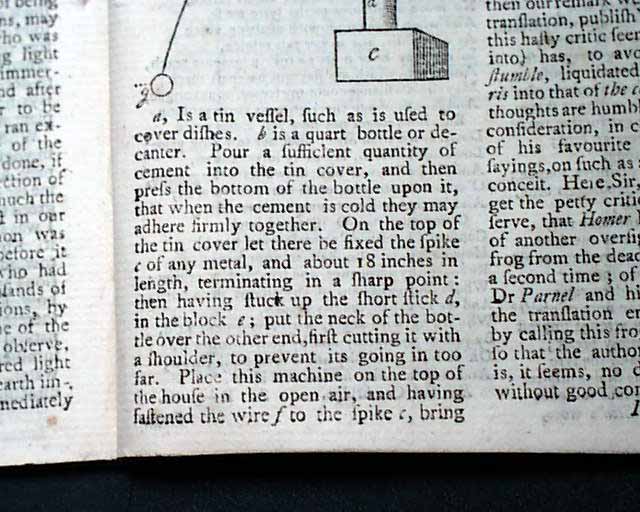
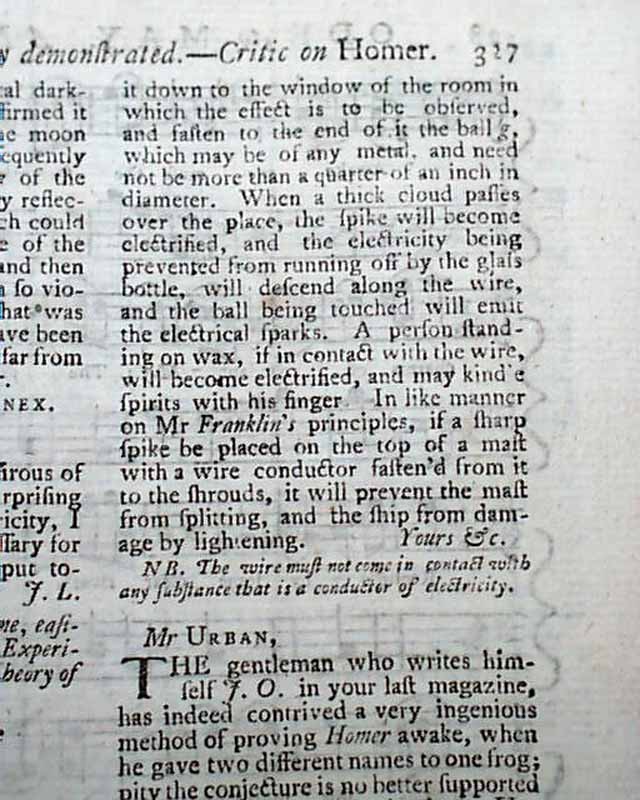
An inside page has an extremely significant article titled: "A Cut and Description of a Machine, easily Constructed, for Making the Experiment by which Franklin's new Theory of Thunder is demonstrated" with descriptive text showing how this experiment works. Each piece of the illustration is identified as well.
A great and early, contemporary piece on Franklin's experiments with electricity and his lightning rod.
Near the back is the "Historical Chronicle" with various news reports of the day, including a report from New York.
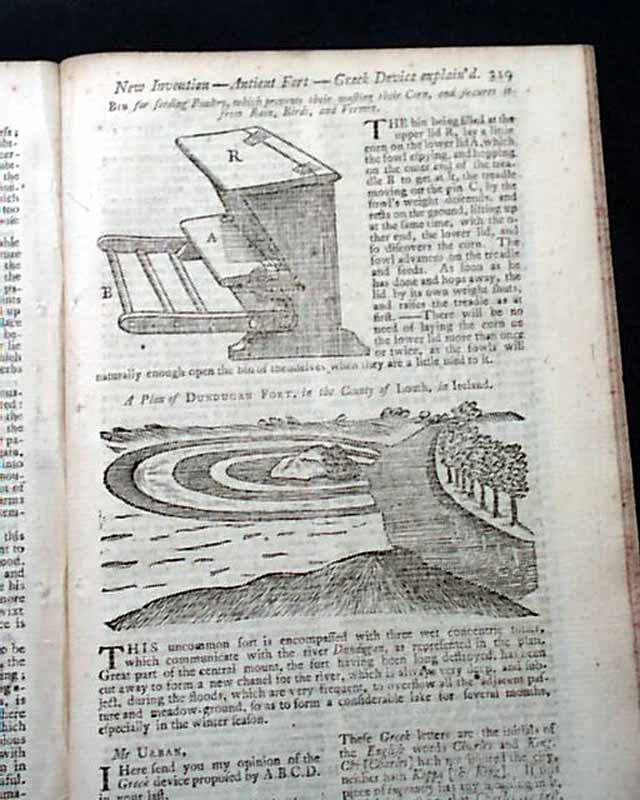
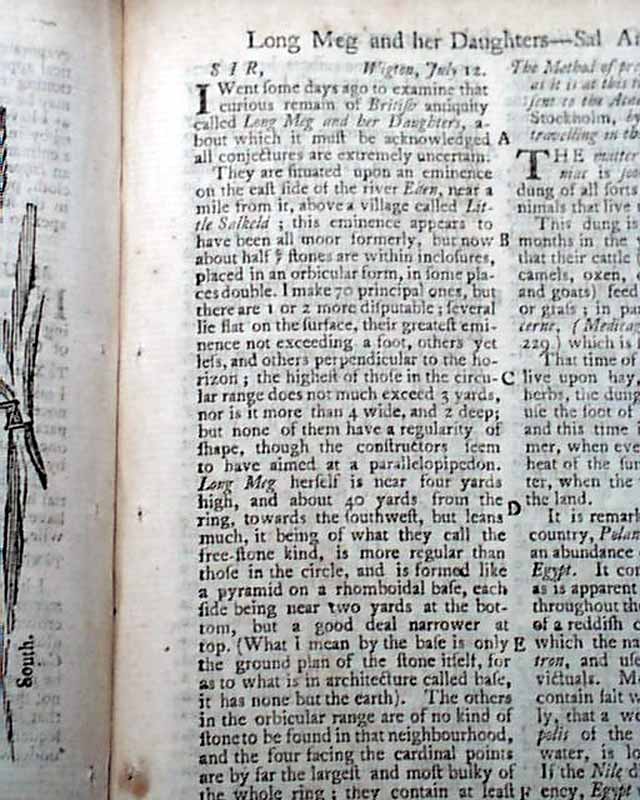
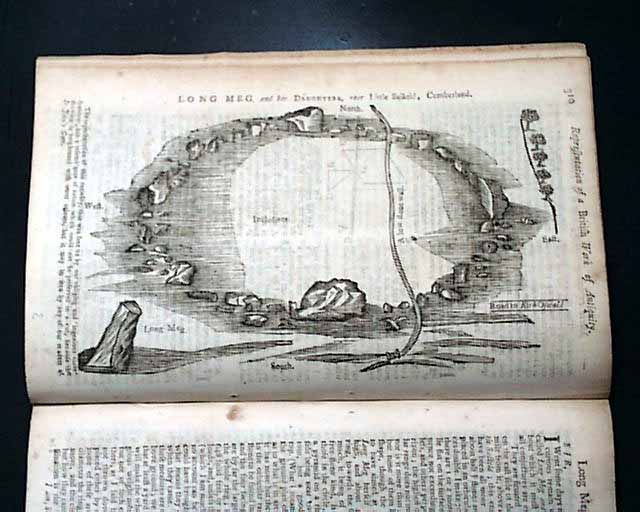
Also included in this issue is a full page print: "Long Meg and Her Daughters, a remarkable ancient fort...", with a corresponding article by George Smith signed in block type: G.S.
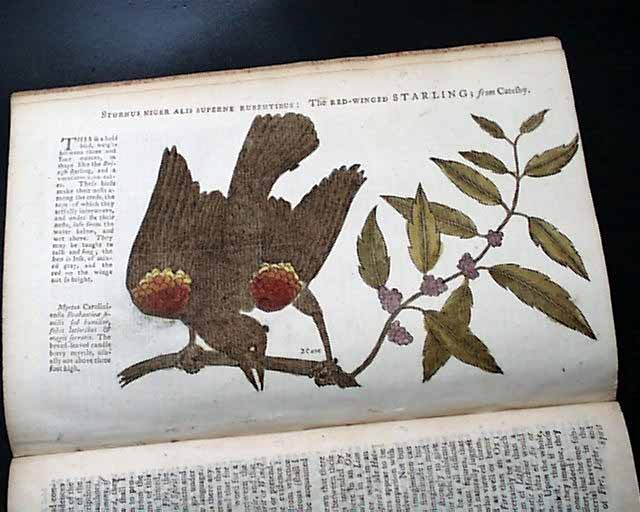
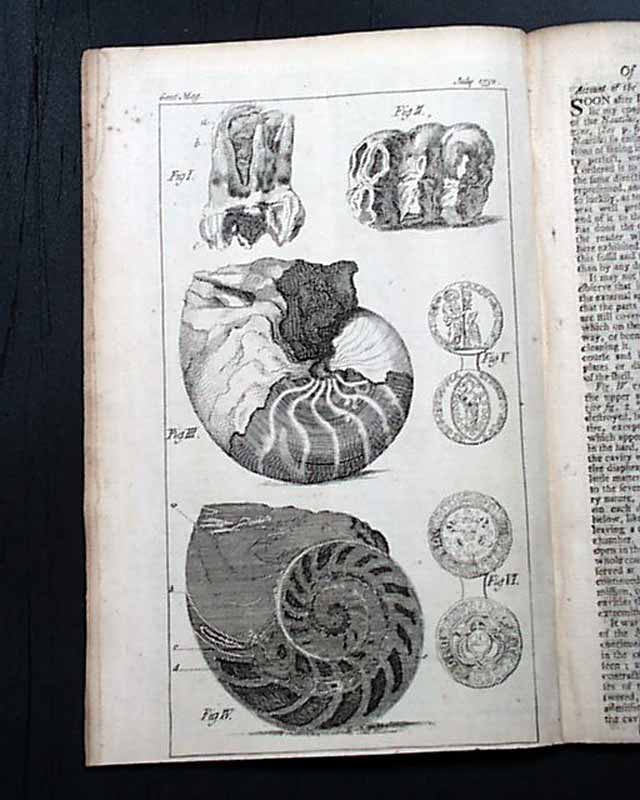
An additional full page print shows seashells, and a very nice (and typically missing) plate shows: "The Red Winged Starling, from Catsby" which is hand-colored and has descriptive text.
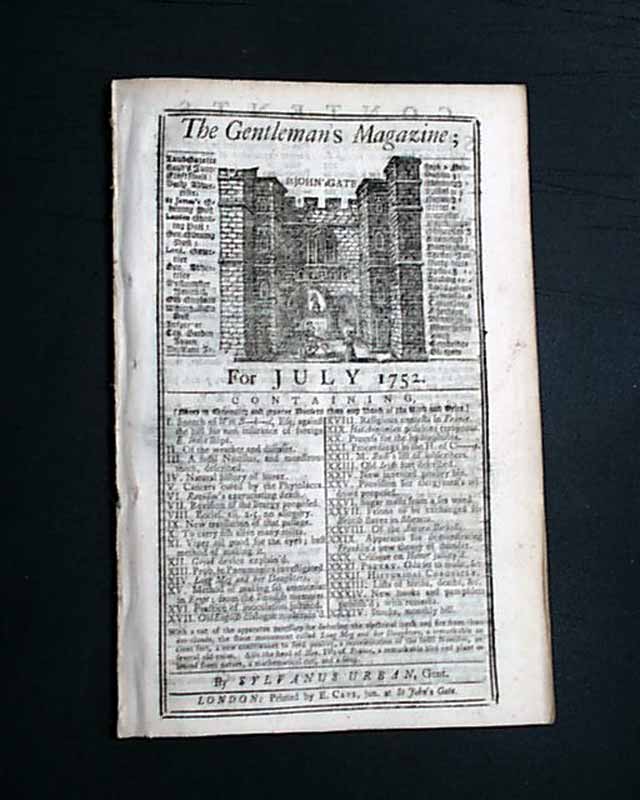
Complete in 48 pages with a full title/contents page featuring an engraving of St. John's Gate, 5 1/4 by 8 1/4 inches, very nice condition.
AI notes: In 1752, Benjamin Franklin conducted groundbreaking experiments that demonstrated the electrical nature of lightning, most famously using a kite during a thunderstorm. He flew a kite with a metal key attached to the string, allowing the wet string to conduct the electrical charge from storm clouds to the key, where he observed sparks when brought near a grounded object. This experiment provided clear evidence that lightning was a form of electricity, fundamentally changing the scientific understanding of natural phenomena. Building on these insights, Franklin invented the lightning rod, a pointed metal rod mounted on buildings and connected to the ground, which could safely channel electrical charges from lightning, preventing fires and structural damage. Franklin’s work in 1752 not only advanced the study of electricity from theoretical speculation to experimental science but also created practical technology that saved countless structures from lightning strikes.
A very nice pre-Revolutionary War magazine from the "mother country" with a wide range of varied content. This was the first periodical to use the word "magazine" in its title, having begun in 1731 and lasting until 1907.
* Benjamin Franklin
* Electricity experiments
* Lightning rod
An inside page has an extremely significant article titled: "A Cut and Description of a Machine, easily Constructed, for Making the Experiment by which Franklin's new Theory of Thunder is demonstrated" with descriptive text showing how this experiment works. Each piece of the illustration is identified as well.
A great and early, contemporary piece on Franklin's experiments with electricity and his lightning rod.
Near the back is the "Historical Chronicle" with various news reports of the day, including a report from New York.
Also included in this issue is a full page print: "Long Meg and Her Daughters, a remarkable ancient fort...", with a corresponding article by George Smith signed in block type: G.S.
An additional full page print shows seashells, and a very nice (and typically missing) plate shows: "The Red Winged Starling, from Catsby" which is hand-colored and has descriptive text.
Complete in 48 pages with a full title/contents page featuring an engraving of St. John's Gate, 5 1/4 by 8 1/4 inches, very nice condition.
AI notes: In 1752, Benjamin Franklin conducted groundbreaking experiments that demonstrated the electrical nature of lightning, most famously using a kite during a thunderstorm. He flew a kite with a metal key attached to the string, allowing the wet string to conduct the electrical charge from storm clouds to the key, where he observed sparks when brought near a grounded object. This experiment provided clear evidence that lightning was a form of electricity, fundamentally changing the scientific understanding of natural phenomena. Building on these insights, Franklin invented the lightning rod, a pointed metal rod mounted on buildings and connected to the ground, which could safely channel electrical charges from lightning, preventing fires and structural damage. Franklin’s work in 1752 not only advanced the study of electricity from theoretical speculation to experimental science but also created practical technology that saved countless structures from lightning strikes.
A very nice pre-Revolutionary War magazine from the "mother country" with a wide range of varied content. This was the first periodical to use the word "magazine" in its title, having begun in 1731 and lasting until 1907.
Category: British
Available Now
$498.00