Home > Back to Search Results >
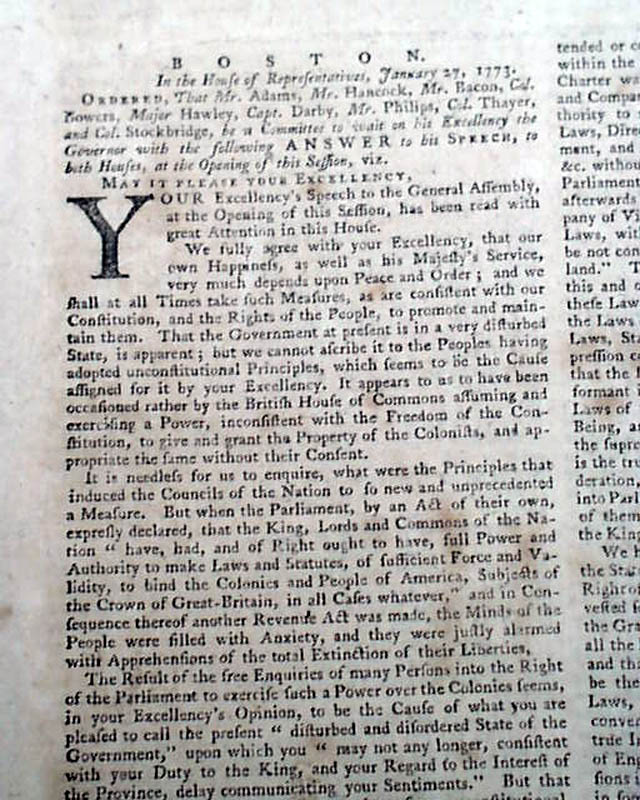
Bostonians respond, patriotically, to the Royal Governor's speech...
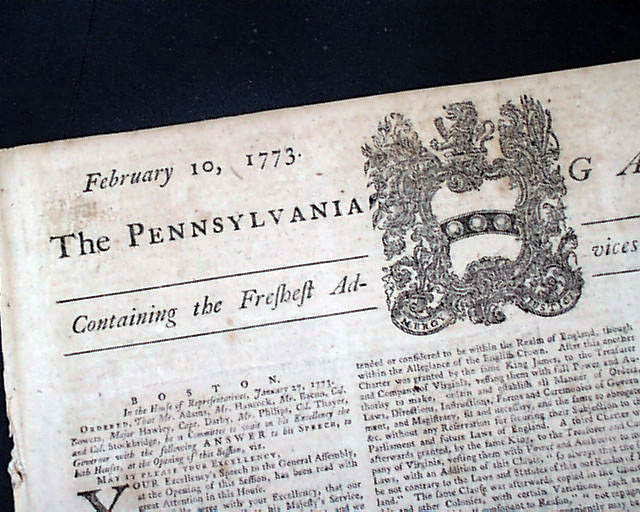
Bostonians respond, patriotically, to the Royal Governor's speech...
Item # 701416
Currently Unavailable. Contact us if you would like to be placed on a want list or to be notified if a similar item is available.
February 10, 1773
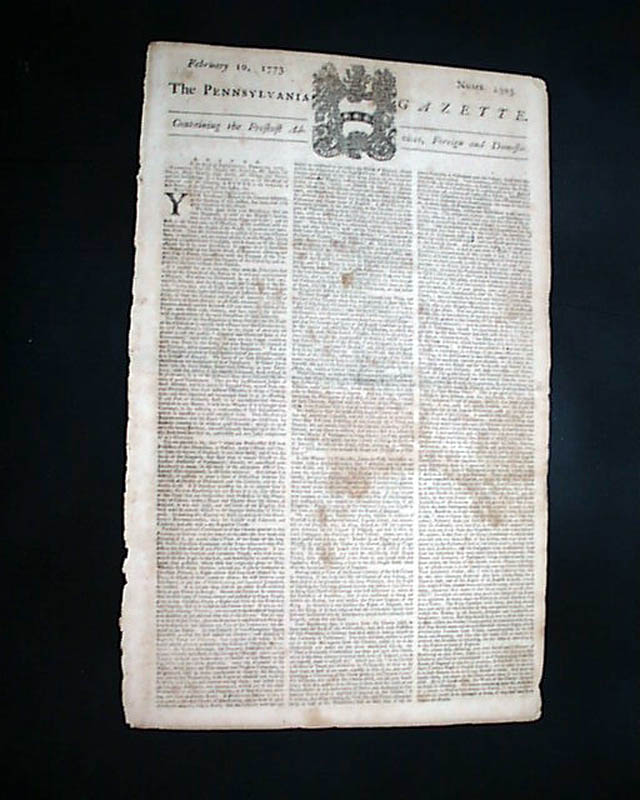
THE PENNSYLVANIA GAZETTE, Philadelphia, Feb. 10, 1773
* Governor Thomas Hutchinson speech
* re. British authority in Massachusetts
* Pre Revolutionary War tensions
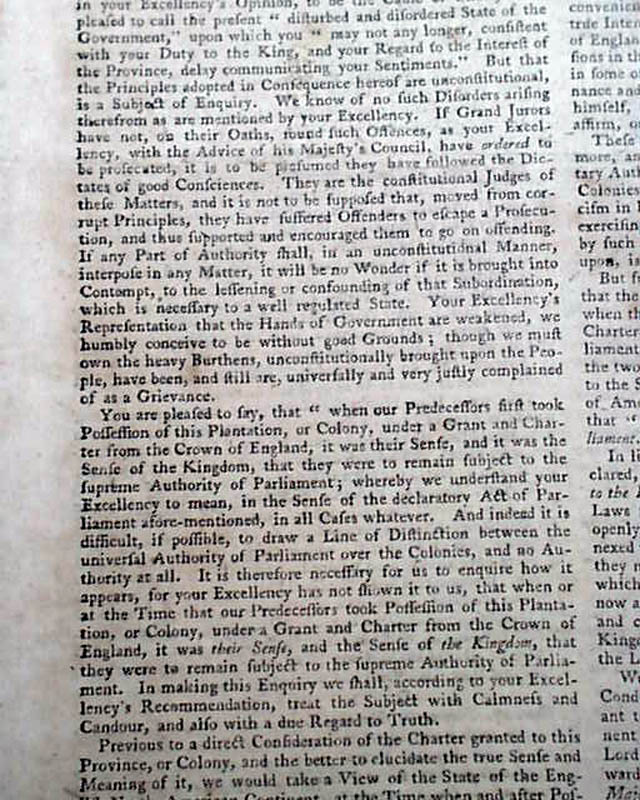
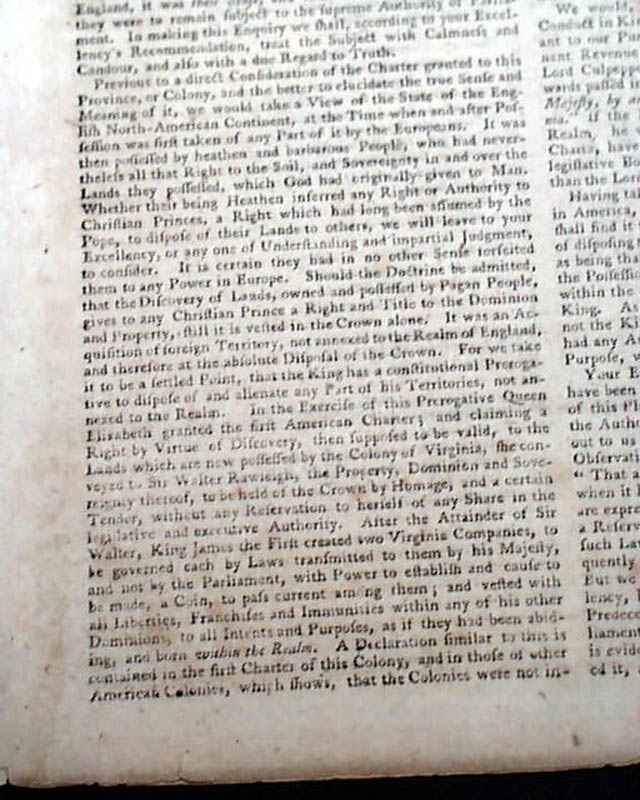
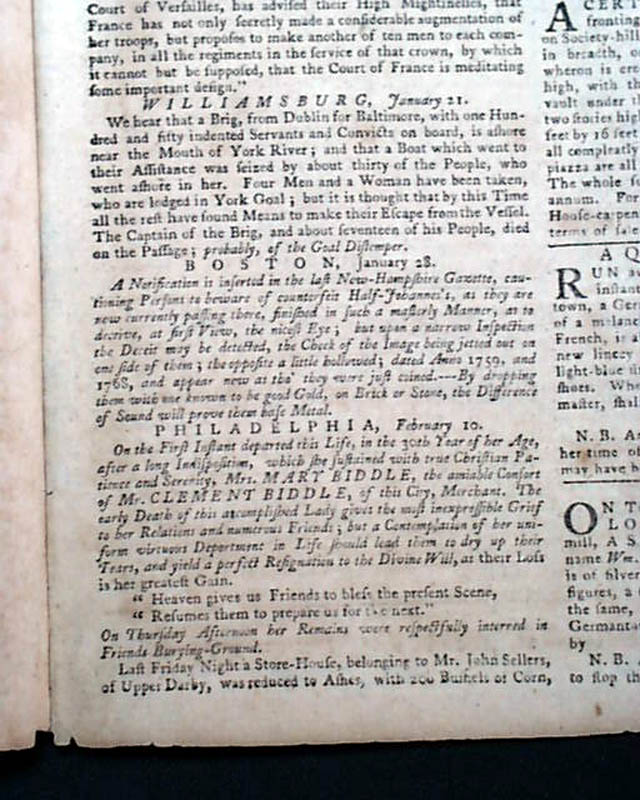
The entire front page and most of page 2 are taken up with the response of John Hancock, Sam Adams, & others to the Mass. governor's recent speech. It is very patriotic in tone, noting near the beginning: "...We fully agree with your Excellency, that our own happiness, as well as his Majesty's service, very much depends upon peace and order; and we shall at all times take such measures as are consistent with our Constitution, and the rights of the people, to promote & maintain them..." with so much more.
A few items on page 3 as well.
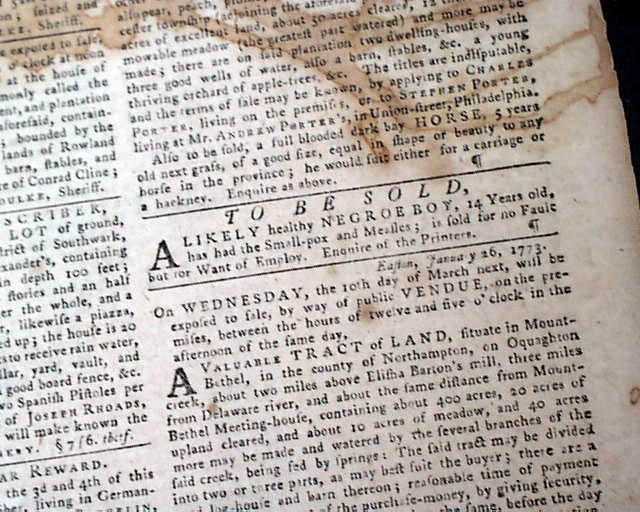
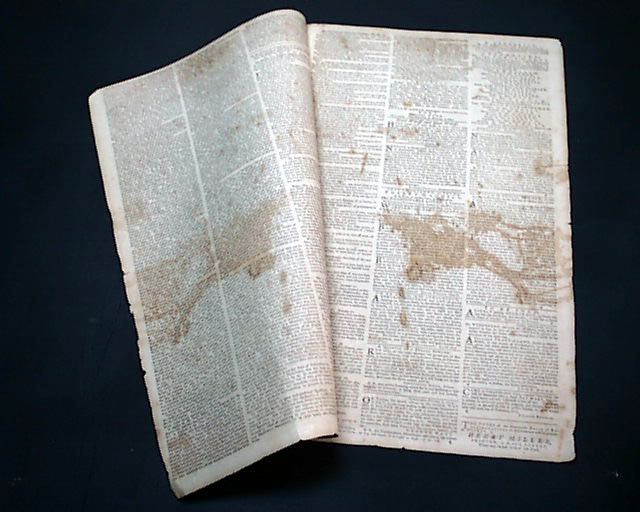
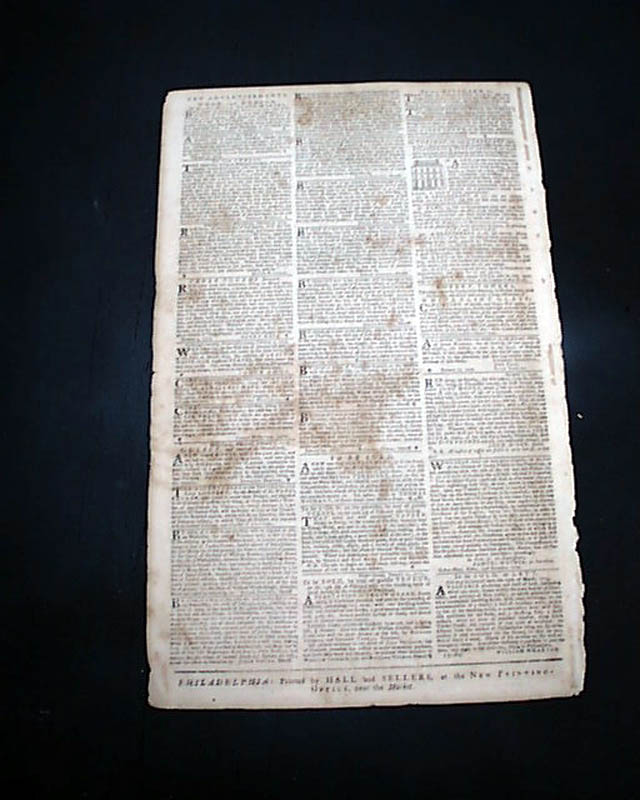
Four pages, slightly irregular at the margins, light staining on the back leaf causes no loss of readability, generally good condition.
AI notes: In January 1773, John Hancock played a significant supporting role in the Massachusetts House of Representatives’ forceful reply to Governor Thomas Hutchinson’s speech asserting Parliament’s “supreme authority” over the colony. Although the formal rebuttal adopted on January 27, 1773 was chiefly drafted by Samuel Adams, Hancock—already one of the most influential and wealthy patriot leaders—stood firmly with Adams and the majority in rejecting Hutchinson’s claim that Massachusetts was merely a dependent province with no constitutional rights apart from Parliament’s pleasure. Hancock’s prestige, popularity, and outspoken resistance to earlier British measures, including his public denunciations of customs enforcement, helped solidify legislative support for the House’s argument that Massachusetts’ rights derived from its charter and the British Constitution, not from parliamentary absolutism. While he neither wrote nor delivered the response, Hancock’s leadership within the House and his alignment with the rising patriot faction made him an indispensable figure in the colony’s constitutional stand in early 1773, setting the stage for his more visible leadership later that year during the Tea Act crisis.
Category: Revolutionary War
No Longer Available