Home > Back to Search Results >
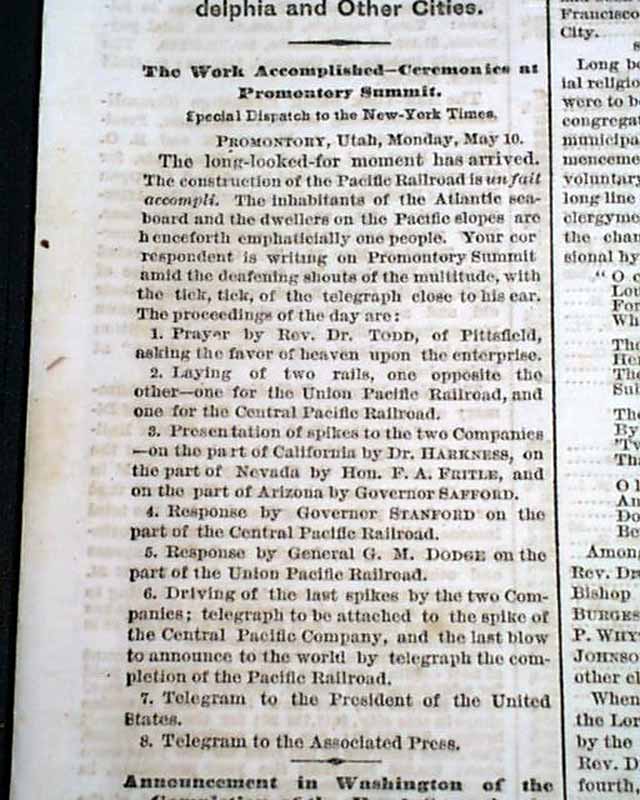
Reporting the big event--the East and West have been joined...
Reporting the big event--the East and West have been joined...
Item # 701296
May 11, 1869
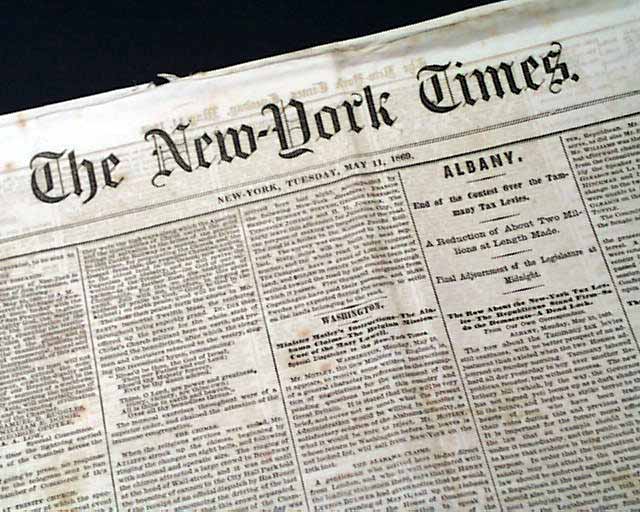
NEW YORK TIMES, May 11, 1869
* Completing the Transcontinental railroad
* Golden spike driven in at Promontory Point
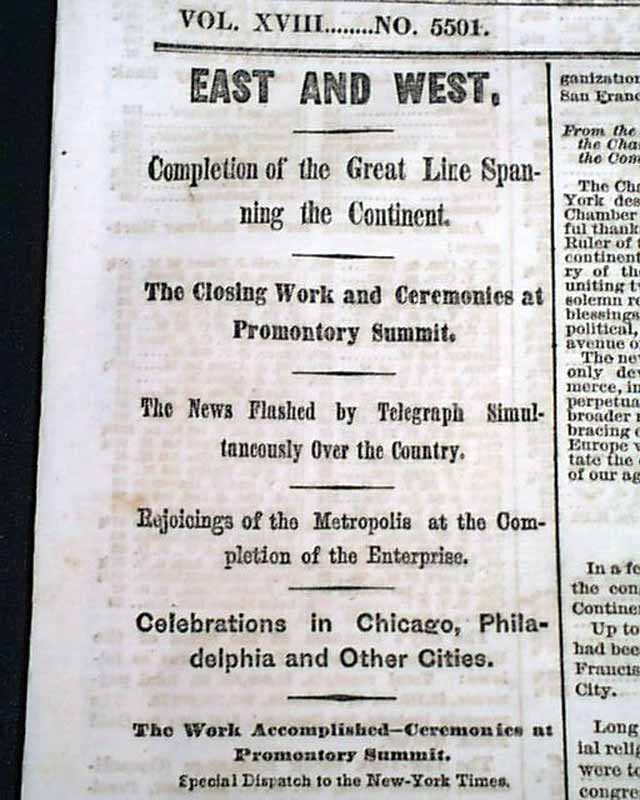
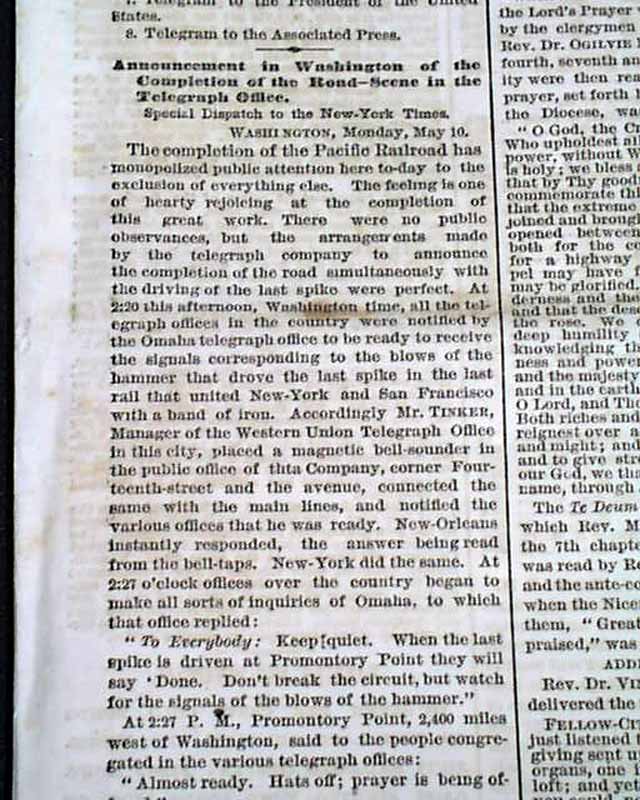
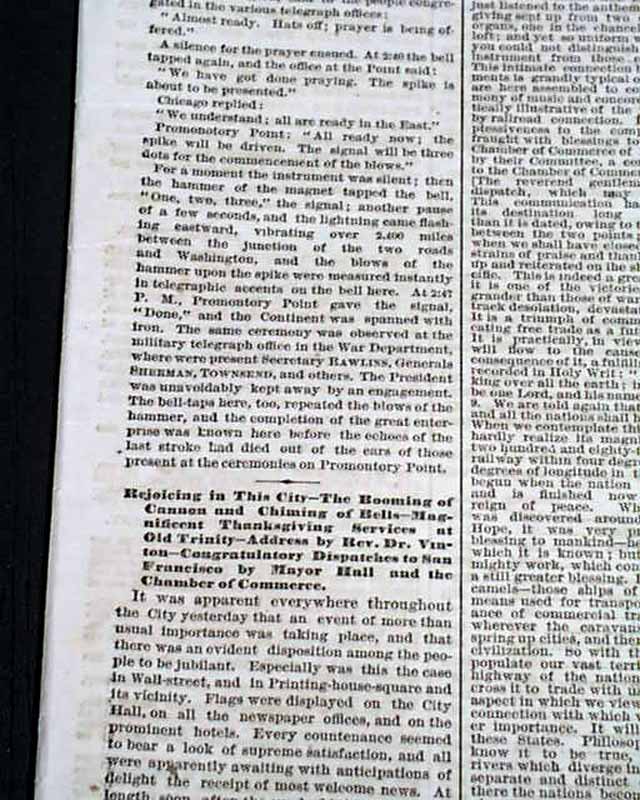
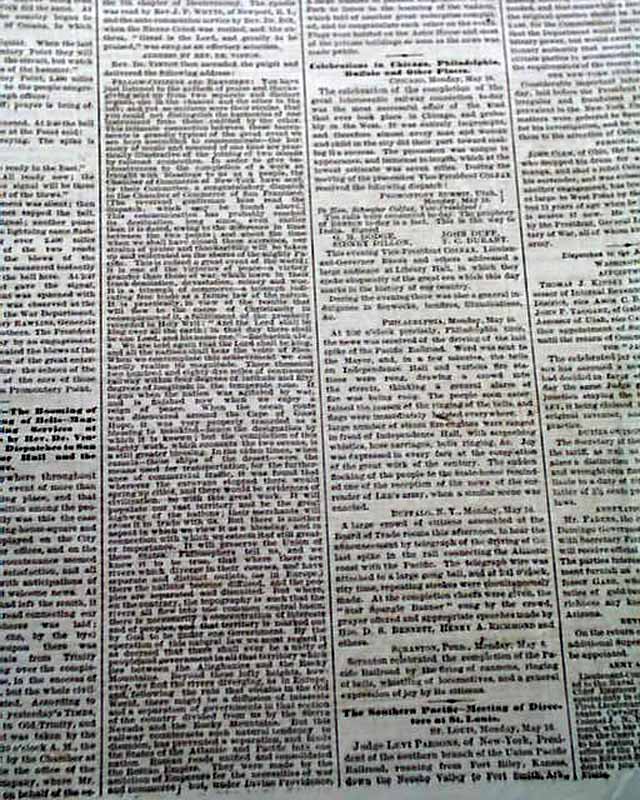
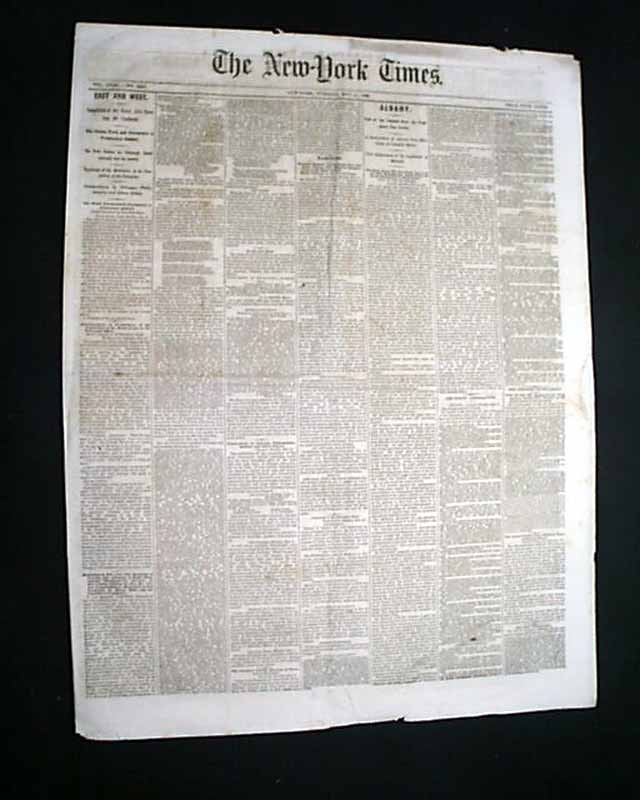
The front page begins with over three columns taken up with this historic reporting of the completion of the transcontinental railroad which officially happened the day before, with the top of the first column heads: "EAST AND WEST" "Completion of the Great Line Spanning the Continent" "The Closing Work and Ceremonies at Promontory Summit" "The News Flashed by Telegraph Simultaneously Over the Country" and more.
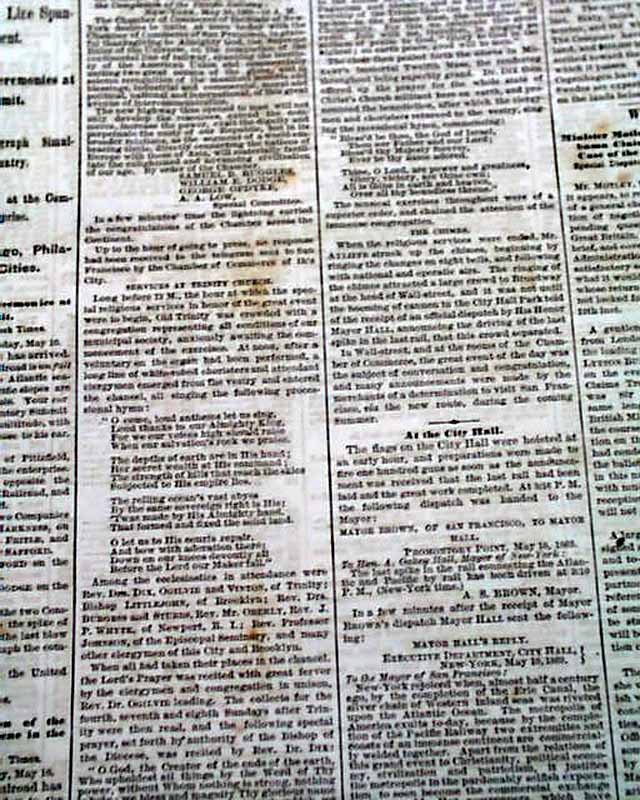
The article begins: "The long-looked-for moment has arrived, the construction of the Pacific Railroad is un fait accmpli. The inhabitants of the Atlantic seaboard and the dwellers on the Pacific slopes are henceforth emphatically one people..." followed by an 8 point program of the ceremonies, then a subhead: "Announcement in Washington of the Completion of the Road--Scene in the Telegraph Office", then some details on the proceedings. The text includes several religious services in New York churches concerning the ceremonies.
Eight pages, never bound nor trimmed, very nice condition.
background: On May 10, 1869, the completion of the Transcontinental Railroad was marked by the ceremonial driving of the golden spike at Promontory Summit, Utah, symbolizing the joining of the Central Pacific Railroad (building from the west) and the Union Pacific Railroad (building from the east), creating the first continuous rail line linking the Atlantic and Pacific Oceans. This monumental achievement revolutionized the United States by dramatically reducing travel time across the country—from several months to just a week—enabling faster movement of goods and people. The railroad played a crucial role in the economic development of the American West, fueling the expansion of agriculture, mining, and commerce, while also supporting the settlement of the frontier. However, it also had darker consequences, as its construction led to the displacement of Native American tribes, who were forced off their land to make way for rail lines. The completion of the Transcontinental Railroad thus represents both a triumph of industrial progress and a catalyst for significant social, economic, and cultural changes across the nation, shaping the course of American history for generations to come.
Category: Post-Civil War
Available Now
$192.00