Home > Back to Search Results >
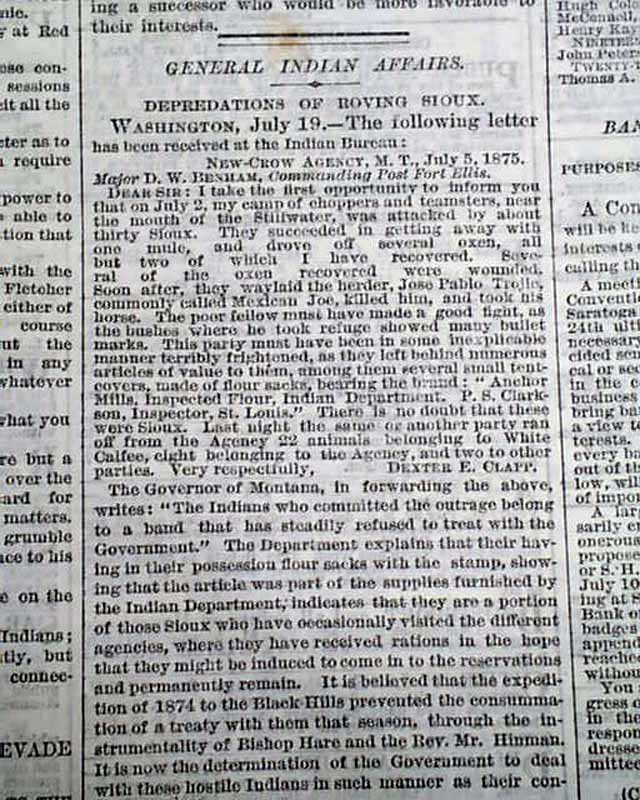
On the trial for the Mountain Meadows Massacre... Depredations by the Sioux Indians...
On the trial for the Mountain Meadows Massacre... Depredations by the Sioux Indians...
Item # 699965
July 20, 1875
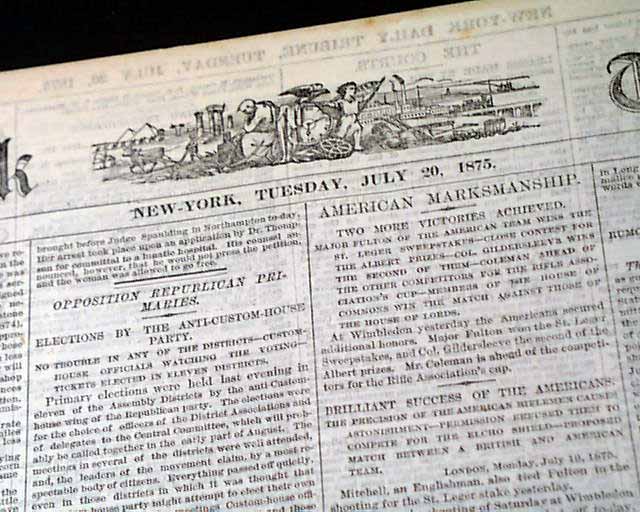
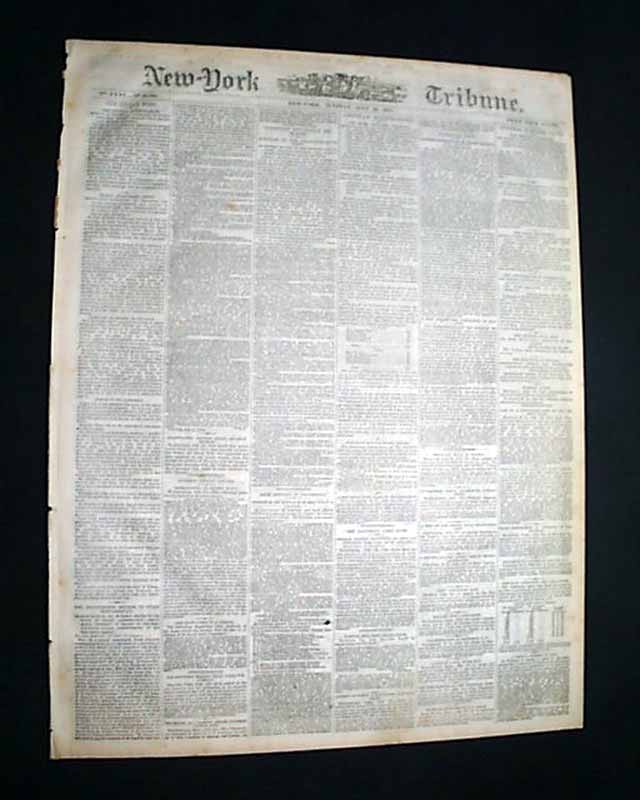
NEW YORK TRIBUNE, July 20, 1875
* Mountain Meadows Massacre
* Mormons - Mormonism trial
* John D. Lee - Brigham Young
* Trial of the conspirators begins
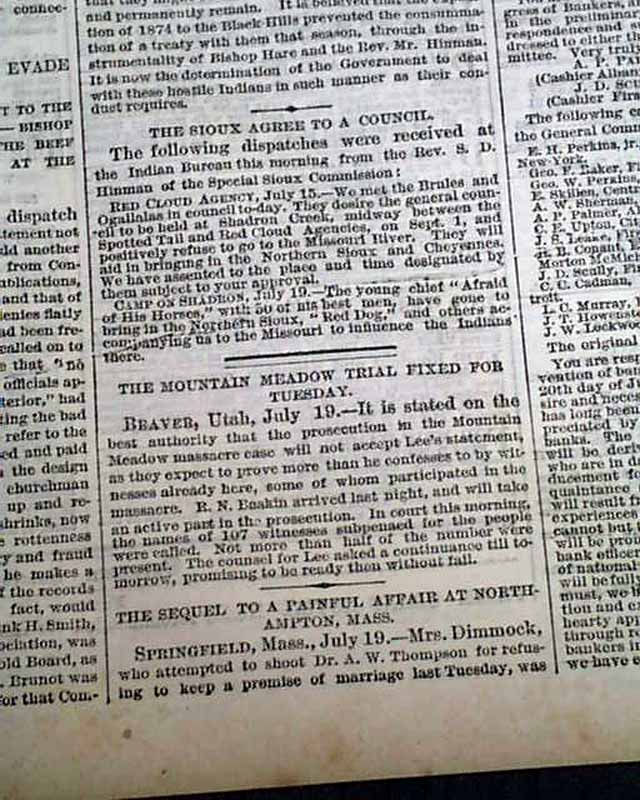
The bottom of the front page has a brief report: "The Mountain Meadow Trial Fixed For Tuesday" with a dateline from Beaver, Utah.
The Mountain Meadows Massacre was a series of attacks during the Utah War that resulted in the mass murder of at least 120 members of an emigrant wagon train, occurring in the southern Utah Territory at Mountain Meadows. It was perpetrated by Mormons who recruited and were aided by some Southern Paiute Native Americans. The wagon train, made up mostly of families from Arkansas, was bound for California, traveling on the Old Spanish Trail that passed through the Territory.
Also on the front page: "General Indian Affairs - Depredations of Roving Sioux" and: "The Sioux Agree To A Council".
Eight pages, nice condition.
background: On July 19, 1875, the first trial of John D. Lee for his role in the 1857 Mountain Meadows Massacre was underway in Beaver, Utah Territory, marking the first serious federal effort to hold anyone accountable for the killing of over 120 emigrants from the Baker–Fancher party. Lee, a Mormon militia leader, had been arrested in late 1874 after years of evading prosecution, and he faced charges of conspiracy and murder. By mid‑July, court proceedings—including jury selection, opening statements, and examination of early witnesses—were in progress, with the prosecution attempting to establish Lee’s leadership role in orchestrating the massacre and the defense portraying him as a scapegoat acting under orders. The trial reflected the tensions of the time, as eight of the twelve jurors were Mormon and reportedly resistant to convicting a fellow church member, while the three non-Mormon jurors pressed for accountability. Despite detailed testimony and evidence, the proceedings stalled, and over the following weeks the jury ultimately hung, refusing to reach a unanimous verdict, demonstrating both the complexities of prosecuting a mass atrocity in a predominantly Mormon territory and the deep local loyalties that complicated justice. This first trial set the stage for Lee’s second trial in 1876, where he would finally be convicted and later executed.
Category: Post-Civil War
Available Now
$38.00