Home > Back to Search Results >
John Brown & the Harper's Ferry insurrection...
John Brown & the Harper's Ferry insurrection...
Item # 699715
October 31, 1859
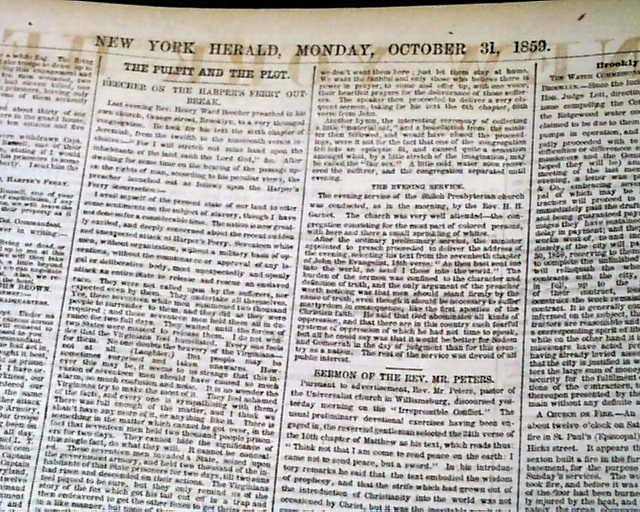
NEW YORK HERALD, Oct. 31, 1859
* John Brown's insurrection - invasion - raid
* Harpers Ferry WV - West Virginia trial
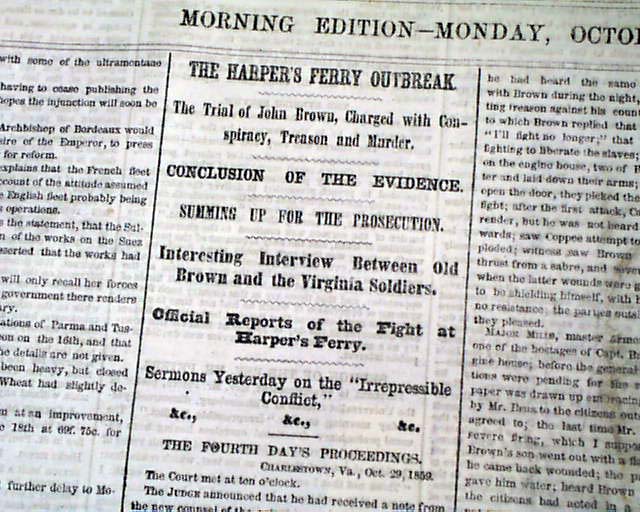
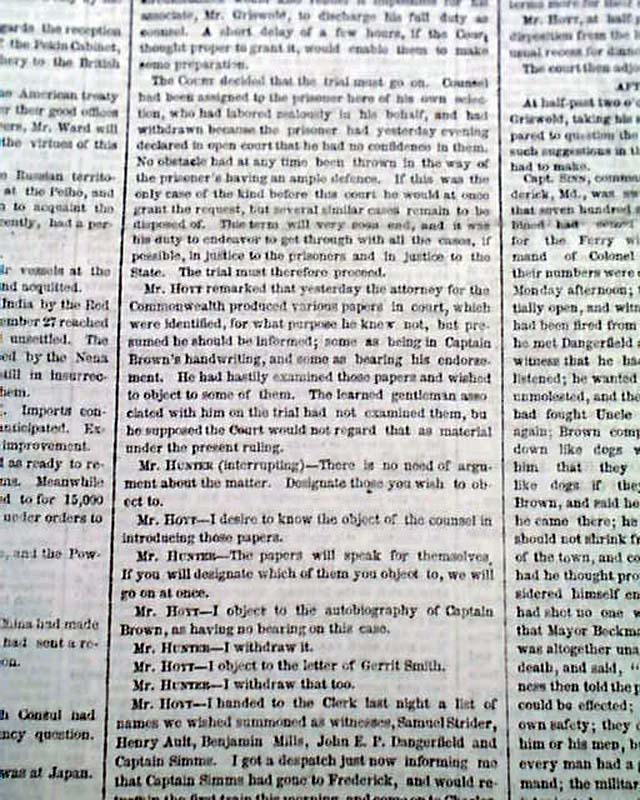
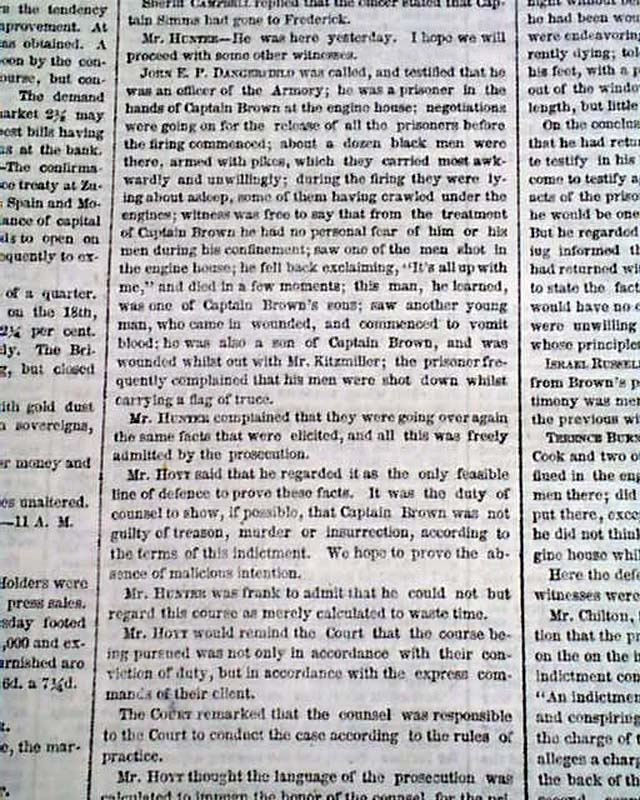
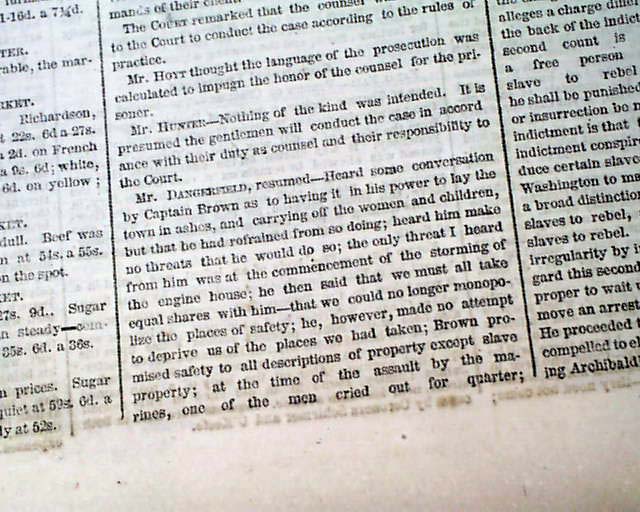
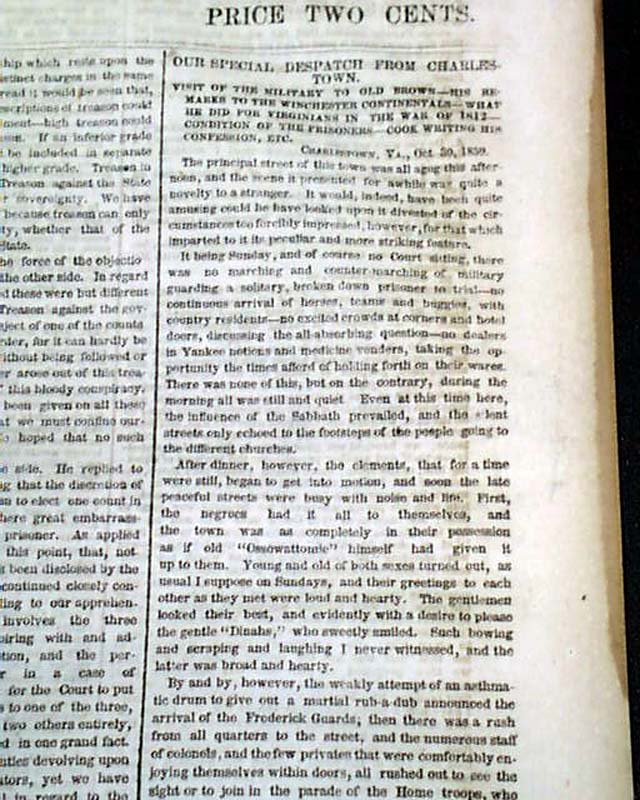
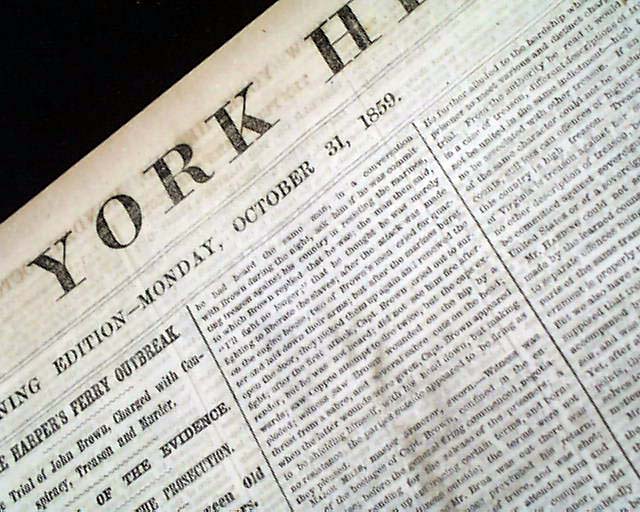
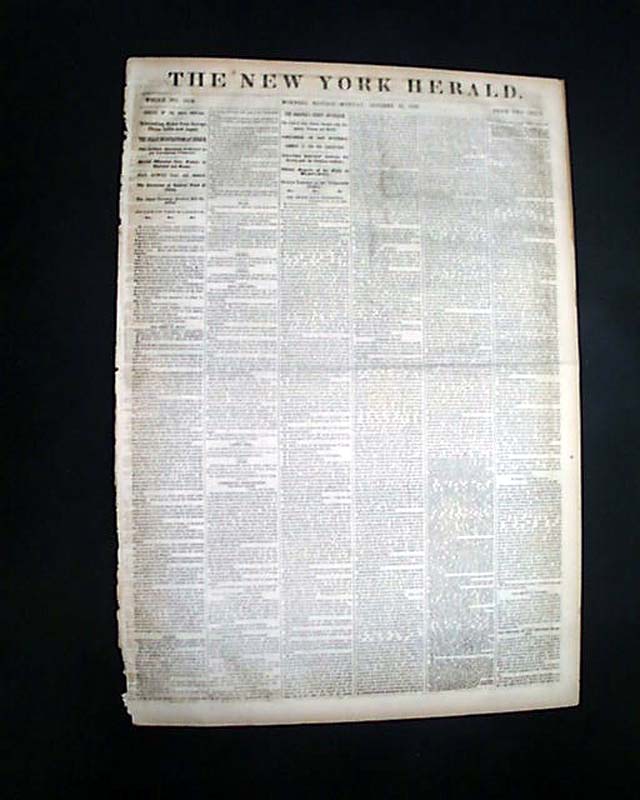
The top of the front page has column heads: "The Harper's Ferry Outbreak" "The Trial of John Brown, Charged with Conspiracy, Treason and Murder" "Conclusion of the Evidence" "Summing Up For the Prosecution" "Interesting Interview Between Old Brown & the Virginia Soldiers" "Official Reports of the Fight at Harper's Ferry" "Sermons Yesterday on the 'Irrepressible Conflict' ".
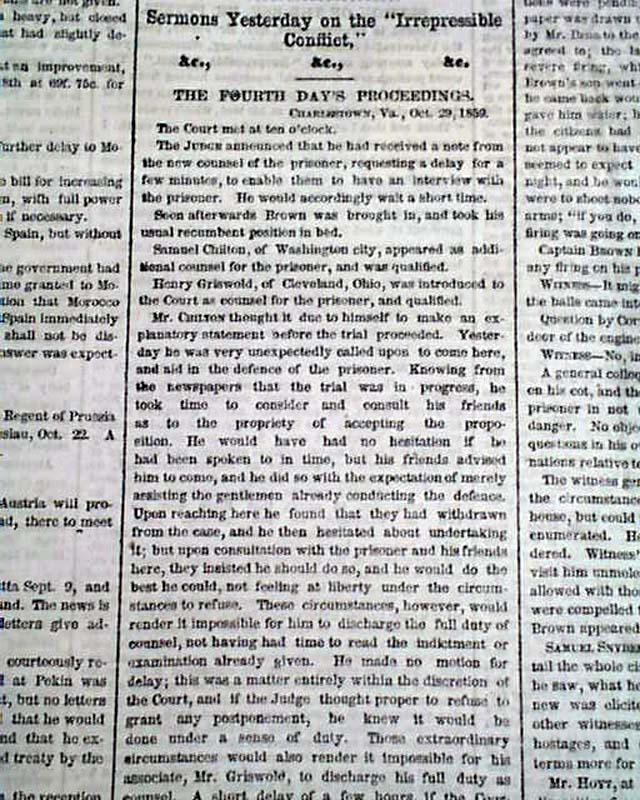
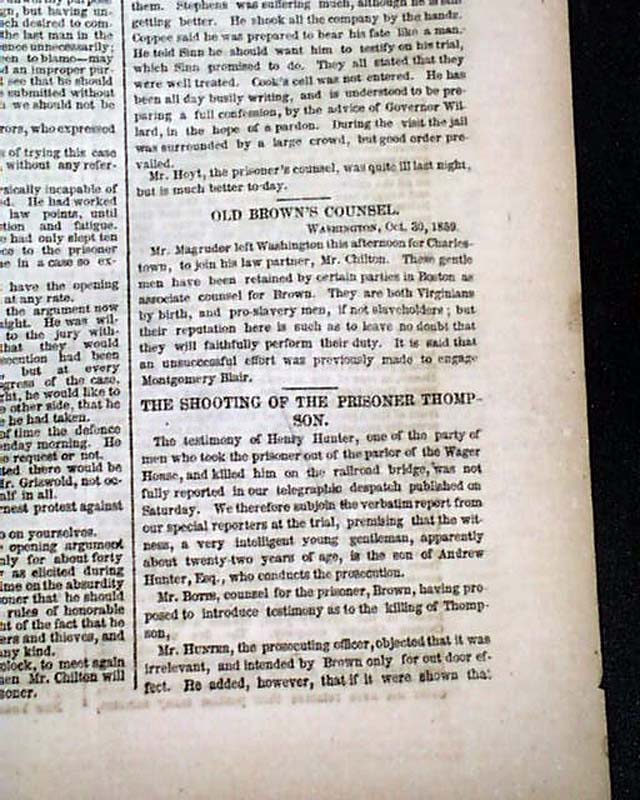
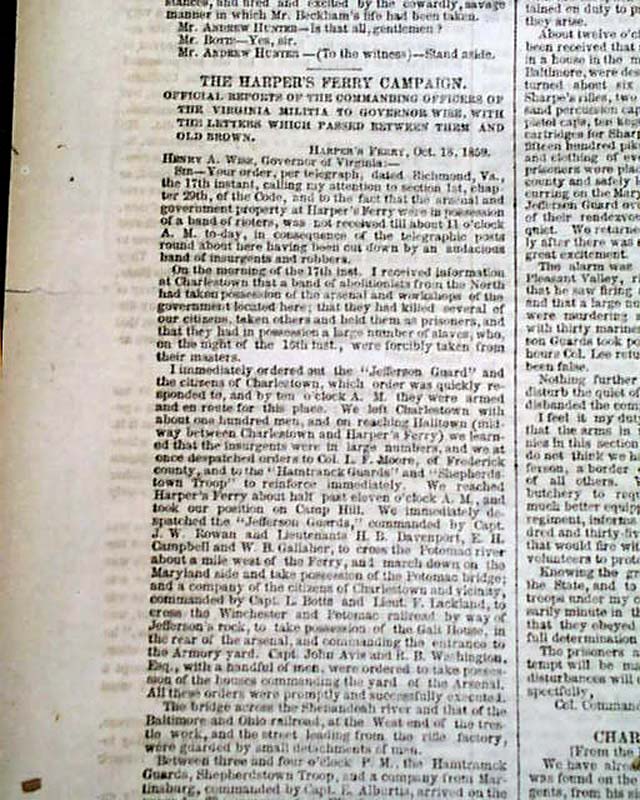
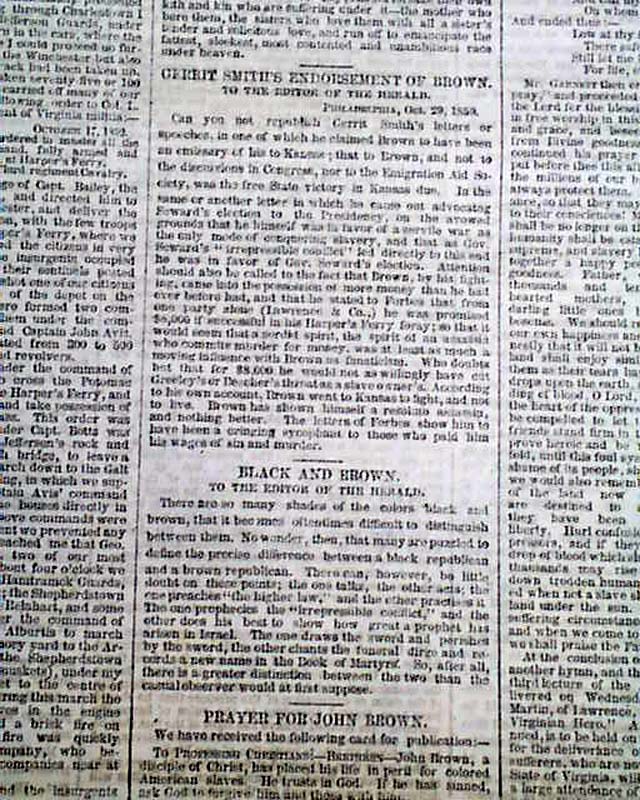
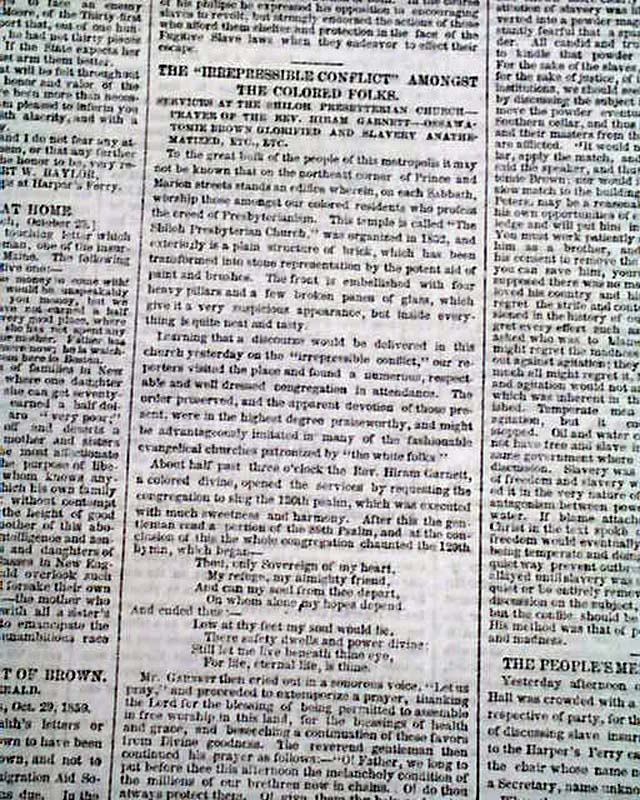
This coverage takes over half of the front page, carrying over to take over half of page 2 as well, with additional column heads including: "Our Special Despatch from Charlestown--Visit of the Military to Old Brown..." "Old Brown's Counsel" 'The Shooting of the Prisoner Thompson" "Gerrit Smith's Endorsement of Brown" "Black And Brown" 'Prayer For John Brown" "The Harper's Ferry Campaign" "The 'Irrepressible Conflict' Amongst the Colored Folks" "The Pulpit and the Plot - Beecher on the Harper's Ferry Outbreak" and even more.
Retated reports on page 4 as well.
Eight pages, a bit irregular at the blank spine, nice condition.
AI notes: The trial of John Brown, following his raid on Harpers Ferry in October 1859, began in late October and concluded in early November in Charles Town, Virginia, under Judge Richard Parker. Brown faced charges of treason against Virginia, murder, and inciting a slave insurrection. Despite being wounded during the raid, he actively participated in the trial with legal representation from attorneys including Samuel Chilton and Hiram Griswold. The prosecution presented extensive testimony detailing Brown’s actions, intentions, and the involvement of his followers, while the defense highlighted his moral and religious motivations, even invoking claims of hereditary insanity. The trial moved swiftly, with the jury deliberating only about 45 minutes before convicting Brown on all counts on November 2, 1859, the same day he was sentenced to death by hanging. His eloquent defense and steadfast demeanor turned him into a polarizing figure: a martyr in the North and a symbol of fear in the South, and the trial itself became a significant national event that intensified sectional tensions, illustrating the deep divisions over slavery and foreshadowing the coming Civil War.
Category: Pre-Civil War
Available Now
$58.00