Home >
Escobar Rebellion in Northern Mexico....
Escobar Rebellion in Northern Mexico....
Item # 699530
March 10, 1929
THE NEW YORK TIMES, section 11 only, March 10, 1929
* Escobar Rebellion
* Maximato conflict
* President Emilio Portes Gil
* Jose Gonzalo Escobar
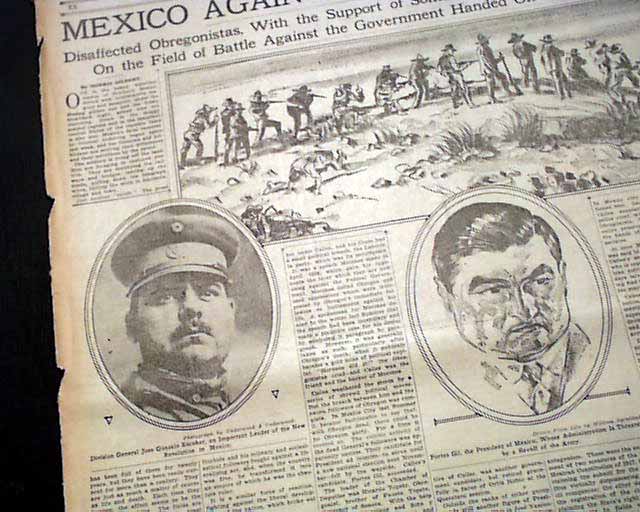
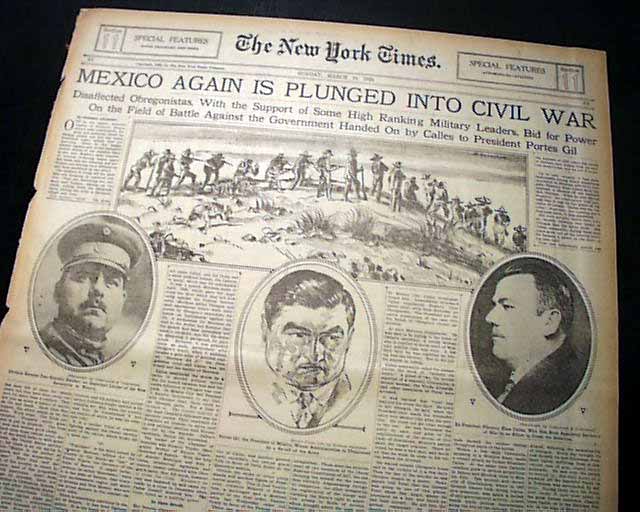
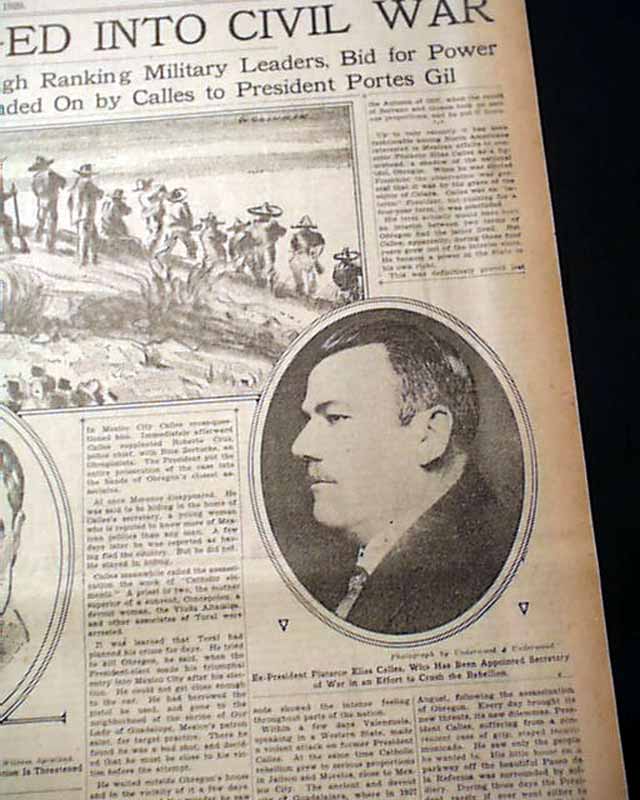
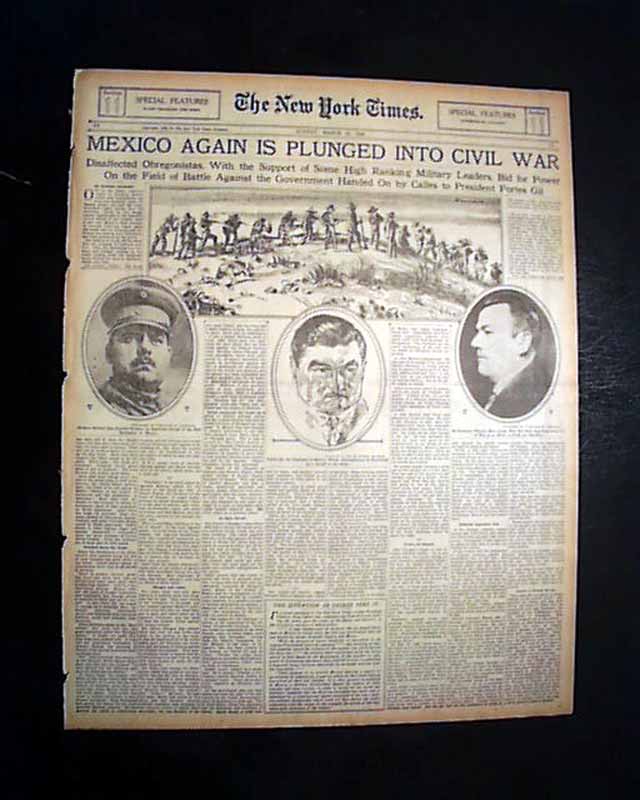
The front page of this section 11 only has a banner headline: "MEXICO AGAIN IS PLUNGED INTO CIVIL WAR" with banner subhead, two related illustrations and two photos of key figures. (see) Lengthy text here.
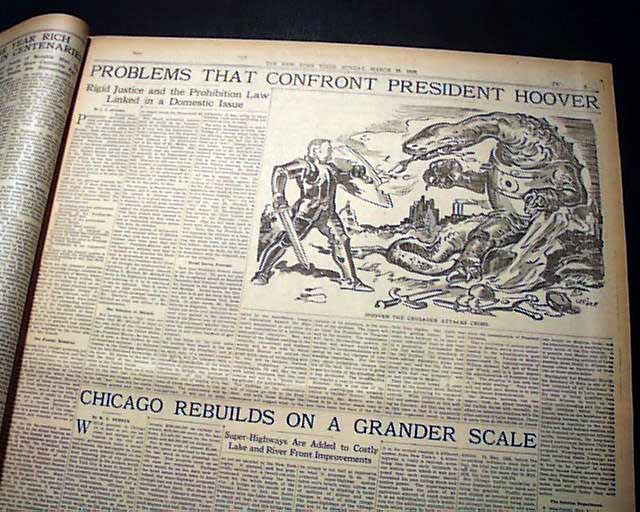
Other topics throughout. Complete section 11 only with all 22 pages, a little irregular along the spine, nice condition.
AI notes: The Escobar Rebellion of 1929, also known as the Escobarista Rebellion, was a short-lived but serious military uprising in Mexico led by General José Gonzalo Escobar, who opposed the political dominance of former president Plutarco Elías Calles during the so-called Maximato. Following the assassination of President-elect Álvaro Obregón in 1928, the provisional presidency of Emilio Portes Gil was widely viewed as being controlled by Calles, prompting resentment among dissident generals who accused the regime of corruption, electoral manipulation, and betrayal of revolutionary ideals. In March 1929, Escobar and his supporters—primarily army units in northern Mexico—issued the Plan of Hermosillo, calling for Calles’s removal and genuine constitutional rule. The rebellion spread across Sonora, Chihuahua, Coahuila, and Nuevo León, but the federal government responded swiftly, using loyal forces commanded by General Lázaro Cárdenas and benefiting from superior logistics, air power, and U.S. diplomatic support, including restrictions on arms sales to the rebels. By April 1929 the uprising collapsed after decisive defeats, Escobar fled into exile in the United States, and the rebellion’s failure consolidated the Calles-dominated political order while accelerating reforms to professionalize and depoliticize the Mexican army.
Category: The 20th Century
Available Now
$40.00