Home >
Lengthy article on Noah's Ark...
Lengthy article on Noah's Ark...
Item # 676523
Currently Unavailable. Contact us if you would like to be placed on a want list or to be notified if a similar item is available.
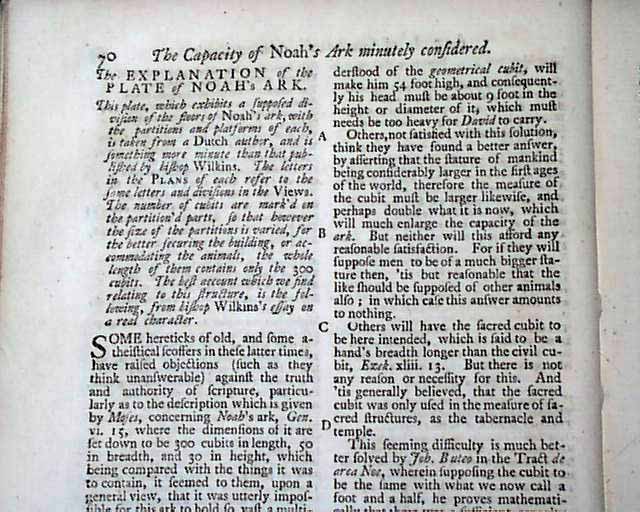
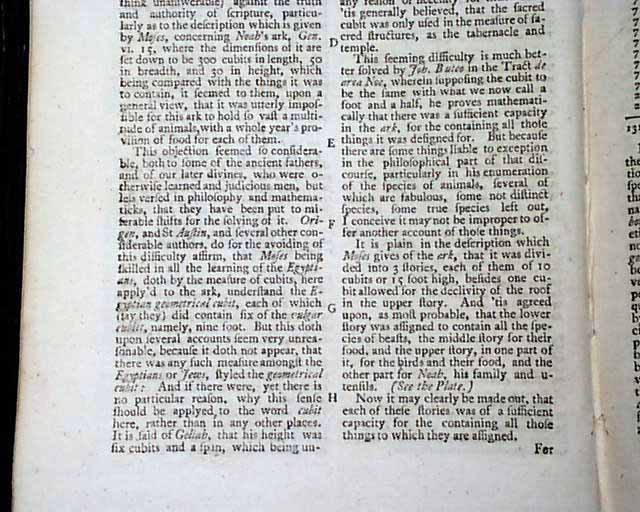
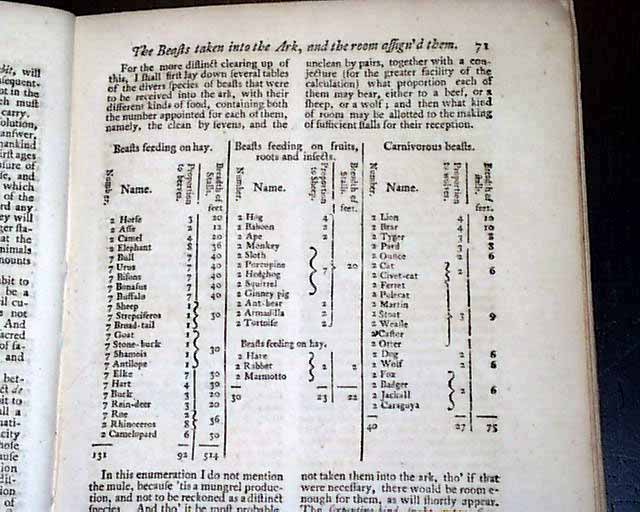
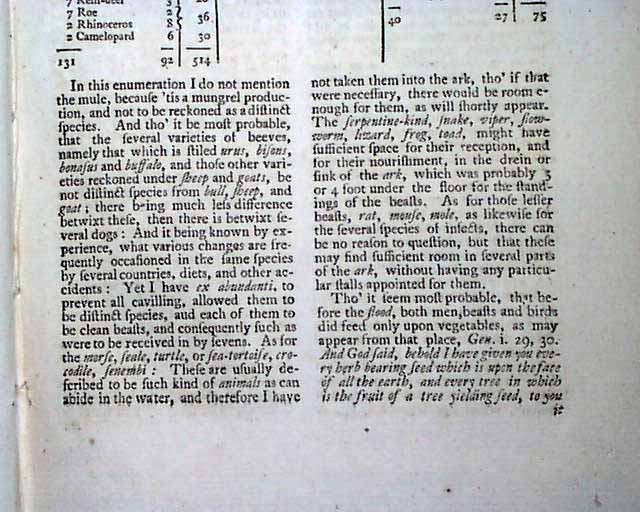
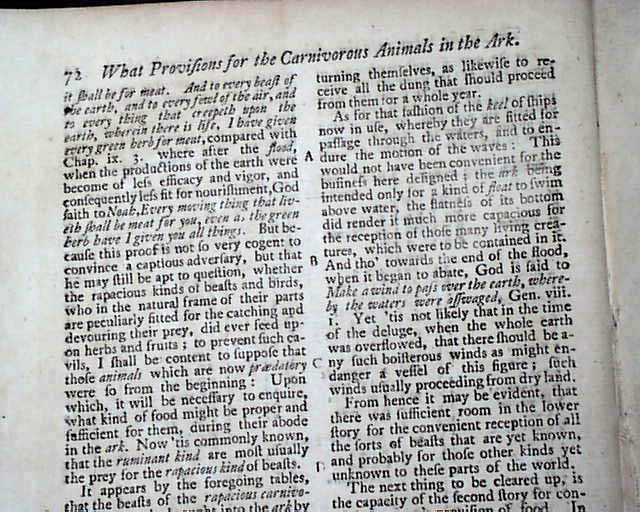
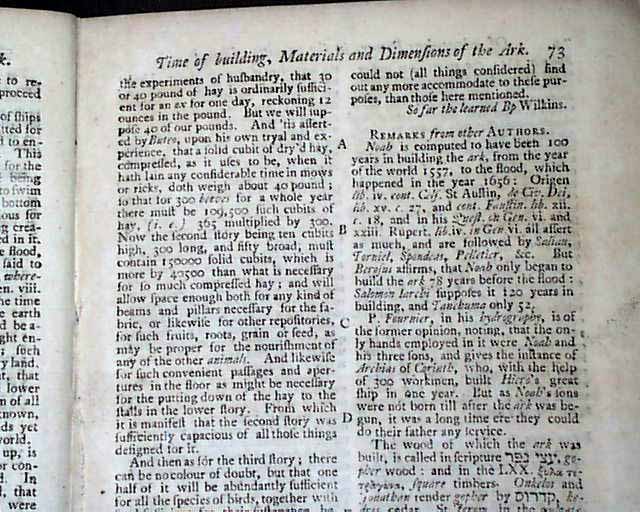
THE GENTLEMAN'S MAGAZINE, London, February, 1749 There is an interesting article: "The Capacity of Noah's Ark Minutely Considered" which has much detail & includes a chart of the animals included, plus: "What Provisions for the Carnivorous Animals in the Ark", and more. Lacking is the related foldout plate.
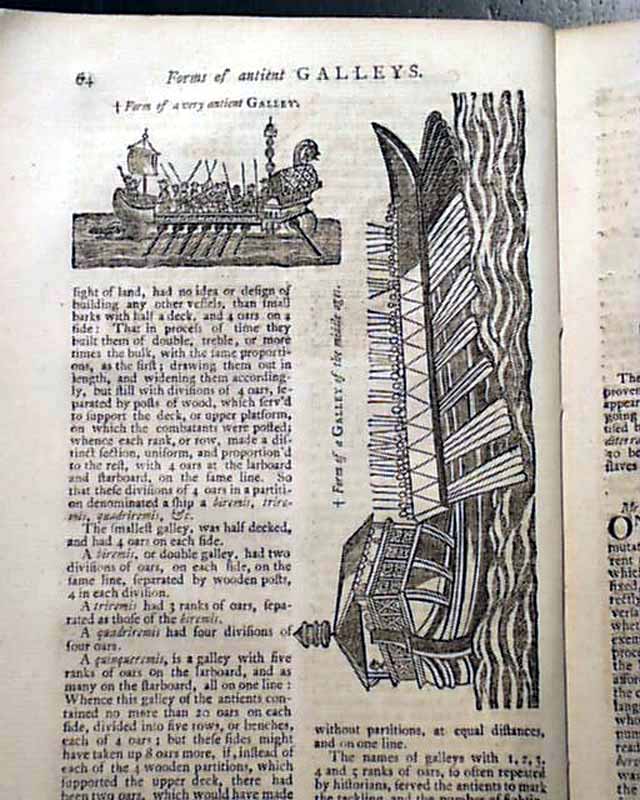
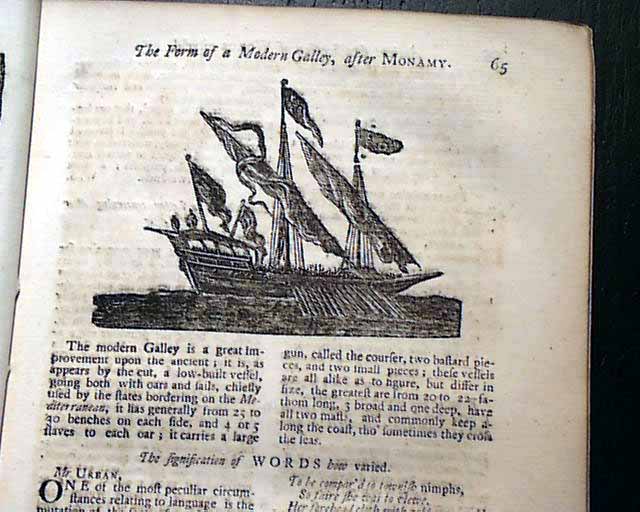
Among the other articles within are: "On the Construction of Fire Works" "Of the Ancient Galleys" which includes 3 engravings of early ships, plus other items.
Lacking both plates called for.
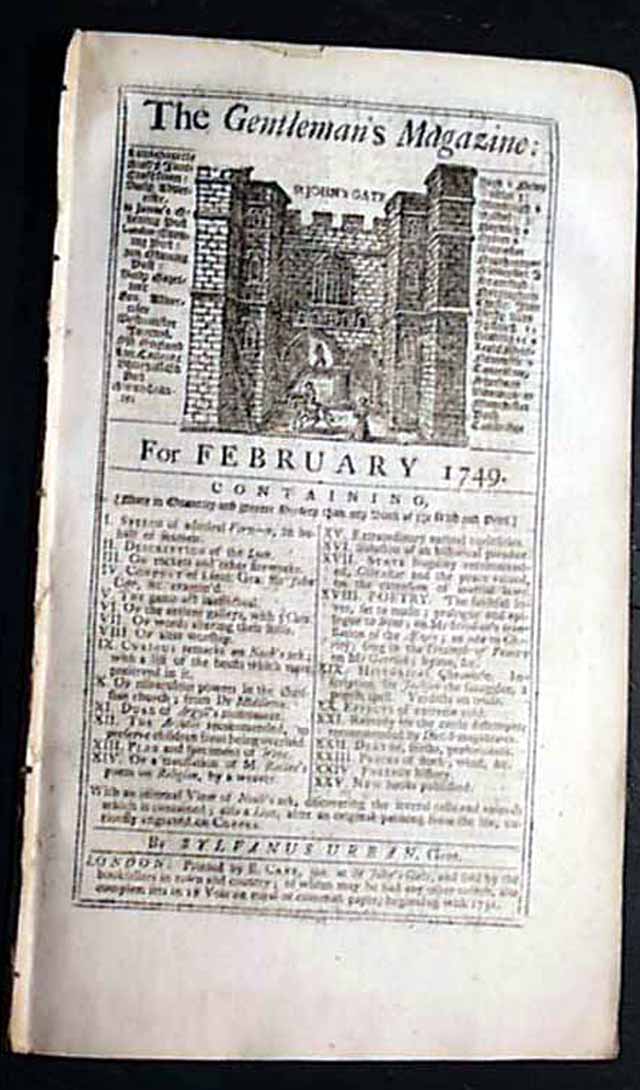
Complete in 48 pages, 5 1/2 by 9 14 inches with very wide margins, full title/contents page with an engraving of St. John's Gate, great condition.
AI notes: In the February 1749 issue of The Gentleman’s Magazine, the article titled “The Capacity of Noah’s Ark Minutely Considered” reflects the Enlightenment-era fascination with reconciling biblical narratives and emerging scientific reasoning. The anonymous author approached the Book of Genesis not devotionally but mathematically, calculating the Ark’s dimensions—300 cubits long, 50 wide, and 30 high—using contemporary estimates of the cubit to determine total cubic capacity. The essay carefully compared this volume with the estimated size, number, and habits of known animal species, arguing that only representative breeding pairs of “kinds,” rather than every distinct species, would have been necessary. Attention was also given to storage requirements for food, fresh water, ventilation, waste management, and the division of space across the Ark’s three decks. Typical of The Gentleman’s Magazine, the piece blended biblical scholarship, natural history, and applied arithmetic, presenting the Flood narrative as both credible and rational within 18th-century scientific understanding, and illustrating how popular periodicals of the time sought to harmonize faith with reason rather than challenge Scripture outright.
A very nice pre-Revolutionary War magazine from the "mother country" with a wide range of varied content. This was the first periodical to use the word "magazine" in its title, having begun in 1731 and lasting until 1907.
Among the other articles within are: "On the Construction of Fire Works" "Of the Ancient Galleys" which includes 3 engravings of early ships, plus other items.
Lacking both plates called for.
Complete in 48 pages, 5 1/2 by 9 14 inches with very wide margins, full title/contents page with an engraving of St. John's Gate, great condition.
AI notes: In the February 1749 issue of The Gentleman’s Magazine, the article titled “The Capacity of Noah’s Ark Minutely Considered” reflects the Enlightenment-era fascination with reconciling biblical narratives and emerging scientific reasoning. The anonymous author approached the Book of Genesis not devotionally but mathematically, calculating the Ark’s dimensions—300 cubits long, 50 wide, and 30 high—using contemporary estimates of the cubit to determine total cubic capacity. The essay carefully compared this volume with the estimated size, number, and habits of known animal species, arguing that only representative breeding pairs of “kinds,” rather than every distinct species, would have been necessary. Attention was also given to storage requirements for food, fresh water, ventilation, waste management, and the division of space across the Ark’s three decks. Typical of The Gentleman’s Magazine, the piece blended biblical scholarship, natural history, and applied arithmetic, presenting the Flood narrative as both credible and rational within 18th-century scientific understanding, and illustrating how popular periodicals of the time sought to harmonize faith with reason rather than challenge Scripture outright.
A very nice pre-Revolutionary War magazine from the "mother country" with a wide range of varied content. This was the first periodical to use the word "magazine" in its title, having begun in 1731 and lasting until 1907.
Category: The 1600's and 1700's
No Longer Available