Home > Back to Search Results >
Thomas Jefferson when Secretary of State....

Thomas Jefferson when Secretary of State....
Item # 669151
September 07, 1793
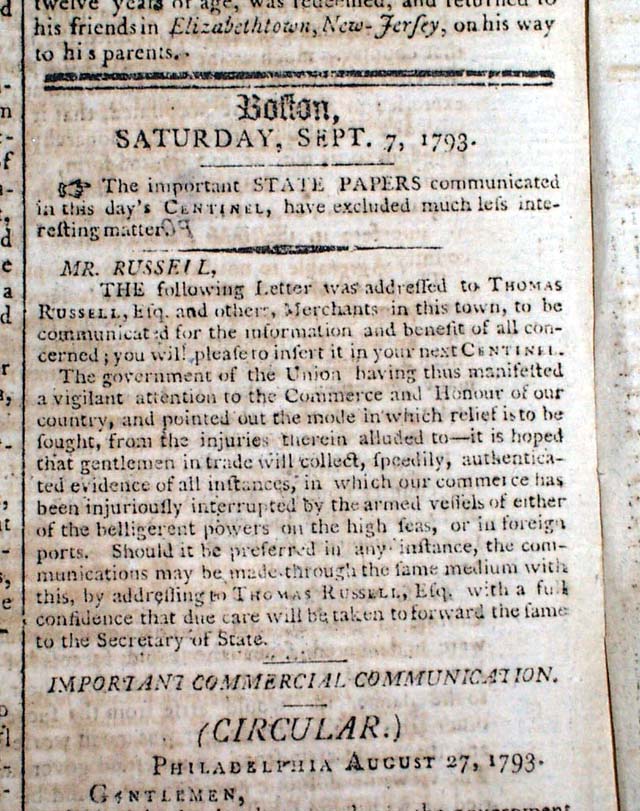
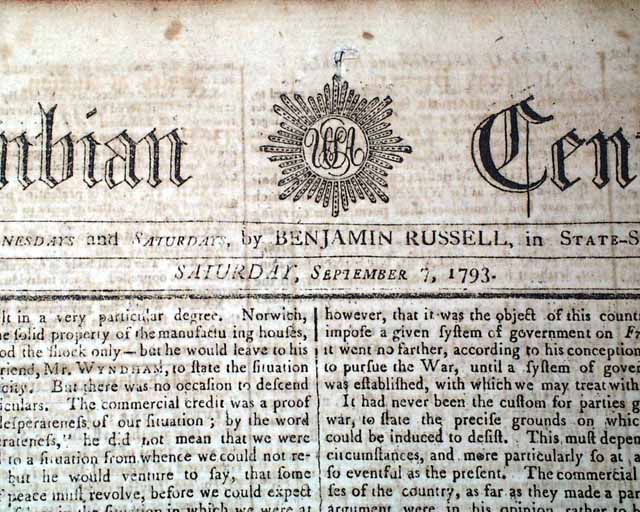
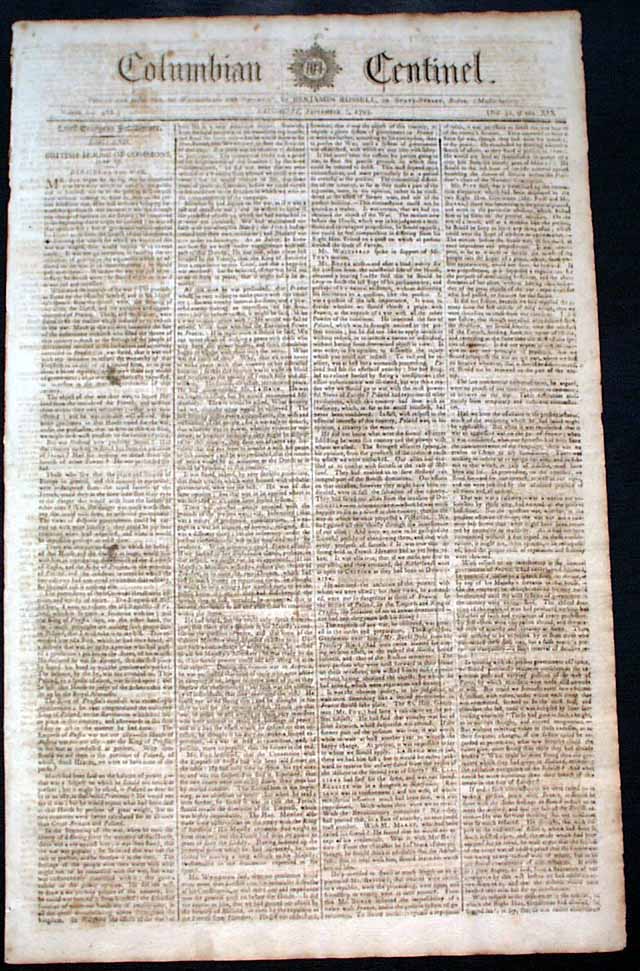
COLUMBIAN CENTINEL, Boston, Sept. 7, 1793
* Early Thomas Jefferson document
* United States Secretary of State
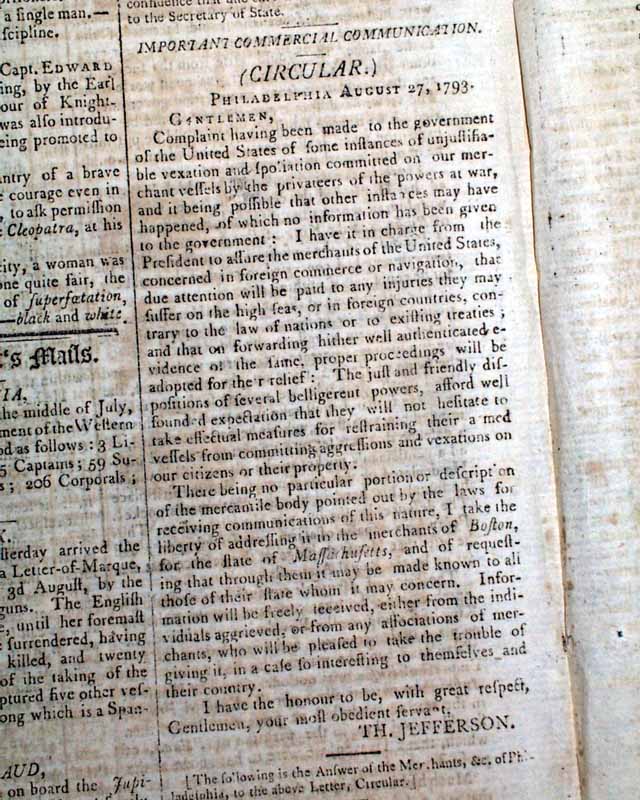
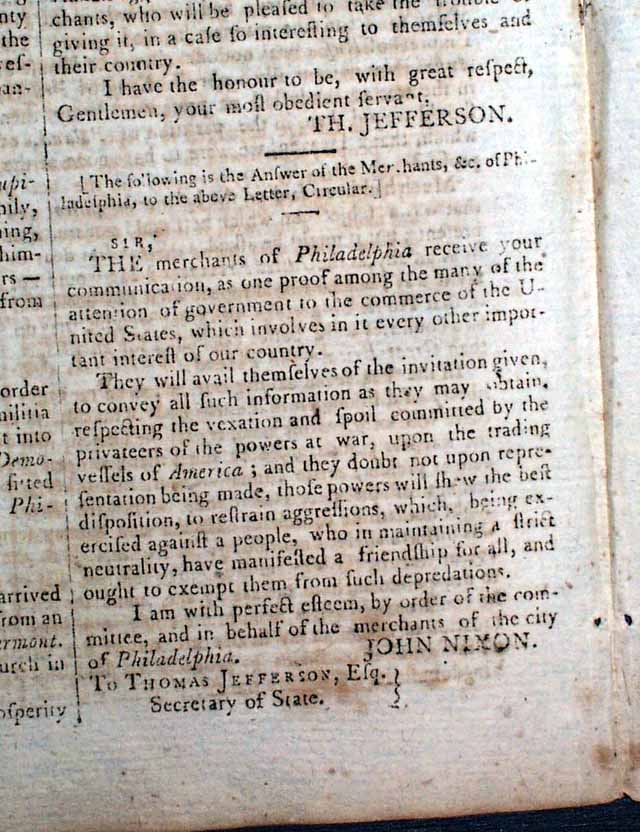
Page 2 has a "Circular" concerning "...the unjustifiable vexation and spoliation committed on our merchant vessels by the privateers of the powers at war..." and stating that due attention will be given to the matter, signed in type: TH: Jefferson.
Uncommon to have a document from Jefferson when he was Sec. of State.
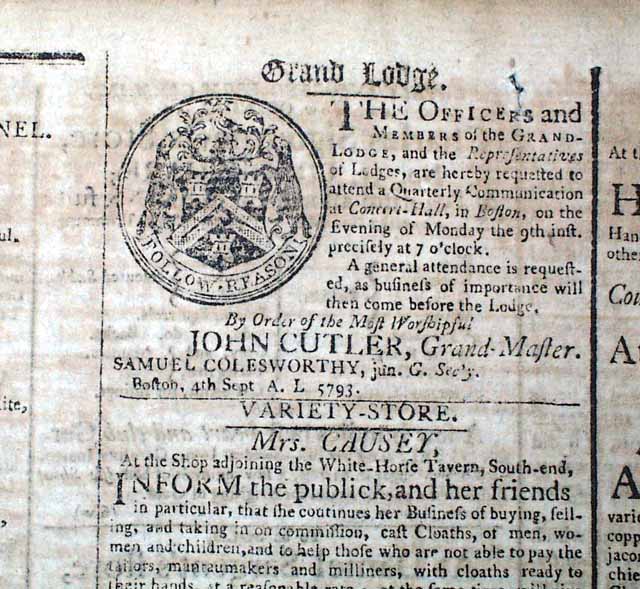
Other items include: "Proceedings relative to The President's Proclamation of Neutrality" and from the National Convention of France the: "Declaration of the Rights of Many and of the Citizens".
Four pages, very nice condition.
AI notes: Thomas Jefferson served as the first U.S. Secretary of State from 1790 to 1793 under President George Washington, playing a crucial role in shaping the nation’s early foreign policy and political identity. As Secretary of State, he sought to maintain strong ties with revolutionary France, reflecting his support for republican ideals, while opposing closer relations with Britain, which he viewed as a lingering threat to American independence. Jefferson’s tenure was marked by sharp ideological conflict with Treasury Secretary Alexander Hamilton, particularly over economic policies such as the establishment of a national bank and the federal assumption of state debts—measures Jefferson believed favored wealthy elites and undermined agrarian democracy. The debate between Jefferson’s vision of a decentralized, agrarian republic and Hamilton’s strong, commerce-driven federal government ultimately gave rise to the first political parties: the Democratic-Republicans and the Federalists. During the early 1790s, as France and Britain went to war, Jefferson also grappled with maintaining American neutrality, opposing Washington’s and Hamilton’s preference for strict neutrality toward Britain. Disillusioned by Washington’s tendency to side with Hamilton and weary of partisan divisions, Jefferson resigned at the end of 1793, but his influence as Secretary of State endured—establishing enduring principles of American diplomacy grounded in independence, republican virtue, and caution against entangling alliances.
Category: The 1600's and 1700's
Available Now
$48.00