



Maryville, Missouri Negro lynching...
Item # 646314Sorry, but this item is no longer available. Please be in touch at info@rarenewspapers.com if you would like to be placed on a want list or are interested in a potential alternate issue.
January 13, 1931
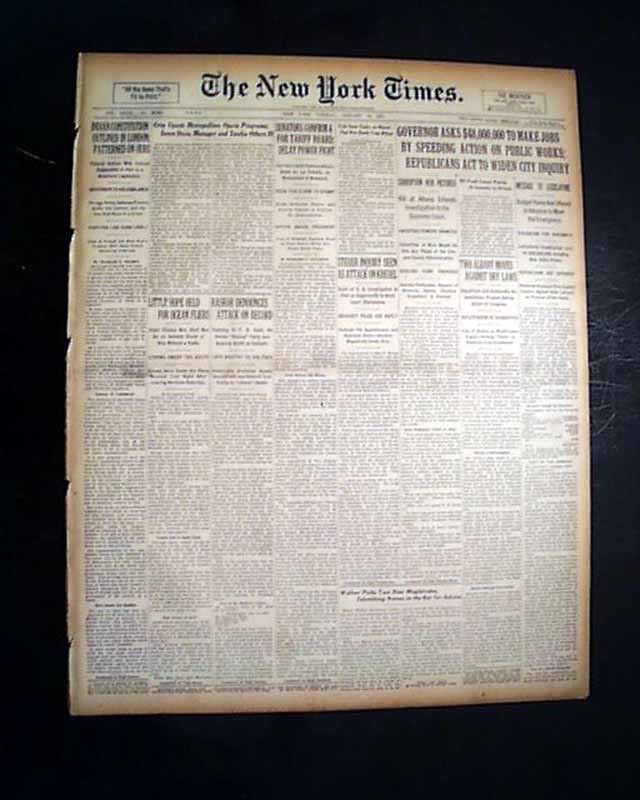
THE NEW YORK TIMES, January 13, 1931
* Raymond Gunn lynching
* Maryville MO Missouri
* Burned atop a schoolhouse
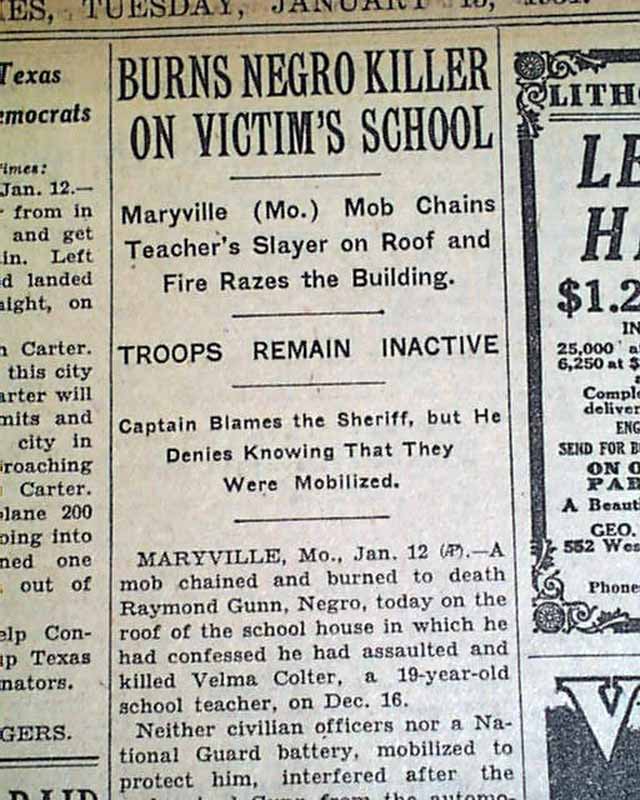
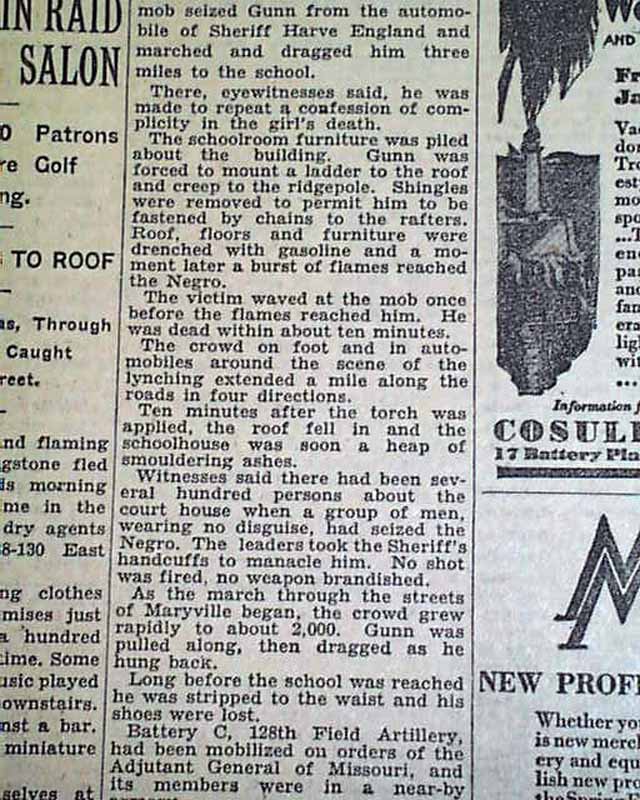
Page 3 has one column headlines: "BURNS NEGRO KILLER ON VICTIM'S SCHOOL" "Maryville (Mo.) Mob Chains Teacher's Slayer on Roof and Fire Razes the Building" "Troops Remain Inactive" and more. (see) First report coverage on the lynching of negro Raymond Gunn in Maryville, Missouri. Always nice to have notable events in history reported in this World famous publication.
Other news, sports and advertisements of the day. Complete in 56 pages, light toning and minor wear at the margins, generally nice.
wikipedia notes: In 1931, a notorious lynching occurred in Maryville when a mob burned alive African American Raymond Gunn, who had confessed to killing and attempting to rape a 20 year-old white school teacher. The lynching attracted national attention and was frequently invoked in the unsuccessful campaign to pass the Wagner-Costigan Bill, which would have made it a federal crime for law enforcement officials to refuse to try to prevent a lynching.
* Raymond Gunn lynching
* Maryville MO Missouri
* Burned atop a schoolhouse
Page 3 has one column headlines: "BURNS NEGRO KILLER ON VICTIM'S SCHOOL" "Maryville (Mo.) Mob Chains Teacher's Slayer on Roof and Fire Razes the Building" "Troops Remain Inactive" and more. (see) First report coverage on the lynching of negro Raymond Gunn in Maryville, Missouri. Always nice to have notable events in history reported in this World famous publication.
Other news, sports and advertisements of the day. Complete in 56 pages, light toning and minor wear at the margins, generally nice.
wikipedia notes: In 1931, a notorious lynching occurred in Maryville when a mob burned alive African American Raymond Gunn, who had confessed to killing and attempting to rape a 20 year-old white school teacher. The lynching attracted national attention and was frequently invoked in the unsuccessful campaign to pass the Wagner-Costigan Bill, which would have made it a federal crime for law enforcement officials to refuse to try to prevent a lynching.
Category: The 20th Century


