Home >
The Patent Act...
The Patent Act...
Item # 559940
Currently Unavailable. Contact us if you would like to be placed on a want list or to be notified if a similar item is available.
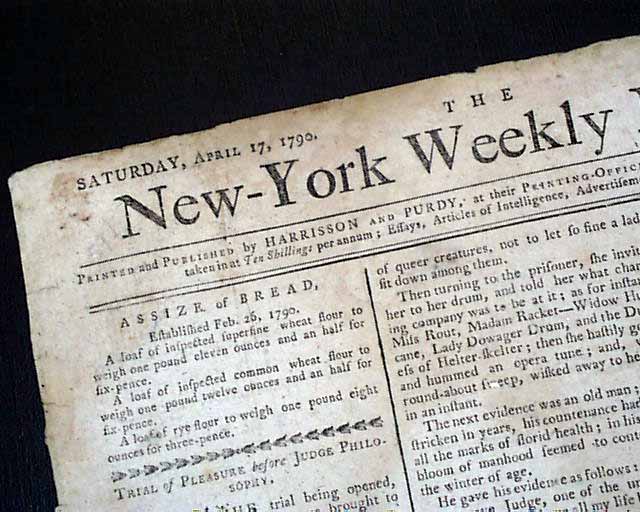
April 17, 1790
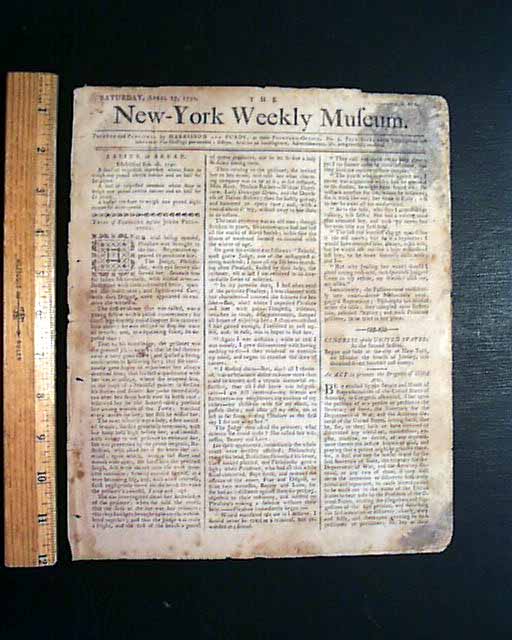
NEW YORK WEEKLY MUSEUM, New York, NY, April 17, 1790
* Patent Act of 1790
* President George Washington
* John Adams
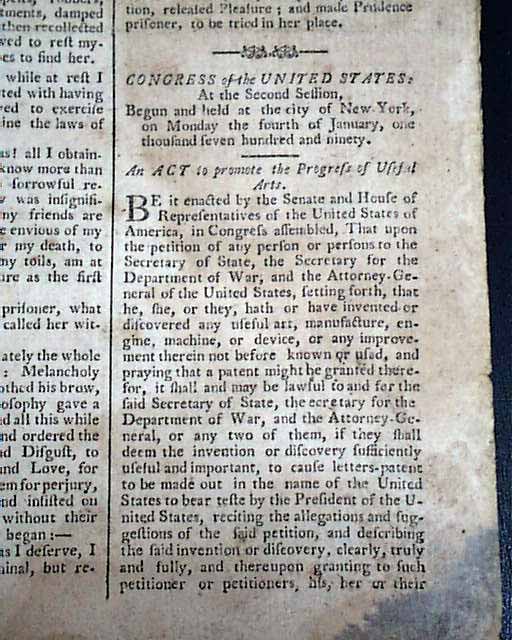
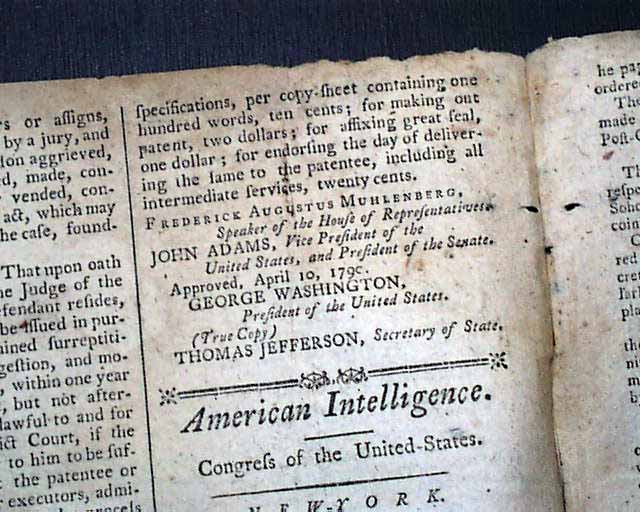
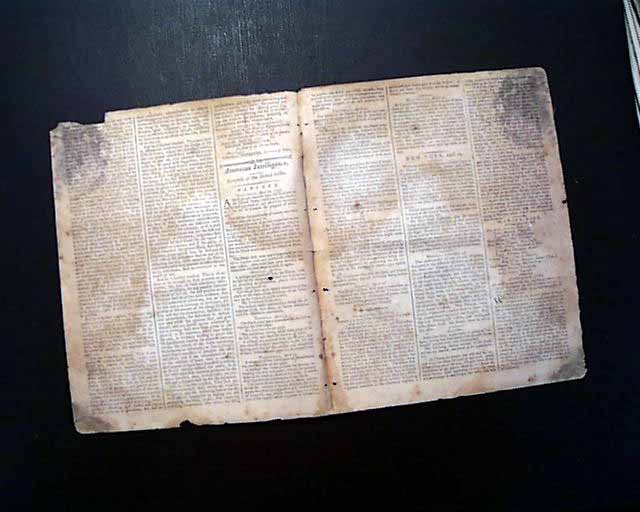
On the front page under "Congress of the United States" is a complete printing of: "An ACT to promote the Progress of useful Arts" which carries over to take most of page 2 & where it is signed in type by the President, George Washington, as well as by John Adams & Thomas Jefferson (see).
This was the all-important "Patent Act" establishing the system for offering protective patents to those filing for inventions & improvement, still a very important part of our economic system today.
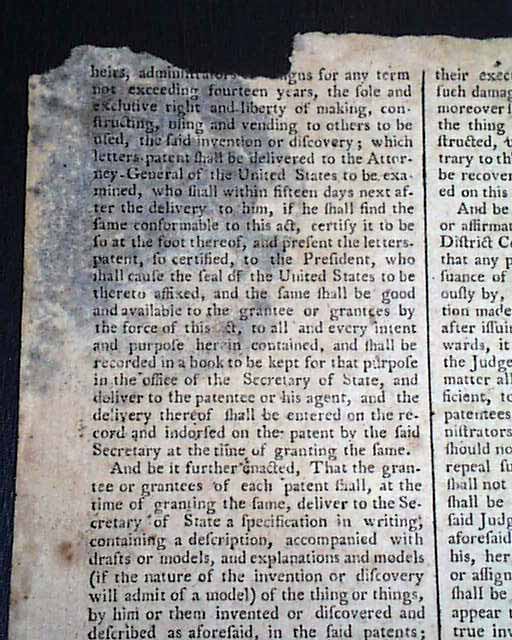
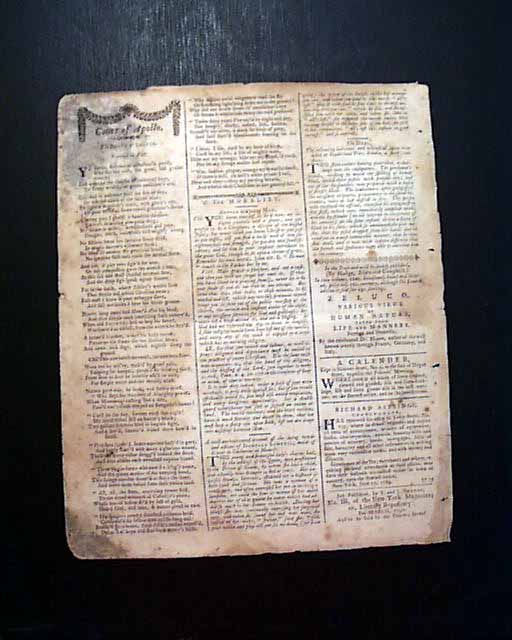
Great to have this historic document in a New York newspaper where the capital was in 1790, and also beginning on the front page. Some staining near the right edge does not cause loss of readability, small piece from the top margin causes loss to parts of 3 words in the Patent Act (see), light damp staining.
Four pages, measures 9 1/2 by 11 3/4 inches.
wikipedia notes: On April 10, 1790, President George Washington signed the bill that laid the foundation of the modern American patent system. This date marks the first time in American history that the law gave inventors rights to their creations.
The 1790 law gave the Patent Board members the power to grant a patent. Their authority was absolute and could not be appealed. The first board members included Thomas Jefferson, Secretary of State, who was considered the first administrator of the American patent system and the first patent examiner; Henry Knox, Secretary of War; and Edmund Randolph, Attorney General. The Department of State had the responsibility for administering the patent laws, and fees for a patent were between $4 and $5, with the board deciding on the duration of each patent, not to exceed 14 years.
The Act of April 10, 1790 also defined the subject matter of a U.S. patent as "any useful art, manufacture, engine, machine, or device, or any improvement thereon not before known or used." Applicants were to provide a patent specification and drawing and, if possible, a model. After examining the application, the board members would issue a patent if they deemed "the invention or discovery sufficiently useful and important."
On July 31, 1790, Samuel Hopkins of Philadelphia, PA, received the first U.S. patent for an improvement in "the making of Pot ash and Pearl ash by a new Apparatus and Process." President George Washington signed the patent, as did Attorney General Edmund Randolph and Secretary of State Thomas Jefferson. The original document is still in existence in the collections of the Chicago Historical Society.
Category: The 1600's and 1700's
No Longer Available