Home >
Item # 559172
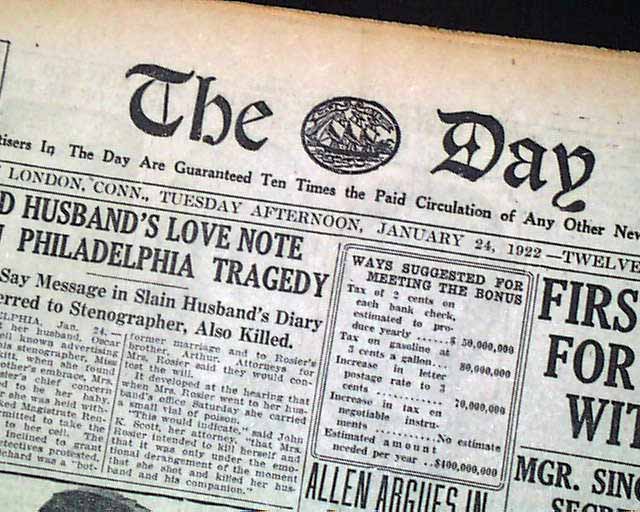
THE DAY, New London, Connecticut CT February 24, 1922
* Mohandas Karamchand Gandhi
* The Mahatma
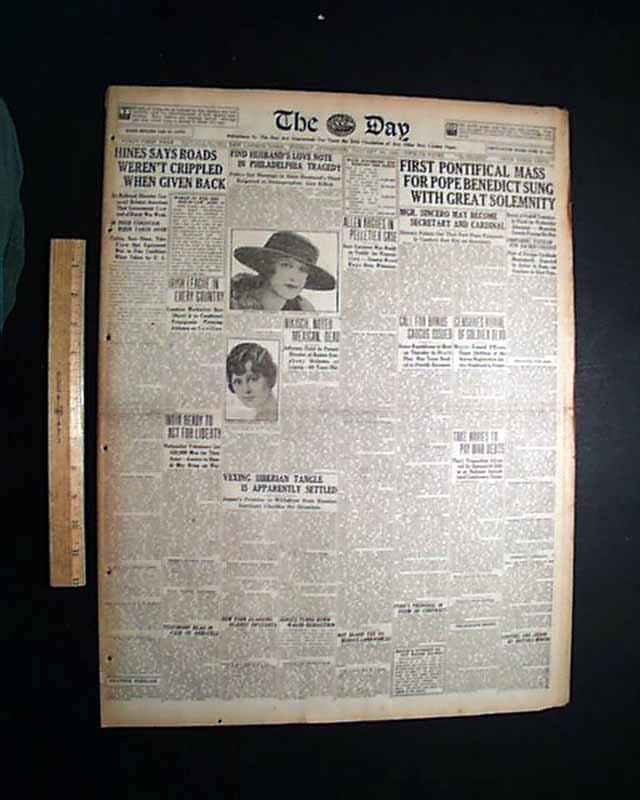
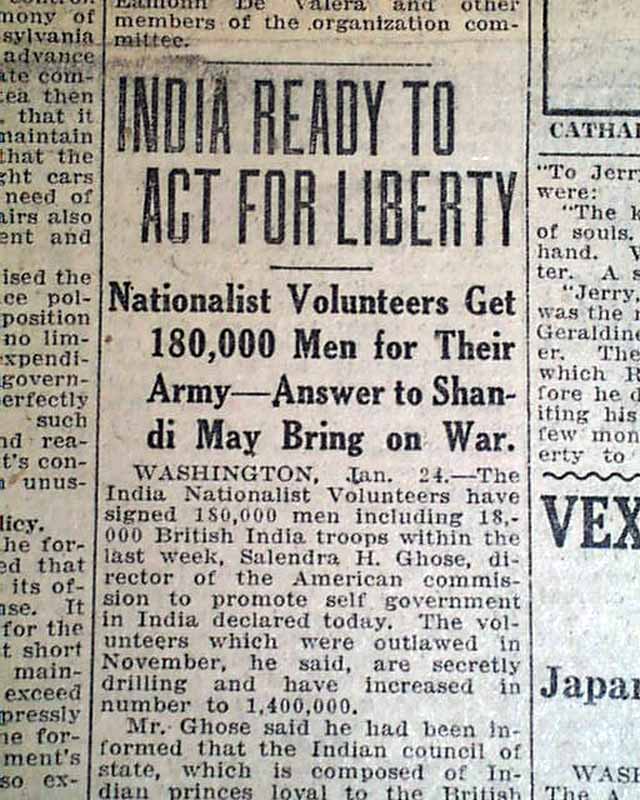
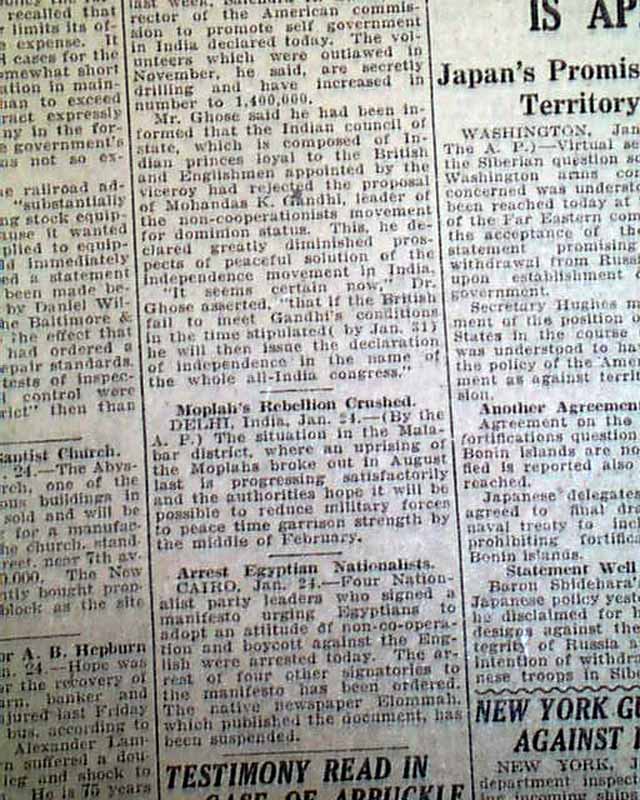
This 12 page newspaper has one column headlines on the front page:
* INDIA READY TO ACT FOR LIBERTY
* Nationalist Volunteers Get 180,000 Men for Their Army--Answer to Shandi May Bring on War
Other news of the day. Light browning with minor margin wear, otherwise in good condition.
wikipedia notes: Mohandas Karamchand Gandhi Hi-Mohandas_Karamchand_Gandhi (October 1869 – 30 January 1948) was a major political and spiritual leader of India and the Indian independence movement. He was the pioneer of satyagraha—resistance to tyranny through mass civil disobedience, firmly founded upon ahimsa or total non-violence—which led India to independence and inspired movements for civil rights and freedom across the world. He is commonly known around the world as Mahatma Gandhi and in India also as Bapu. He is officially honoured in India as the Father of the Nation; his birthday, 2 October, is commemorated there as Gandhi Jayanti, a national holiday, and worldwide as the International Day of Non-Violence.
Gandhi first employed non-violent civil disobedience as an expatriate lawyer in South Africa, in the resident Indian community's struggle for civil rights. After his return to India in 1915, he set about organising peasants, farmers, and urban labourers in protesting excessive land-tax and discrimination. Assuming leadership of the Indian National Congress in 1921, Gandhi led nationwide campaigns for easing poverty, expanding women's rights, building religious and ethnic amity, ending untouchability, increasing economic self-reliance, but above all achieving Swaraj—the independence of India from foreign domination. Gandhi famously led Indians in the Non-cooperation movement in 1922 and in protesting the British-imposed salt tax with the 400 km (249 mi) Dandi Salt March in 1930, and later in calling for the British to Quit India in 1942. He was imprisoned for many years, on numerous occasions, in both South Africa and India.
As a practitioner of Ahimsa Gandhi swore to speak the truth, and advocated that others do the same. He lived modestly in a self-sufficient residential community and wore the traditional Indian dhoti and shawl, woven with yarn he had hand spun on a charkha. He ate simple vegetarian food, and also undertook long fasts as means of both self-purification and social protest.
Currently Unavailable. Contact us if you would like to be placed on a want list or to be notified if a similar item is available.
January 24, 1922
THE DAY, New London, Connecticut CT February 24, 1922
* Mohandas Karamchand Gandhi
* The Mahatma
This 12 page newspaper has one column headlines on the front page:
* INDIA READY TO ACT FOR LIBERTY
* Nationalist Volunteers Get 180,000 Men for Their Army--Answer to Shandi May Bring on War
Other news of the day. Light browning with minor margin wear, otherwise in good condition.
wikipedia notes: Mohandas Karamchand Gandhi Hi-Mohandas_Karamchand_Gandhi (October 1869 – 30 January 1948) was a major political and spiritual leader of India and the Indian independence movement. He was the pioneer of satyagraha—resistance to tyranny through mass civil disobedience, firmly founded upon ahimsa or total non-violence—which led India to independence and inspired movements for civil rights and freedom across the world. He is commonly known around the world as Mahatma Gandhi and in India also as Bapu. He is officially honoured in India as the Father of the Nation; his birthday, 2 October, is commemorated there as Gandhi Jayanti, a national holiday, and worldwide as the International Day of Non-Violence.
Gandhi first employed non-violent civil disobedience as an expatriate lawyer in South Africa, in the resident Indian community's struggle for civil rights. After his return to India in 1915, he set about organising peasants, farmers, and urban labourers in protesting excessive land-tax and discrimination. Assuming leadership of the Indian National Congress in 1921, Gandhi led nationwide campaigns for easing poverty, expanding women's rights, building religious and ethnic amity, ending untouchability, increasing economic self-reliance, but above all achieving Swaraj—the independence of India from foreign domination. Gandhi famously led Indians in the Non-cooperation movement in 1922 and in protesting the British-imposed salt tax with the 400 km (249 mi) Dandi Salt March in 1930, and later in calling for the British to Quit India in 1942. He was imprisoned for many years, on numerous occasions, in both South Africa and India.
As a practitioner of Ahimsa Gandhi swore to speak the truth, and advocated that others do the same. He lived modestly in a self-sufficient residential community and wore the traditional Indian dhoti and shawl, woven with yarn he had hand spun on a charkha. He ate simple vegetarian food, and also undertook long fasts as means of both self-purification and social protest.
Category: The 20th Century
No Longer Available