

The Battle of Britain...
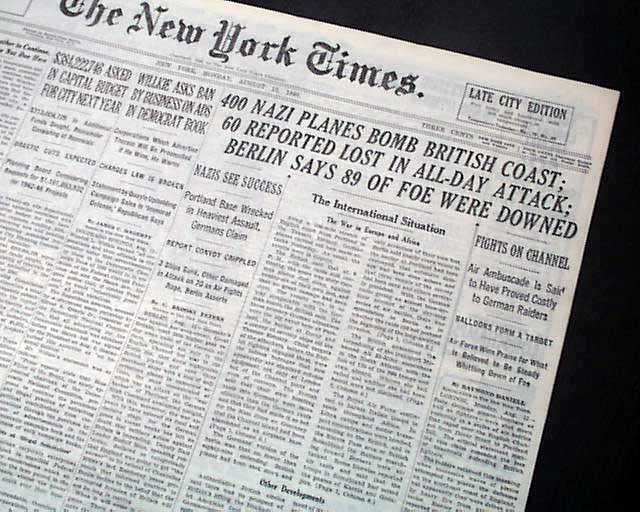
THE NEW YORK TIMES, Aug. 12, 1940
- Battle of Britain
- London bombings
- WWII Nazi bombers
The top of the front page has a four column headline: "400 NAZI PLANES BOMB BRITISH COAST; 60 REPORTED LOST IN ALL-DAY ATTACK; BERLIN SAYS 89 OF FOE WERE DOWNED" plus related subheads. (see) More on page 3.
Complete with all 32 pages, rag edition in great condition.
Background: On August 12, 1940, the Battle of Britain entered a decisive new phase as the Luftwaffe shifted from attacking English Channel convoys to launching coordinated precision strikes against Britain’s coastal Chain Home radar network and forward RAF airfields on the eve of Adlertag ("Eagle Day"). In an effort to blind Britain's integrated air defense ("the Dowding System"), German fighter-bombers (Erprobungsgruppe 210) and Stuka dive-bombers struck five coastal radar stations—knocking RAF Ventnor on the Isle of Wight offline for 11 days—while simultaneously bombing forward airfields at RAF Manston, Hawkinge, and Lympne, sinking two naval trawlers in the Thames Estuary, and mounting a major midday Ju 88 raid on the Portsmouth dockyard that cost the commander of Kampfgeschwader 51 his life. Although the Luftwaffe lost 32 aircraft to the RAF's 18 and failed to permanently cripple British fighter operations—as ground crews repaired cratered runways within hours and mobile units bridged the radar gap—the day was historically pivotal because it proved Britain's radar stations were vulnerable, yet German high command fatally chose not to sustain attacks against them afterward, leaving intact the very warning system that enabled outnumbered RAF Fighter Command to win the battle.
Other issues you may like
§ related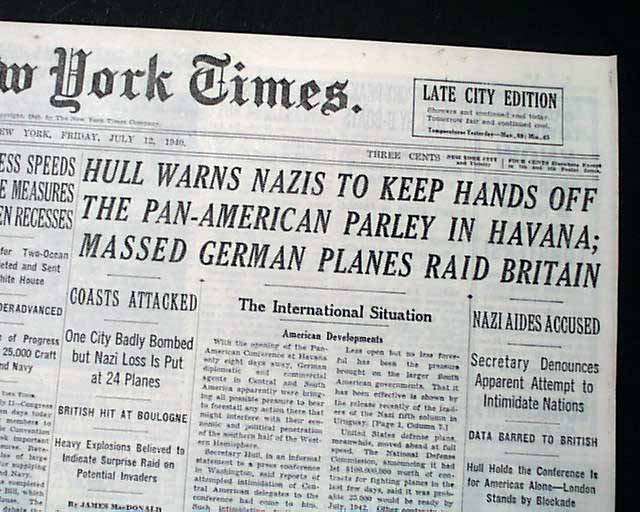
THE NEW YORK TIMES, New York, NY, July 12, 1940
- Battle of Britain begins
- World War II original
- Nazis bomb London and more
This 34 page newspaper has a four
...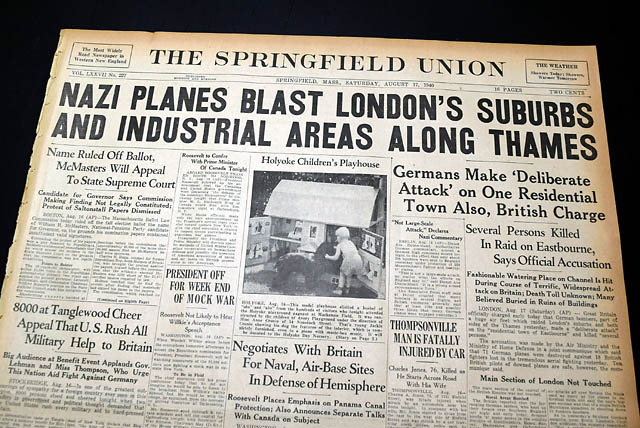
THE SPRINGFIELD UNION, Mass., Aug. 17, 1940
- Battle of Britain - Adlertag (Eagle Attack)
- German Luftwaffe vs. British Royal Air Force
- World War II - WWII
The
...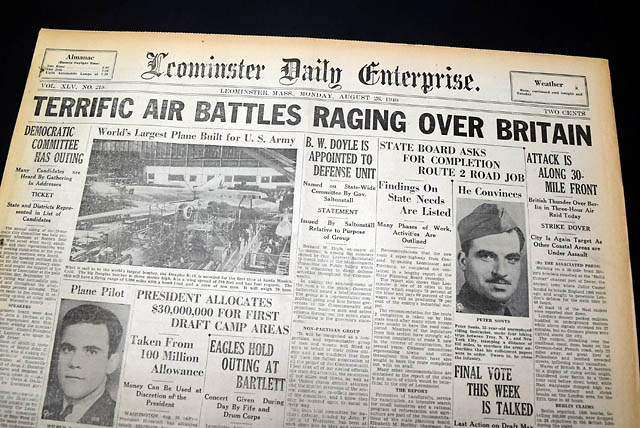
LEOMINSTER DAILY ENTERPRISE, Mass. Aug. 26, 1940
- Battle of Britain aerial fight
- Royal Air Force - Fleet Air Arm
- Nazi Germany - German Luftwaffe
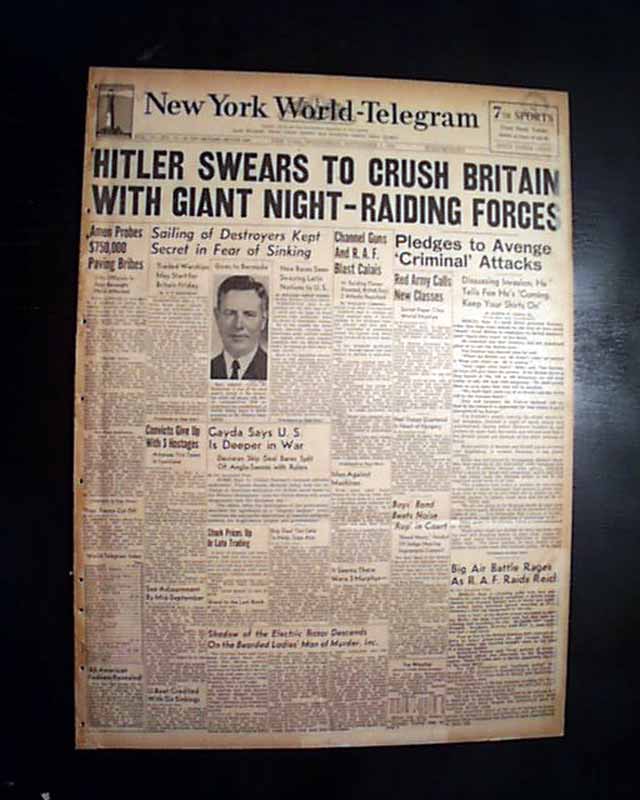
The front page
...
THE NEW YORK TIMES, August 27, 1940
- Battle of Britain
- London, England bombings
- World War II - WWII
The the top of the front page has a nice banner headline:
...