Social Security bill ratification in 1935...
Item # 728245
·
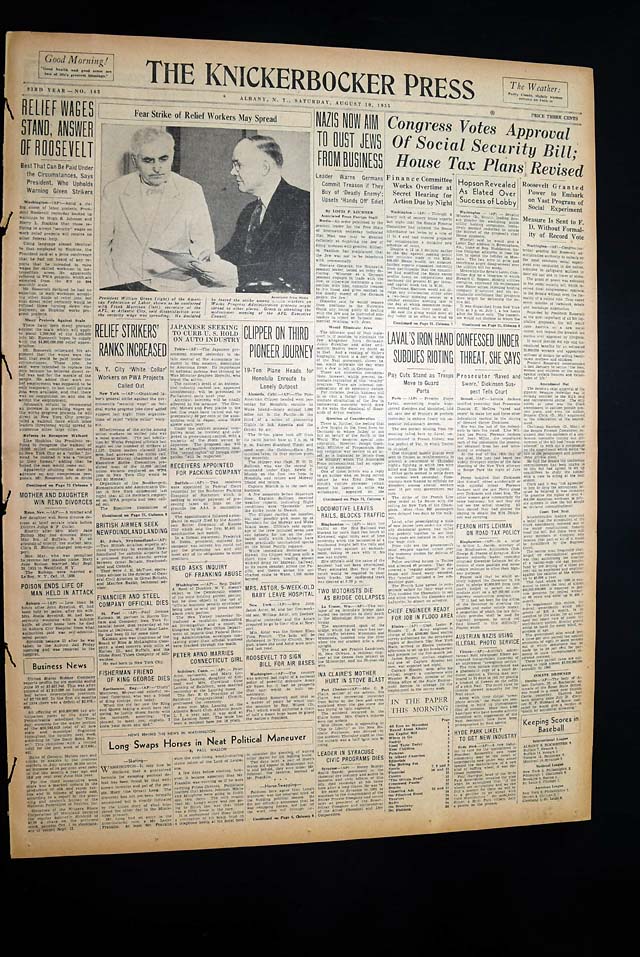
THE KNICKERBOCKER PRESS, Albany, New York, August 10, 1935.
* Social Security bill ratification
* Passes Senate vote & to be signed
* Franklin D. Roosevelt - FDR
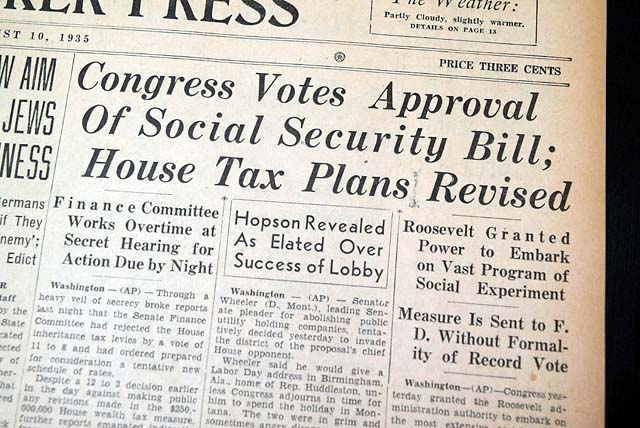
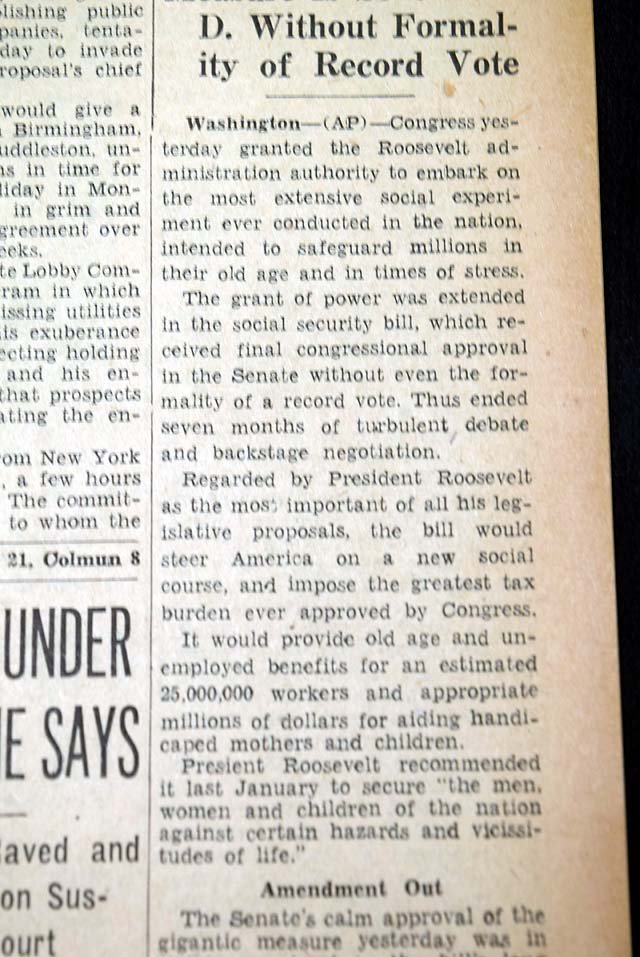
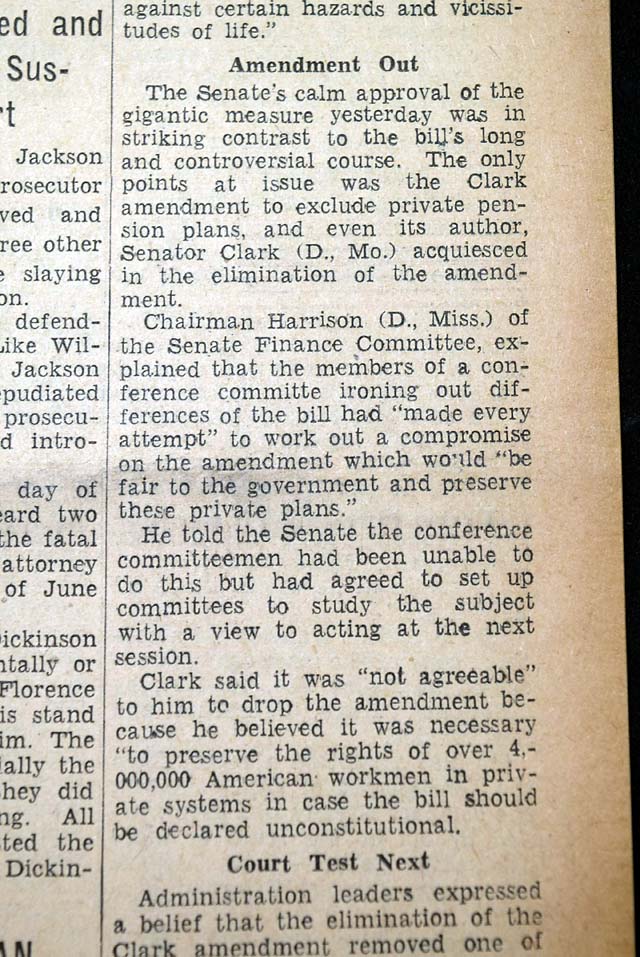
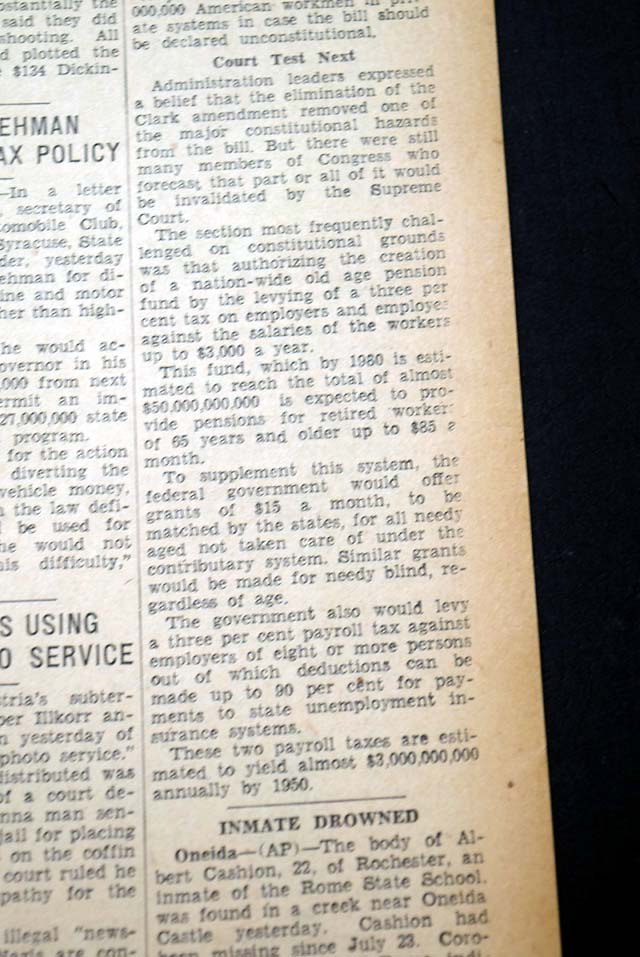
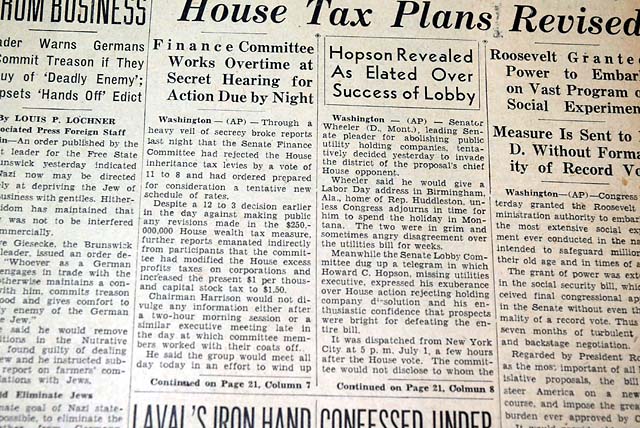
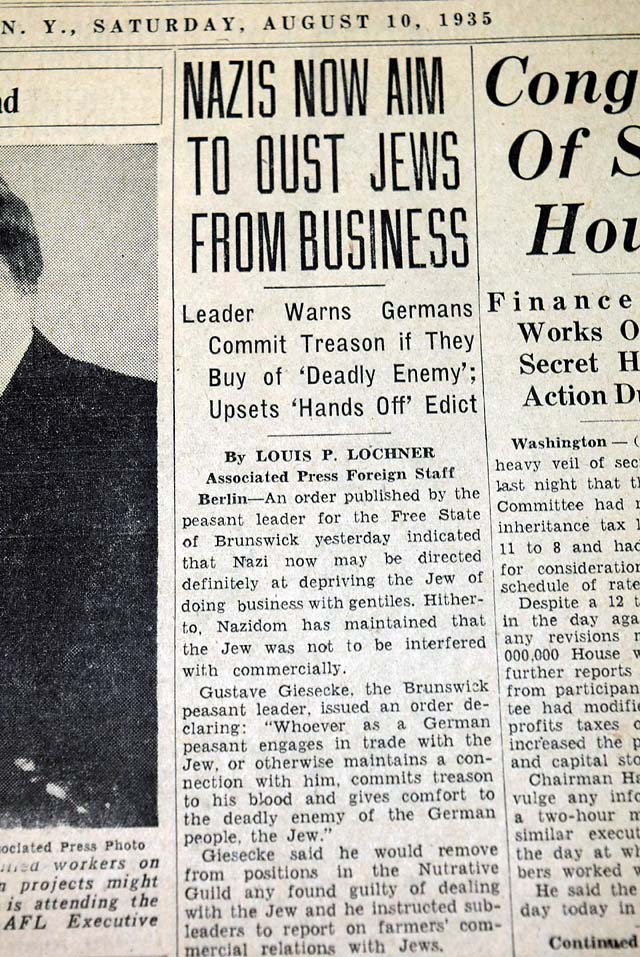
The top of the front page has a three column heading: "Congress Votes Approval Of Social Security Bill" with subheads. (see images)
Complete with 24 pages, light toning at the margins, some small binding slits along the spine, generally very nice.
Background: On August 9, 1935, President Franklin D. Roosevelt signed the Social Security Act into law, marking one of the cornerstone achievements of the New Deal during the Great Depression. The Act aimed to provide a safety net for Americans, particularly the elderly, unemployed, and disadvantaged, as the country faced widespread economic hardship. Key provisions included old-age pensions for retired workers, unemployment insurance, aid to dependent children, and assistance for the disabled. The law established a system of federal-state partnerships in administering benefits, funded by payroll taxes collected from employers and employees. While initially limited in scope, primarily covering industrial and commercial workers, the Social Security Act laid the foundation for the modern welfare state in the United States and represented a dramatic expansion of federal responsibility for social welfare.
* Social Security bill ratification
* Passes Senate vote & to be signed
* Franklin D. Roosevelt - FDR
The top of the front page has a three column heading: "Congress Votes Approval Of Social Security Bill" with subheads. (see images)
Complete with 24 pages, light toning at the margins, some small binding slits along the spine, generally very nice.
Background: On August 9, 1935, President Franklin D. Roosevelt signed the Social Security Act into law, marking one of the cornerstone achievements of the New Deal during the Great Depression. The Act aimed to provide a safety net for Americans, particularly the elderly, unemployed, and disadvantaged, as the country faced widespread economic hardship. Key provisions included old-age pensions for retired workers, unemployment insurance, aid to dependent children, and assistance for the disabled. The law established a system of federal-state partnerships in administering benefits, funded by payroll taxes collected from employers and employees. While initially limited in scope, primarily covering industrial and commercial workers, the Social Security Act laid the foundation for the modern welfare state in the United States and represented a dramatic expansion of federal responsibility for social welfare.
Category: The 20th Century
Price
$52
100% Authentic: Original printing, never a reproduction.
Other issues you may like
§ related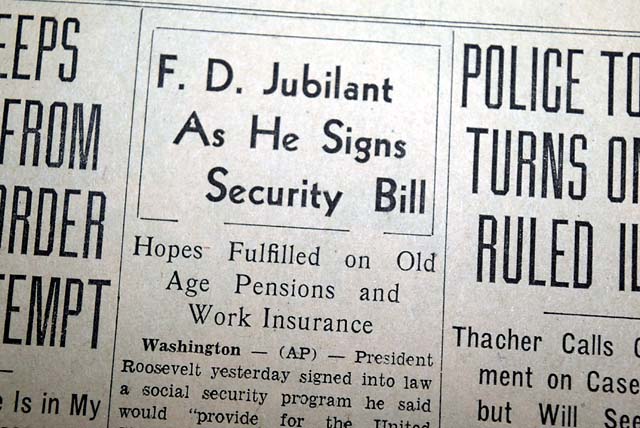
Social Security bill becomes law in 1935...
THE KNICKERBOCKER PRESS, Albany, N.Y., August 15, 1935.
* Social Security bill is passed
* Franklin D. Roosevelt signs
The top of the front page has a one
...* Social Security bill is passed
* Franklin D. Roosevelt signs
The top of the front page has a one
Aug 1935
$42
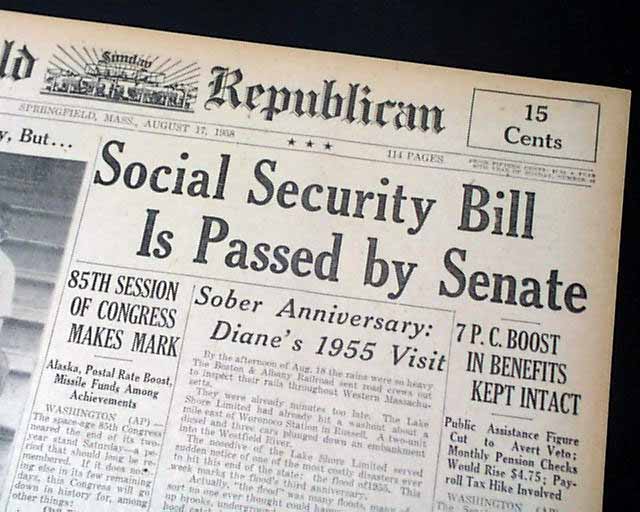
1958 Social Security Bill...
SPRINGFIELD SUNDAY REPUBLICAN, Aug. 17, 1958
* Social Security Bill - Act revisions
* United States Senate 79-0 vote passes
The top of the front page has a...
* Social Security Bill - Act revisions
* United States Senate 79-0 vote passes
The top of the front page has a...
Aug 1958
$42
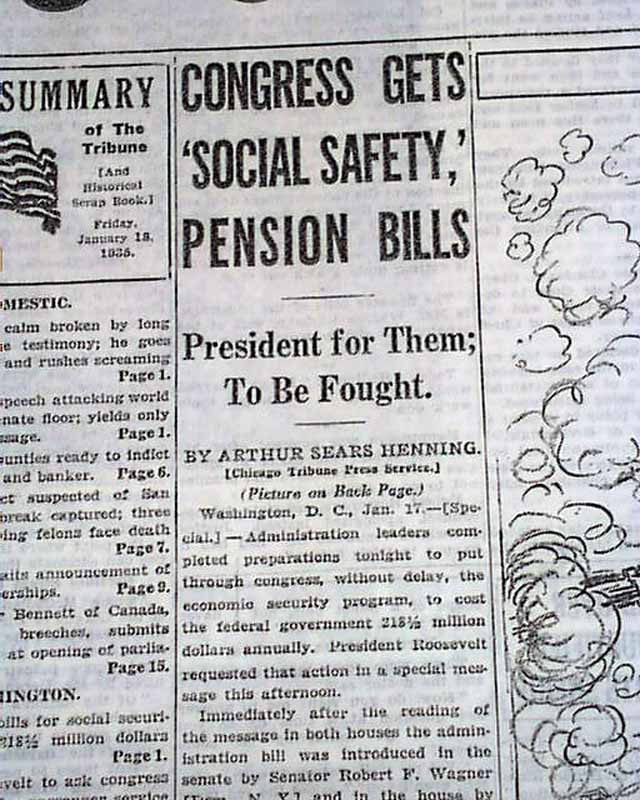
Start of Social Security in the U.S...
CHICAGO DAILY TRIBUNE, January 18, 1935.
* Start of Social Security in the U.S.
The front page has a one column heading: "CONGRESS GETS 'SOCIAL...
* Start of Social Security in the U.S.
The front page has a one column heading: "CONGRESS GETS 'SOCIAL...
Jan 1935
$45
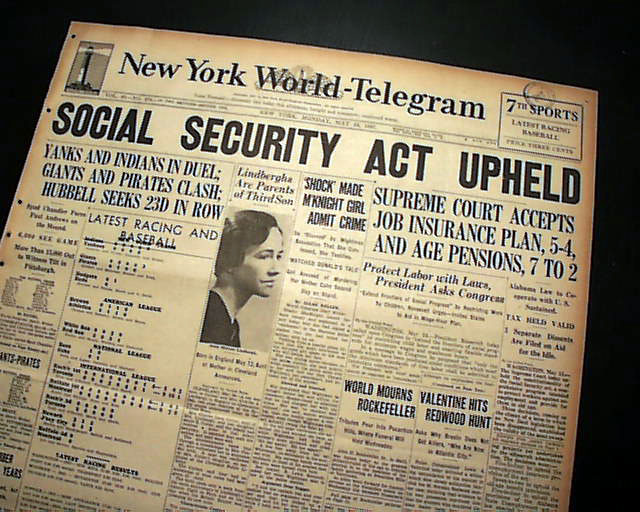
1937 Supreme Court decision on Social Security......
NEW YORK WORLD-TELEGRAM, May 24, 1937
* Helvering vs. Davis re. Social Security taxing
* United States Supreme Court decision
The front page has a...
* Helvering vs. Davis re. Social Security taxing
* United States Supreme Court decision
The front page has a...
May 1937
$72