1956 Civil Rights leaders killed and arrested...
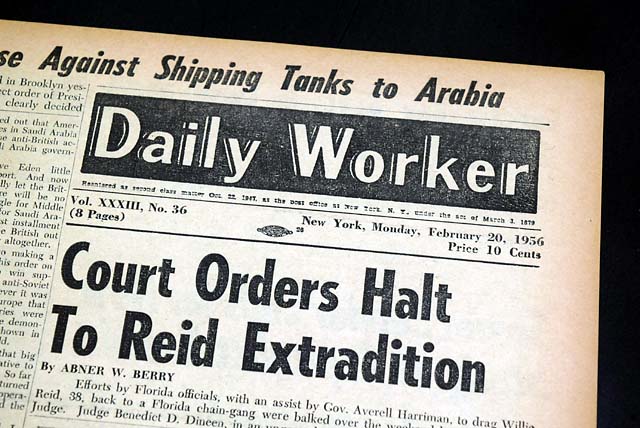
DAILY WORKER, New York, Feb. 20, 1956
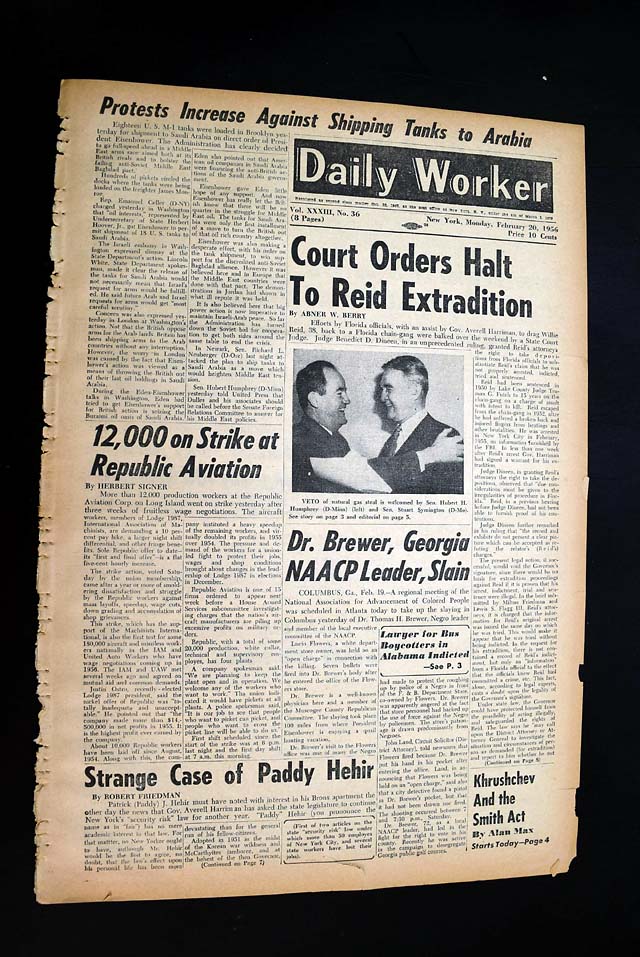
- Dr. Thomas H. Brewer assassination
- Columbus, Georgia NAACP chapter leader
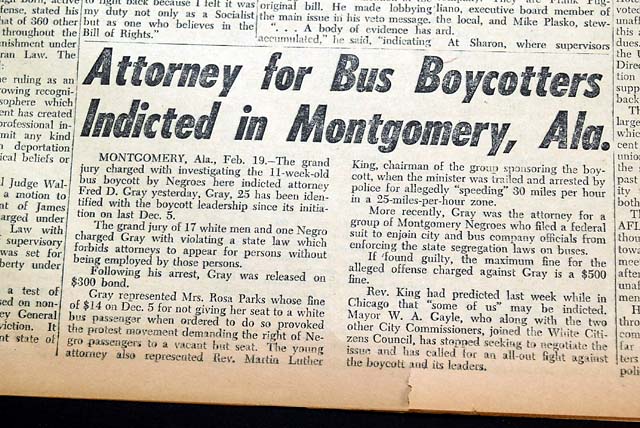
- Martin Luther King Jr.'s lawyer indicted
- Southern civil rights movement events
This publication, The Worker, represents the official voice and ideological "mouthpiece" of the Communist Party USA (CPUSA) during one of the most volatile periods of the Cold War.
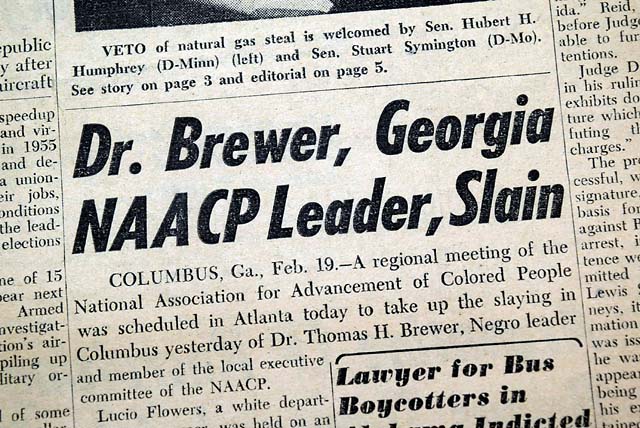
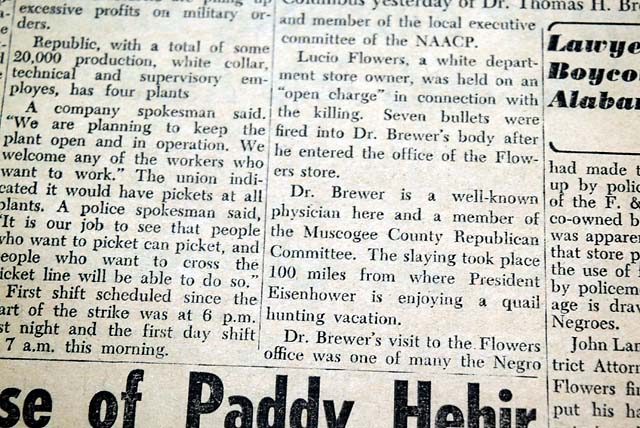
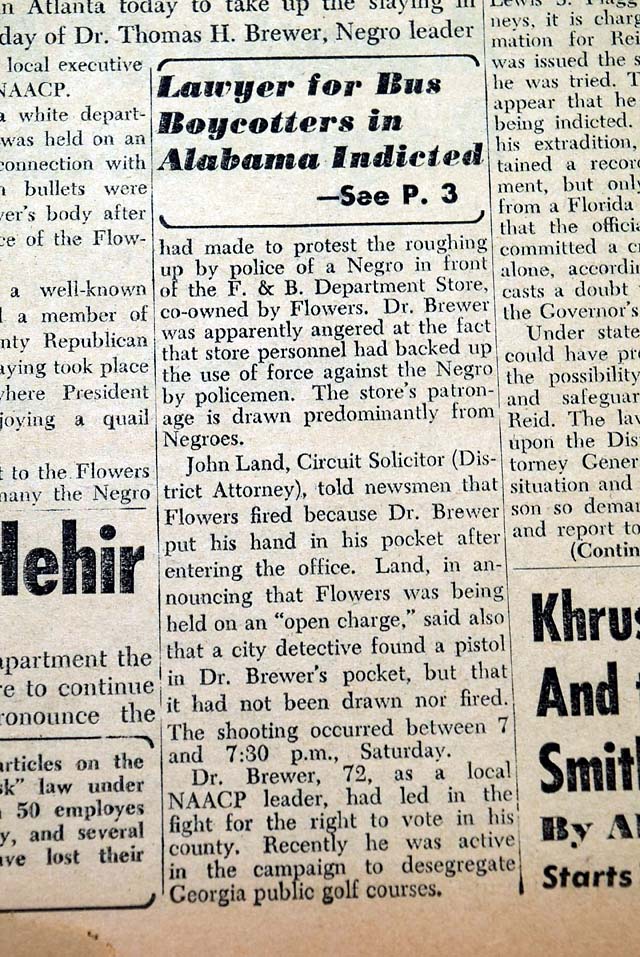
The front page has a heading that reads: "Dr. Brewer, Georgia NAACP Leader, Slain" with related photo. (see images)
Page 3 has a heading: "Attorney for Bus Boycotters Indicted in Montgomery, Ala." which was Southern civil rights lawyer Fred D. Gray. He was also Martin Luther King Jr.'s personal lawyer.
Original physical issues of The Worker from the 1950s are exceptionally rare today becuse the political climate of the McCarthy era compelled many subscribers to destroy their copies to avoid FBI surveillance and the professional ruin associated with possessing "subversive" communist literature.
Complete with 8 pages, some margin wear, generally good.
Background: The assassination of Dr. Thomas H. Brewer on February 18, 1956, stands as a pivotal but frequently overlooked tragedy of the early civil rights movement, exemplifying the deadly stakes of Southern Black political organizing. A prominent physician and founder of the Columbus, Georgia NAACP chapter, Dr. Brewer was the mastermind behind King v. Chapman (1945), the landmark federal court victory that struck down Georgia’s all-white primary system and opened voter registration to Black citizens statewide. His activism made him a target, culminating in a fatal confrontation when he was shot seven times inside a department store by Luico Flowers, a conservative Black merchant who had refused to back Brewer’s demands to report a recent act of white police brutality. When an all-white grand jury rapidly ruled the shooting self-defense and declined to indict Flowers—whose own mysterious death a year later was ruled a suicide but later reclassified by the Department of Justice as an unsolved murder—the local African American community was devastated by what they widely perceived as a state-sanctioned cover-up. The historical significance of Dr. Brewer's assassination lies in its immediate, chilling impact: it effectively decapitated the local civil rights leadership, forcing prominent Black professionals and Brewer's own family to flee the city in terror, which stalled aggressive activism in the region for a decade. Ultimately, his death underscores the profound, often fatal risks borne by early civil rights pioneers whose legal and grassroots victories laid the indispensable foundation for the national Voting Rights Act of 1965.
Other issues you may like
§ related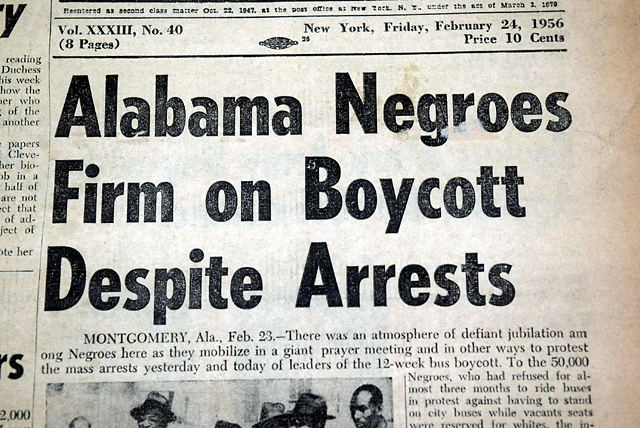
DAILY WORKER, New York, Feb. 24, 1956
- Martin Luther King Jr. arrested
- Montgomery, Alabama bus boycott
- Ralph Abernathy & other key figures
This publication,
...
DAILY WORKER, New York, Feb. 22, 1956
- Montgomery, Alabama bus boycott
- Negroes hold meeting to continue
- Ralph Abernathy & other key figures
This publication,
...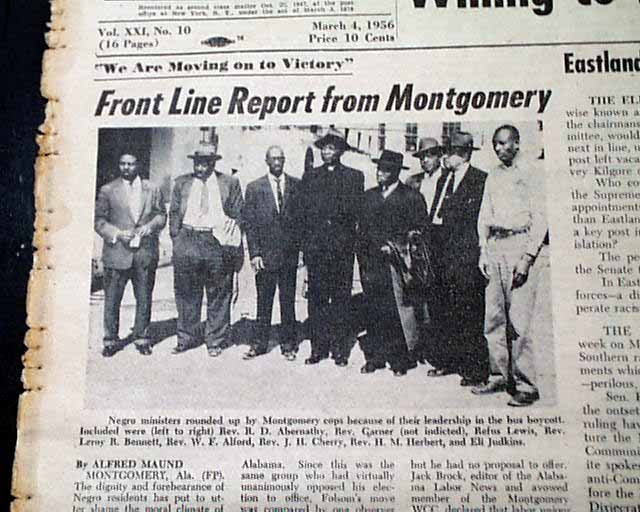
THE WORKER, New York, March 4, 1956
- Montgomery, Alabama bus boycott
- Civil Rights movement leaders arrested
- Martin Luther King Jr. - African Americans
This
...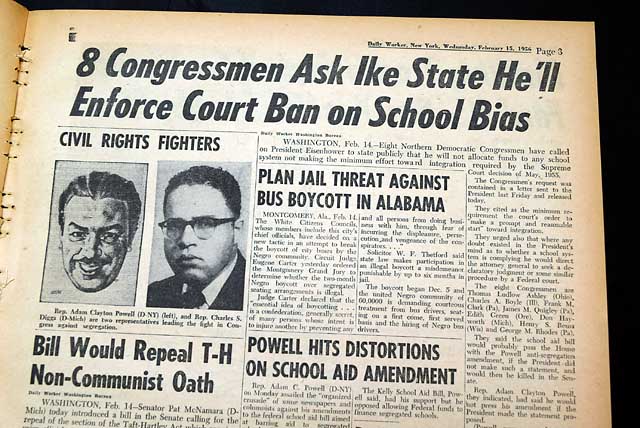
DAILY WORKER, New York, Feb. 15, 1956
- Civil Rights Movement - school segregation
- Montgomery, Alabama bus boycott
This publication, The Worker, represents the
...