1956 Alabama fugitive Negro case...
DAILY WORKER, New York, Feb. 16, 1956
- Civil Rights Movement
- Securing the right to vote
- NAACP leader Roy Wilkins
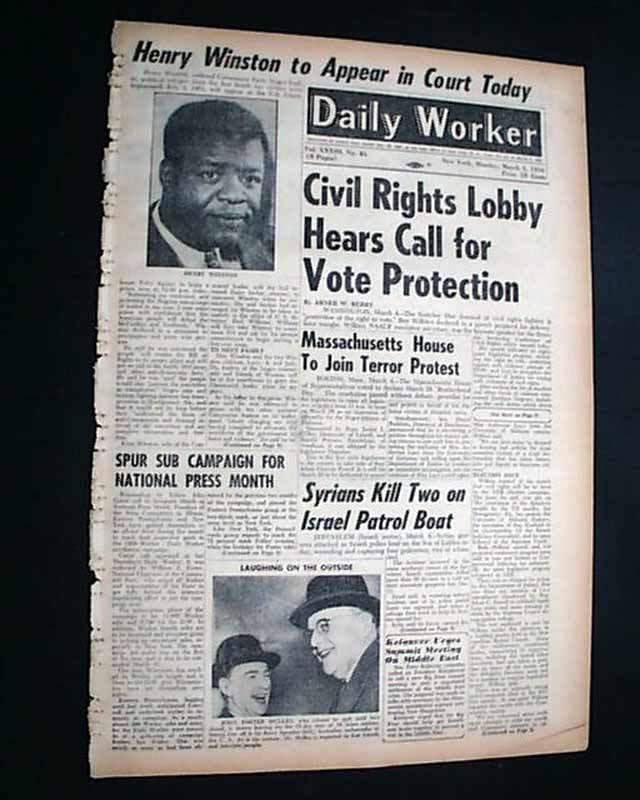
This publication, The Worker, represents the official voice and ideological "mouthpiece" of the Communist Party USA (CPUSA) during one of the most volatile periods of the Cold War.
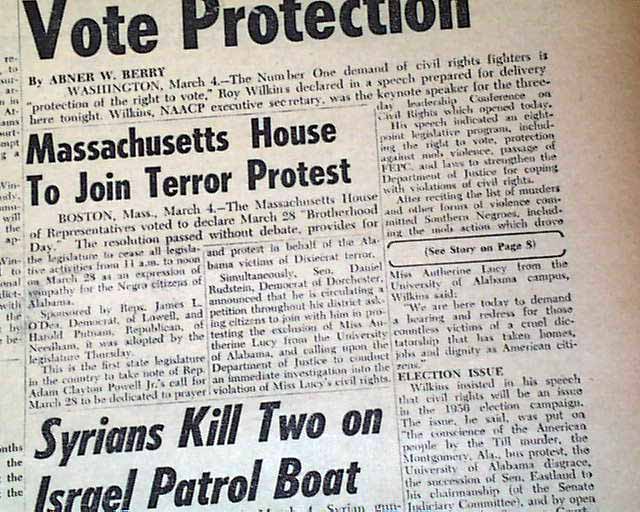
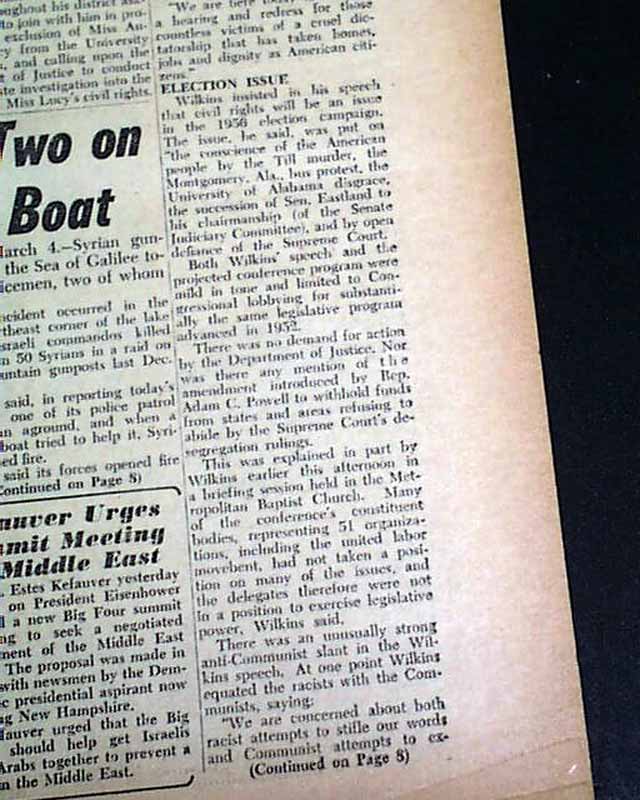
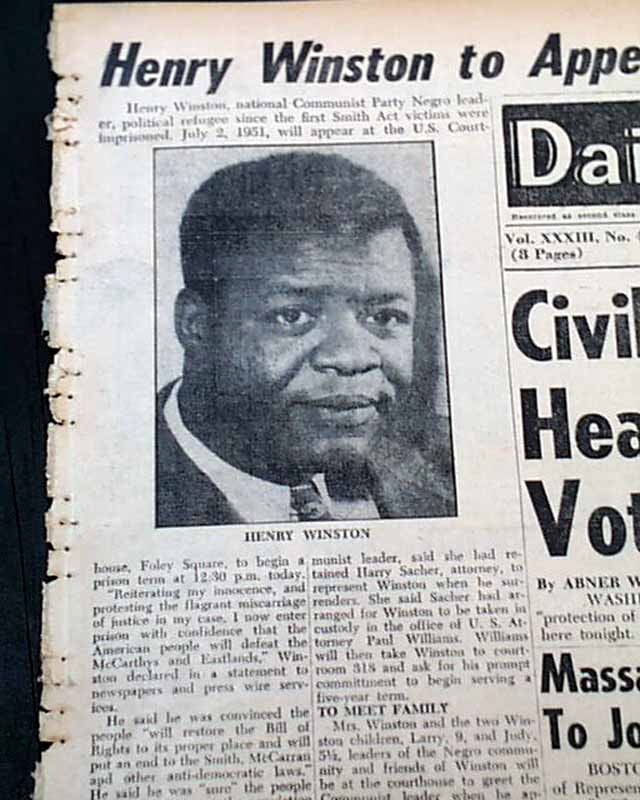
The front page has a headline that reads: "Civil Rights Lobby Hears Call for Vote Protection" (see images)
Original physical issues of The Worker from the 1950s are exceptionally rare today becuse the political climate of the McCarthy era compelled many subscribers to destroy their copies to avoid FBI surveillance and the professional ruin associated with possessing "subversive" communist literature.
Complete with 8 pages, some spine wear, otherwise in nice condition.
Background: The March 4, 1956, report from Washington D.C. represented a transformative pivot in American history, marking the federal government’s first serious commitment to civil rights since Reconstruction and the emergence of Roy Wilkins as the movement’s premier legislative strategist. On this date, the Eisenhower administration signaled its intent to seek federal authority to protect voting rights, a move that catalyzed the Delegate Assembly for Civil Rights where Wilkins mobilized over 50 organizations to demand an end to Southern "massive resistance." This event was historically significant because it shifted the movement's primary focus from local litigation to a national legislative mandate, arguing that the right to vote was the "master key" required to unlock all other constitutional freedoms. By aligning the NAACP’s lobbying muscle with the Justice Department’s new proposals, Wilkins and the D.C. assembly laid the specific groundwork for the Civil Rights Act of 1957, proving that while grassroots protests like the Montgomery Bus Boycott provided the moral spark, the legal framework for the modern era would be built through high-level federal policy and the codification of voting protections in the halls of Congress.
Other issues you may like
§ related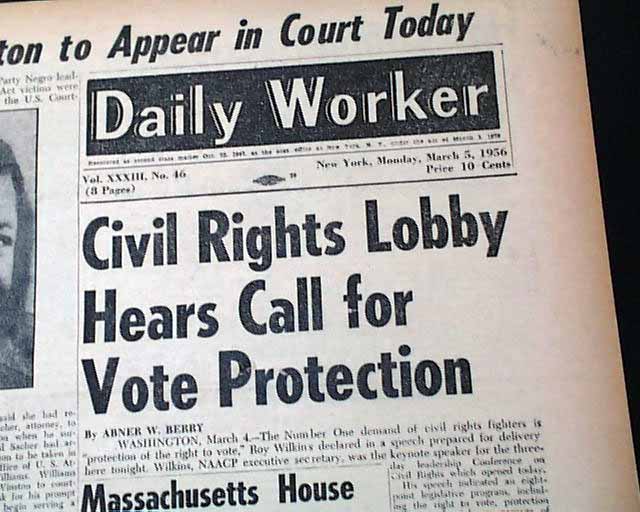
DAILY WORKER, New York, Feb. 16, 1956
- Civil Rights Movement
- Securing the right to vote
- NAACP leader Roy Wilkins
This publication, The Worker, represents the
...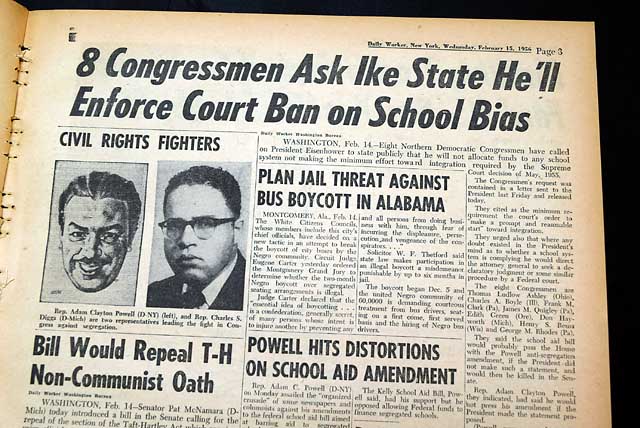
DAILY WORKER, New York, Feb. 15, 1956
- Civil Rights Movement - school segregation
- Montgomery, Alabama bus boycott
This publication, The Worker, represents the
...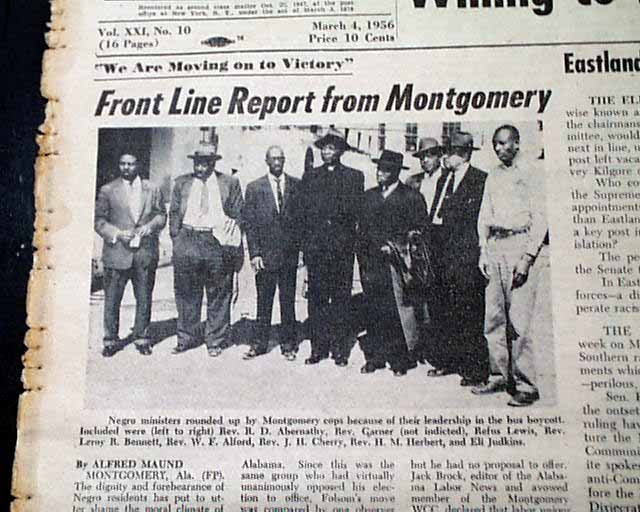
THE WORKER, New York, March 4, 1956
- Montgomery, Alabama bus boycott
- Civil Rights movement leaders arrested
- Martin Luther King Jr. - African Americans
This
...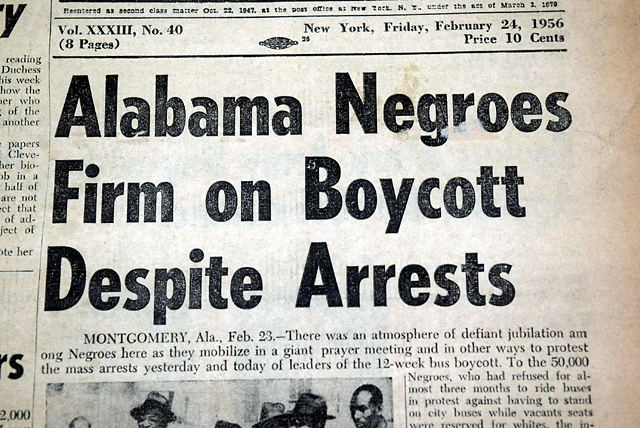
DAILY WORKER, New York, Feb. 24, 1956
- Martin Luther King Jr. arrested
- Montgomery, Alabama bus boycott
- Ralph Abernathy & other key figures
This publication,
...