1954 Creature from the Back Lagoon...
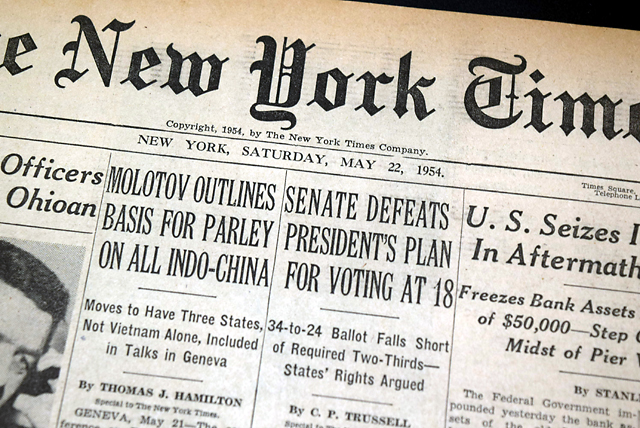
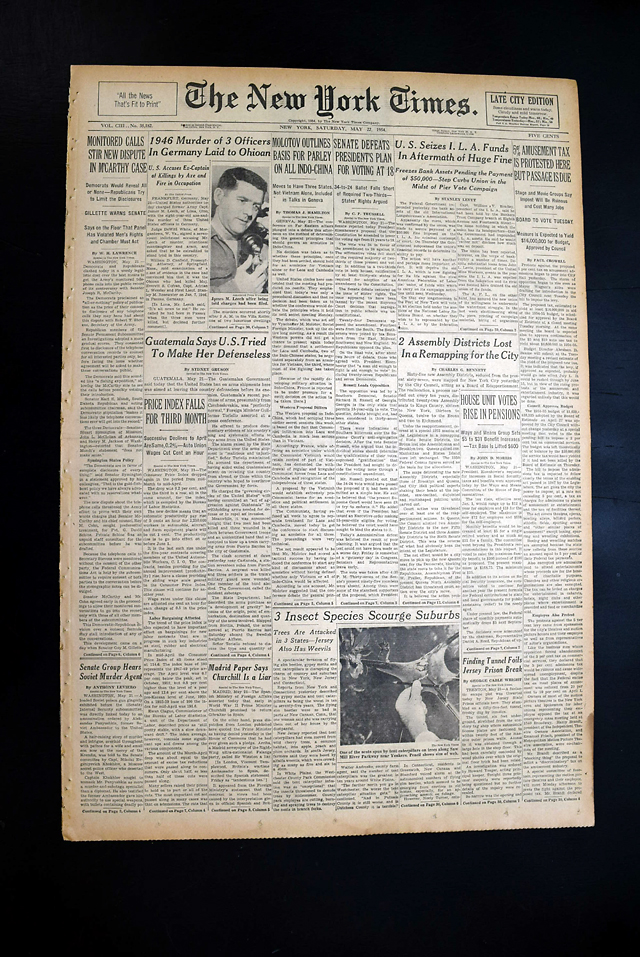
THE NEW YORK TIMES, May 22, 1954
- Creature from the Black Lagoon - Gill-man
- Third day premiere advertisement for NYC
- 3D monster horror film - movie
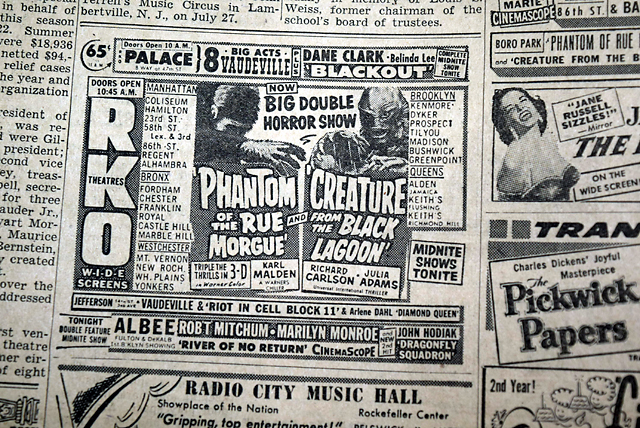
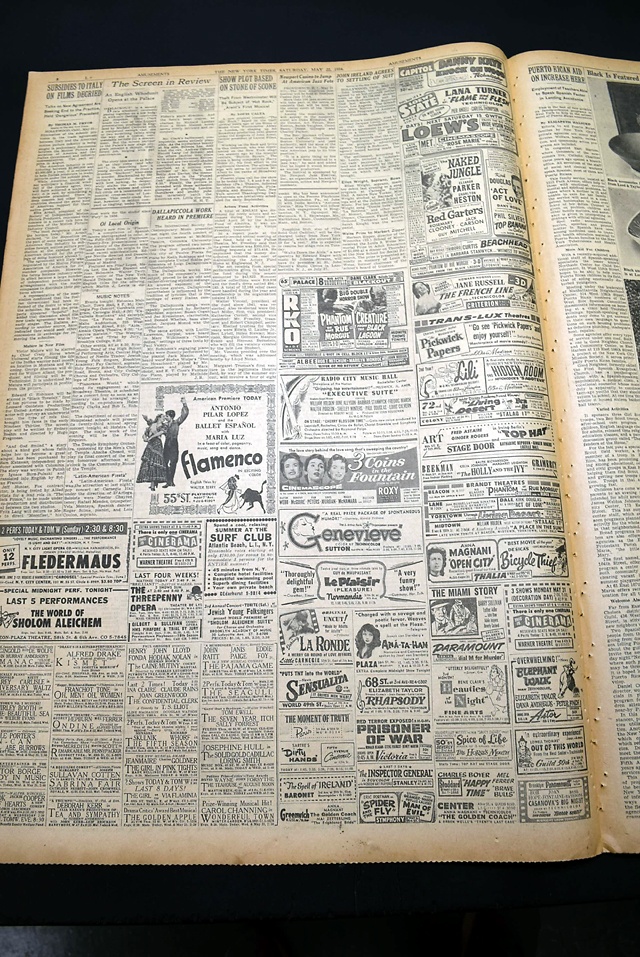
Page 8 has a 3 1/2 x 3 inch advertisement for the third day premiere (regular showings) for a double feature showing of "Phantom of the Rue Morgue" and "Creature from the Back Lagoon" in New York City. (see)
Complete with 30 pages, light toning at the margins, nice condition.
Background: The presence of the legendary RKO Palace Theatre on a May 22, 1954 advertisement or program for the Phantom of the Rue Morgue and Creature from the Black Lagoon double feature significantly elevates the historic weight and rarity of the publication, capturing a monumentally chaotic moment in American theater history. As the crown jewel of Broadway's entertainment district, the flagship RKO Palace in Times Square fiercely guarded its reputation by showcasing premium, first-run single features augmented by top-tier live acts, meaning a grueling, highly volatile four-hour 3-D double bill of mid-tier studio genre films was an absolute anomaly for its marquee. Instead, this specific booking layout highlights the RKO circuit's rapid structural pivot, where the corporate office packaged these heavy-hitting stereoscopic titles into a blockbuster twin bill for their network of neighborhood neighborhood theaters—such as the RKO Albee in Brooklyn or the RKO Keith's in Flushing—to squeeze maximum profitability out of the public's dying fascination with the mid-50s 3-D craze. To force two resource-intensive 3-D movies onto a single ticket required local projectionists to orchestrate a near-impossible technical marathon of perfectly aligning dual-projector setups while managing multiple mandatory mid-movie intermissions just to swap out synchronized film reels. Because audiences rapidly grew exhausted by the eye strain of cardboard Polaroid glasses and theater chains soon abandoned the logistical headache of dual-system 3-D for widescreen formats like CinemaScope, these prints were permanently pulled, separated, or flattened into 2-D versions within weeks. Consequently, any surviving print artifact or regional program documenting this specific double feature under the prestigious RKO banner stands as an extraordinarily rare, culturally significant relic, preserving the precise weekend that mid-century Hollywood pushed its first stereoscopic gimmick to its absolute industrial limit.
Other issues you may like
§ related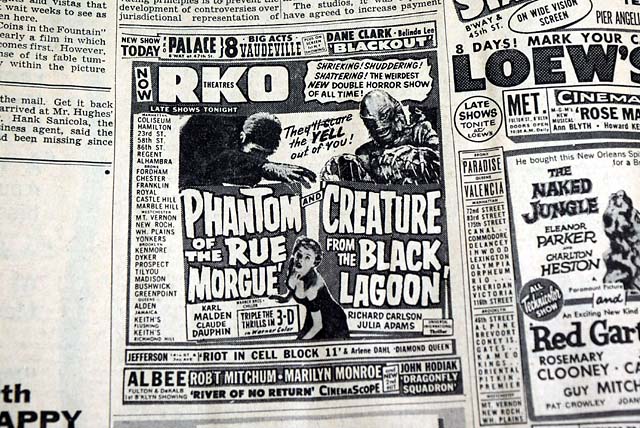
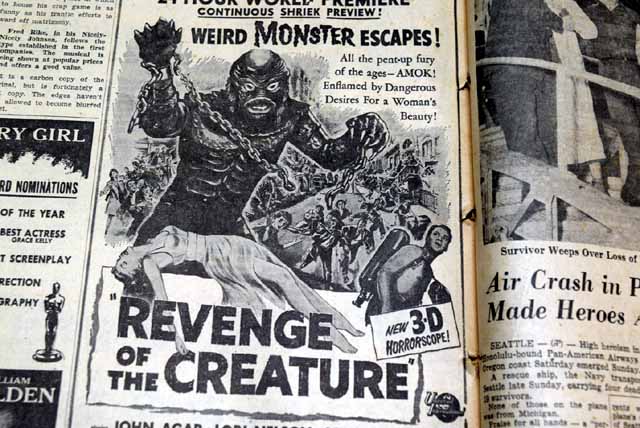
THE NEW YORK TIMES, May 21, 1954
- Creature from the Black Lagoon - Gill-man
- Opening day (2nd) advertisement for NYC
- 3D monster horror film - movie
Page 18 has
...
THE DETROIT FREE PRESS, March 28, 1955
- "Revenge of the Creature" - Gill-man
- "Creature from the Black Lagoon" sequel
- Opening day (midnight) premiere
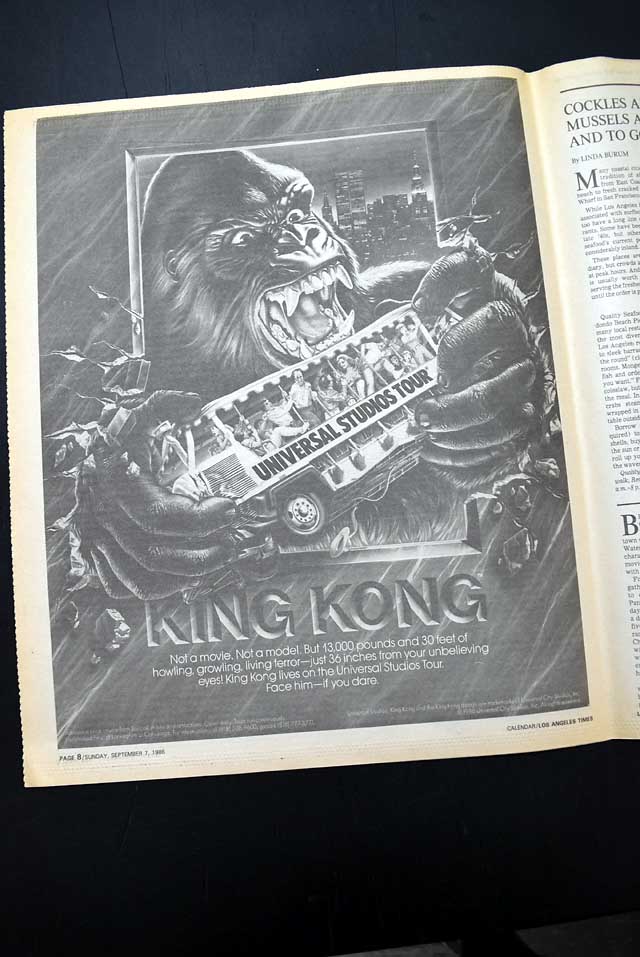
LOS ANGELES TIMES, Sept. 7, 1986 (an original vintage newspaper leaf from the Calendar section) This offering consists of four complete pages (two
...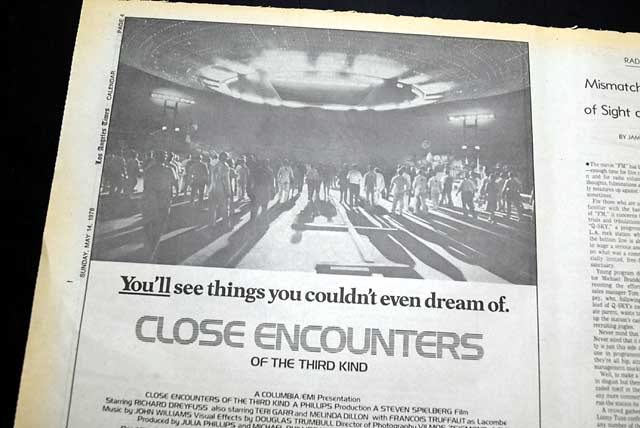
LOS ANGELES TIMES, May 14, 1978 (an original vintage newspaper leaf from the Calendar section) This offering consists of four complete pages (two
...