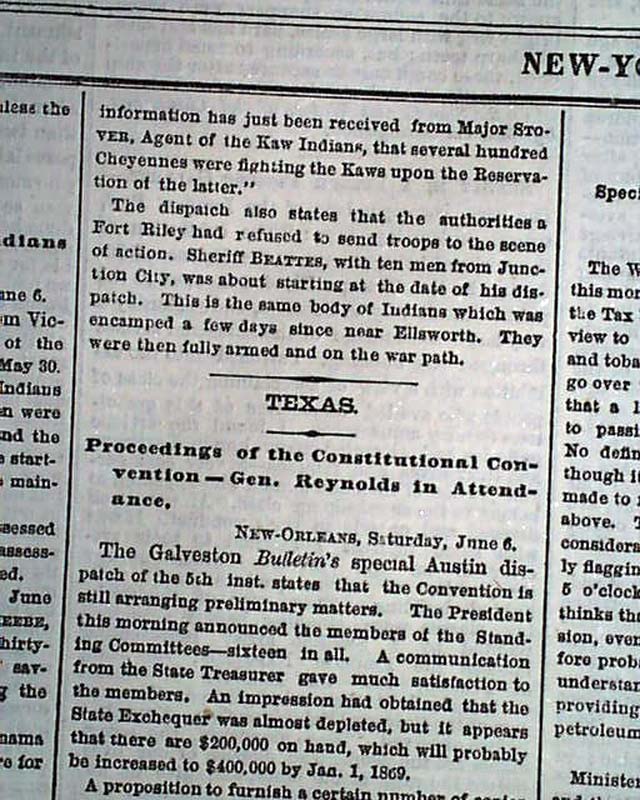
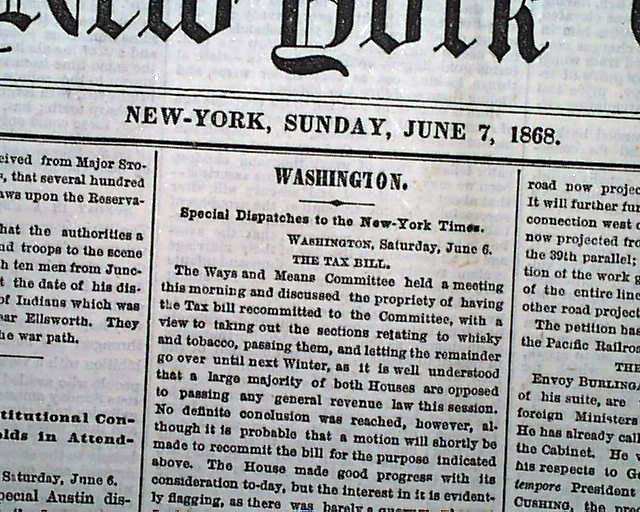
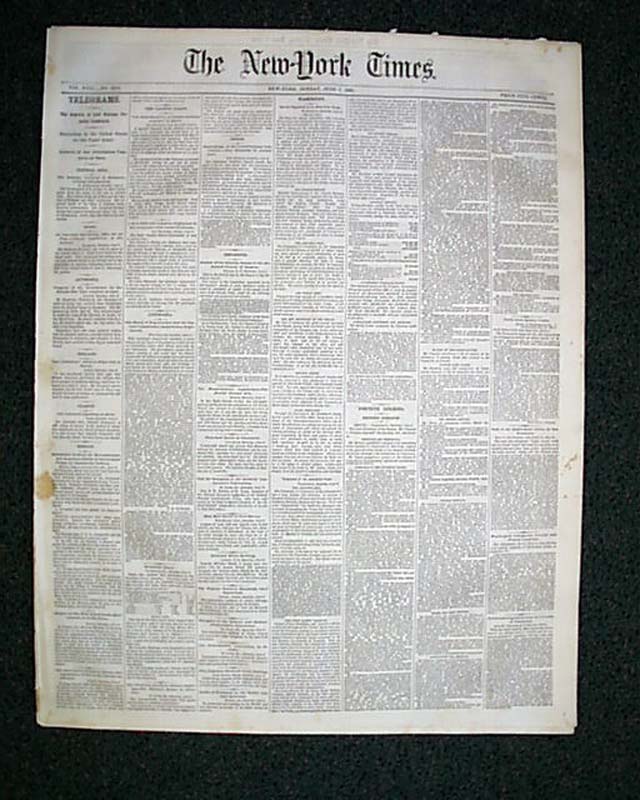
Contrasting views of the 1st (official) Memorial Day...
THE NEW YORK TIMES, June 7, 1868
- Very 1st Memorial Day observance
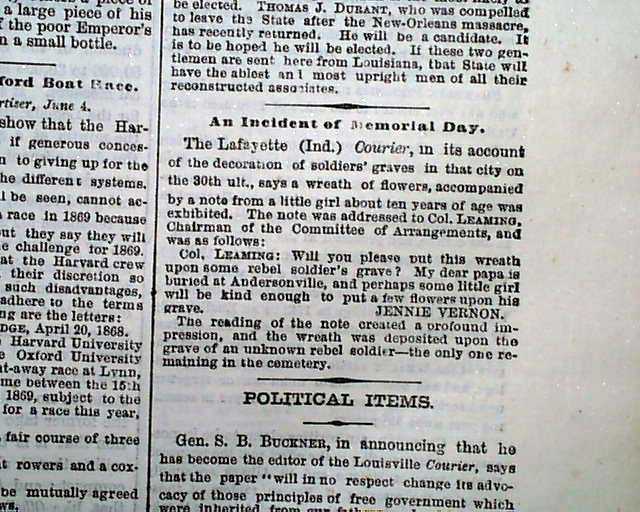
Page 3 has an article related to the 1st official Memorial Day which includes a touching letter from a young girl who had lost her father during the war, addressed to Col. Leaming: "Will you please put this wreath upon some rebel soldier's grave? My dear papa is buried at Andersonville, and perhaps some little girl will be kind enough to put a few flowers on his grave," signed in block type, "JENNY VERNON." It is interesting to note that they did find one remaining rebel grave at the cemetery, and granted her wish.
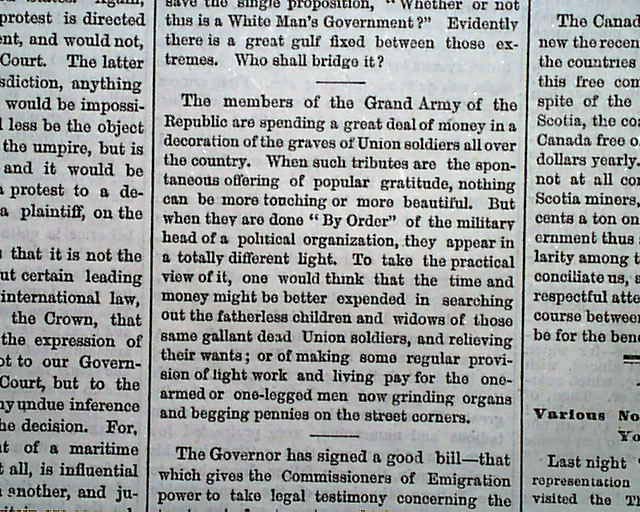
In contrast, page 4 has an article which states: "The members of the Grand Army of the Republic are spending a great deal of money in a decoration of the graves of Union soldiers all over the country. When such tributes are the spontaneous offering of popular gratitude, nothing can be more touching or more beautiful. But when done "By Order" of the military head of a political organization, they appear in a totally different light...," with more.
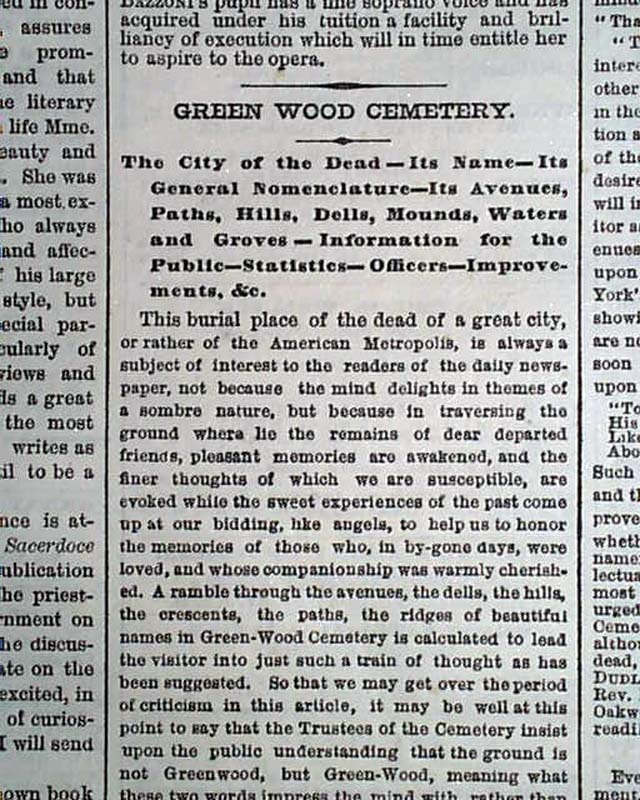
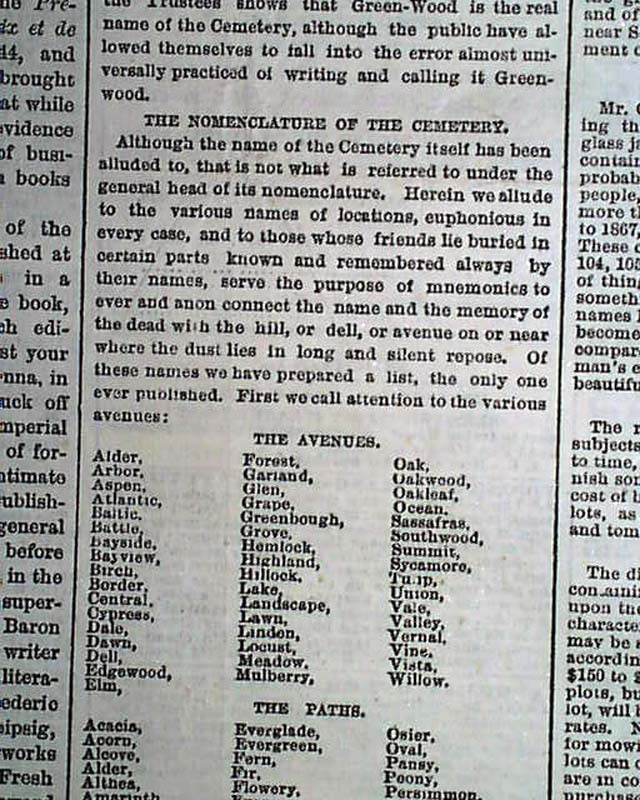
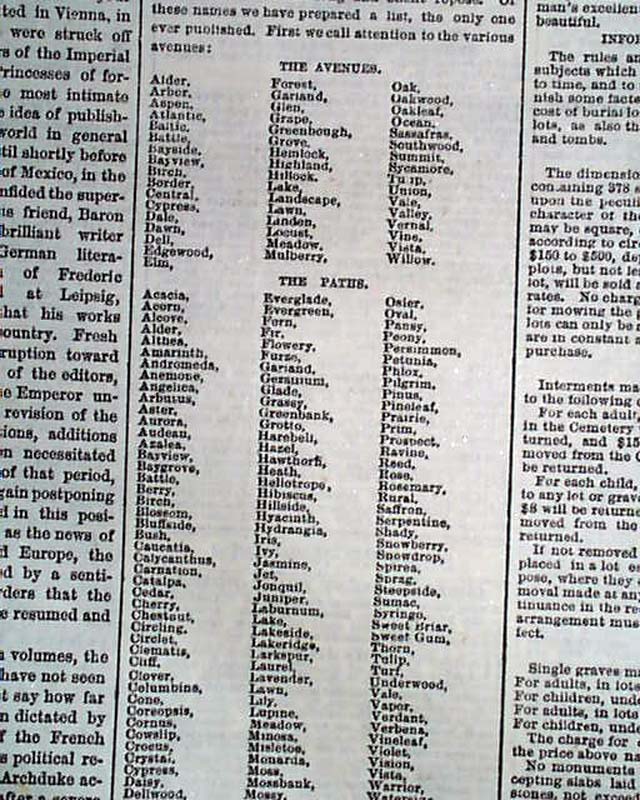
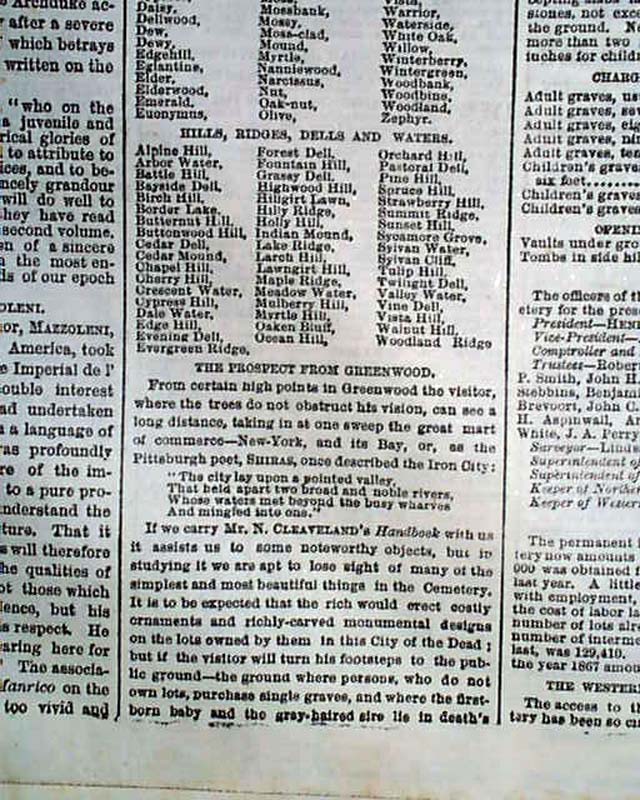
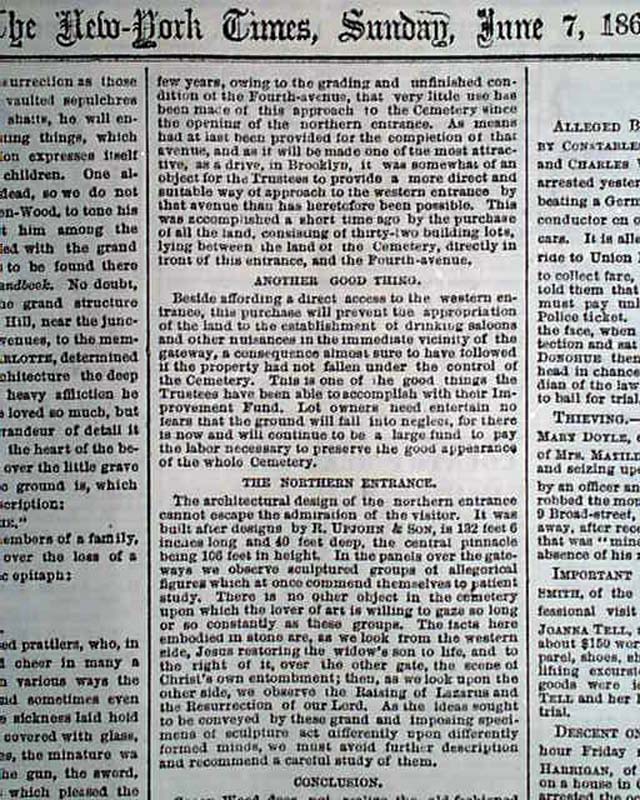
Speaking of coverage related to cemeteries, page 8 has a lengthy article describing "GREEN WOOD CEMETERY - The City of the DEAD." See images for details.
Complete in eight pages, a few brown spots mostly in the margins, but overall in nice condition. See images for details.
Background: The June 7, 1868 edition of The New York Times captures a pivotal moment in American history surrounding the inaugural Decoration Day, reflecting the deep national grief, political friction, and yearning for reconciliation following the Civil War. On Page 3, a moving letter from Jenny Vernon—whose father died at the infamous Andersonville Prison—asking Col. Leaming to place a wreath on a rebel soldier's grave in hopes a Southern girl might do the same for her father, demonstrated a powerful impulse for healing that culminated when cemetery officials granted her wish on the last remaining rebel grave. In sharp contrast, Page 4 revealed early political skepticism toward the Grand Army of the Republic (GAR), arguing that honoring Union soldiers loses its emotional power when mandated "By Order" of a military organization rather than arising as a spontaneous act of popular gratitude. Finally, Page 8 highlighted Green-Wood Cemetery as "The City of the Dead," underscoring the vital role of rural cemeteries as public spaces of reflection and collective memory for a nation coming to terms with unprecedented loss.
Other issues you may like
§ related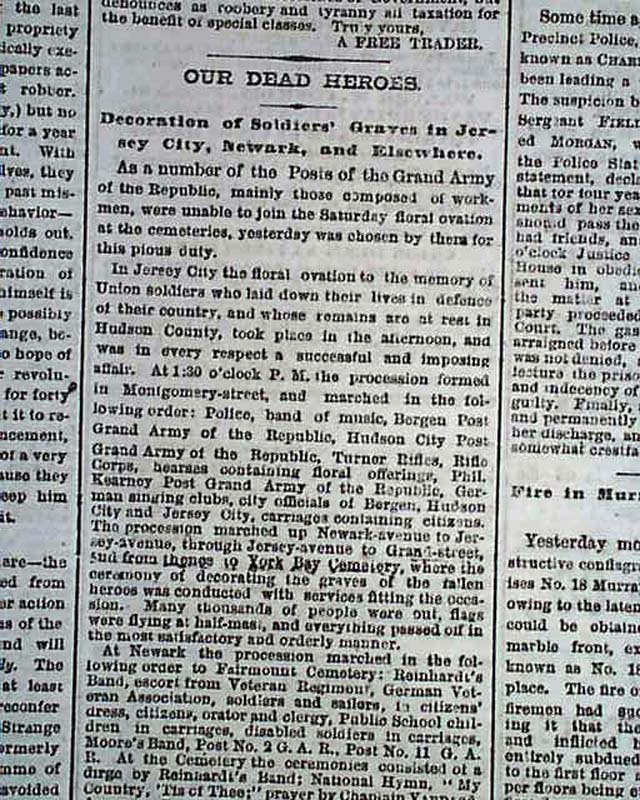
THE NEW YORK TIMES, June 1, 1868 Page 5 has, under the heading "Our Dead Heroes," multiple, day 2 reports regarding the 1st official Memorial Day
...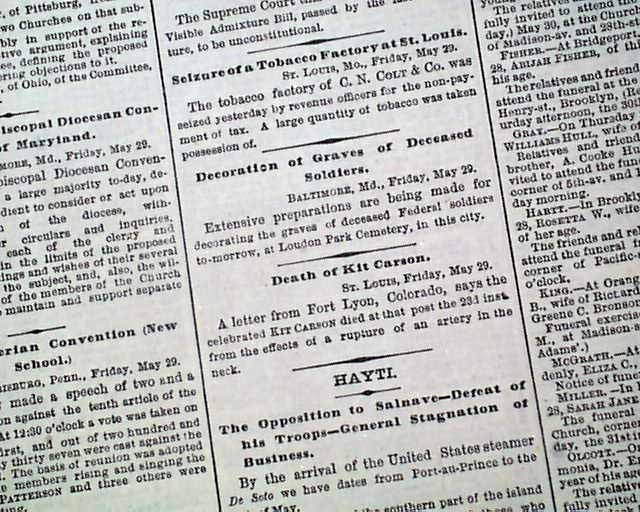
NEW YORK TIMES, May 30, 1868 History tell us that the very first official Memorial Day was in 1868
- Very 1st Memorial Day
- Kit Carson death
In that year
...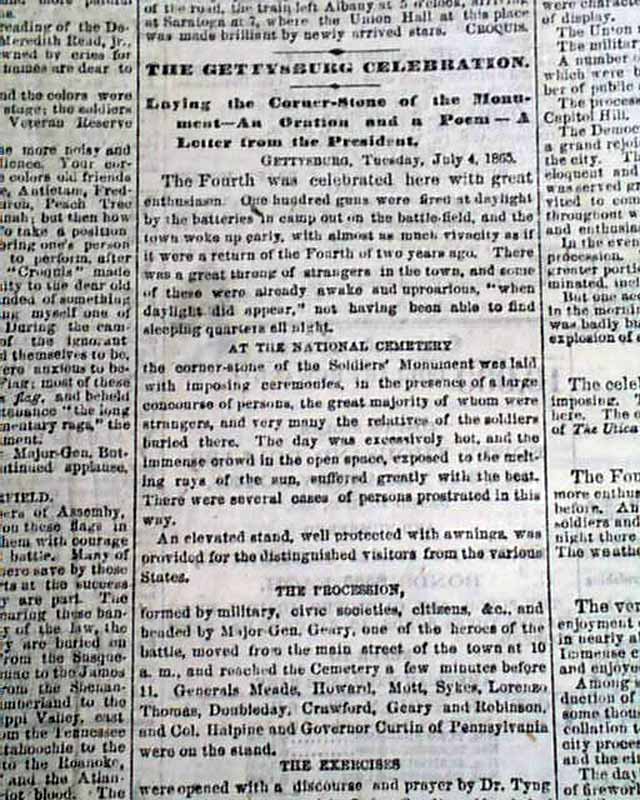
NEW YORK TRIBUNE, July 6, 1865
- Soldiers' National Monument
- Gettysburg battlefield cemetery
- Laying the cornerstone celebration
Much coverage on the celebration
...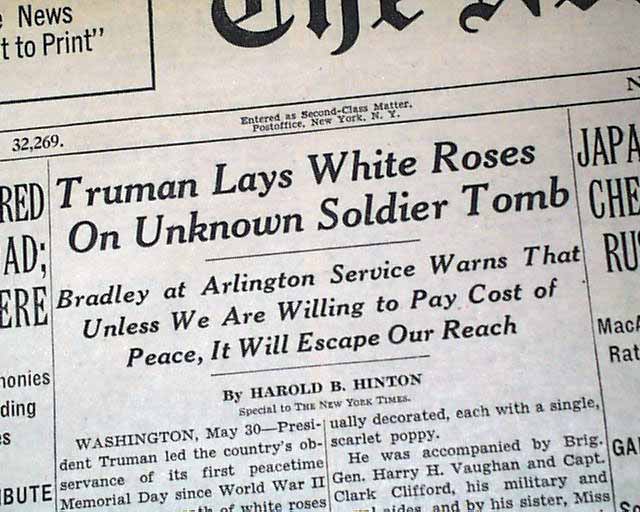
THE NEW YORK TIMES, May 31, 1946
- "Tomb of the Unknown Soldier" observance
- First peacetime Memorial Day after World War II
- President Henry S. Truman - Dwight