Honoring the dead at Gettysburg...
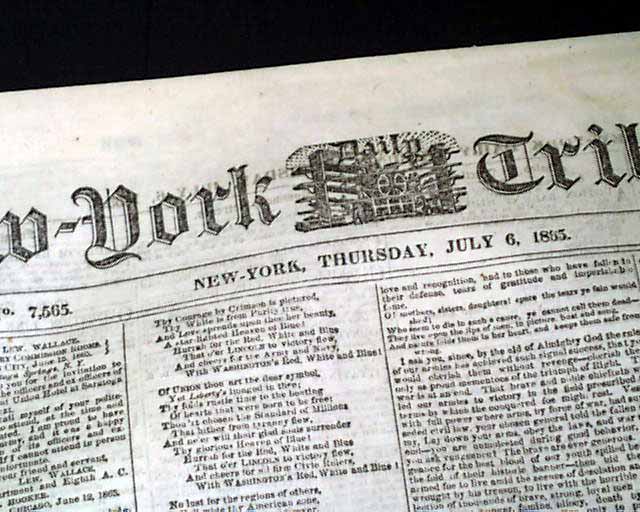
NEW YORK TRIBUNE, July 6, 1865
- Soldiers' National Monument
- Gettysburg battlefield cemetery
- Laying the cornerstone celebration
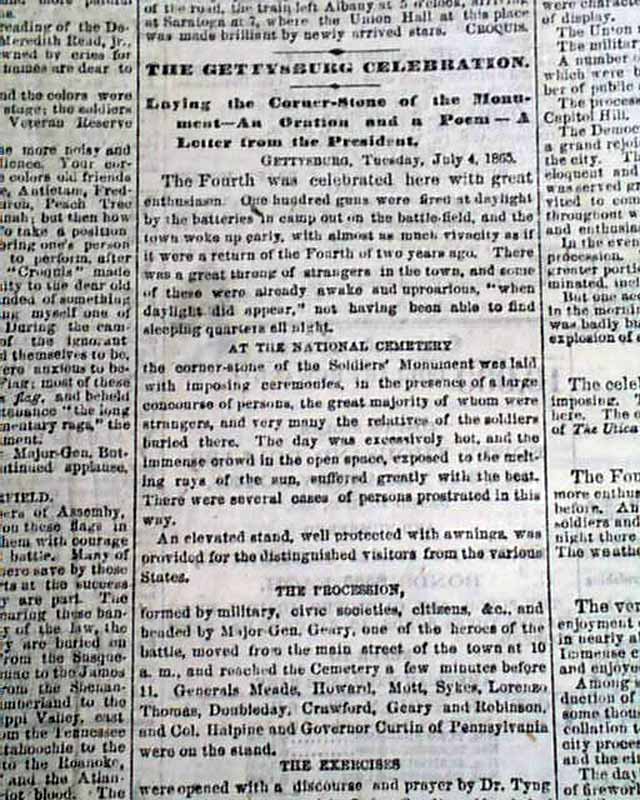
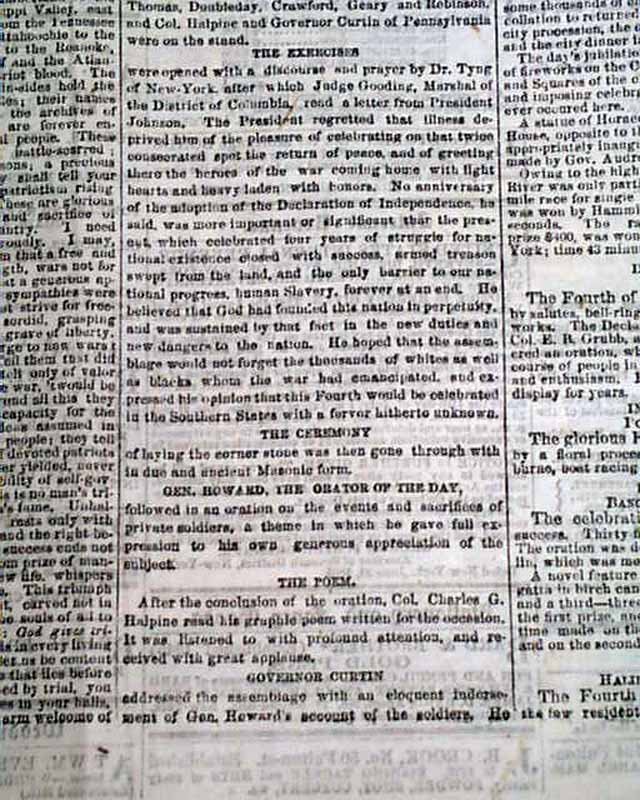
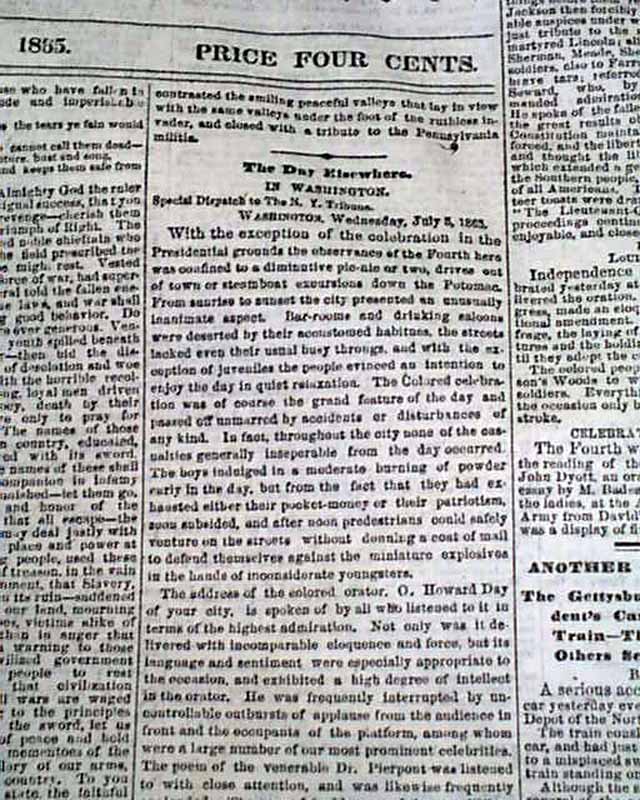
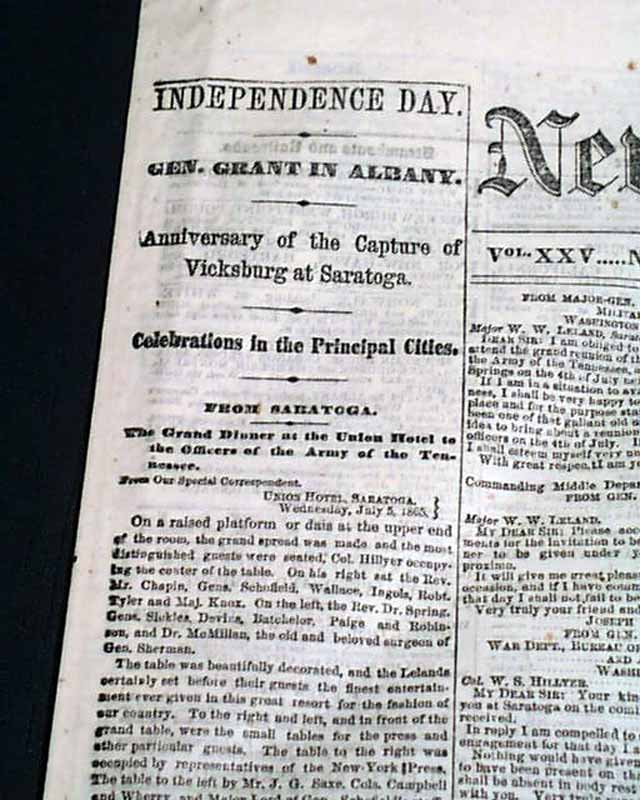
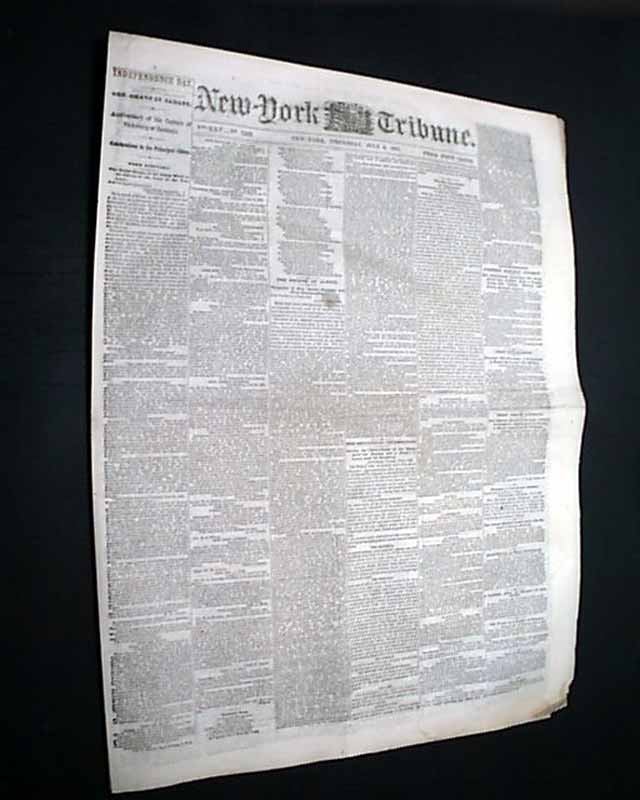
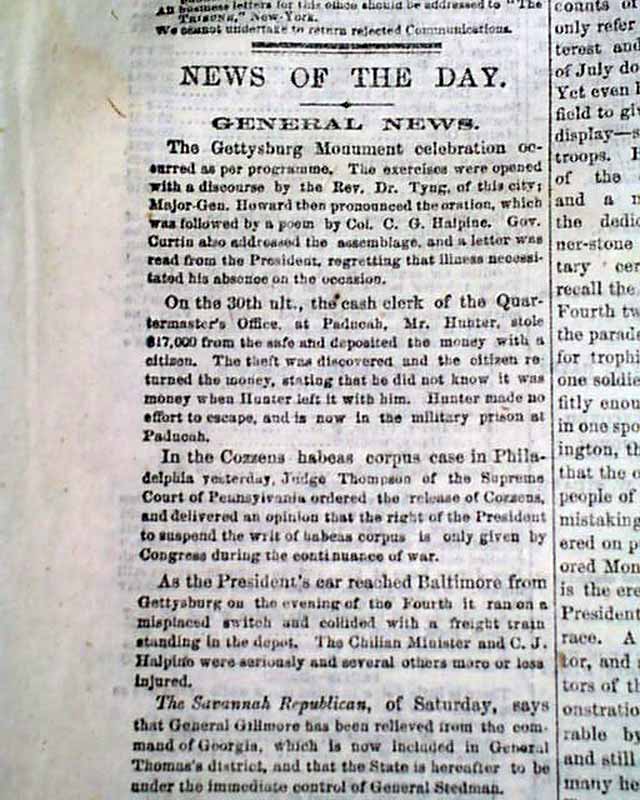
Much coverage on the celebration of the 4th of July, the first since the end of the Civil War. The front page includes: "The Gettysburg Celebration" "Laying the Corner-Stone of the Monument--An Oration and a Poem--A Letter from the President".
Page 4 includes: "Home, Sweet Home!" which begins: "Mrs. Jefferson Davis...writes in March last from Montgomery, that she had 'thought of buying a poor girl, who appealed to her, as the wife of the President, to take her out of the tavern'. 'I am so tired', said the girl, 'of beings bought by first one negro-trader and then another'...".
Page 6 has nice first column heads on the 4th of July.
Eight pages, never bound, uncut, a few light creases, nice condition.
Background: The laying of the cornerstone for the Soldiers' National Monument on July 4, 1865, holds immense historical significance as the moment the Gettysburg battlefield transitioned from a raw, scarred landscape of mass death into America's premier sacred site of national healing and commemoration. Occurring a mere three months after General Robert E. Lee’s surrender at Appomattox and the tragic assassination of President Abraham Lincoln, the Independence Day ceremony served as a critical civic ritual for a fragile, grieving Union grappling with the dawn of Reconstruction. Led by Major General Oliver Otis Howard, who had fought on that very ground, the event formalized the commitment to permanently honor the common soldier rather than just high-ranking generals, establishing a democratic precedent for American war memorials. By dedicating this central monument—which would ultimately be topped by the "Genius of Liberty" and surrounded by thousands of Union graves—the nation physically anchored its new, post-war identity in the ideas of Lincoln's Gettysburg Address. This ceremony effectively launched the monumental era of Gettysburg, pioneering the modern concept of a national battlefield park and setting the blueprint for how the United States would collectively remember, mourn, and romanticize the cataclysm of the Civil War.
Other issues you may like
§ related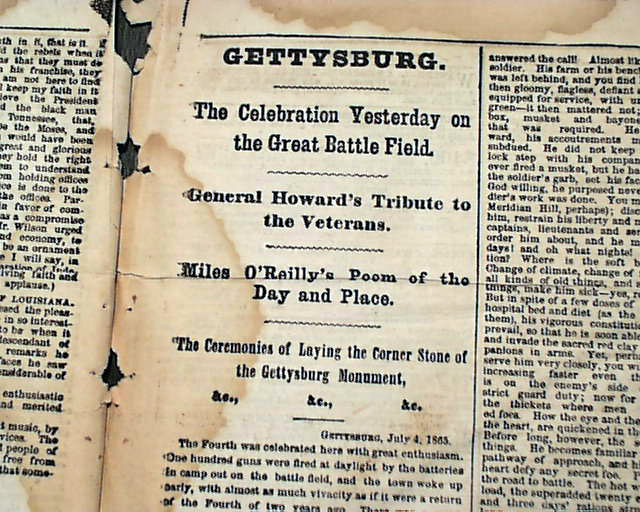
THE NEW YORK HERALD, July 5, 1865
- Cornerstone laid for the Gettysburg monument
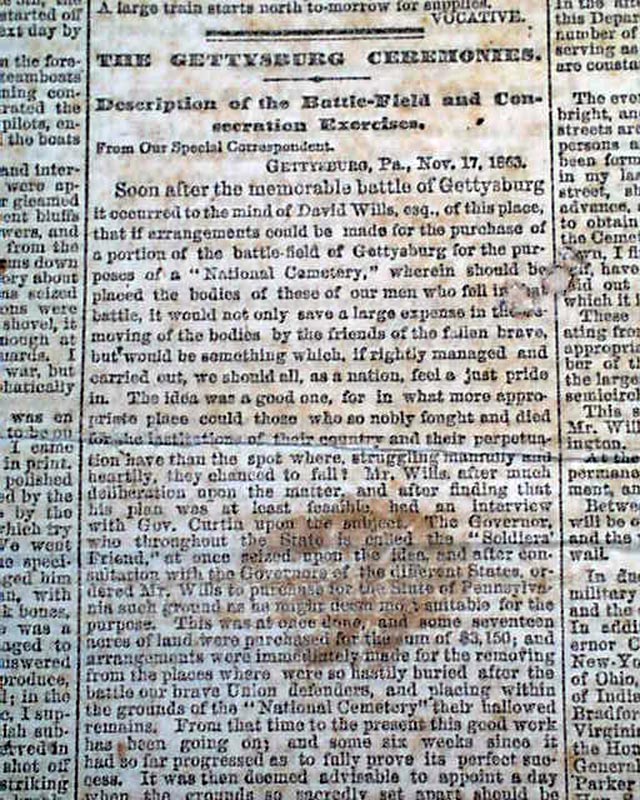
Page 5 has: "Gettysburg", "The Celebration Yesterday on the Great Battle
...
NEW YORK WEEKLY TRIBUNE, Nov. 28, 1863
- President Abraham Lincoln's famous speech
- Gettysburg Address at battlefield cemetery
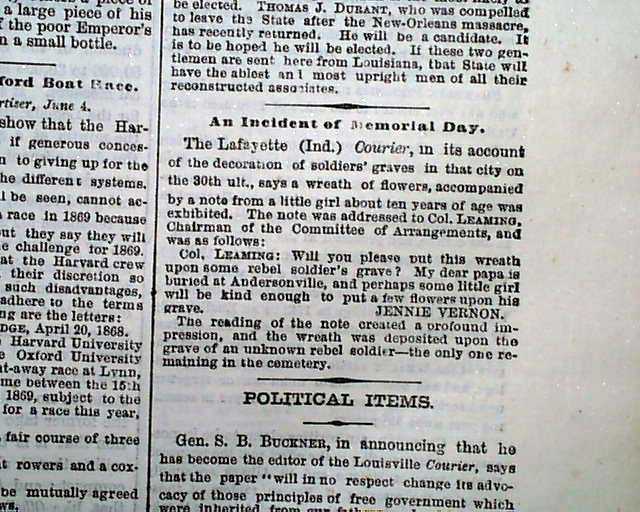
Page 3 contains a report headed:
...
THE NEW YORK TIMES, June 7, 1868
- Very 1st Memorial Day observance
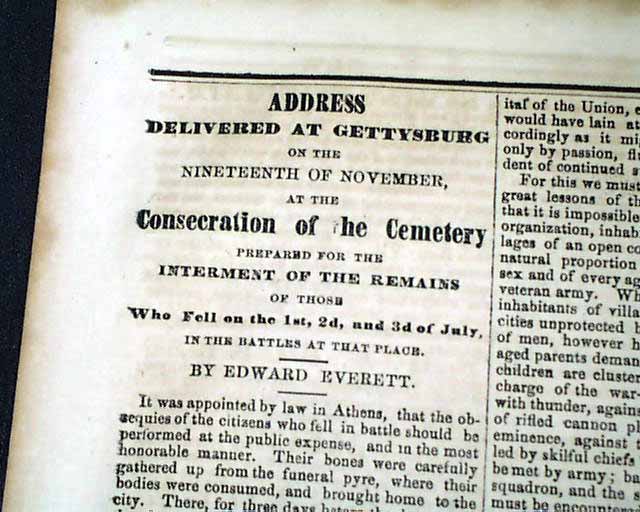
Page 3 has an article related to the 1st official Memorial Day which includes a touching
...
THE EVENING BULLETIN, Providence, Rhode Island, Nov. 20, 1863
- Abraham Lincoln's "Gettysburg Address"
- Historic American Civil War speech
- Edward Everett's