Item # 727124
·
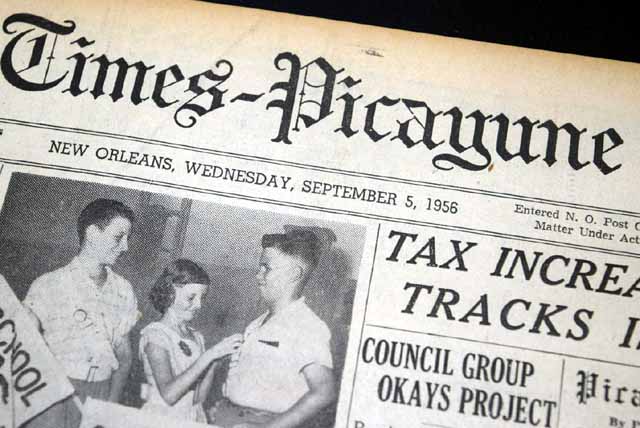
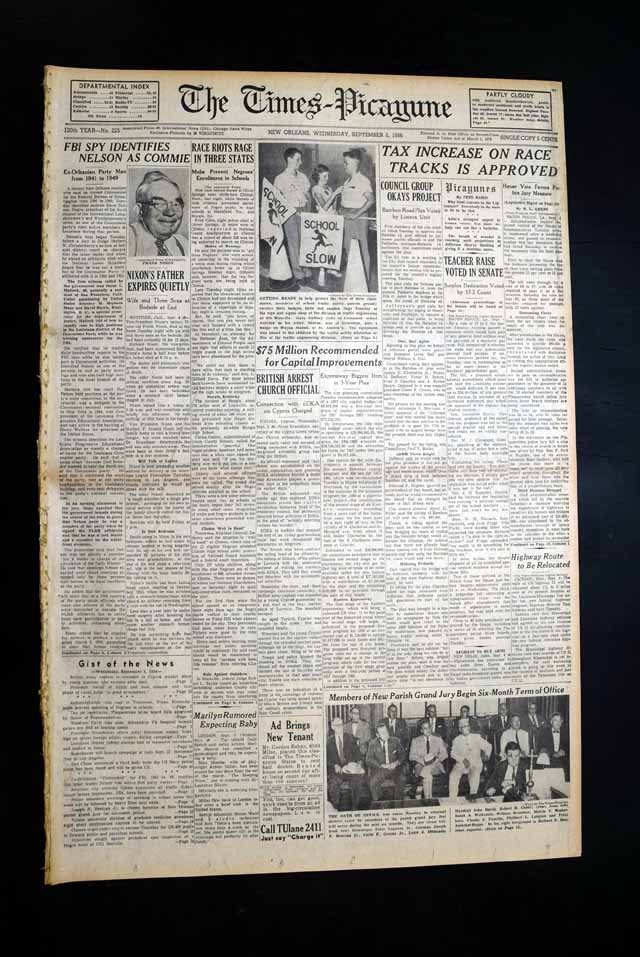
THE TIMES-PICAYUNE, New Orleans, Sept. 5, 1956
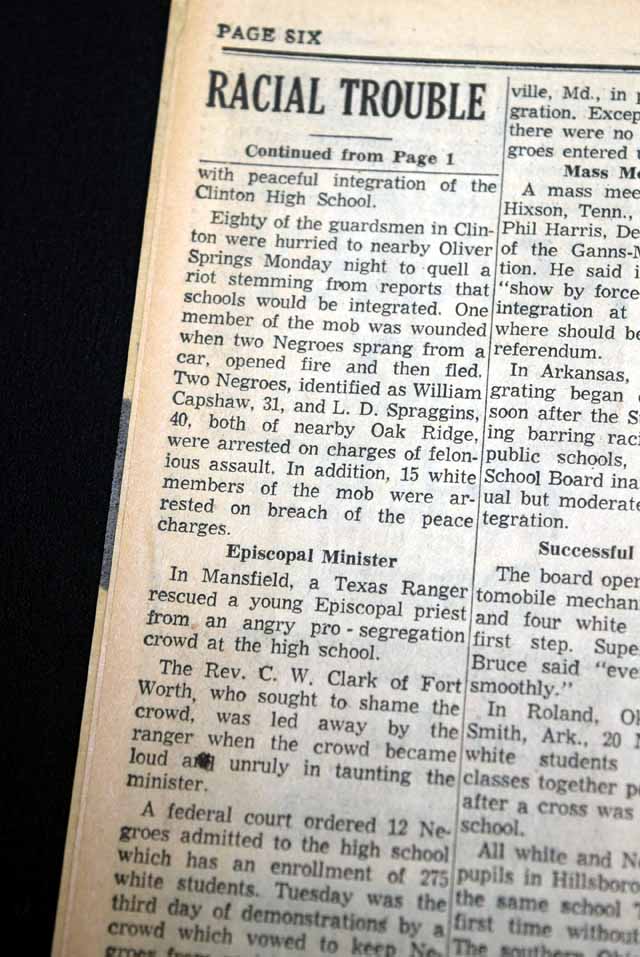
* Oliver Springs and Clinton, Tennessee
* Mansfield, Texas school integration crisis
* American Civil Rights Movement - Black students
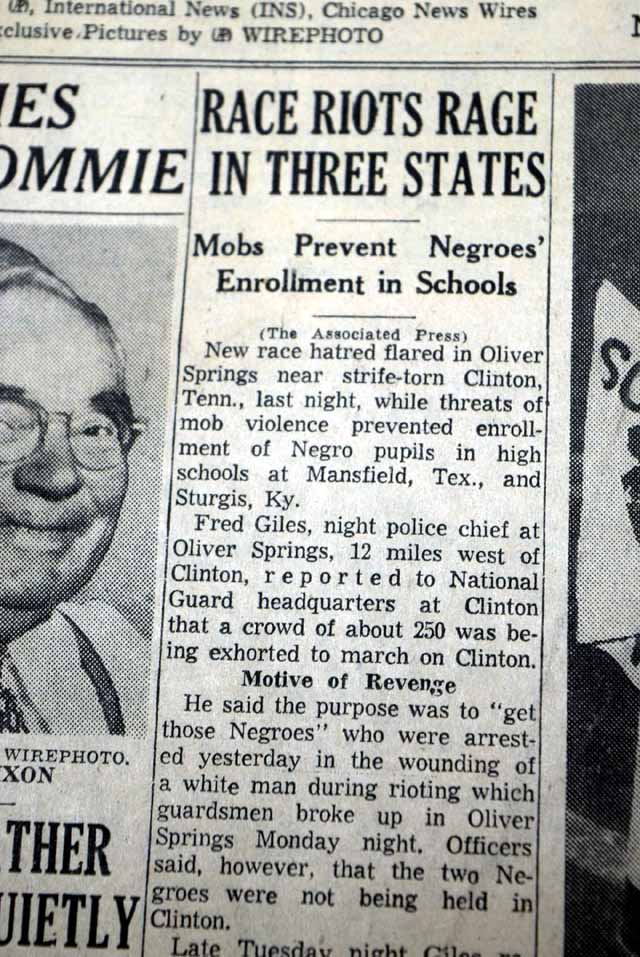
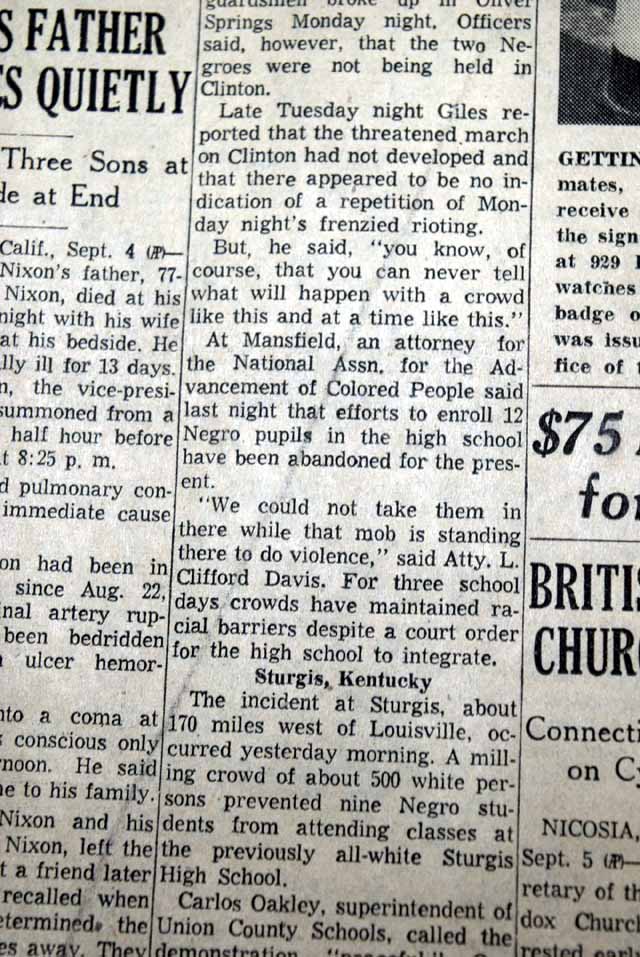
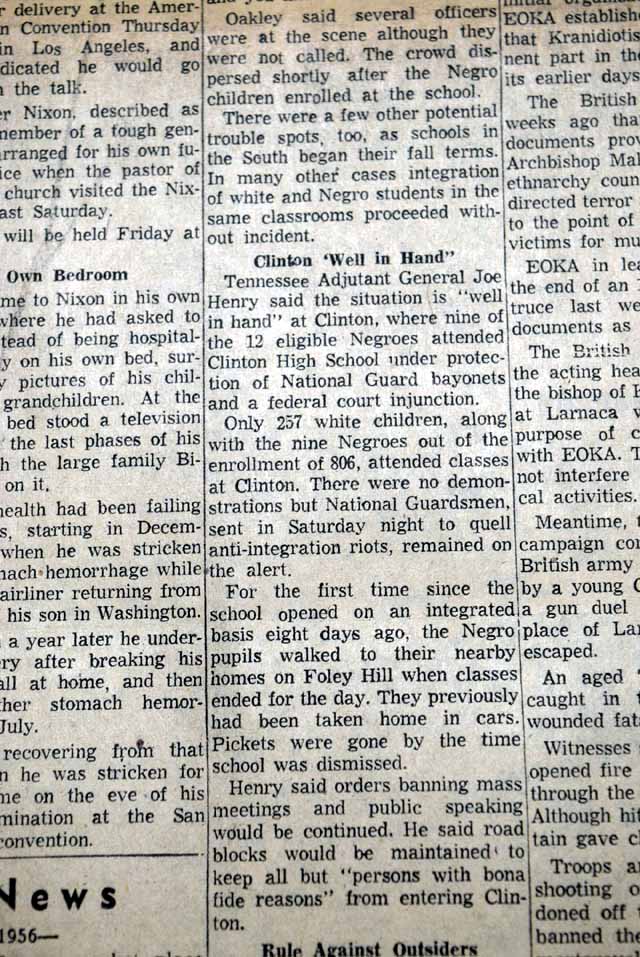
The top of the front page has a one column heading: "RACE RIOTS RAGE IN THREE STATES" with subhead. (see images)
Complete with all 44 pages, a little wear at the margins, generally very nice.
Background: The localized school integration crises of September 1956 in Clinton, Oliver Springs, and Mansfield served as the volatile, defining crucible for the American Civil Rights Movement by exposing the violent lengths to which Southern "Massive Resistance" would go to defy Brown v. Board of Education. As the very first battlegrounds of public school desegregation, these events proved that local law enforcement was utterly incapable of—and often entirely opposed to—protecting Black students, forcing a stark ideological split in state governance: while Tennessee demonstrated that federal mandates could only be upheld through the extraordinary measure of state-ordered military intervention, Texas provided segregationists with a successful blueprint for state-sponsored defiance by using law enforcement to uphold the white mob. Ultimately, the federal government's failure to intervene in Mansfield emboldened Southern segregationists, directly leading to the even more explosive crisis in Little Rock, Arkansas, a year later. This escalation fundamentally forced President Eisenhower to realize that the survival of federal law and constitutional authority would require nothing less than the deployment of federal troops on American soil.
* Oliver Springs and Clinton, Tennessee
* Mansfield, Texas school integration crisis
* American Civil Rights Movement - Black students
The top of the front page has a one column heading: "RACE RIOTS RAGE IN THREE STATES" with subhead. (see images)
Complete with all 44 pages, a little wear at the margins, generally very nice.
Background: The localized school integration crises of September 1956 in Clinton, Oliver Springs, and Mansfield served as the volatile, defining crucible for the American Civil Rights Movement by exposing the violent lengths to which Southern "Massive Resistance" would go to defy Brown v. Board of Education. As the very first battlegrounds of public school desegregation, these events proved that local law enforcement was utterly incapable of—and often entirely opposed to—protecting Black students, forcing a stark ideological split in state governance: while Tennessee demonstrated that federal mandates could only be upheld through the extraordinary measure of state-ordered military intervention, Texas provided segregationists with a successful blueprint for state-sponsored defiance by using law enforcement to uphold the white mob. Ultimately, the federal government's failure to intervene in Mansfield emboldened Southern segregationists, directly leading to the even more explosive crisis in Little Rock, Arkansas, a year later. This escalation fundamentally forced President Eisenhower to realize that the survival of federal law and constitutional authority would require nothing less than the deployment of federal troops on American soil.
Category: The 20th Century
Price
$48
100% Authentic: Original printing, never a reproduction.
Other issues you may like
§ related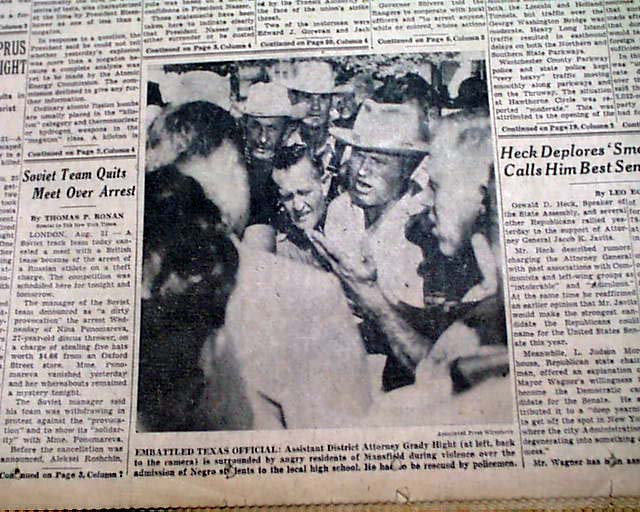
1856 Mansfield, Texas high school integration riot...
THE NEW YORK TIMES, Sept. 1, 1956
* Mansfield, Texas high school desegregation incident
* Civil Rights Movement - Negroes - students
* Post Brown v....
* Mansfield, Texas high school desegregation incident
* Civil Rights Movement - Negroes - students
* Post Brown v....
Sep 1956
$58
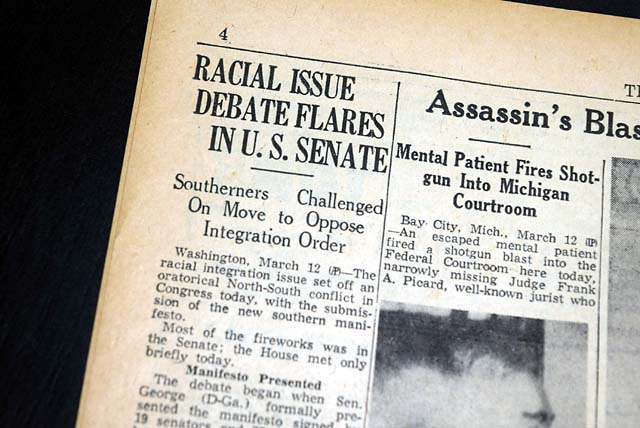
1956 civil rights movement... right to vote...
THE SPRINGFIELD UNION, Mass., March 13, 1956
* "Southern Manifesto"signing
* United States Congress presentation
* Defense of White Supremacy - racism
* "Jim
Mar 1956
$48
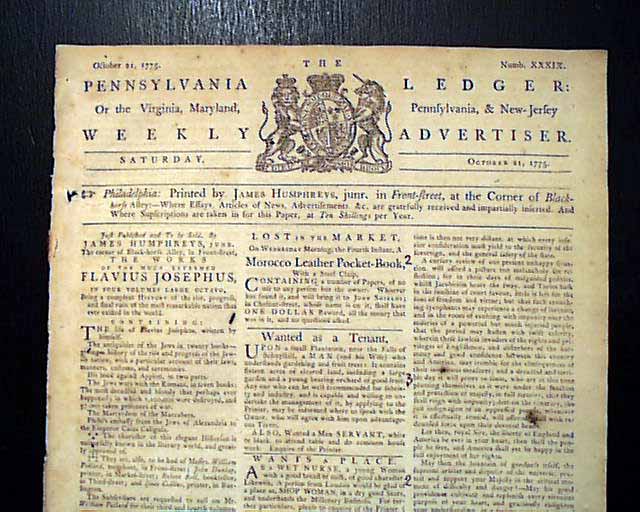
1775 capture of Ethan Allen...
THE PENNSYLVANIA LEDGER, Philadelphia, Oct. 21, 1775
* Ethan Allen captured
* American Revolutionary War
The front page includes a letter: "To the...
* Ethan Allen captured
* American Revolutionary War
The front page includes a letter: "To the...
Oct 1775
$915
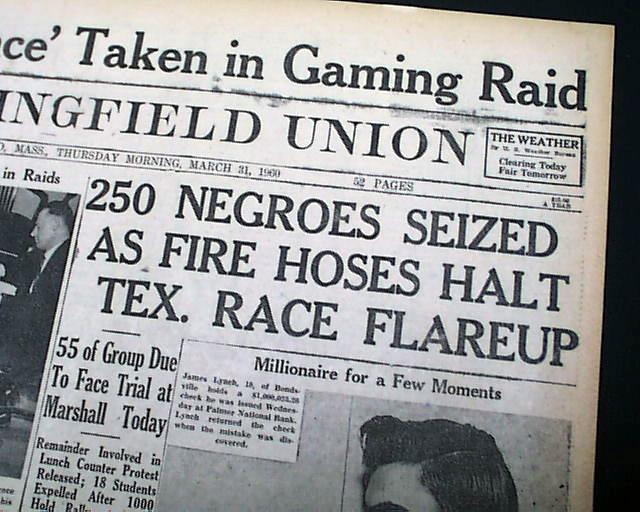
1960 Marshall, Texas & Baton Rouge racial protests...
THE SPRINGFIELD UNION, Mass., March 31, 1960
* Marshall, Texas & Baton Rouge, Louisiana
* Negroes - college students - lunch counter protests
* Civil...
* Marshall, Texas & Baton Rouge, Louisiana
* Negroes - college students - lunch counter protests
* Civil...
Mar 1960
$52