

Puyi becomes Emperor of Manchukuo...
Item # 726942
March 01, 1934
THE NEW YORK TIMES, March 1, 1934
* Puyi - Henry Pu Yi - Manchu Aisin Gioro
* Last Emperor of China - Qing dynasty
* Becomes Emperor of Manchukuo (1st report)
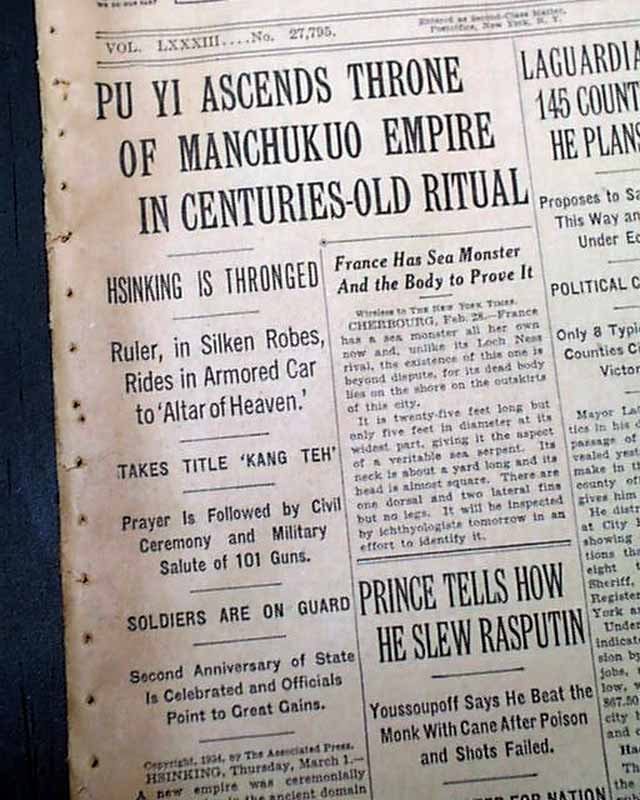
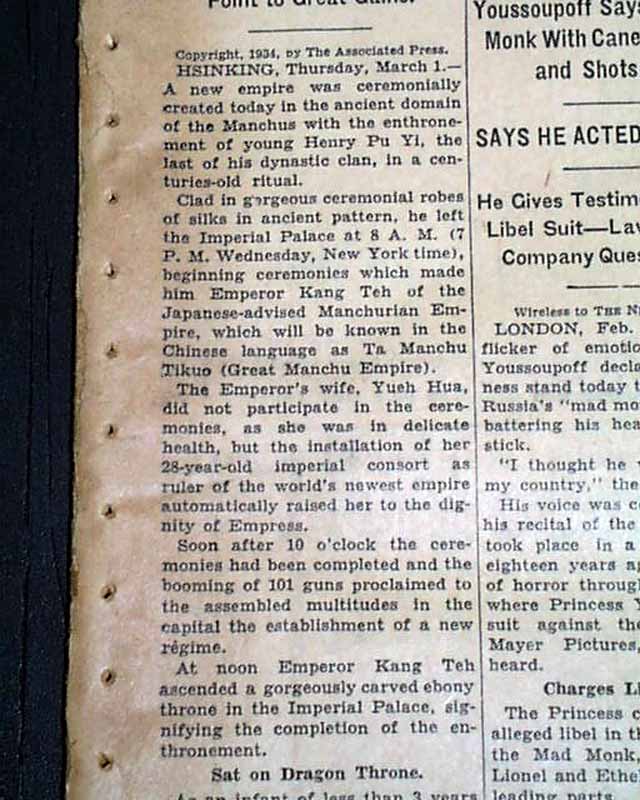
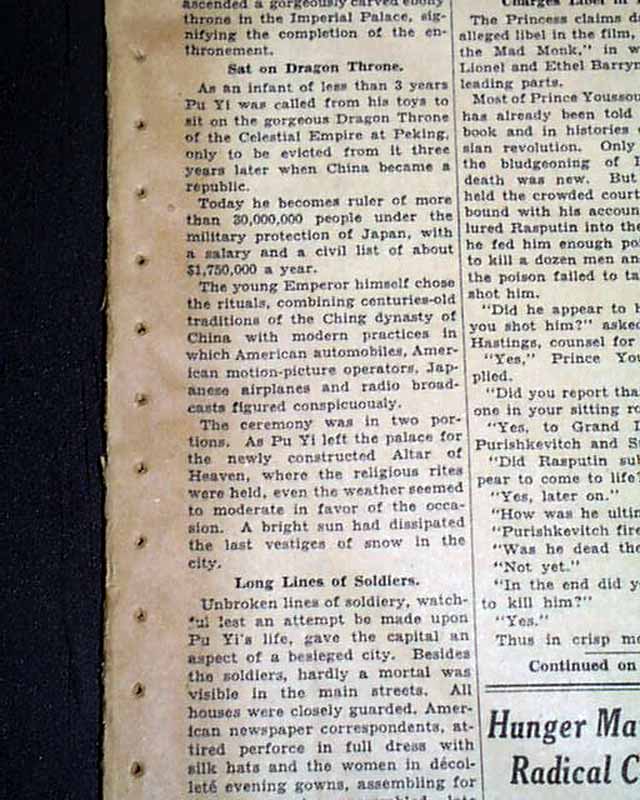
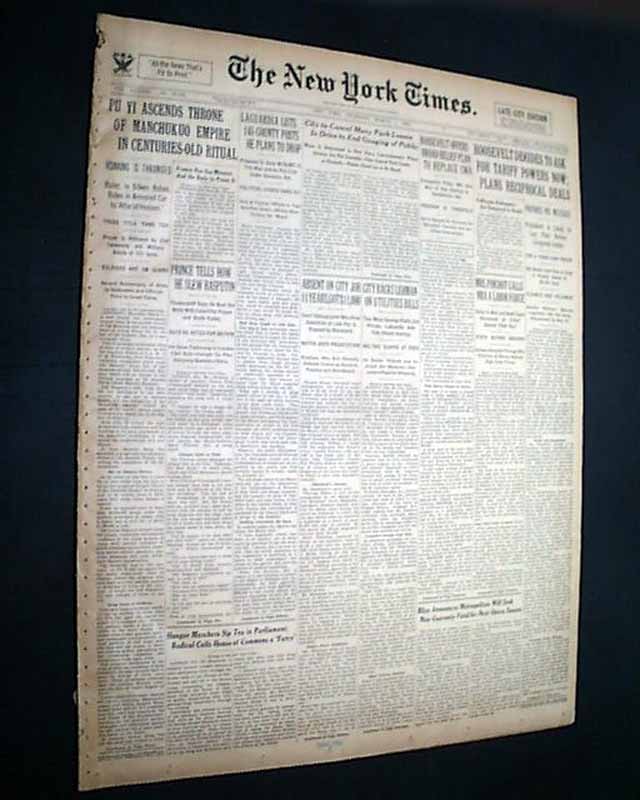
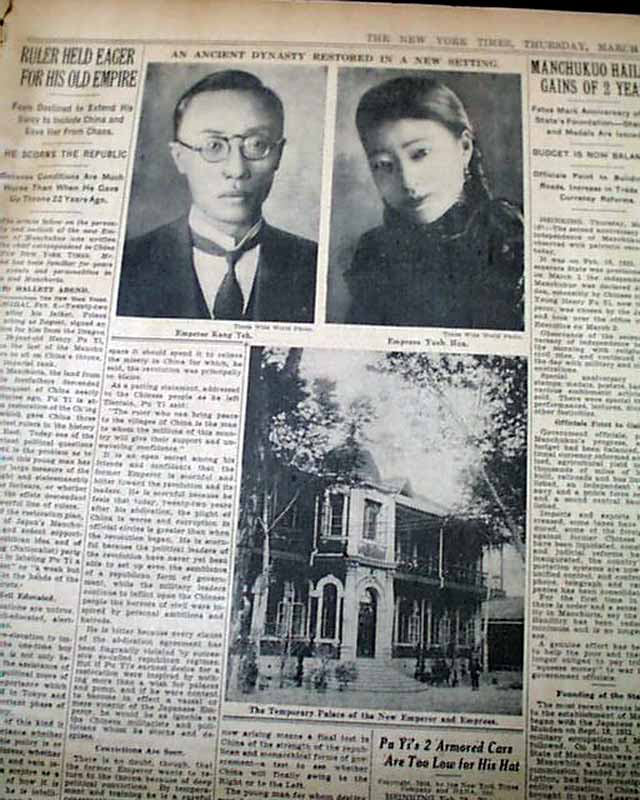
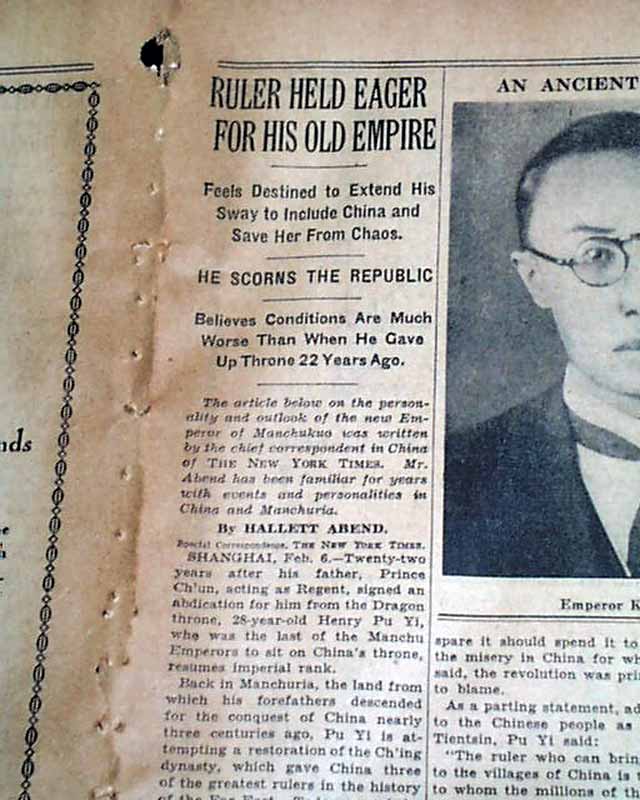
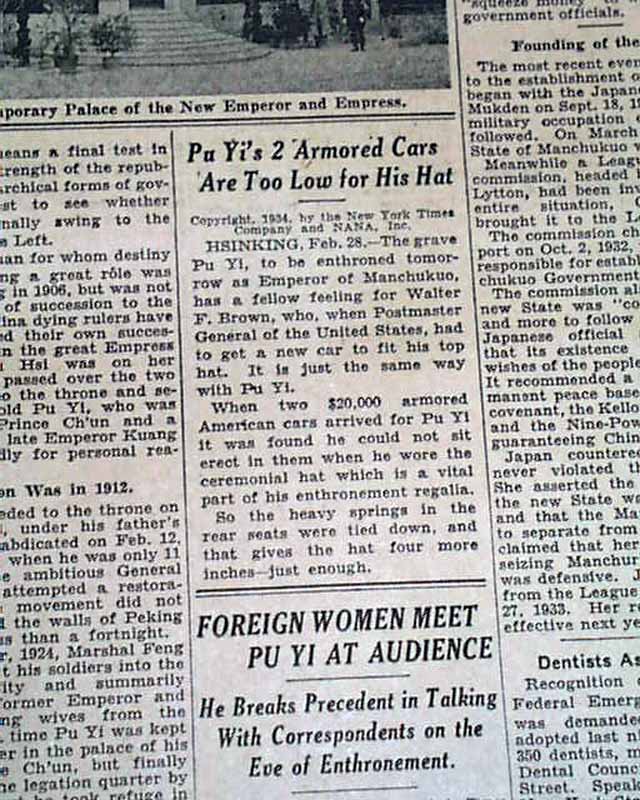
The top of the front page has a two column headline: "PU YI ASCENDS THRONE OF MANCHUKUO EMPIRE IN CENTURIES-OLD RITUAL" with subheads. First report coverage continues on page 3 with a few related photos. Lengthy text.
Complete 42 pages, light toning, a little spine wear, generally nice.
Background: The enthronement of Puyi as the Emperor of Manchukuo on March 1, 1934, stands as a critical geopolitical flashpoint that signaled the collapse of the post-World War I international order and foreshadowed the outbreak of World War II in Asia. By placing the last emperor of China's Qing Dynasty onto a manufactured throne, the Empire of Japan attempted to legitimize its brutal 1931 invasion of Manchuria under the guise of an independent state revival, cloaking modern imperialist expansion in "centuries-old" ancestral rituals. In reality, Manchukuo was a tightly controlled puppet state designed to exploit the region's vast natural resources and serve as a militarized buffer zone against the Soviet Union. This blatant violation of Chinese sovereignty and international law directly defied the League of Nations, which had refused to recognize the regime, prompting a defiant Japan to walk out of the League and effectively exposing the international community's inability to check aggressive expansionism. Ultimately, Puyi’s second ascension was a tragic, hollow theater of power; it reduced a former imperial ruler to a political pawn, cemented Japan's total control over Northeast China, and accelerated the regional aggression that culminated in the Second Sino-Japanese War and the broader Pacific War.
* Puyi - Henry Pu Yi - Manchu Aisin Gioro
* Last Emperor of China - Qing dynasty
* Becomes Emperor of Manchukuo (1st report)
The top of the front page has a two column headline: "PU YI ASCENDS THRONE OF MANCHUKUO EMPIRE IN CENTURIES-OLD RITUAL" with subheads. First report coverage continues on page 3 with a few related photos. Lengthy text.
Complete 42 pages, light toning, a little spine wear, generally nice.
Background: The enthronement of Puyi as the Emperor of Manchukuo on March 1, 1934, stands as a critical geopolitical flashpoint that signaled the collapse of the post-World War I international order and foreshadowed the outbreak of World War II in Asia. By placing the last emperor of China's Qing Dynasty onto a manufactured throne, the Empire of Japan attempted to legitimize its brutal 1931 invasion of Manchuria under the guise of an independent state revival, cloaking modern imperialist expansion in "centuries-old" ancestral rituals. In reality, Manchukuo was a tightly controlled puppet state designed to exploit the region's vast natural resources and serve as a militarized buffer zone against the Soviet Union. This blatant violation of Chinese sovereignty and international law directly defied the League of Nations, which had refused to recognize the regime, prompting a defiant Japan to walk out of the League and effectively exposing the international community's inability to check aggressive expansionism. Ultimately, Puyi’s second ascension was a tragic, hollow theater of power; it reduced a former imperial ruler to a political pawn, cemented Japan's total control over Northeast China, and accelerated the regional aggression that culminated in the Second Sino-Japanese War and the broader Pacific War.
Category: The 20th Century


