1804 Grand Master Isaiah Thomas notice... Masonic...
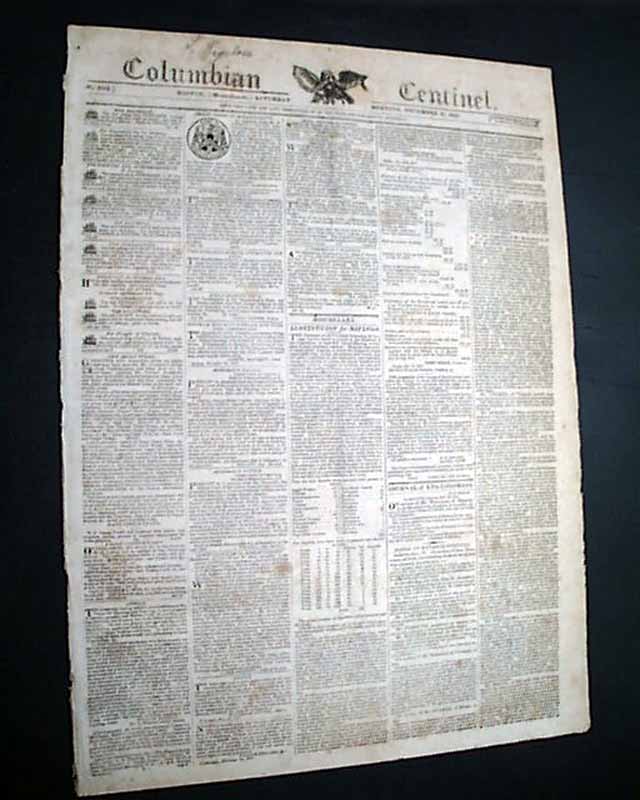
COLUMBIAN CENTINEL, Boston, Dec. 27, 1817
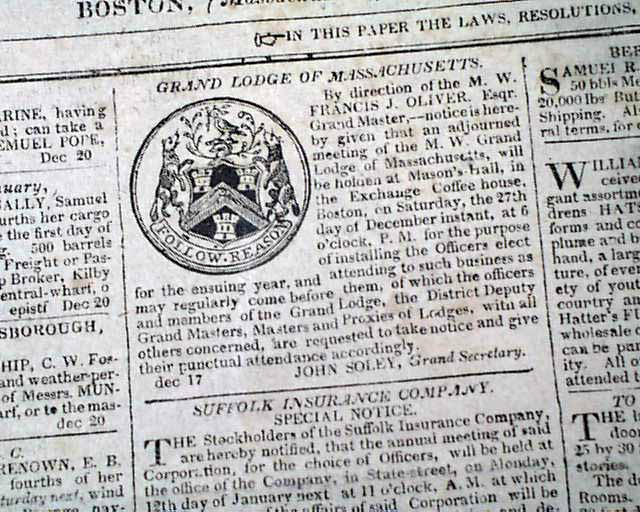
- Grand Lodge of Massachusetts notice
- Masonic - Masons - Freemasonry - Freemasons
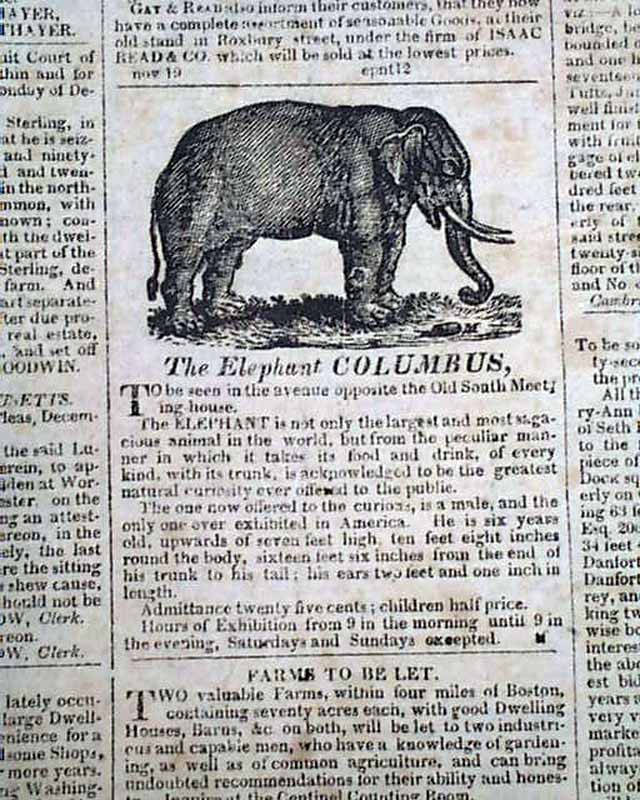
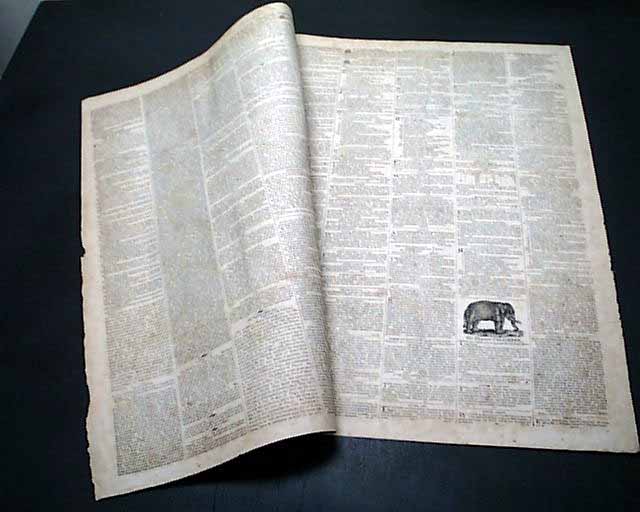
- The Elephant 'Columbus' engraving
- Asian Pachyderm from India on display
- First ever male exhibited in America
The front page has a notice for a upcoming meeting headed: "Grand Lodge of Massachusetts" Also contains the seal of the lodge. (see image)
Page 3 has a 3 1/2 x 2 1/2 inch notice for an exhibition of "The Elephant Columbus", which includes an engraving of an elephant. The ad states, in part that: "The ELEPHANT is not only the largest and most sagacious animal in the world, but...with its trunk, is acknowledged to be the greatest natural curiosity ever offered to the public. The one now offered...is...the only one ever exhibited in America..."
News of the day and several advertisements. Complete with 4 pages, minor margin wear, generally nice.
Background: The publication of the 1817 Grand Lodge notice in the Columbian Centinel, emblazoned with the official seal and the authority of Francis J. Oliver, stands as a definitive marker of the "Golden Age" of American Freemasonry, where the fraternity functioned as a visible and prestigious pillar of New England’s social hierarchy. Historically, this advertisement was far more than a simple meeting summons; it was a public declaration of the Lodge’s institutional stability and its deep integration with the Federalist elite of Boston, orchestrated by both Oliver and the newspaper’s editor, Past Grand Master Benjamin Russell. By placing the sacred iconography of the Masonic seal alongside the commercial and political news of the day, the notice signaled that the Grand Lodge’s activities—such as the standardizing of ritual "work" and the distribution of the Grand Charity Fund—were essential to the civic order of the Commonwealth. This high level of public transparency and confidence, typical of the "Era of Good Feelings," ironically provided the very visibility that would later be used against the craft during the anti-Masonic fervor of the 1830s, making these 1817 notices precious artifacts of a time when the Grand Lodge operated at the absolute height of its cultural and political influence.
Other issues you may like
§ related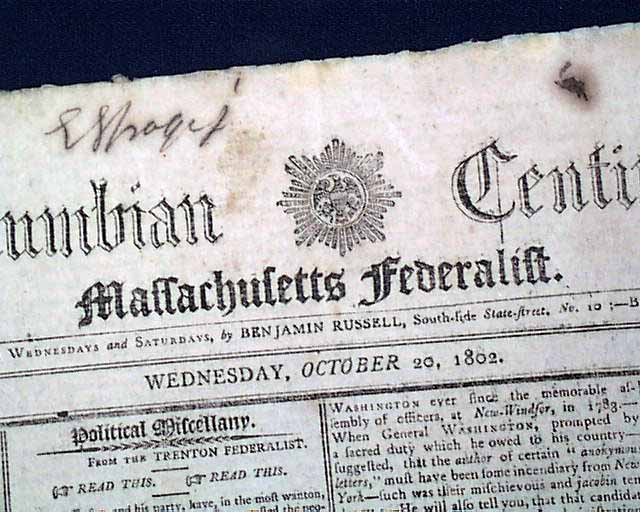
COLUMBIAN CENTINEL, Boston, dated Oct. 20, 1802.
- Masons - Masonic
- Early 19th century original reading
A page 2 report from New-York states in part:
...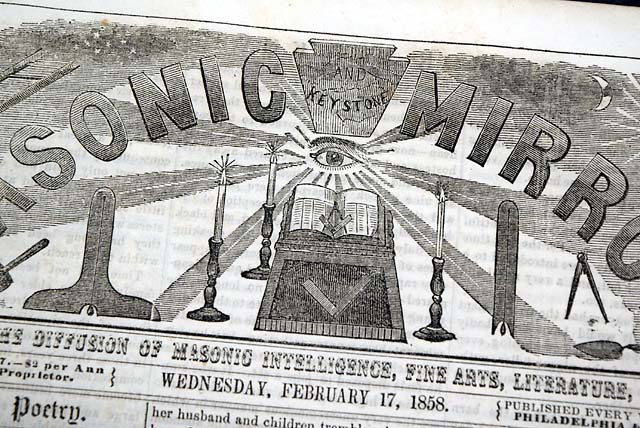
MASONIC MIRROR, Philadelphia & New York, Feb. 17, 1858
- Masonic - free masonry - Masons
- Pre American Civil War era
In the dateline is: "Devoted To The
...
THE MASSACHUSETTS MAGAZINE, Boston, May, 1793
- Masonic - Freemasons
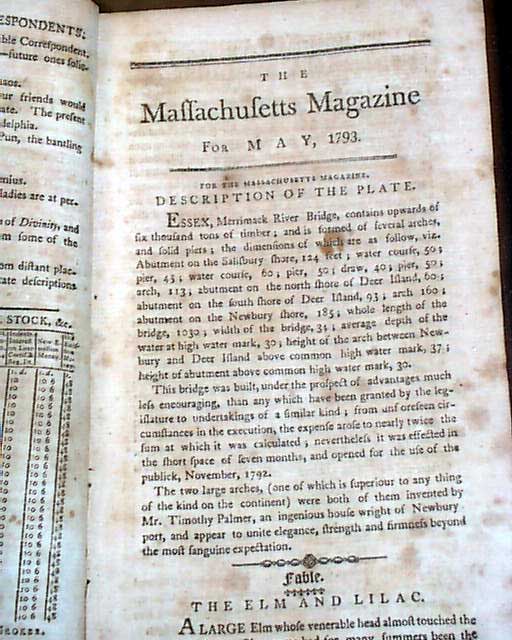
Among the articles is a description of a new bridge over the Merrimack River (plate is
...
COLUMBIAN CENTINEL, Boston, December 2, 1820
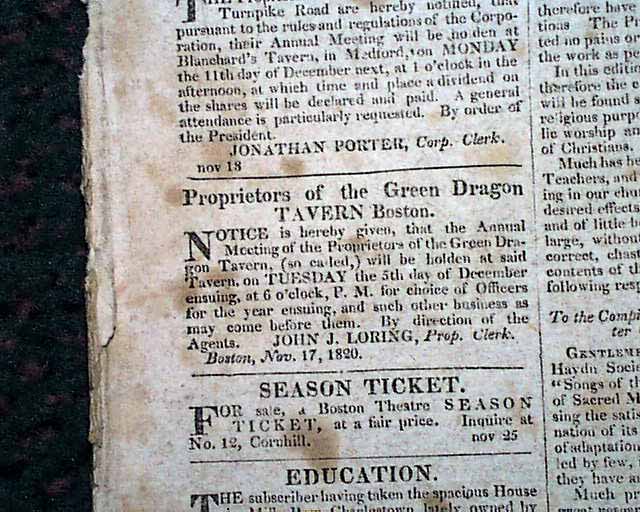
- The Historic Green Dragon Tavern (Boston).
- The Grand Royal Arch Chapter of Massachusetts
The first column of the
...