1918 Hammond Circus Train Wreck...
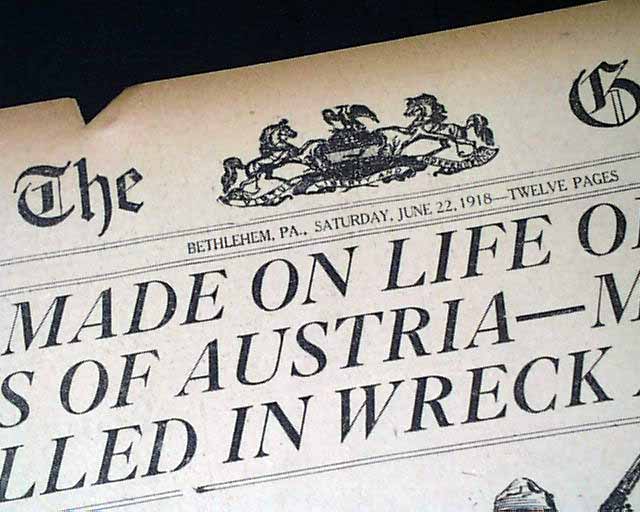
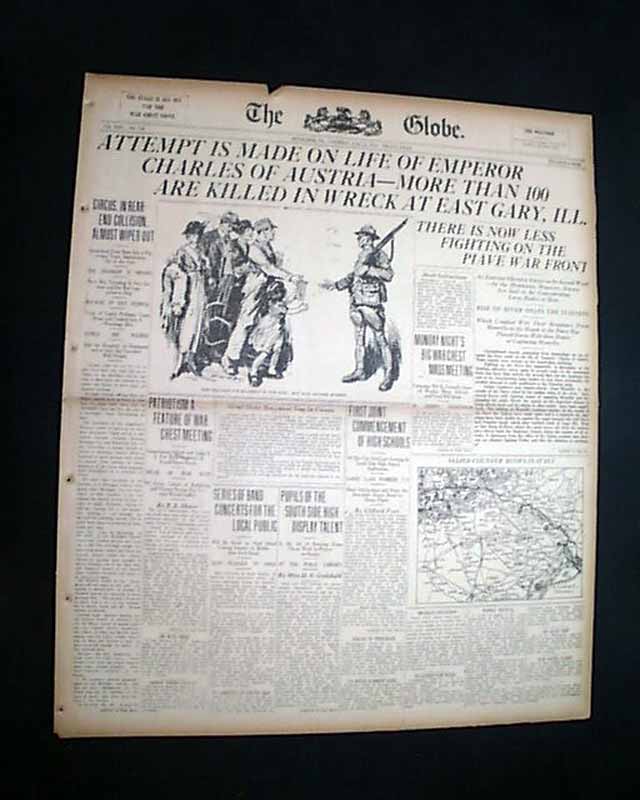
THE GLOBE, Bethlehem, Penn., June 22, 1918
- Hammond Circus Train Wreck
- Hagenbeck-Wallace Circus disaster
- Michigan Central Railroad - Indiana
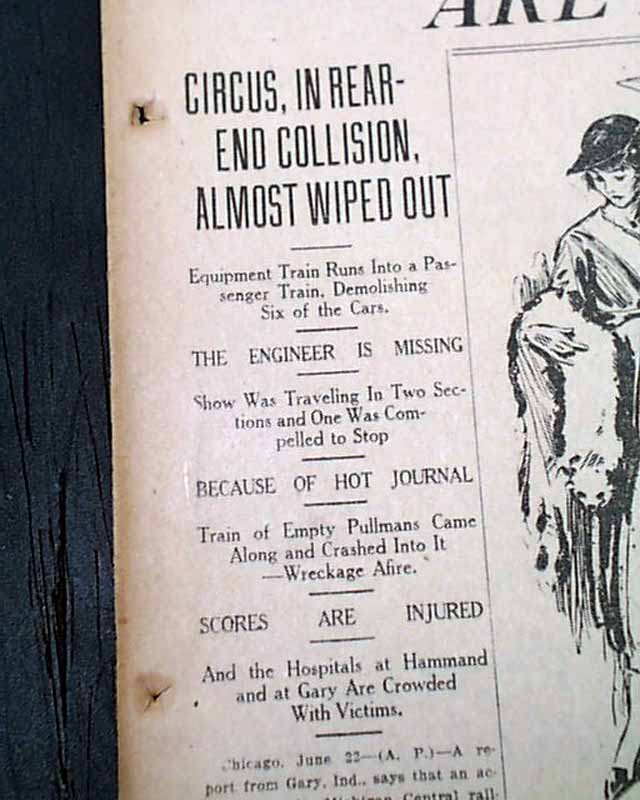
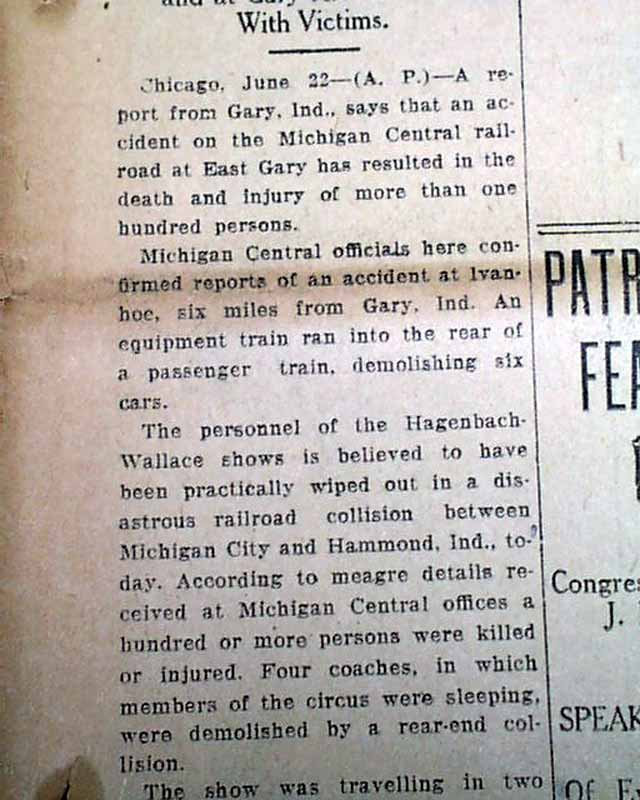
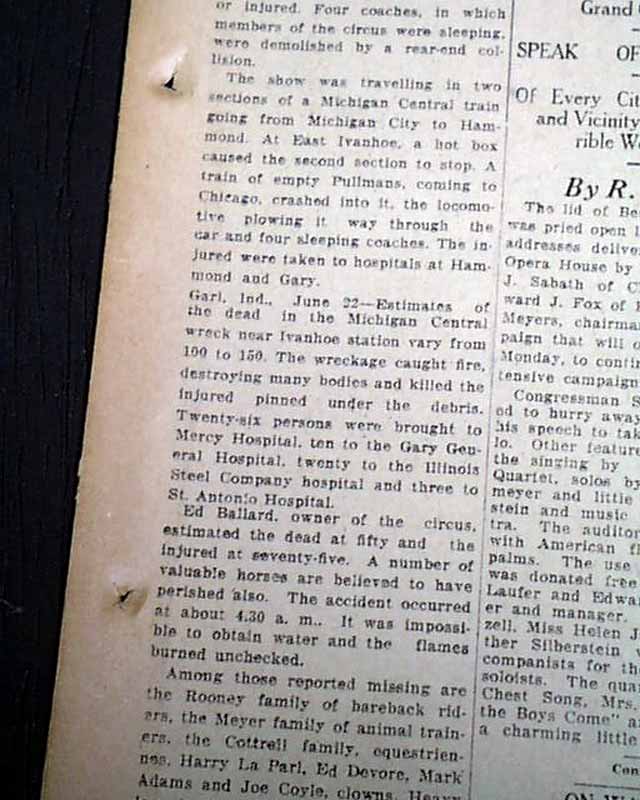
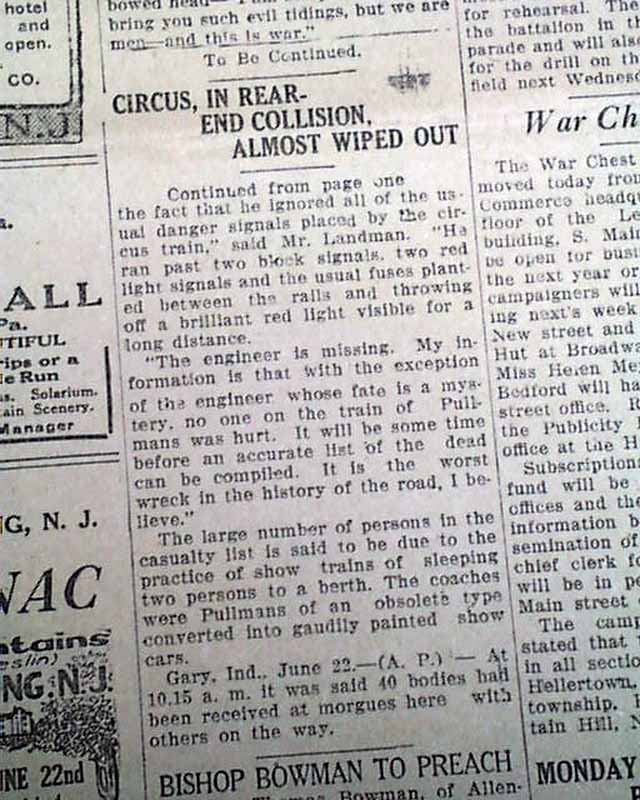
The top of the front page has a one column heading: "Circus, In Rear-End Collision, Almost Wiped Out" with subheads. (see images)
Complete with 12 pages, light toning and minor wear at the margins, some small binding holes along the spine, generally in good condition.
Background: The 1918 Hagenbeck-Wallace Circus train wreck stands as one of the most harrowing industrial disasters in American history, primarily due to the catastrophic failure of safety protocols and the gruesome nature of the wooden car "telescoping" effect. Beyond the immediate death toll of an estimated 86 people, the event’s historical significance lies in its role as a catalyst for federal railroad reform, specifically accelerating the transition from fragile wooden passenger coaches to reinforced steel cars and the implementation of more stringent "hours of service" regulations for engineers. The tragedy is immortalized at Showmen’s Rest in Woodlawn Cemetery, where the mass burial of unidentified performers—marked by gravestones with aliases like "Four Horse Driver"—became a somber symbol of the transient and tight-knit nature of circus culture. Despite the loss of nearly a third of their troupe, the circus famously resumed performances just days later with borrowed equipment, cementing the "show must go on" ethos into the American cultural consciousness while simultaneously highlighting the era's lack of a social safety net for itinerant laborers.
Other issues you may like
§ related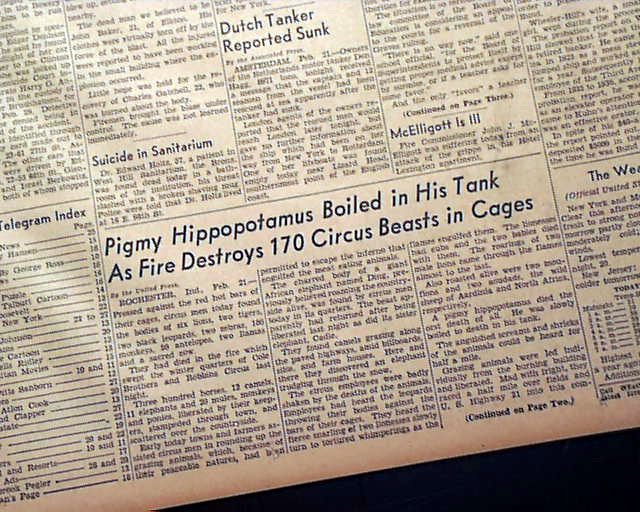
NEW YORK WORLD-TELEGRAM, Feb. 21, 1940
- Cole Bros. Circus fire disaster
- Rochester, Fulton Co., Indiana
- Death of several performing animals
Near the bottom of
...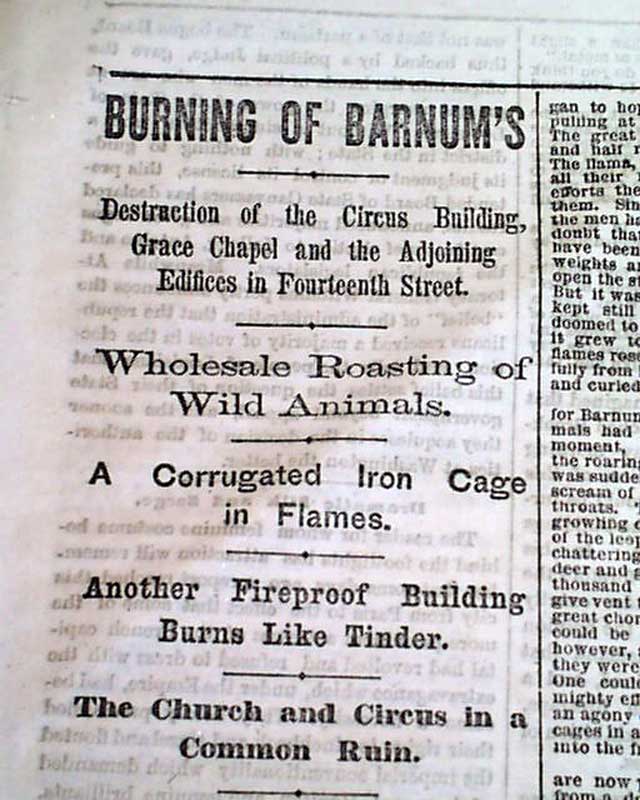
THE NEW YORK HERALD, December 25, 1872
- Christmas eve train wreck disaster
- Cross Cut Railroad - Portland, New York
- Phineas Barnum Circus Museum Fire
The top
...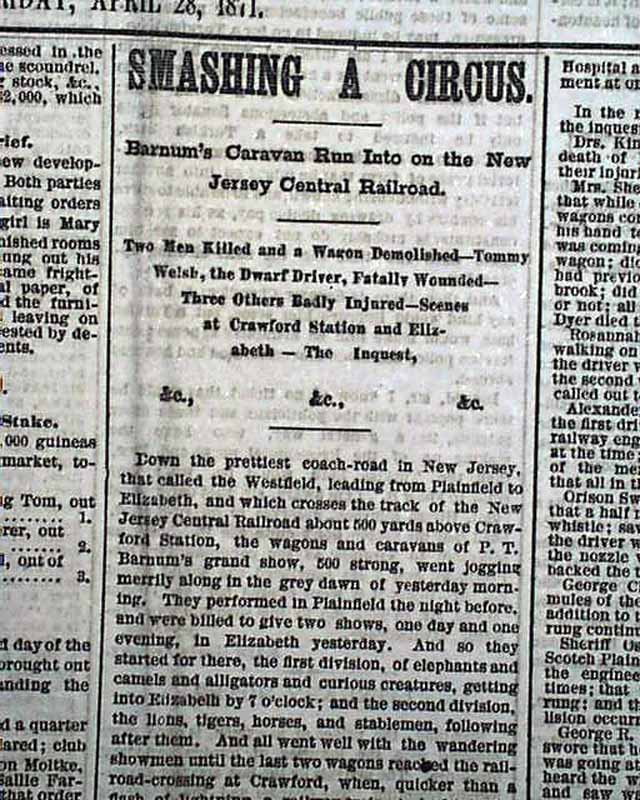
THE WORLD, New York, April 28, 1871 The frontpage carries a headline "Smashing A Circus" with subhead "Barnum's Caravan Run Into on the New Jersey Central
...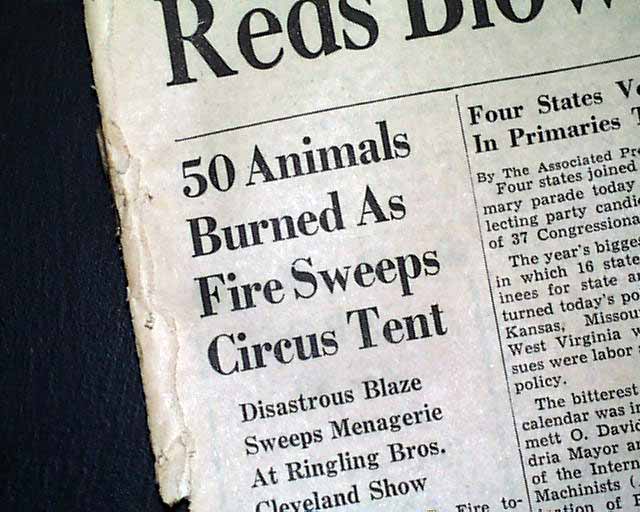
THE NEWS, Frederick, Maryland, August 4, 1942
- Cleveland OH Ohio circus fire
- Ringling Brothers
This 8 page newspaper has one column headlines on the front
...