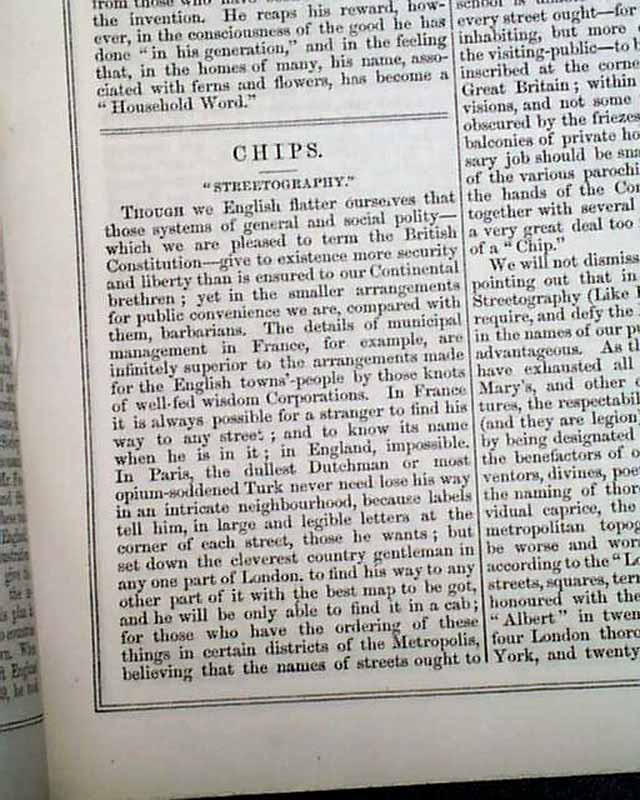
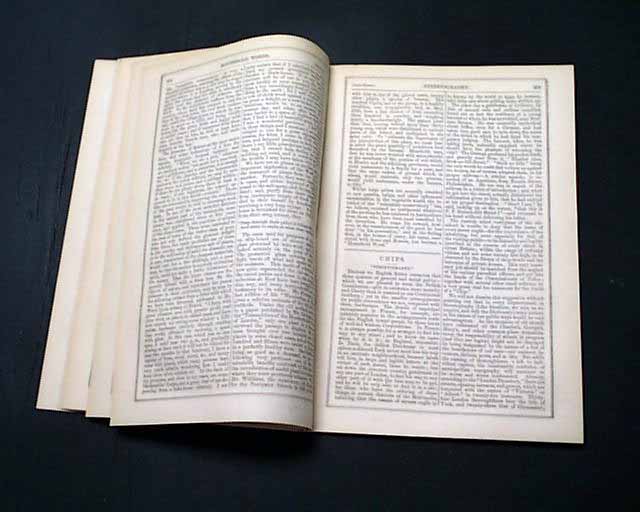
1850 Magazine by the famed Charles Dicken...
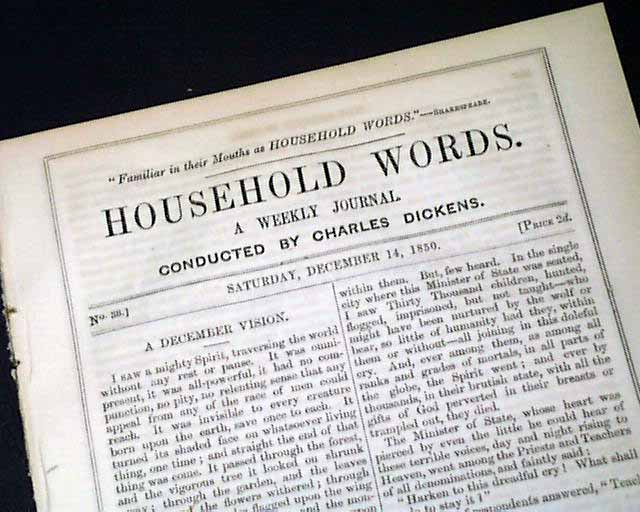
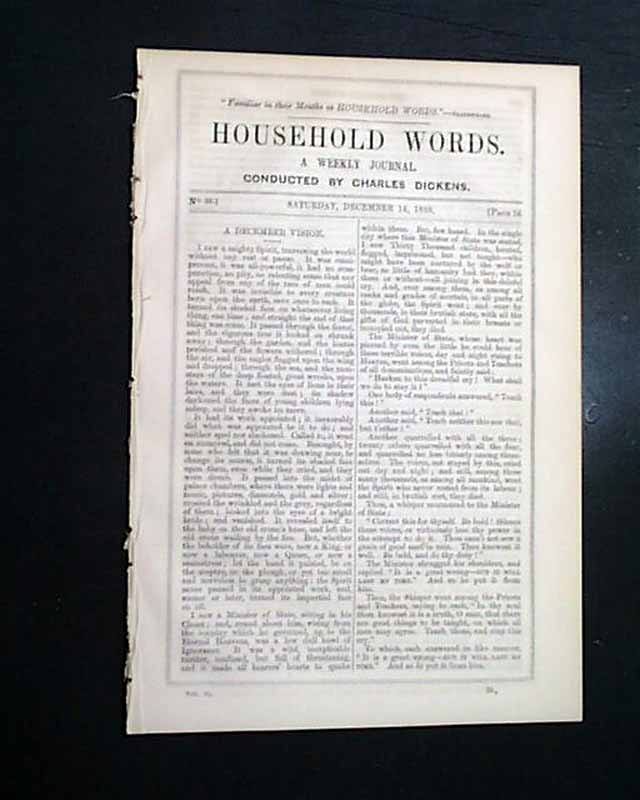
HOUSEHOLD WORDS, London, England, Dec. 14, 1850
- Charles Dickens publication
This 24 page issue is in nice condition and measures 6 x 9 inches. This was a weekly journal which was conducted by Charles Dickens as noted in the masthead. This magazine has mainly literary reading (stories, poems etc.), some by Charles Dickens himself.
Background: The historical significance of Household Words lies in its role as a bridge between the high-brow Victorian literary world and the emerging mass-market readership, effectively democratizing information and social advocacy. Under Charles Dickens’s meticulous "conductorship," the magazine functioned as a powerful engine for social reform, utilizing "investigative journalism" long before the term was popularized to expose the squalor of London’s slums, the failings of the education system, and the dangers of industrialization. By mixing serialized fiction with hard-hitting social commentary, Dickens ensured that a broad audience remained engaged with the pressing moral issues of the 1850s. The publication also marked a pivotal moment in the professionalization of writing; despite the magazine's strict policy of anonymity—which reinforced a singular editorial "voice"—it provided a steady income and a platform for prominent voices like Elizabeth Gaskell and Wilkie Collins. Ultimately, its closure in 1859 was as significant as its run, as the legal battle over its ownership and Dickens's subsequent founding of All the Year Round solidified the author’s status as a dominant, independent media mogul who could command the Victorian public's attention on his own terms.
Other issues you may like
§ related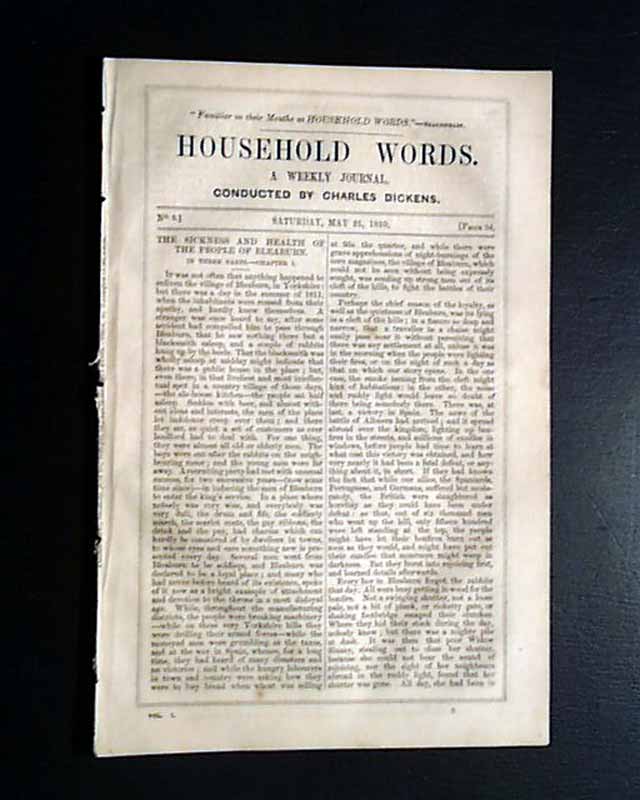
HOUSEHOLD WORDS, London, 1851-1853 Charles Dickens published this magazine from 1850 to 1859. Having been frustrated by the interference of publishers when
...
HOUSEHOLD WORDS, London, 1851-1853 Charles Dickens published this magazine from 1850 to 1859. Having been frustrated by the interference of publishers when
...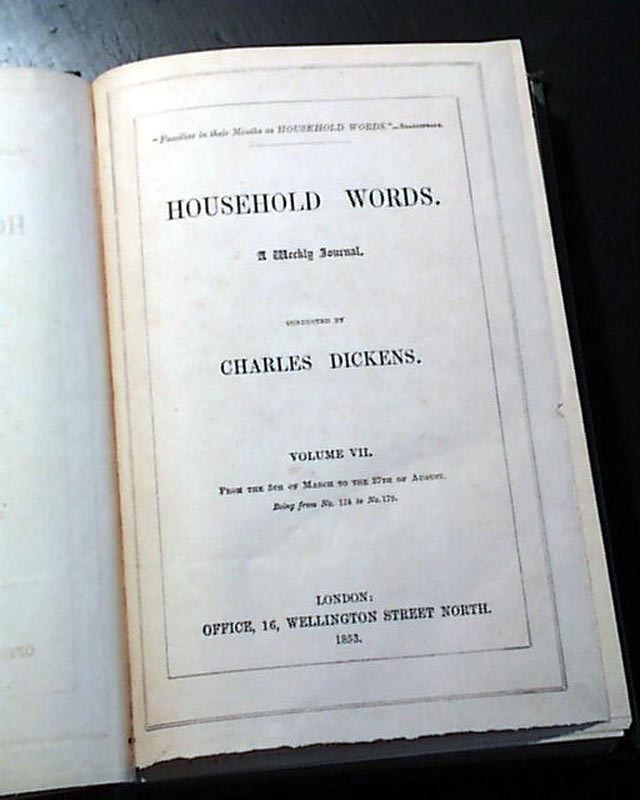
Bound volume of the periodical "HOUSEHOLD WORDS conducted by Charles Dickens" (as noted in the masthead of each issue), London, containing 26 weekly issues
...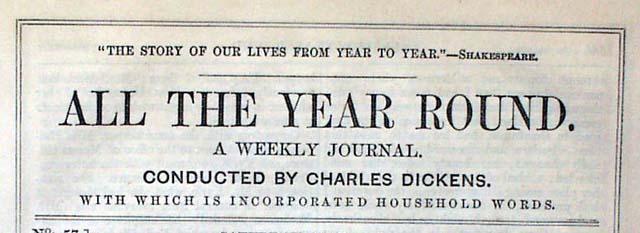
ALL THE YEAR ROUND, London, 1860 This was a Victorian weekly literary publication founded and owned by Charles Dickens, published from 1859 to 1895. Edited
...