Charlie Chaplin's "Modern Times" opening review.......
THE NEW YORK TIMES, March 30, 1949
- "Portrait of Jennie" or "Tidal Wave"
- Supernatural film - Jennie Jones - Ethel Barrymore
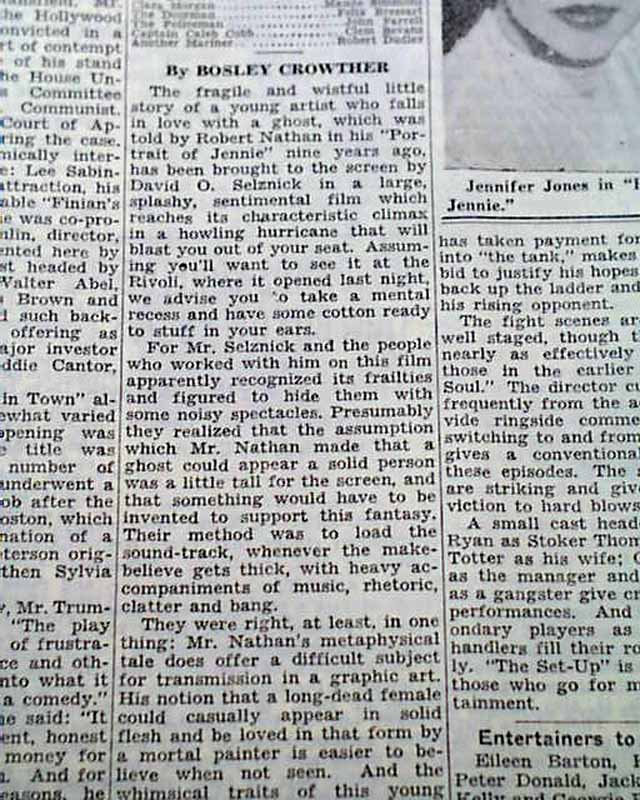
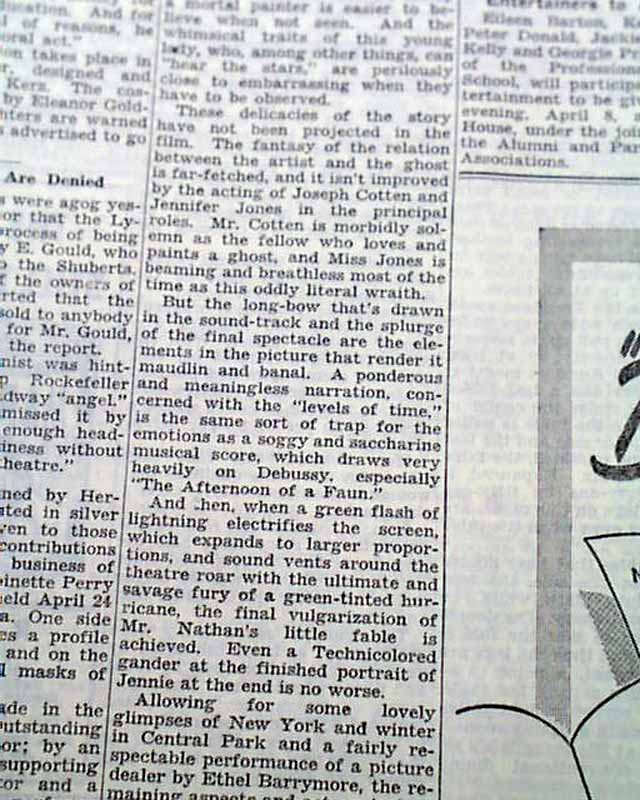
- Opening Day in New York City w/ review
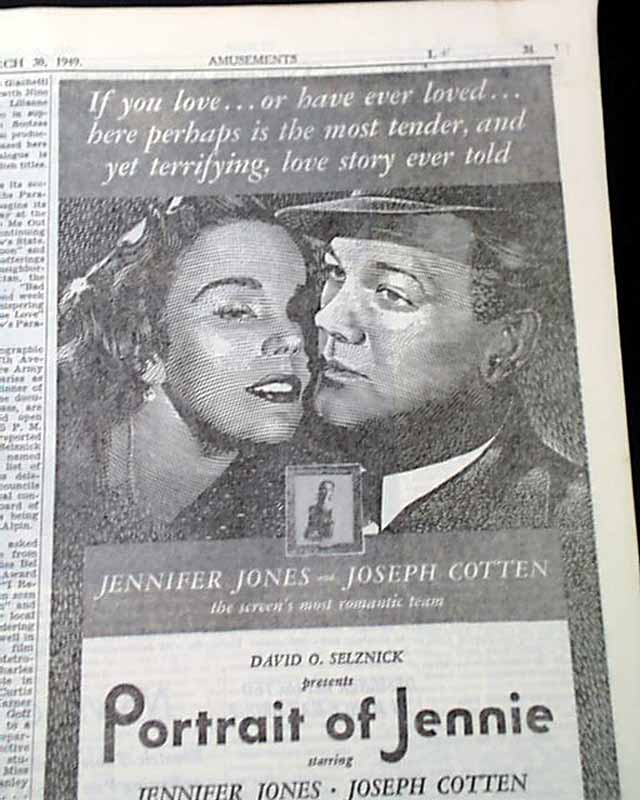
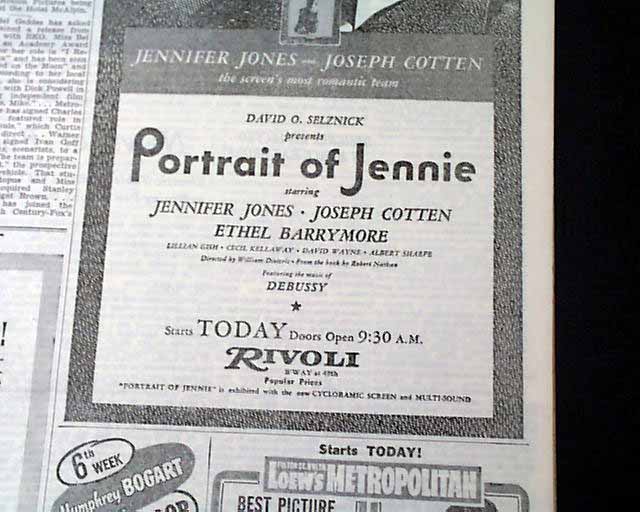
- Opening day premiere advertisement
Page 31 has a 11 5 1/2 inch advertisement for the opening day premiere of the supernatural film "Portrait of Jennie" in New York City.
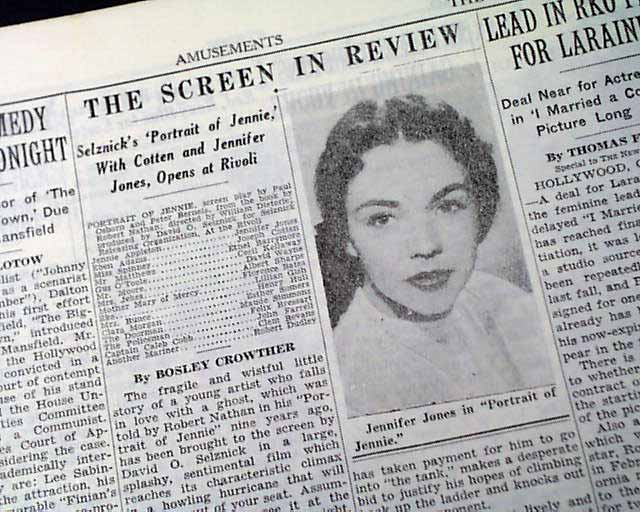
And on the same page is the opening day review under the heading: "Selznick's 'Portrait of Jennie,' With Cotton and Jennifer Jones, Opens at Rivoli" with photo of Jones. (see images)
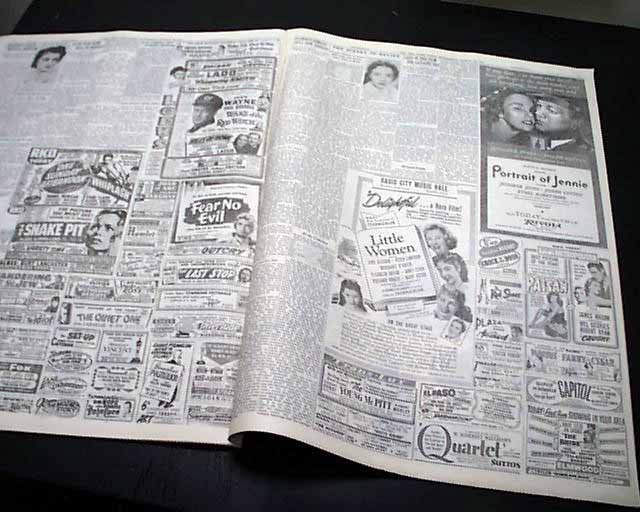
Complete with all 52 pages, rag edition in nice condition.
Background: Released in early 1949 after a troubled and expensive production, Portrait of Jennie stands as a landmark in cinematic history for its innovative blending of technical experimentation and romantic mysticism. Produced by David O. Selznick, the film pushed the boundaries of the medium by utilizing unique visual techniques to mirror the ethereal nature of the story, such as shooting through silk scarves to create a "canvas" texture and employing a dramatic shift in aspect ratio (Magnascope) and tinting for the climactic hurricane sequence. Historically, it represents the twilight of the "Prestige Melodrama" era, marking one of the final grand, obsessive projects of the studio system's most flamboyant producer. Beyond its Academy Award-winning special effects, the film's significance lies in its sophisticated use of Claude Debussy’s impressionist music and its exploration of nonlinear time, which influenced decades of "time-slip" romances. Despite being a box-office failure that signaled the decline of the Selznick International Pictures empire, it has aged into a definitive example of high-art Hollywood fantasy, preserved for its haunting atmosphere and its daring attempt to translate the ephemeral feeling of a painting into a motion picture.
Other issues you may like
§ related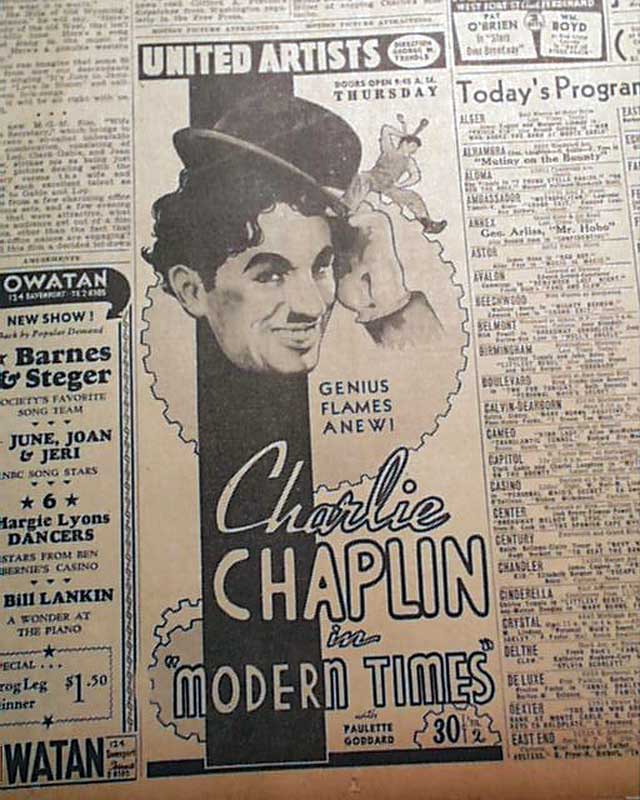
THE DETROIT FREE PRESS, Feb. 19, 1936
- Charlie Chaplin's "Modern Times"
- Opening Day in Detroit, Michigan (eve)
- Movie - film debut advertisement & review
Page 8
...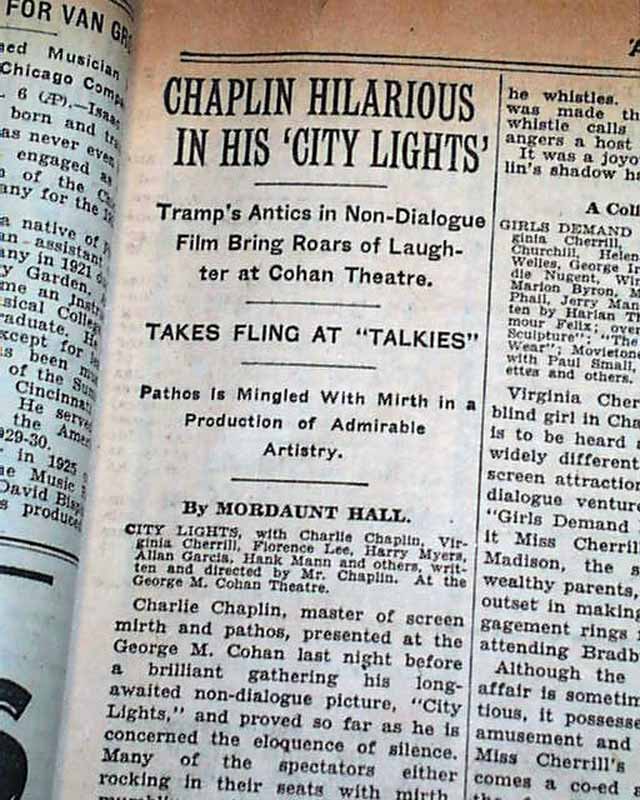
THE NEW YORK TIMES, February 7, 1931
- Silent era comic actor Charlie Chaplin
- "City Lights" movie film debut ad & review
Page 11 has a one column heading:
...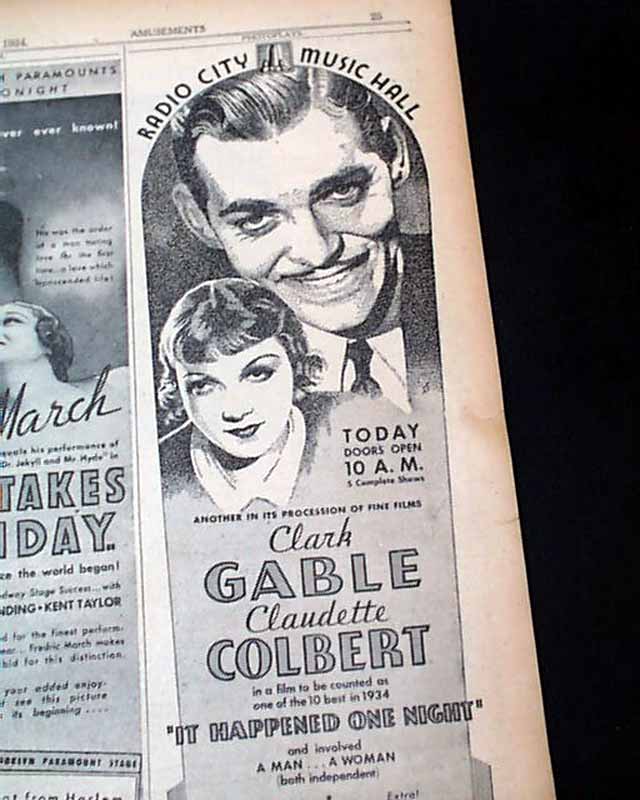
THE NEW YORK TIMES, Feb. 22, 1934
- "It Happened One Night" opening day advertisement
- Clark Gable Claudette Colbert - Frank Capra
- Romantic comedy by
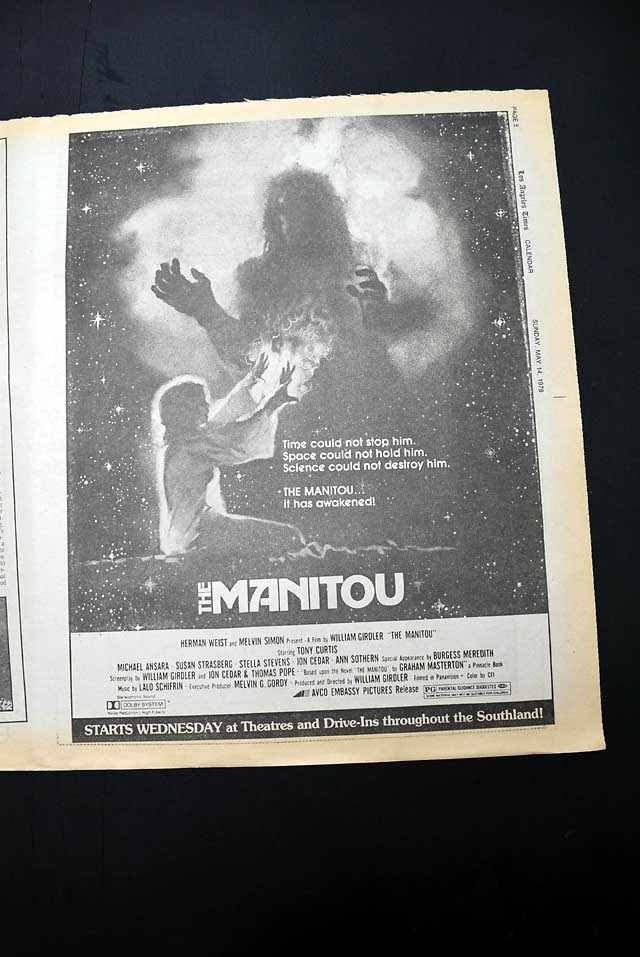
LOS ANGELES TIMES, May 14, 1978 (an original vintage newspaper leaf from the Calendar section) This offering consists of four complete pages (two
...