Albert Einstein becomes U.S. citizen...
Item # 726720
·
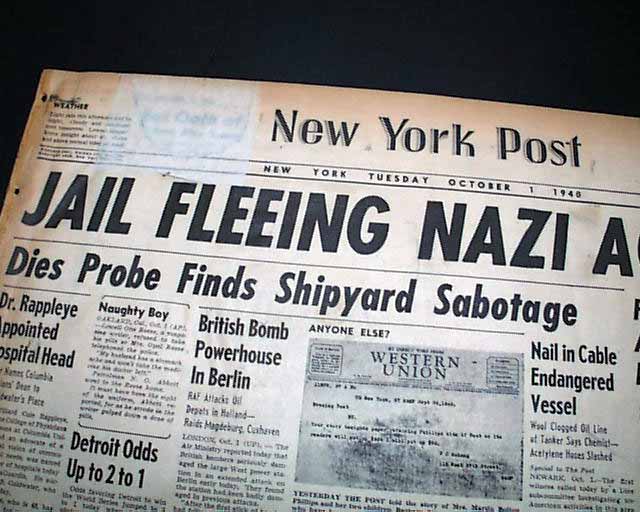
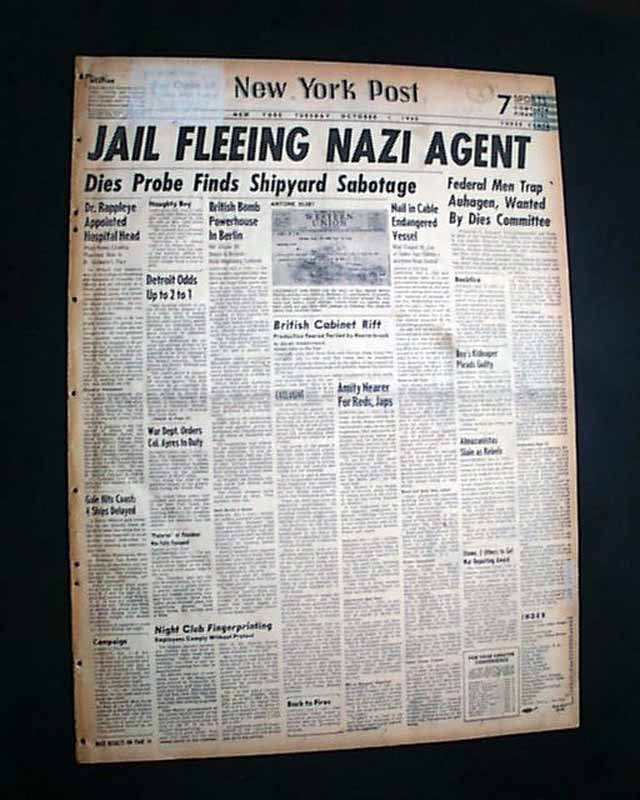
NEW YORK POST, October 1, 1940
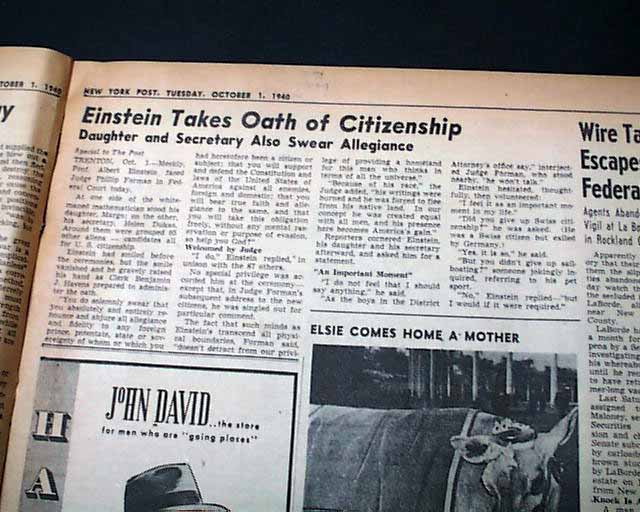
* Albert Einstein becomes United States Citizen
* Theory of Relativity fame - physics
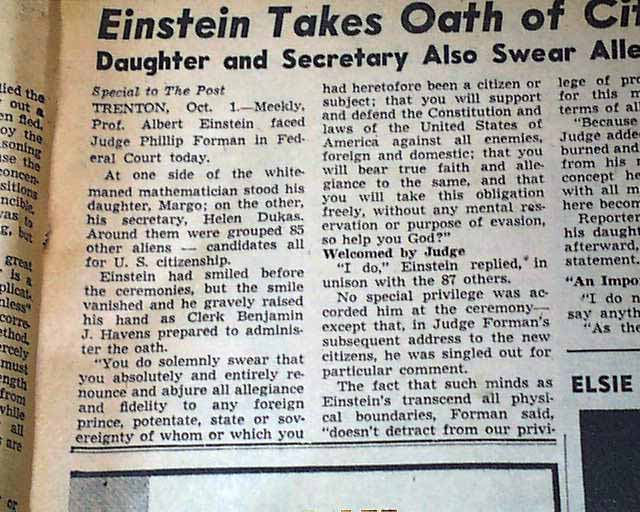
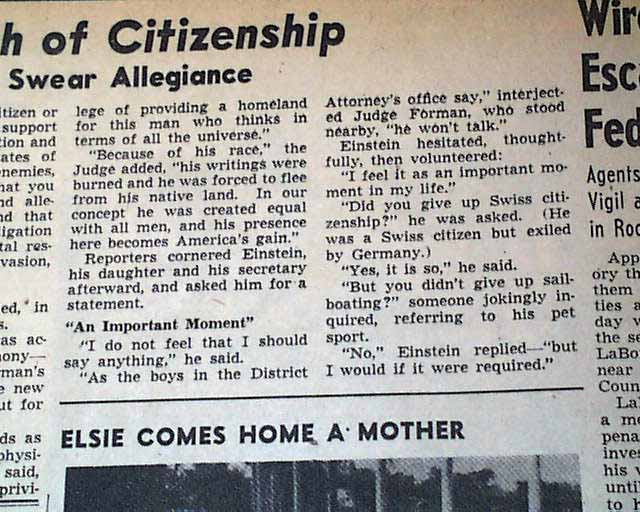
The top od page 3 has a three column heading: "Einstein Takes Oath of Citizenship" with subhead. (see images)
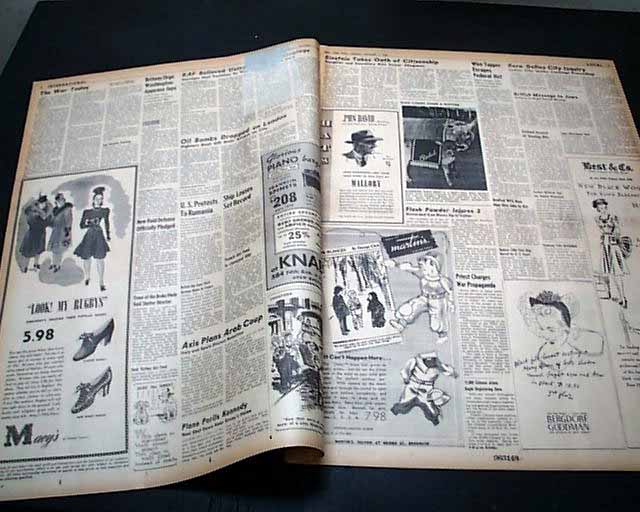
Twenty pages, piece torn away along the top margin of the front page and replaced with archival mending, minor margin wear, some small binding holes along the spine, generally in good condition.
Background: The naturalization of Albert Einstein on October 1, 1940, represented a definitive shift in the global intellectual landscape, signaling the end of European scientific hegemony and the rise of the United States as the world's primary sanctuary for theoretical research. Having fled the rising tide of Nazism in 1933, Einstein's oath of citizenship in Trenton, New Jersey, was a public repudiation of the Third Reich's "Aryan Physics" and a victory for democratic intellectual freedom. This event was not merely symbolic; it provided Einstein with a secure legal platform from which he could influence American policy and social discourse during a period of global upheaval. As a citizen, his advocacy transitioned from that of a displaced refugee to an American constituent, allowing him to more boldly address the Roosevelt administration regarding the potential of atomic energy and, later, to challenge domestic issues such as racial segregation, which he famously characterized as the nation's "worst disease." Ultimately, his citizenship solidified the Institute for Advanced Study in Princeton as a beacon for displaced scholars, fundamentally reshaping the American academic identity into one of inclusivity and scientific dominance that would persist throughout the Cold War and beyond.
* Albert Einstein becomes United States Citizen
* Theory of Relativity fame - physics
The top od page 3 has a three column heading: "Einstein Takes Oath of Citizenship" with subhead. (see images)
Twenty pages, piece torn away along the top margin of the front page and replaced with archival mending, minor margin wear, some small binding holes along the spine, generally in good condition.
Background: The naturalization of Albert Einstein on October 1, 1940, represented a definitive shift in the global intellectual landscape, signaling the end of European scientific hegemony and the rise of the United States as the world's primary sanctuary for theoretical research. Having fled the rising tide of Nazism in 1933, Einstein's oath of citizenship in Trenton, New Jersey, was a public repudiation of the Third Reich's "Aryan Physics" and a victory for democratic intellectual freedom. This event was not merely symbolic; it provided Einstein with a secure legal platform from which he could influence American policy and social discourse during a period of global upheaval. As a citizen, his advocacy transitioned from that of a displaced refugee to an American constituent, allowing him to more boldly address the Roosevelt administration regarding the potential of atomic energy and, later, to challenge domestic issues such as racial segregation, which he famously characterized as the nation's "worst disease." Ultimately, his citizenship solidified the Institute for Advanced Study in Princeton as a beacon for displaced scholars, fundamentally reshaping the American academic identity into one of inclusivity and scientific dominance that would persist throughout the Cold War and beyond.
Category: The 20th Century
Price
$52
100% Authentic: Original printing, never a reproduction.
Other issues you may like
§ related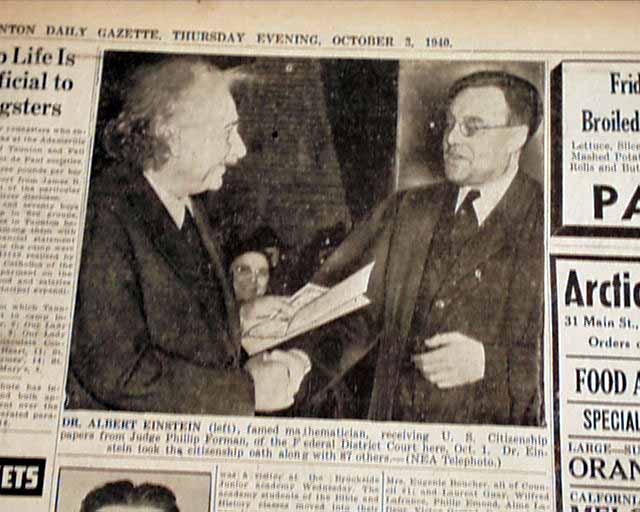
Albert Einstein becomes U.S. citizen...
TAUNTON DAILY GAZETTE, Massachusetts, October 3, 1940
* Albert Einstein becomes United States Citizen
* Physics
Page 6 has a photo showing Albert...
* Albert Einstein becomes United States Citizen
* Physics
Page 6 has a photo showing Albert...
Oct 1940
$34
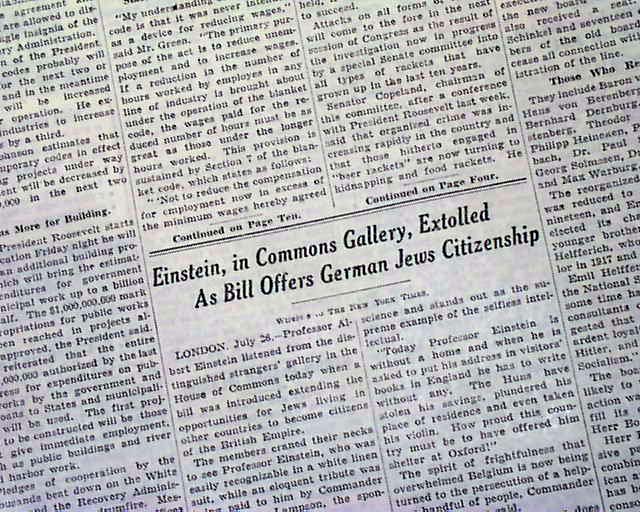
Albert Einstein & Jewish citizenship....
THE NEW YORK TIMES, July 27, 1933
* Professor Albert Einstein
* Jewish citizenship bill
* Nazis persecution of Jews
Near the bottom of the front...
* Professor Albert Einstein
* Jewish citizenship bill
* Nazis persecution of Jews
Near the bottom of the front...
Jul 1933
$37
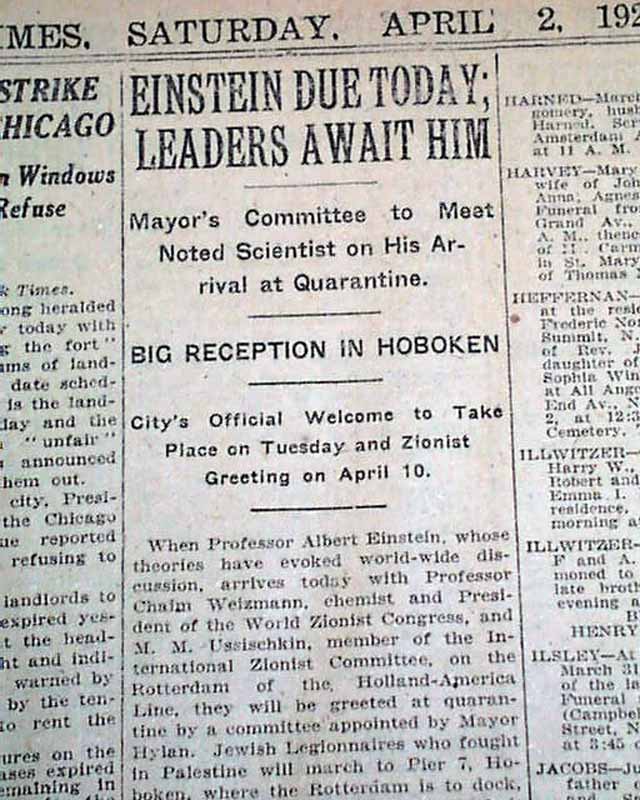
Albert Einstein...
THE NEW YORK TIMES, April 2, 1921
* Albert Einstein
* Eve of Theory of Relativity speech
* 1st visit to America
* Nobel peace prize fame
The top...
* Albert Einstein
* Eve of Theory of Relativity speech
* 1st visit to America
* Nobel peace prize fame
The top...
Apr 1921
$38
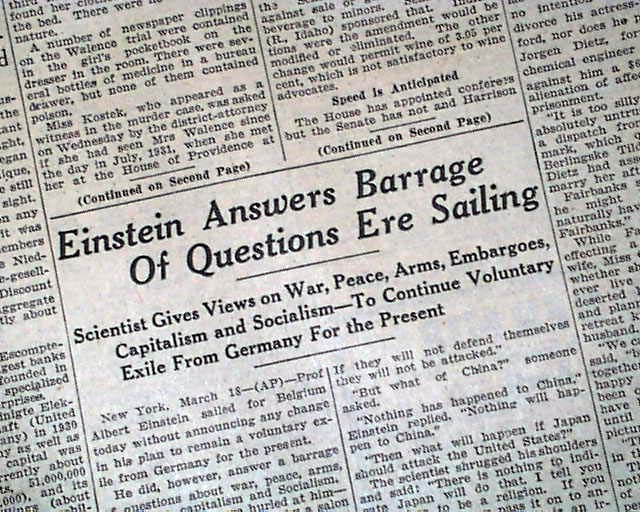
Albert Einstein leaves America...
THE SPRINGFIELD UNION, Mass., March 19, 1933
* Albert Einstein goes back to Europe
* Escaping Adolf Hitler & Third Reich
Near the bottom of the front page is a...
* Albert Einstein goes back to Europe
* Escaping Adolf Hitler & Third Reich
Near the bottom of the front page is a...
Mar 1933
$48