1901 Jacksonville, Florida fire disaster...
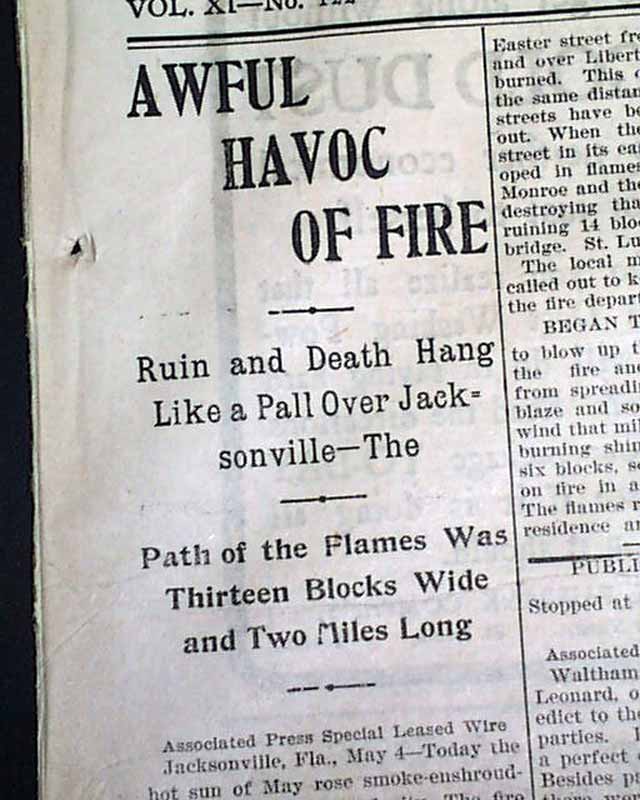
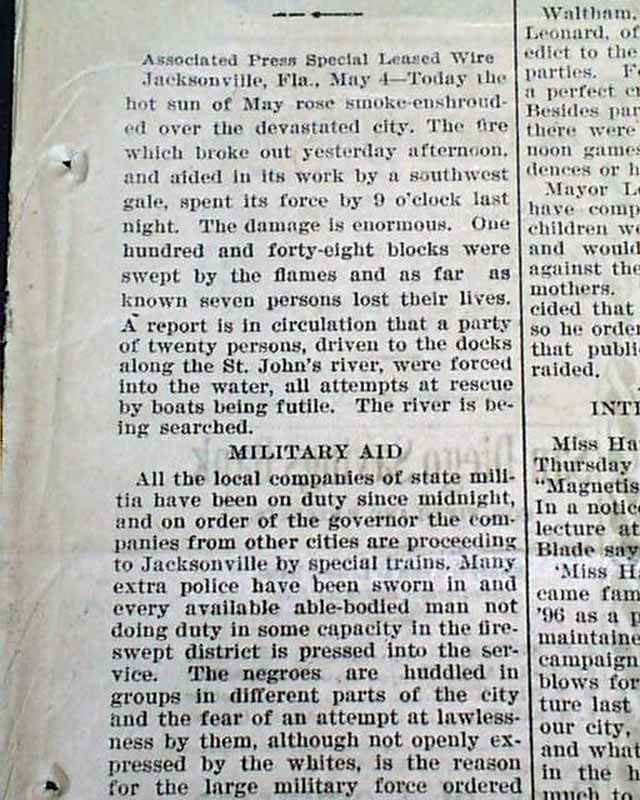
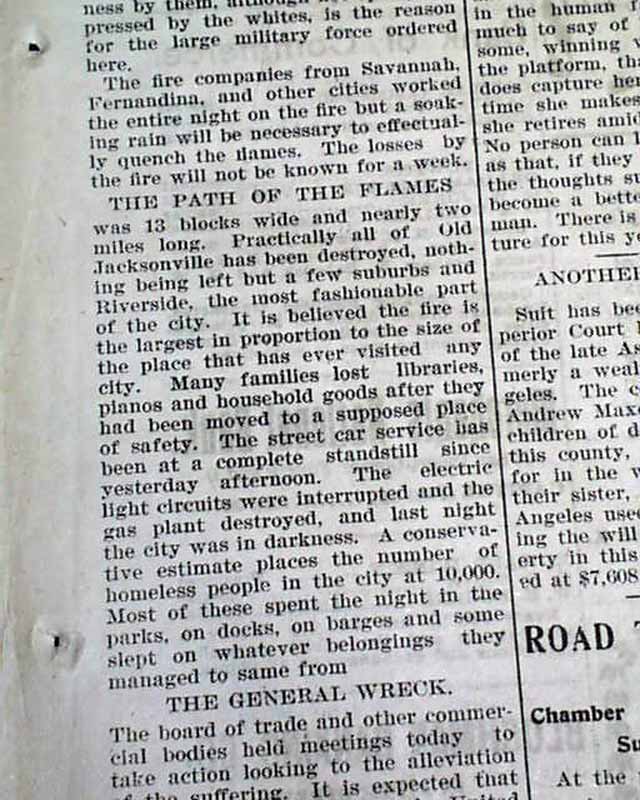
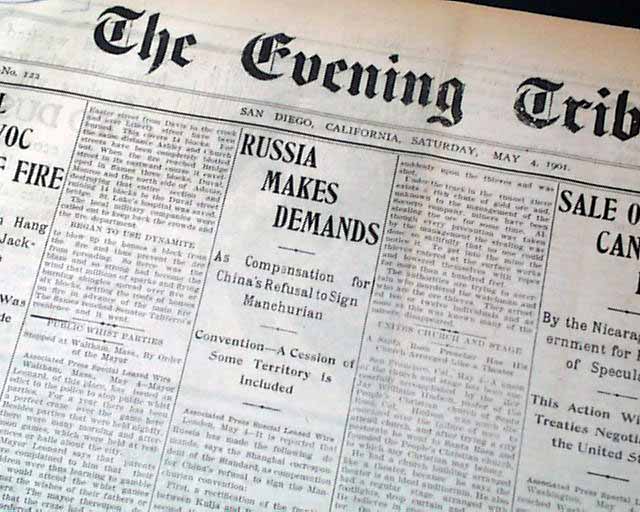
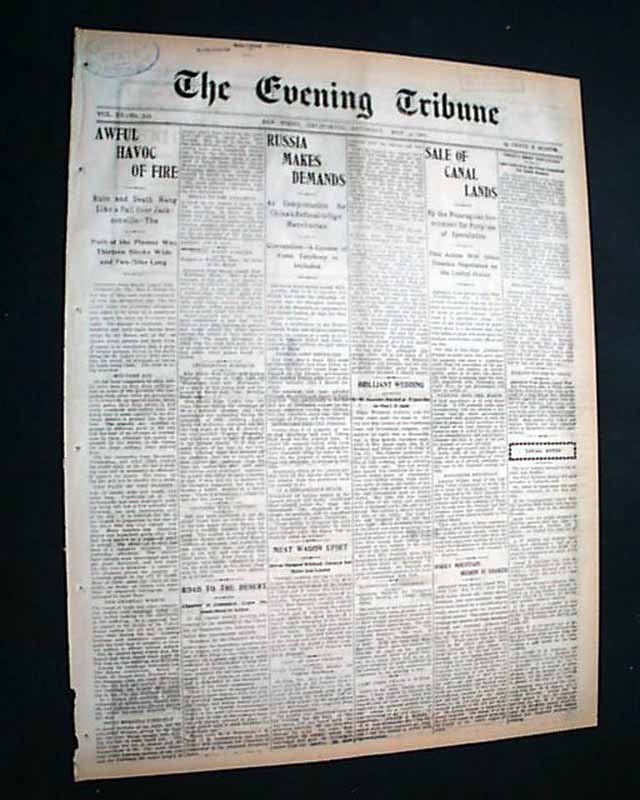
THE EVENING TRIBUNE, San Diego, May 4, 1901
- Great fire of 1901
- Jacksonville, Florida
The top of the front page has a one column heading: "AWFUL HAVOC OF FIRE" with subheads. (see) Surprisingly this issue is in good condition being from the "wood pulp" era. Very hard to find issues that are not totally fragile from this era in paper.
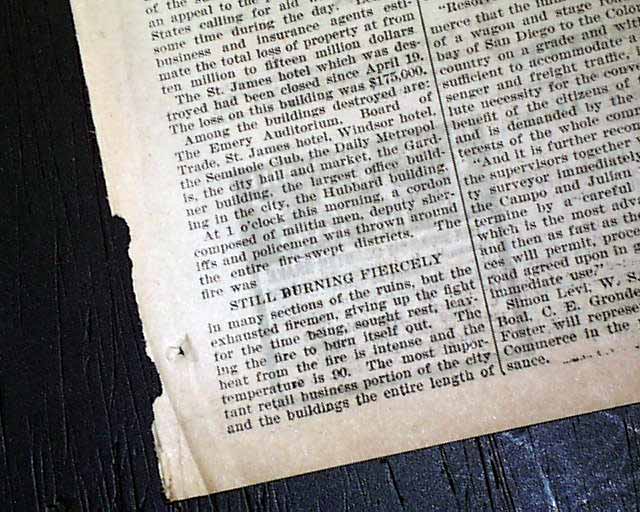
Complete with 8 pages, small library stamps within the masthead, a few small binding holes along the spine, generally very nice.
Background: The Great Fire of 1901 stands as a pivotal turning point in Southern history, representing both the catastrophic vulnerability of turn-of-the-century urban planning and the resilient spirit of the "New South." On May 3, 1901, a spark at the Cleaveland Fibre Factory ignited a heap of dry Spanish moss, which, fueled by a severe drought and stiff westerly winds, transformed into a firestorm that consumed 146 city blocks and nearly 2,400 buildings in just eight hours. This inferno effectively erased the Victorian-era wooden landscape of downtown Jacksonville, leaving 10,000 residents homeless and causing roughly $15 million in property damage (equivalent to hundreds of millions today). However, the historical significance lies in the city's radical transformation during the aftermath; rather than collapsing, Jacksonville underwent an architectural renaissance led by figures like Henry John Klutho. This rapid reconstruction replaced flammable wood with concrete, brick, and stone, introducing the innovative Prairie School style to the region and solidifying Jacksonville’s status as a modern metropolitan hub and the dominant commercial gateway to Florida for decades to follow.
Other issues you may like
§ related
THE EVENING TRIBUNE, San Diego, April 3, 1902
- Atlantic City, New Jersey coastal resort
- Waterfront - boardwalk fire disaster
The top of the front page has a
...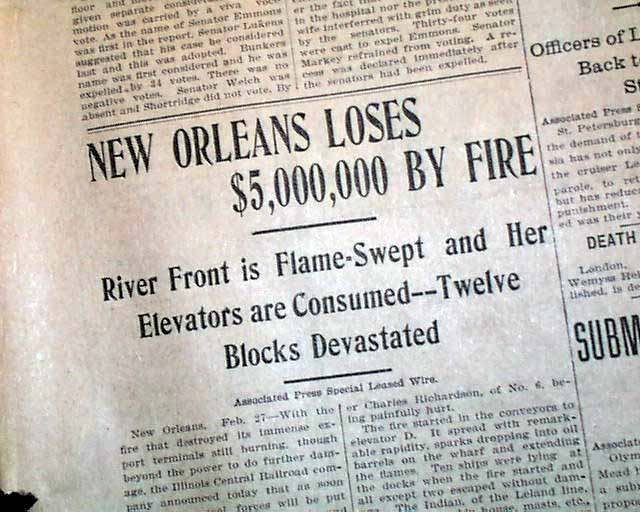
THE EVENING TRIBUNE, San Diego, Feb. 27, 1905
- New Orleans riverfront fire disaster
The front page has a two column heading: "NEW ORLEANS LOSES $5,000,000 BY
...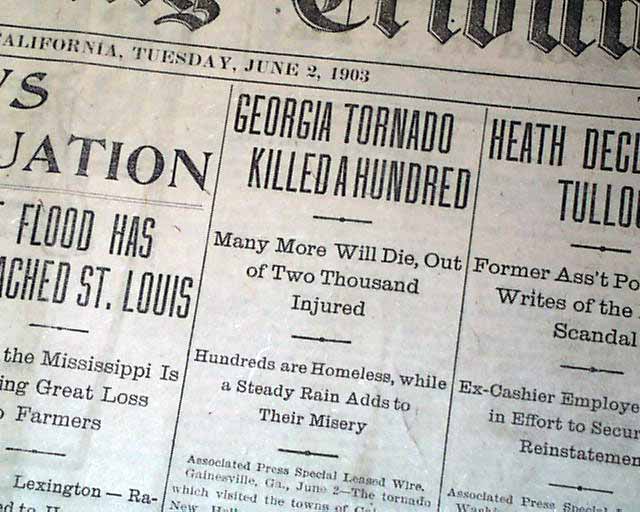
THE EVENING TRIBUNE, San Diego, California, June 2, 1903
- Gainesville, Georgia tornado
- Hall County storm disaster
The top of the front page has a one column
...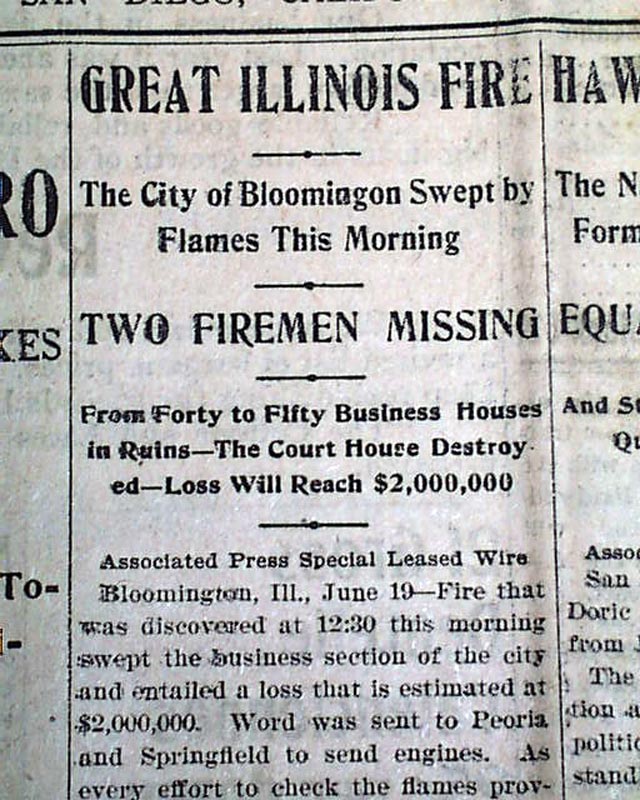
THE EVENING TRIBUNE, San Diego, June 19, 1900
- Bloomington, Illinois fire disaster
- McLean County
The top of the front page has a one column heading: "GREAT
...