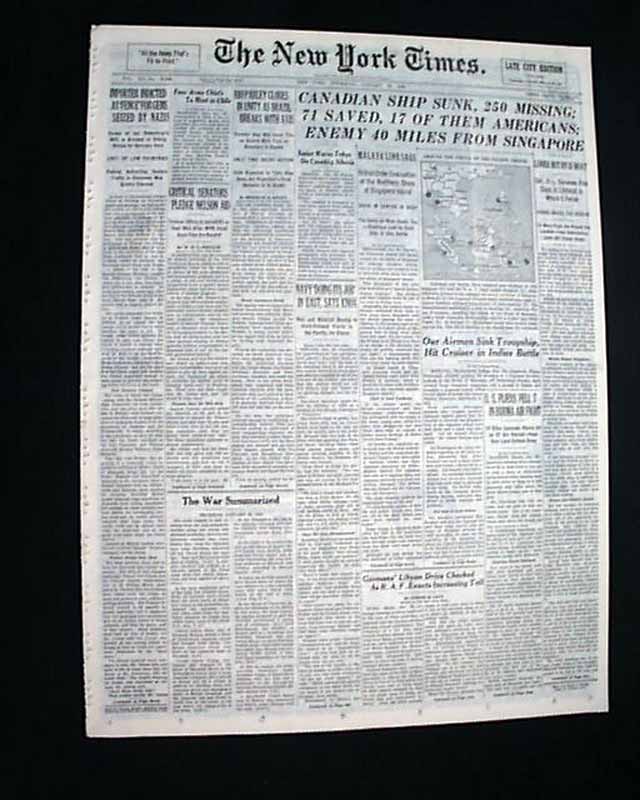
Internment of Japanese-Americans in early 1942...
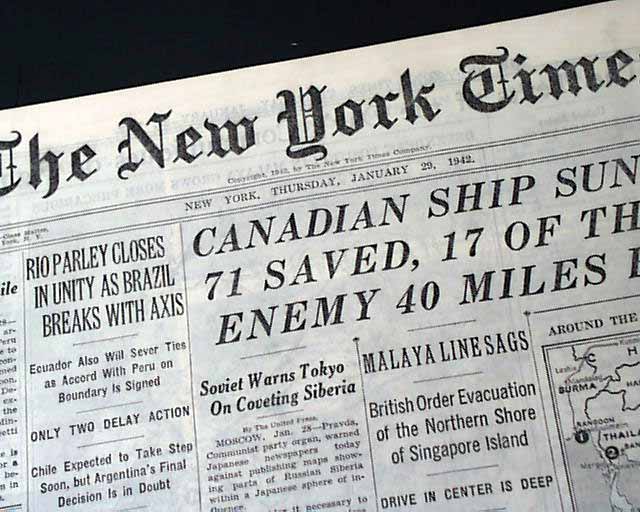
THE NEW YORK TIMES, Jan. 29, 1942
- Internment of Axis-Americans beginning
- World War II - WWII - Japanese citizens
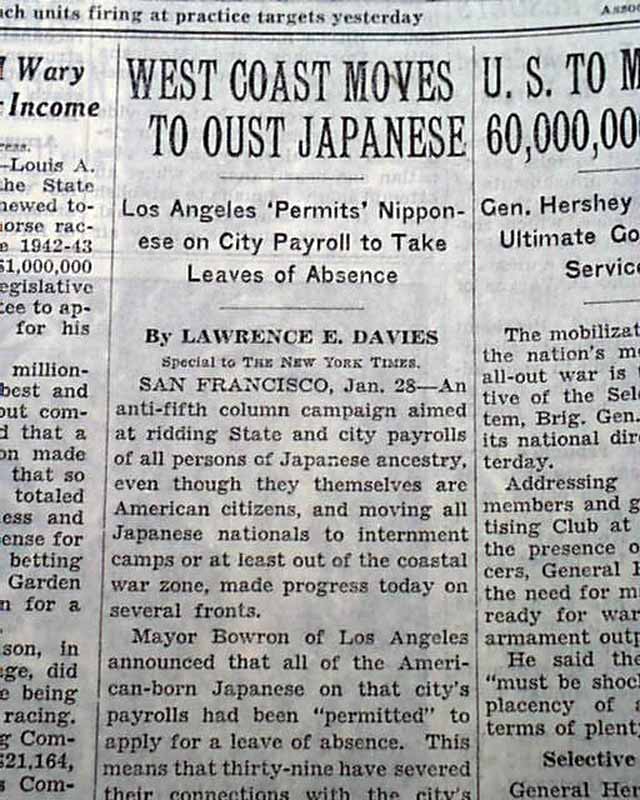
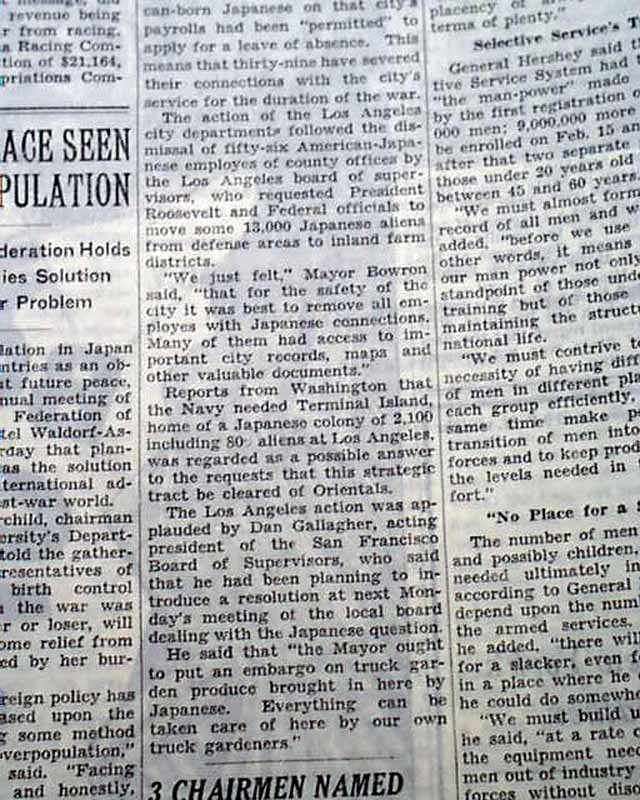
Page 12 has a one column heading: "WEST COAST MOVES TO OUST JAPANESE" with subhead. (see images)
Complete with all 40 pages, rag edition in very nice condition.
Background: The convergence of events on January 28, 1942, serves as the critical transition point where the United States moved from targeted national security measures to a policy of mass, race-based incarceration. The Department of Justice and the Western Defense Command, the federal government signaled that the "Japanese problem" was no longer a matter of individual FBI surveillance but a large-scale military operation. Simultaneously, the Department of Justice's designation of "Category A" strategic areas and the California State Personnel Board’s move to purge Japanese Americans from civil service roles—bolstered by the xenophobic rhetoric of leaders like Mayor Fletcher Bowron—effectively stripped Nisei citizens of their constitutional protections. This period is historically significant because it dismantled the concept of birthright citizenship under the guise of "military necessity," creating the administrative and political infrastructure that allowed Executive Order 9066 to be issued just weeks later, ultimately leading to the forced removal of 120,000 people without due process.
Other issues you may like
§ related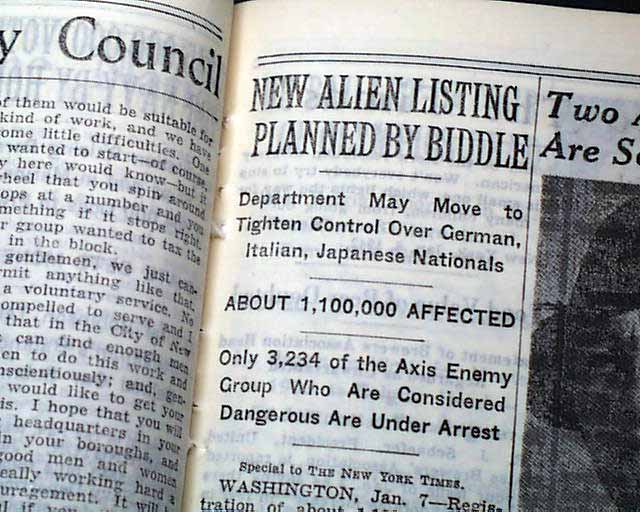
THE NEW YORK TIMES, Jan. 8, 1942
- Internment of Axis-Americans beginning
- World War II - WWII - AG Francis Biddle
The top of page 19 has a one column heading:
...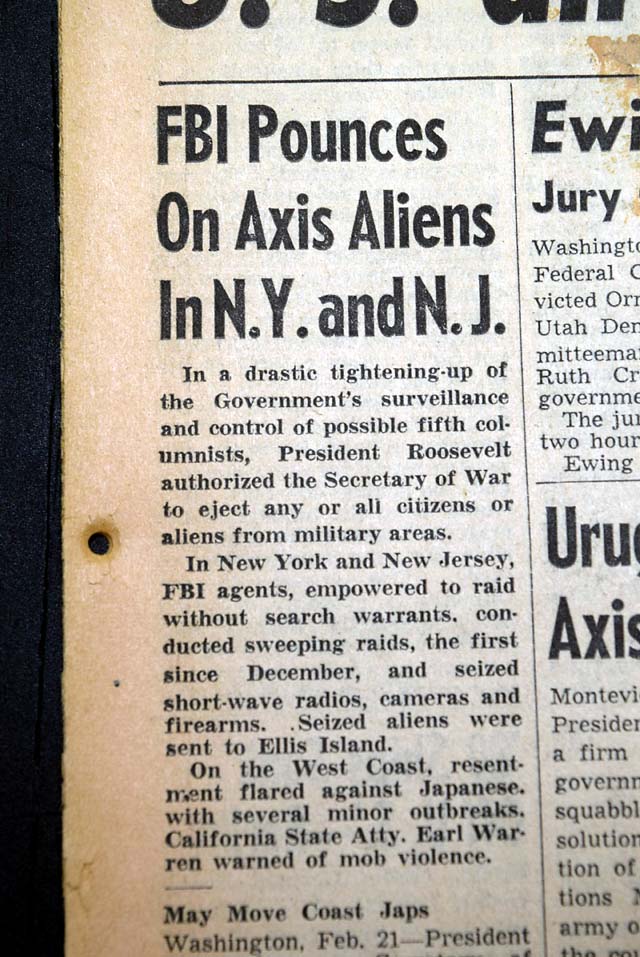
NEW YORK POST, February 22, 1942
- Internment of Japanese Americans
- FDR's Executive Order 9066
- Alien control order
- World War II - WWII
The front page has a one
...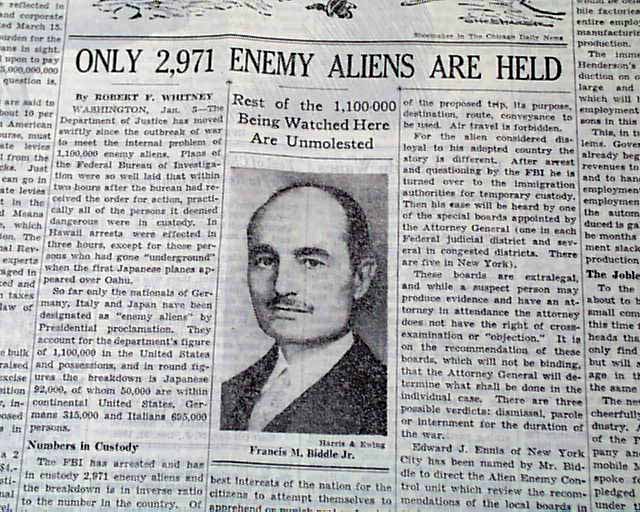
SECTION 4 ONLY of the New York Times, Jan. 4, 1942
- Internment of Japanese Americans beginning
- World War II - WWII - Robert F. Whitney
The back page of this
...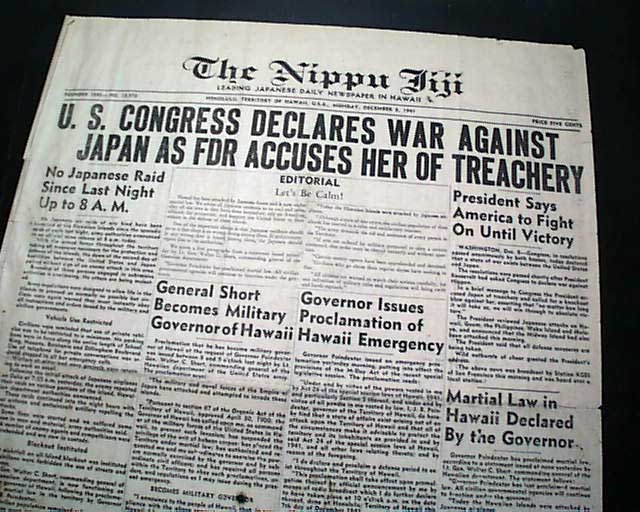
THE NIPPON JIJI, "Leading Japanese Daily Newspaper In Hawaii", Honolulu, Territory of Hawaii, U.S.A. December 8, 1941
- Attack on Pearl Harbor
- U.S. to enter