Charles "Taze" Russell - Russellites in 1918...
Item # 726657
·
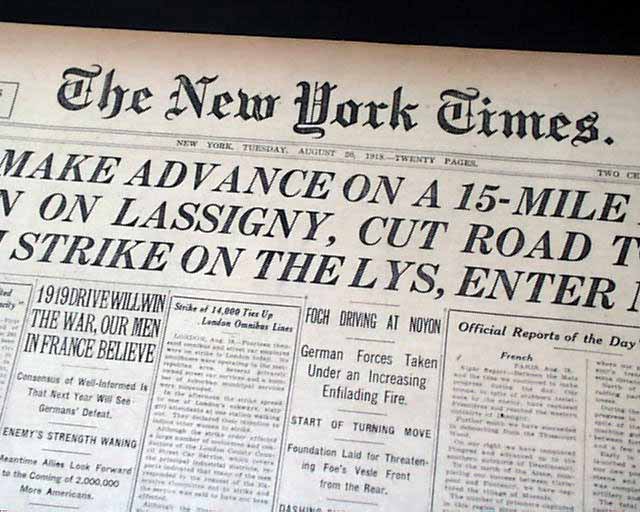
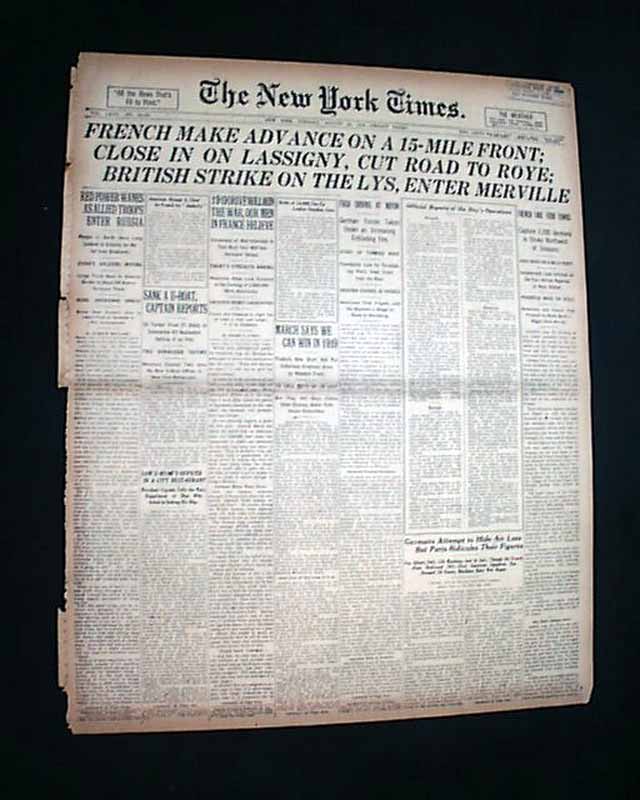
THE NEW YORK TIMES, Aug. 20, 1918
* Rutherford & other Russellites in prison
* Pastor Charles Taze Russell followers
* Christian restorationist minister
* Founder of the Jehovah's Witnesses
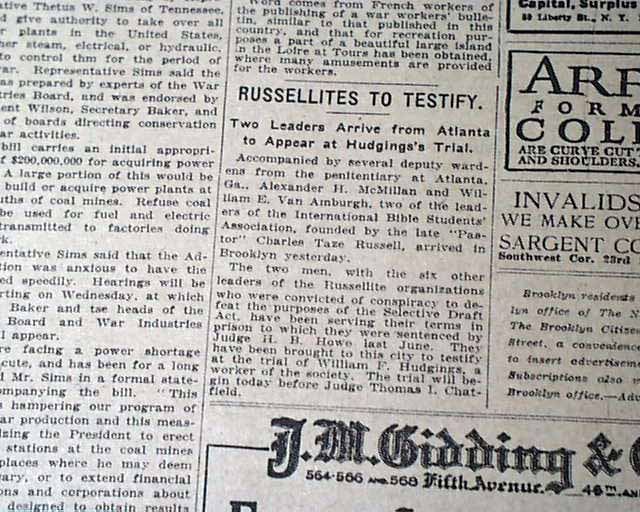
Page 5 has a brief and discrete report with small heading: "Russellites To Testify" (see image)
Complete with 20 pages, light toning, some wear at the margins, more so along the loose spine, should be handled with care.
Note: This issue comes with an acid-free folder (gratis) for protection.
Background: The 1918 contempt trial of William F. Hudgings stands as a pivotal moment in American legal history, representing a critical intersection of wartime hysteria, religious persecution, and the limits of judicial authority. During the height of the First Red Scare, Hudgings was summoned as a witness in the Brooklyn federal trial of the Russellite leaders, who were being prosecuted under the Espionage Act for their pacifist literature. When Hudgings testified that he could not identify his colleagues’ handwriting, Judge Harland B. Howe—whose conduct was later characterized as "manifestly unfair"—summarily jailed him for contempt, effectively attempting to coerce a confession by equating a lack of memory with a deliberate obstruction of justice. This act of judicial overreach led to the landmark 1919 Supreme Court ruling in Ex Parte Hudgings, which strictly limited a judge's power to use contempt as a tool for punishing suspected perjury. By establishing that a witness cannot be indefinitely imprisoned simply because a judge finds their testimony "unbelievable," the case provided a vital safeguard for the constitutional right to due process and shielded future witnesses from the arbitrary use of judicial force during politically charged eras.
* Rutherford & other Russellites in prison
* Pastor Charles Taze Russell followers
* Christian restorationist minister
* Founder of the Jehovah's Witnesses
Page 5 has a brief and discrete report with small heading: "Russellites To Testify" (see image)
Complete with 20 pages, light toning, some wear at the margins, more so along the loose spine, should be handled with care.
Note: This issue comes with an acid-free folder (gratis) for protection.
Background: The 1918 contempt trial of William F. Hudgings stands as a pivotal moment in American legal history, representing a critical intersection of wartime hysteria, religious persecution, and the limits of judicial authority. During the height of the First Red Scare, Hudgings was summoned as a witness in the Brooklyn federal trial of the Russellite leaders, who were being prosecuted under the Espionage Act for their pacifist literature. When Hudgings testified that he could not identify his colleagues’ handwriting, Judge Harland B. Howe—whose conduct was later characterized as "manifestly unfair"—summarily jailed him for contempt, effectively attempting to coerce a confession by equating a lack of memory with a deliberate obstruction of justice. This act of judicial overreach led to the landmark 1919 Supreme Court ruling in Ex Parte Hudgings, which strictly limited a judge's power to use contempt as a tool for punishing suspected perjury. By establishing that a witness cannot be indefinitely imprisoned simply because a judge finds their testimony "unbelievable," the case provided a vital safeguard for the constitutional right to due process and shielded future witnesses from the arbitrary use of judicial force during politically charged eras.
Category: The 20th Century
Price
$58
100% Authentic: Original printing, never a reproduction.
Other issues you may like
§ related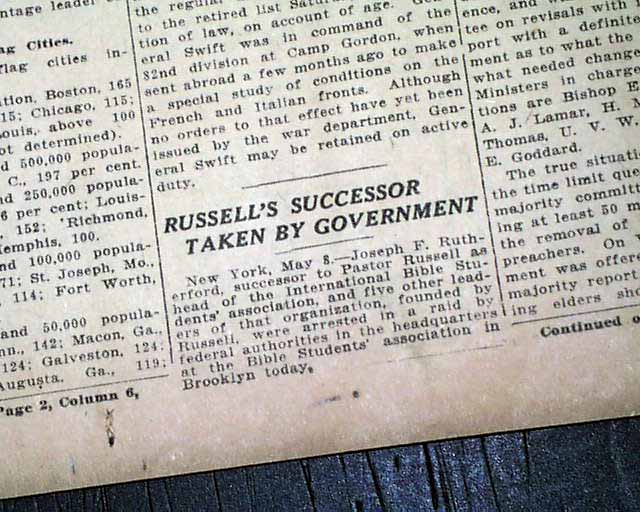
Charles "Taze" Russellites arrested in 1918...
THE ATLANTA CONSTITUTION, May 9, 1918
* Rutherford & other Russellites arrested
* Opposition to World War I - WWI
* Pastor Charles Taze Russell...
* Rutherford & other Russellites arrested
* Opposition to World War I - WWI
* Pastor Charles Taze Russell...
May 1918
$77
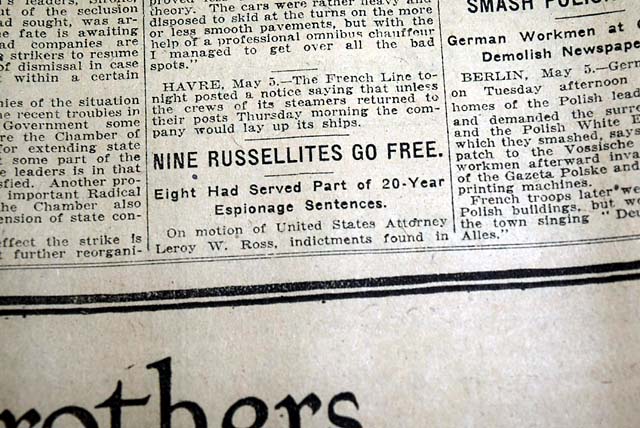
Charles "Taze" Russell - Russellites sentenced...
THE NEW YORK TIMES, May 6, 1920
* Joseph Franklin Rutherford & Russellites
* Charges dropped for espionage - WWI
* Pastor Charles Taze Russell followers
*...
* Joseph Franklin Rutherford & Russellites
* Charges dropped for espionage - WWI
* Pastor Charles Taze Russell followers
*...
May 1920
$72
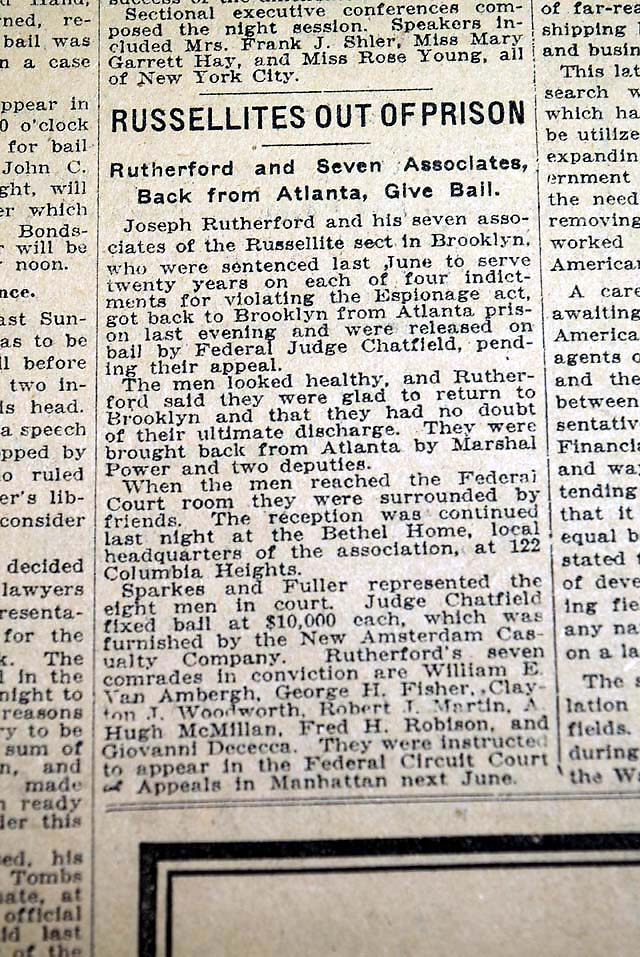
Russellites released from prison in 1919...
THE NEW YORK TIMES, March 27, 1919
* Rutherford & other Russellites
* Atlanta Prison release (1st report)
* Pastor Charles Taze Russell followers
* Christian...
* Rutherford & other Russellites
* Atlanta Prison release (1st report)
* Pastor Charles Taze Russell followers
* Christian...
Mar 1919
$77
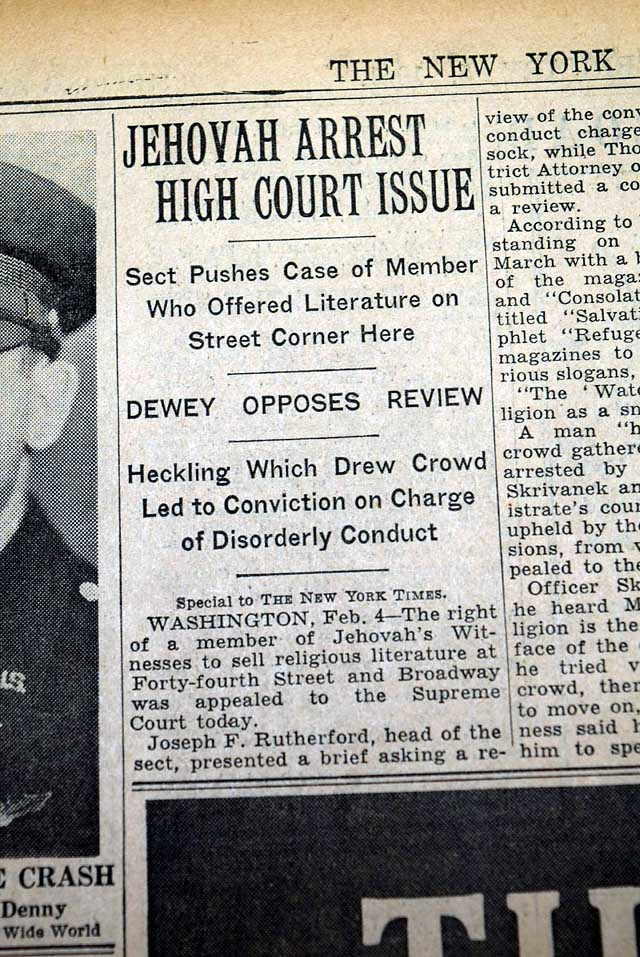
Jehovah's Witnesses and distribution of literature in the 1940's...
THE NEW YORK TIMES, February 5, 1941
* Charles Hussock arrest in New York City
* Distribution of literature on public streets
* Watch Tower Bible and Tract...
* Charles Hussock arrest in New York City
* Distribution of literature on public streets
* Watch Tower Bible and Tract...
Feb 1941
$58