Birth of jet propulsion in aviation (1946)...
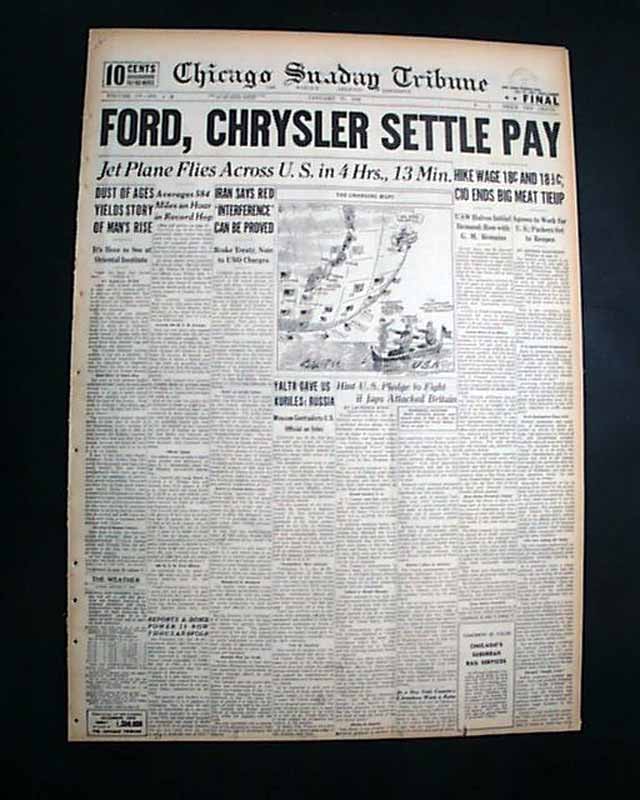
CHICAGO SUNDAY TRIBUNE, Jan. 27, 1946
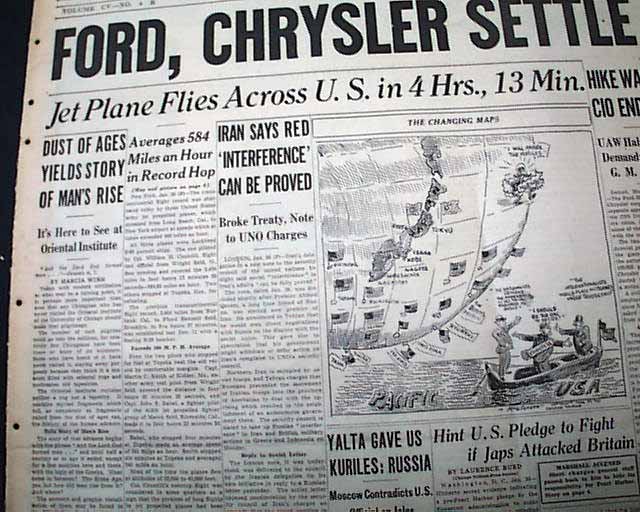
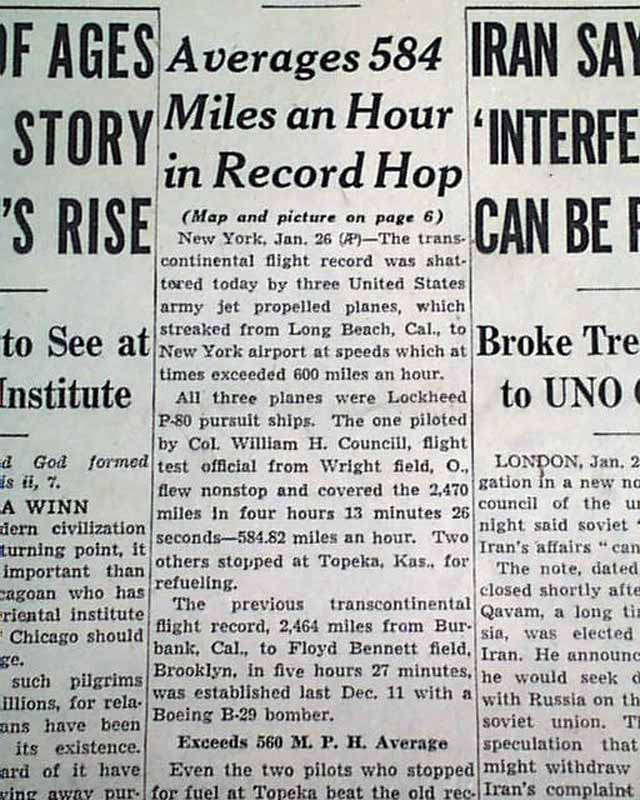
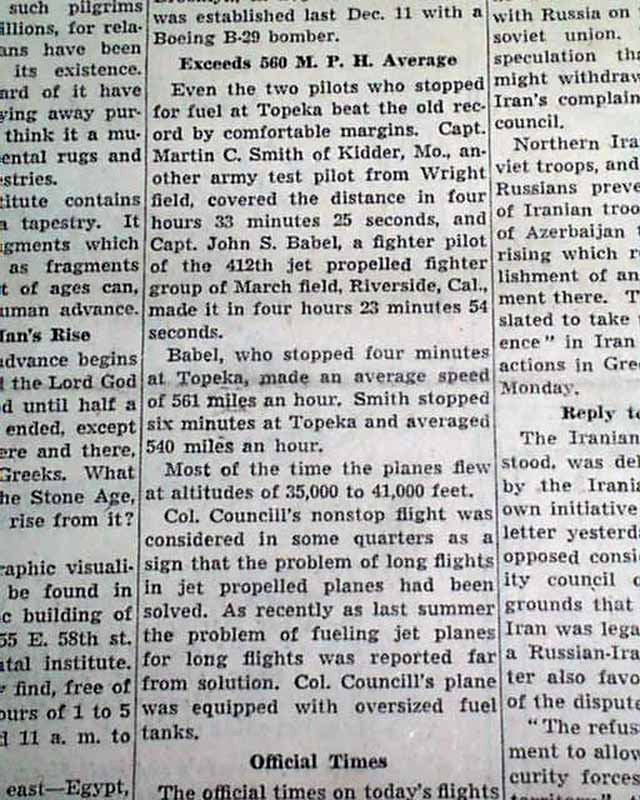
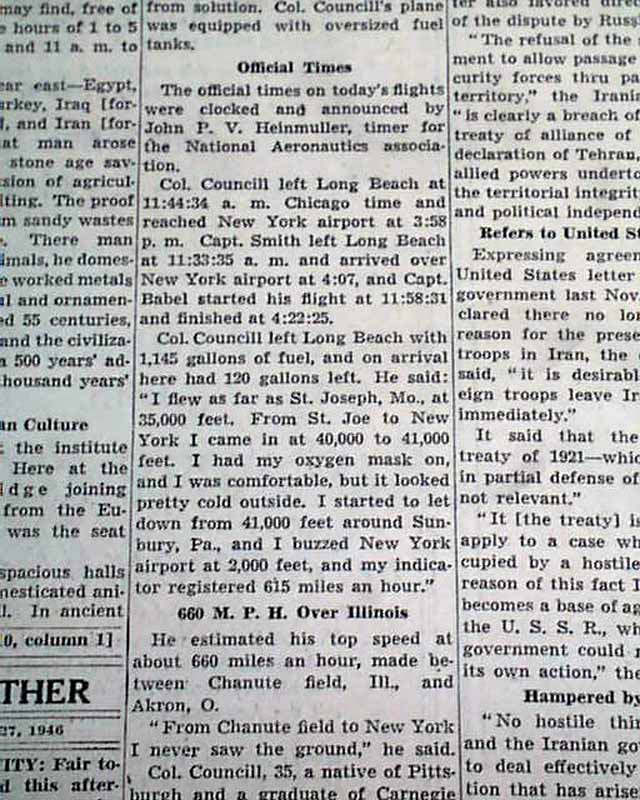
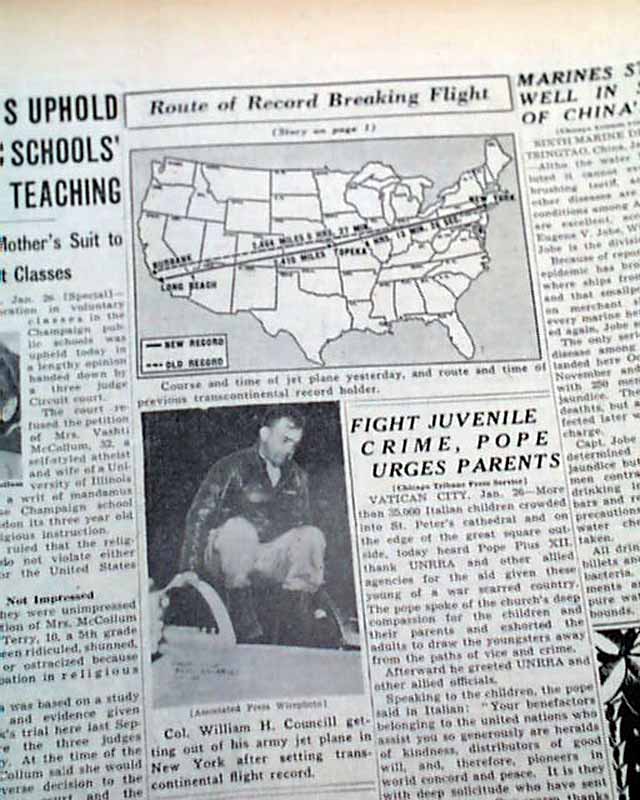
- Transcontinental flight record broken
- The birth of jet propulsion in airplanes
- Lockheed P-80 Shooting Star - jet fighter
The front page has a six column heading: "Jet Plane Flies Across U. S. in 4 Hrs., 13 Min." with subheads. (see images)
Complete 1st section only with all 20 pages, light toning at the margins, small binding holes along the spine, nice condition.
Background: The transcontinental flight on January 26, 1946, stands as a pivotal "proof of concept" for the Jet Age, fundamentally altering the trajectory of both military strategy and civilian expectations for travel. By piloting a Lockheed P-80 Shooting Star from Long Beach to New York in just over four hours, Colonel William H. Councill didn't just break a record; he effectively rendered the world's piston-engine fleet obsolete overnight. This event demonstrated that jet propulsion—previously viewed as a volatile, fuel-thirsty technology limited to short-range combat—possessed the reliability and speed necessary for long-range logistics and strategic dominance. The flight’s average speed of 584 mph nearly halved the existing record held by a Boeing C-97, proving that the vast distances of the American continent could be bridged in a single morning. This milestone validated the secret efforts of Lockheed’s "Skunk Works" and signaled to the global community that the United States had successfully transitioned its air power into a new era of supersonic potential, laying the groundwork for the commercial jetliners that would eventually make global travel a routine reality.
Other issues you may like
§ related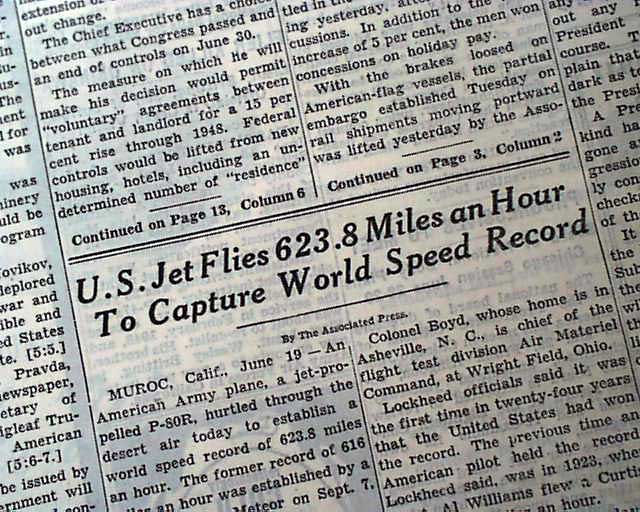
THE NEW YORK TIMES, June 20, 1947
- Test pilot Albert Boyd
- United States Air Force
- Air speed record broken
- First jet fighter airplane
Near the bottom of the
...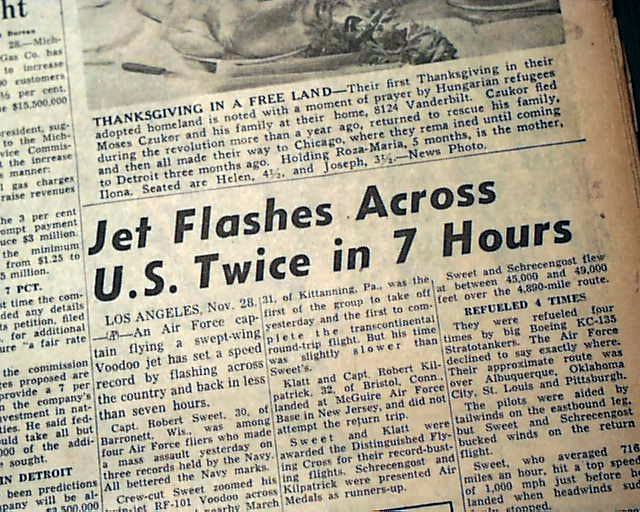
THE DETROIT NEWS, Nov. 28, 1957
- Operation Sun Run - record breaking mission
- Three new transcontinental speed records broken
- USAF airplane pilot Captain Ray W.
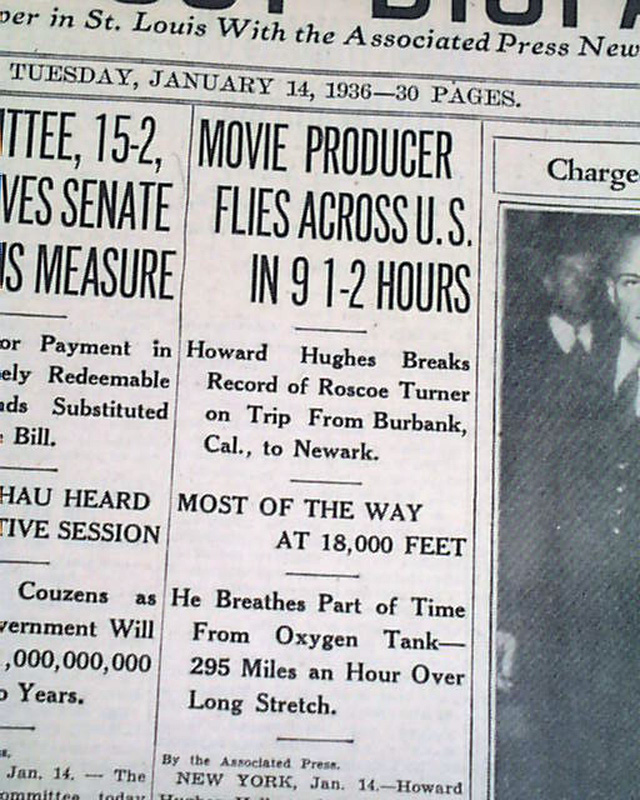
ST. LOUIS POST-DISPATCH, January 14, 1936
- Aviator Howard Hughes
- Transcontinental airplane speed flight record
The top of the front page has a one column
...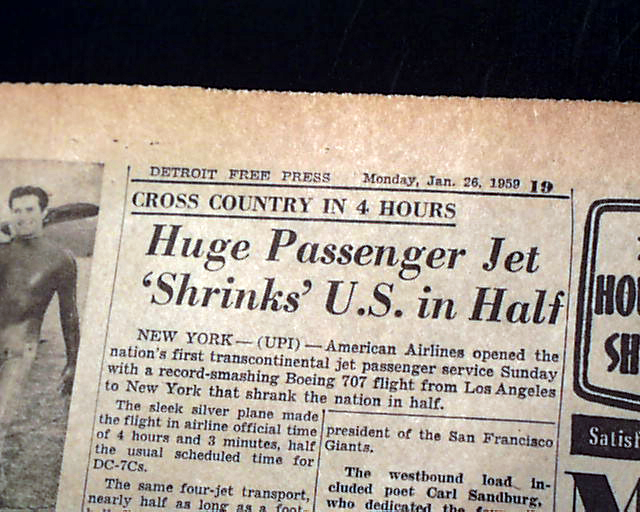
THE DETROIT FREE PRESS, Michigan, January 26, 1959
- 1st coast to coast commercial jet flight
- Airplane - aviation
This 36 page newspaper has a two column
...