Lon Chaney death...
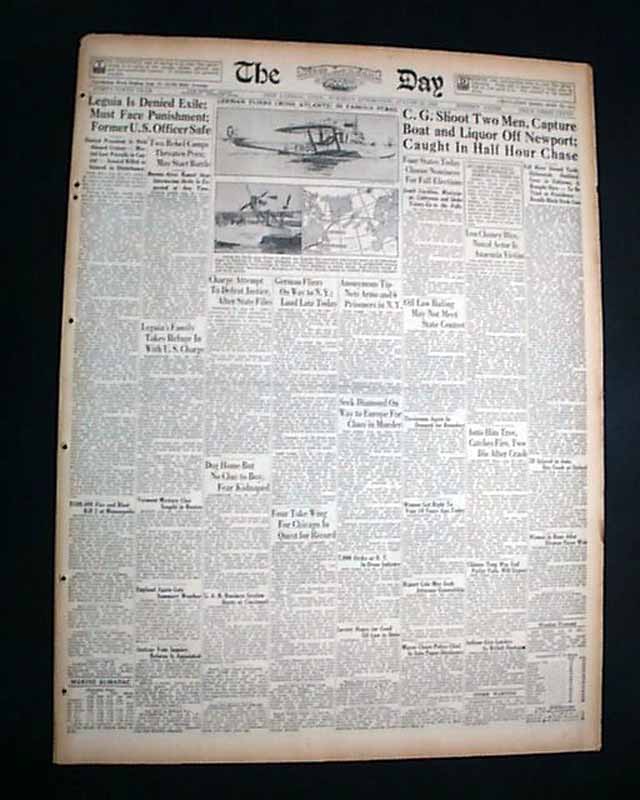
THE DAY, New London, Conn. Aug. 26, 1930
- Silent film era actor Lon Chaney death
- "The Man of a Thousand Faces"
- Pioneer of "Horror" themed characters
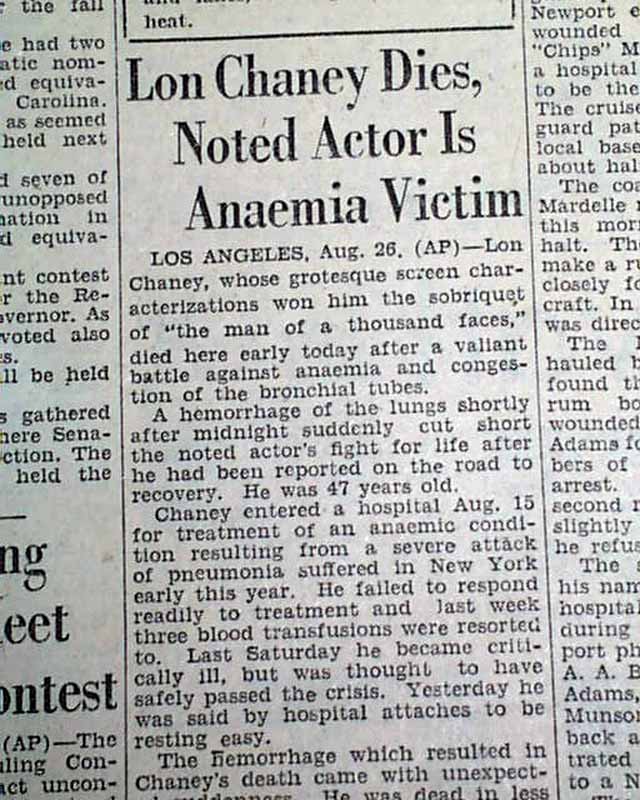
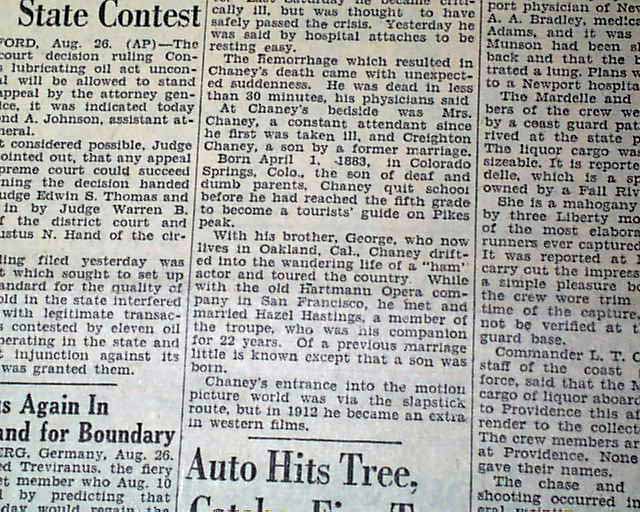
The front page has a one column heading: "Lon Chaney Dies, Noted Actor Is Anemia Victim" (see images)
Complete with all 16 pages, some small binding holes along the spine, nice condition.
Background: The historical significance of Lon Chaney Sr. as "The Man of a Thousand Faces" lies in his singular role as the architect of modern character acting and cinematic special effects during the 1920s. Before the existence of dedicated makeup departments, Chaney utilized his background in silent pantomime—honed through communicating with his deaf parents—to pioneer the "Total Transformation" method, using painful physical distortions such as wire-pulled nostrils for The Phantom of the Opera (1925) and heavy leather harnesses for The Hunchback of Notre Dame (1923) to challenge the Hollywood "leading man" archetype. His work was revolutionary because it shifted the focus of early cinema from surface-level beauty to the grotesque and the empathetic, effectively birthing the "Symphony of Horror" and establishing the psychological depth that would later define the Universal Monsters franchise. By authoring the "Makeup" entry for the 1929 Encyclopædia Britannica, Chaney codified his secret techniques—which included the use of mortician's wax, collodion, and greasepaint—into a formal discipline, ensuring that his legacy transitioned the actor from a mere performer into a technical craftsman who could physically manifest the internal suffering of the "outsider."
Other issues you may like
§ related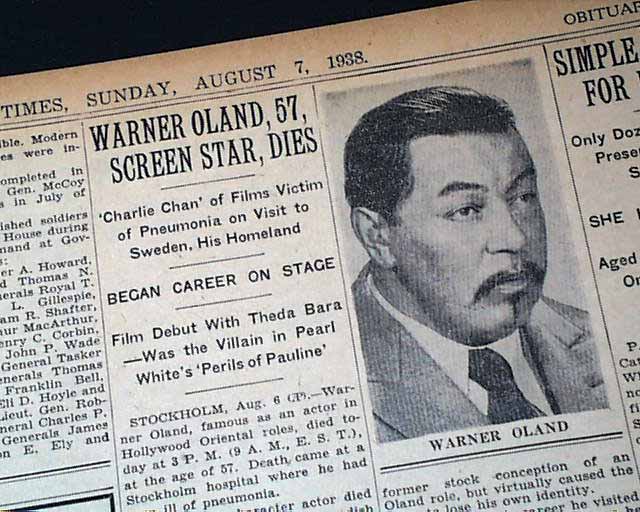
THE NEW YORK TIMES, Aug. 7, 1938
- Warner Oland death (1st report)
- Hollywood actor of Chinese characters
- Charlie Chan & Fu Manchu
The top of page 32 has a one
...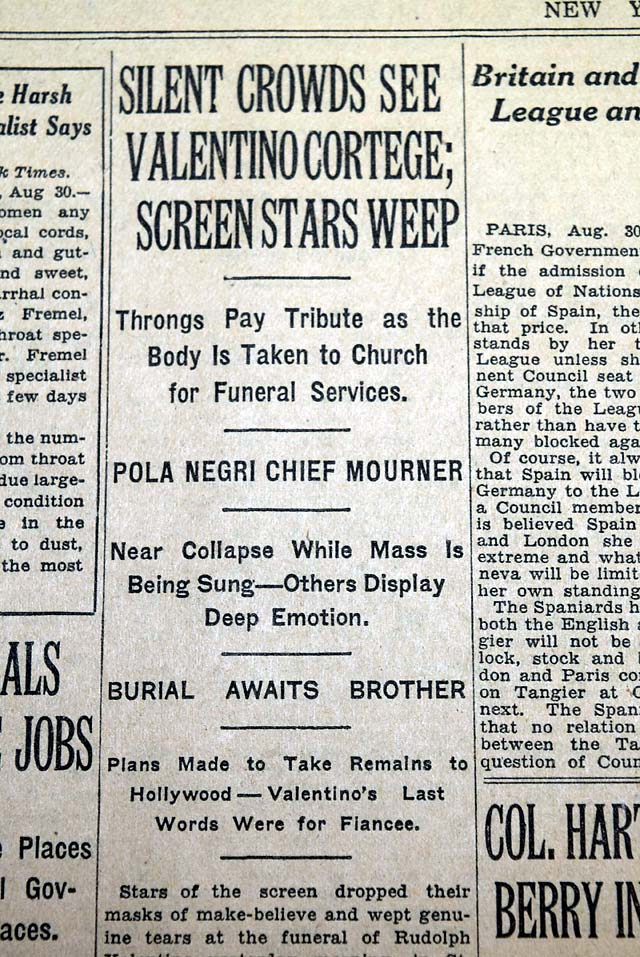
THE NEW YORK TIMES, Aug. 31, 1926
- Silent film star Rudolph Valentino
- Latin Lover - "The Sheik" funeral
- Pola Negri fainting over coffin
The top of the front
...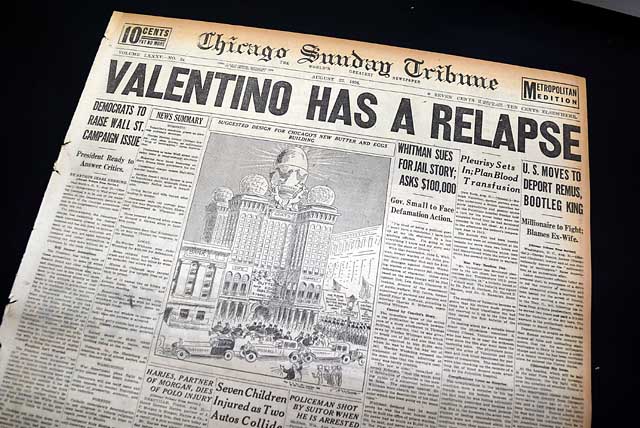
CHICAGO SUNDAY TRIBUNE (1st section only), Aug. 22, 1926
- Silent film star Rudolph Valentino
- Latin Lover - "The Sheik" actor
- He would die the very next day
The
...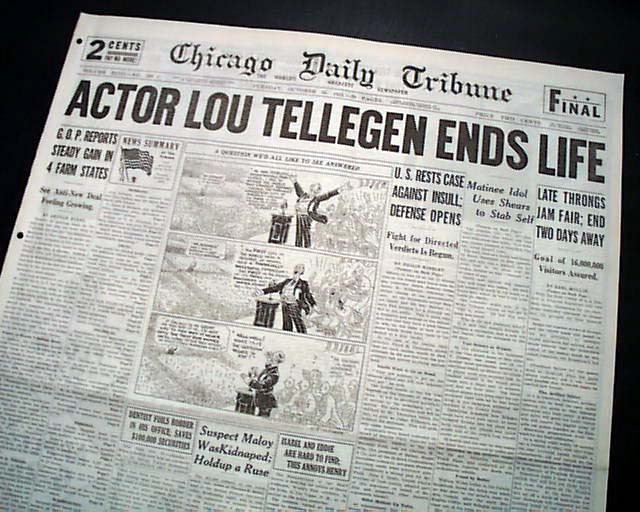
CHICAGO DAILY TRIBUNE, October 30, 1934
- Lou Tellegen suicide death
- Dutch born silent film actor & more
The front page has a nice banner healdine: "ACTOR LOU
...