

Horace E. Dodge deathin 1920...
Item # 726576
December 11, 1920
THE DETROIT FREE PRESS, Dec. 11, 1920
* Horace E. Dodge death - co-founder
* Ford Brothers Motor Company
* Best publication to be had ?
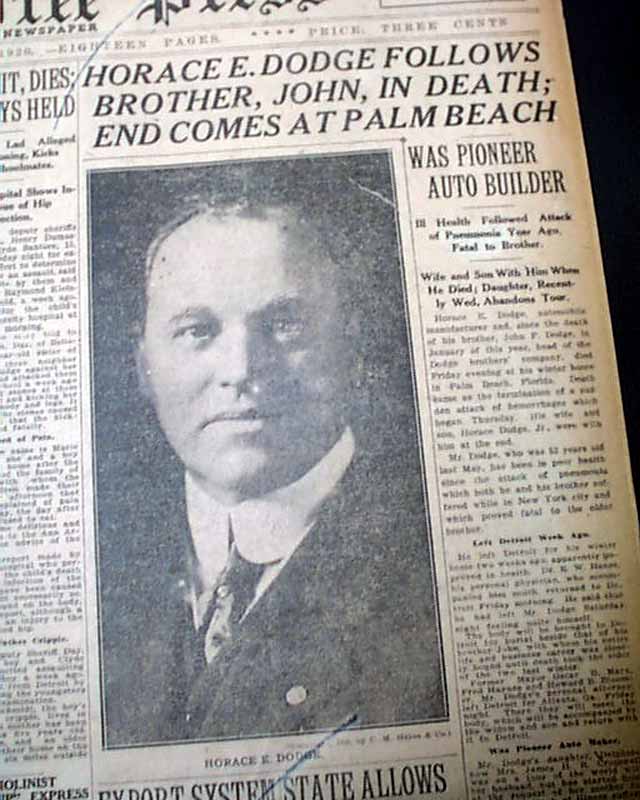
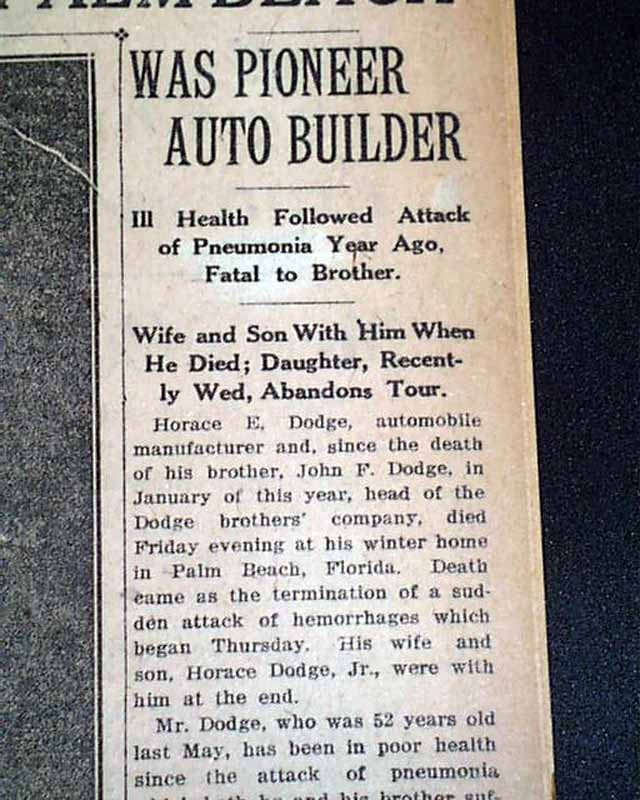
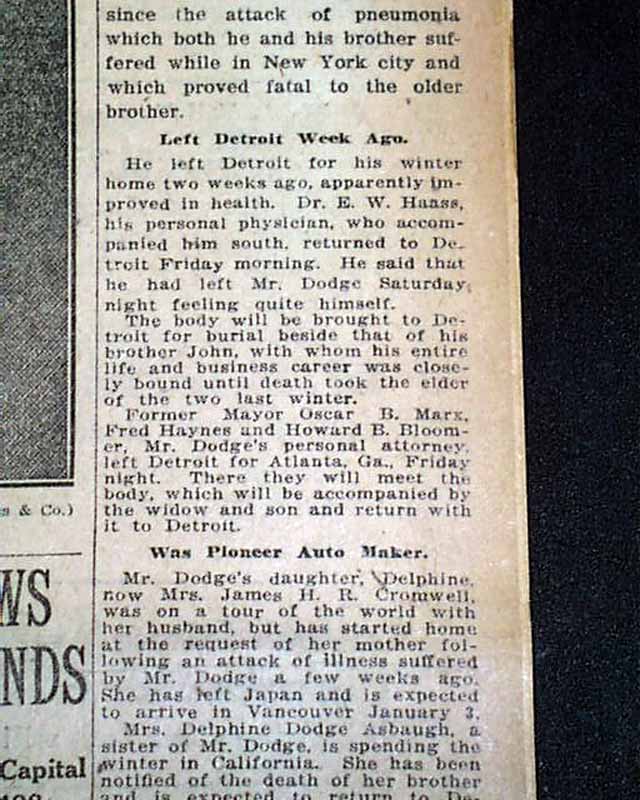
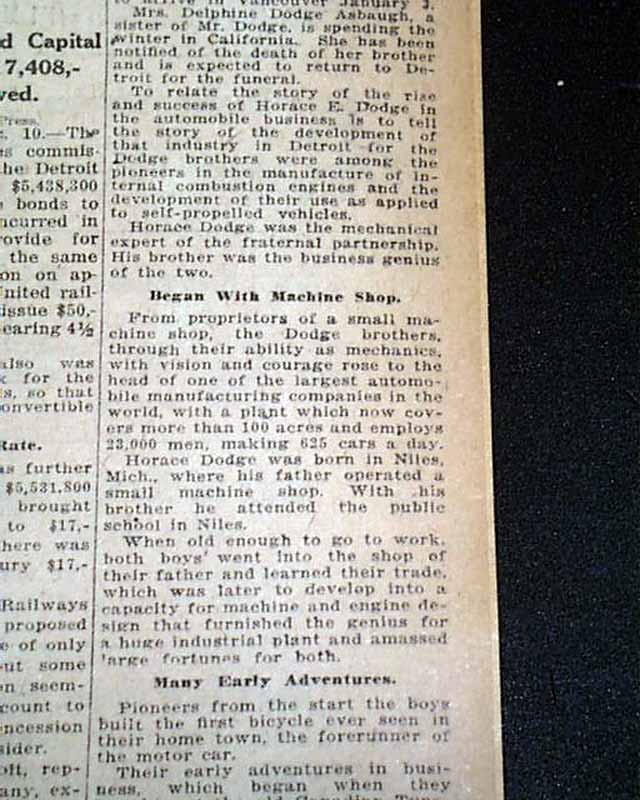
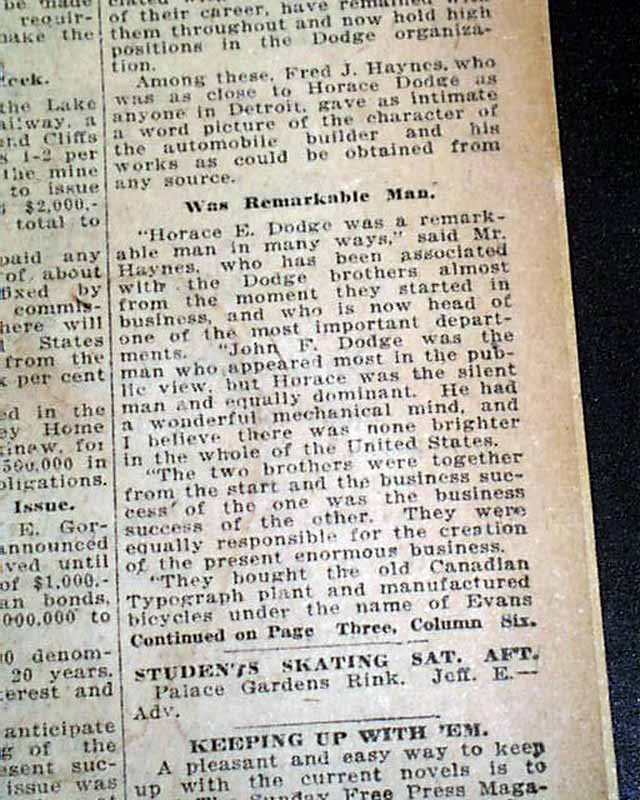
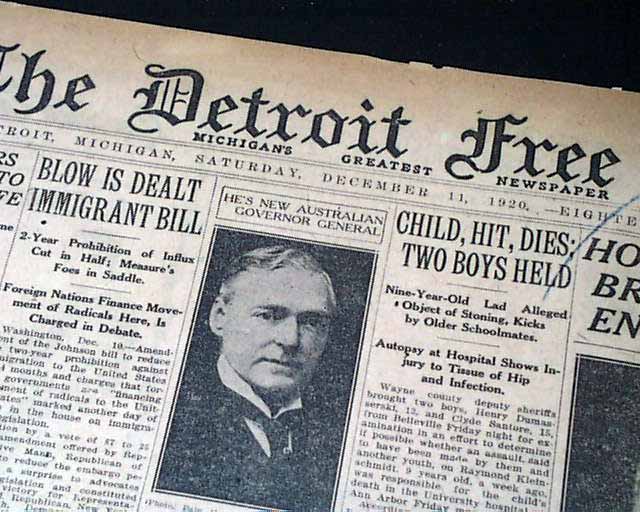
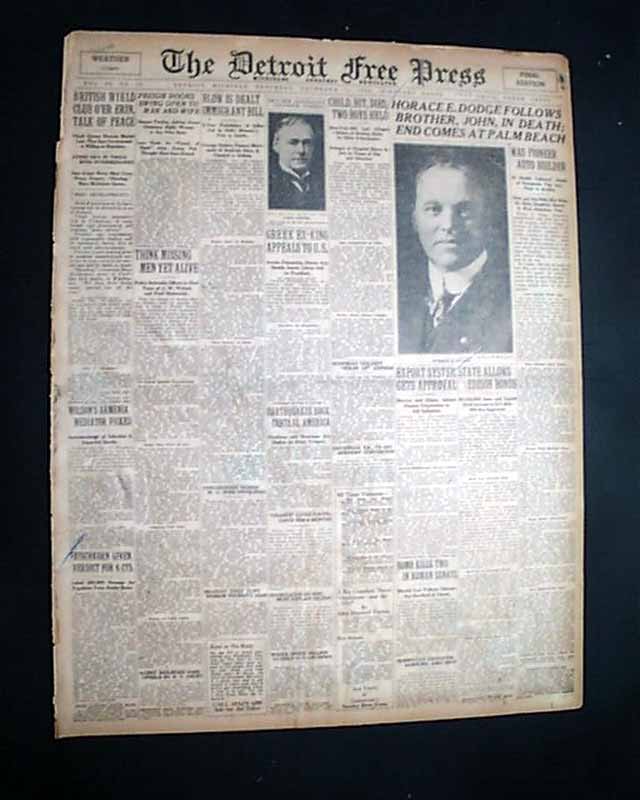
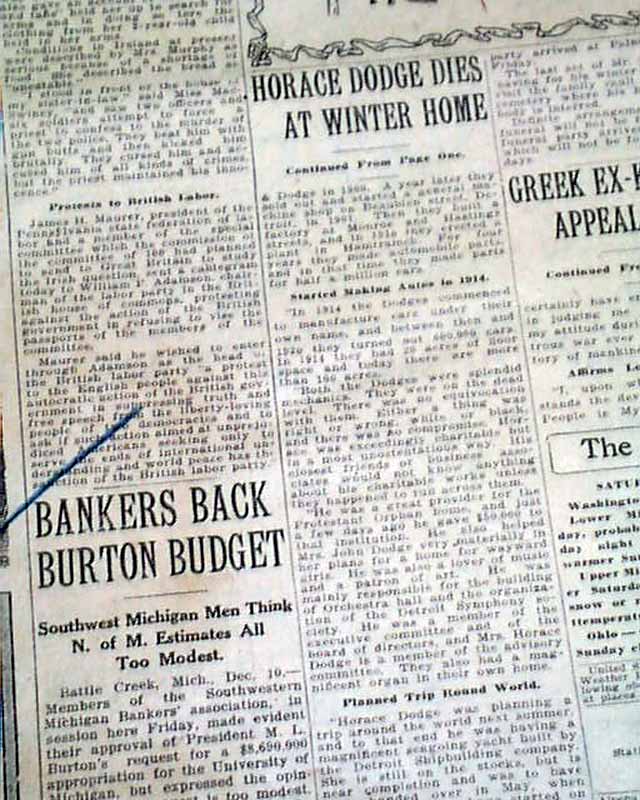
The top of the front page has a three column headline: "HORACE E. DODGE FOLLOWS BROTHER, JOHN, IN DEATH; END COMES AT PALM BEACH" with subheads and photo. (see images) Great to have from the home of the automotive industry. Very rare as such.
Complete with 18 pages, light toning, some margin wear, a few light blue pencil markings, should be handled with care.
Background: The founding of the Dodge Brothers Motor Company in 1914 stands as a watershed moment in industrial history because it signaled the end of Henry Ford’s absolute dominance and the birth of the modern, mid-market automobile. Having previously served as the mechanical backbone of Ford’s empire—where Horace Dodge personally engineered the Model T’s most critical components—the brothers pivoted to create a vehicle that prioritized durability and technical sophistication over Ford's "cheap as possible" philosophy. Their first car, the Model 30, introduced groundbreaking innovations such as an all-steel body construction and a 12-volt electrical system, effectively bridging the gap between the utilitarian Model T and luxury vehicles. This shift forced the industry to compete on quality rather than just price, and the company's rapid ascent to becoming the third-largest automaker in America by 1920 proved that there was a massive public appetite for "dependability" (a term coined by their own marketing). Even after the brothers' tragic, near-simultaneous deaths in 1920, the historical significance of their venture remained clear: they had democratized high-quality engineering and set the stage for the massive consolidation of the American "Big Three" auto manufacturers.
* Horace E. Dodge death - co-founder
* Ford Brothers Motor Company
* Best publication to be had ?
The top of the front page has a three column headline: "HORACE E. DODGE FOLLOWS BROTHER, JOHN, IN DEATH; END COMES AT PALM BEACH" with subheads and photo. (see images) Great to have from the home of the automotive industry. Very rare as such.
Complete with 18 pages, light toning, some margin wear, a few light blue pencil markings, should be handled with care.
Background: The founding of the Dodge Brothers Motor Company in 1914 stands as a watershed moment in industrial history because it signaled the end of Henry Ford’s absolute dominance and the birth of the modern, mid-market automobile. Having previously served as the mechanical backbone of Ford’s empire—where Horace Dodge personally engineered the Model T’s most critical components—the brothers pivoted to create a vehicle that prioritized durability and technical sophistication over Ford's "cheap as possible" philosophy. Their first car, the Model 30, introduced groundbreaking innovations such as an all-steel body construction and a 12-volt electrical system, effectively bridging the gap between the utilitarian Model T and luxury vehicles. This shift forced the industry to compete on quality rather than just price, and the company's rapid ascent to becoming the third-largest automaker in America by 1920 proved that there was a massive public appetite for "dependability" (a term coined by their own marketing). Even after the brothers' tragic, near-simultaneous deaths in 1920, the historical significance of their venture remained clear: they had democratized high-quality engineering and set the stage for the massive consolidation of the American "Big Three" auto manufacturers.
Category: The 20th Century


