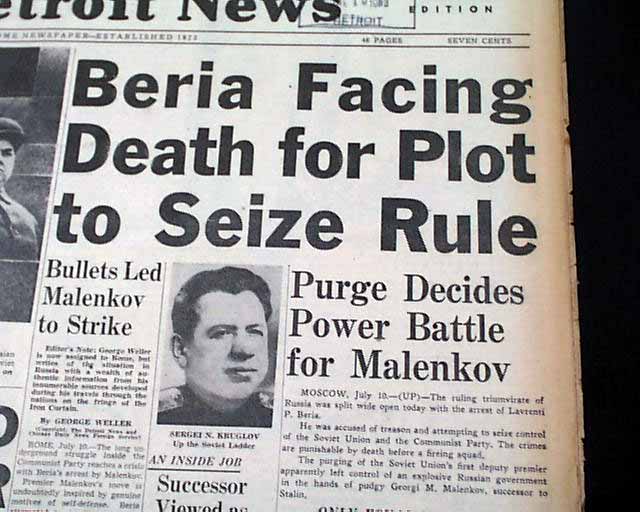
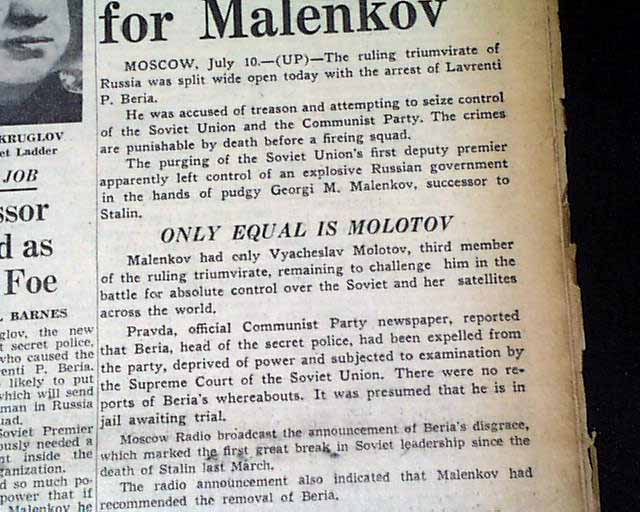
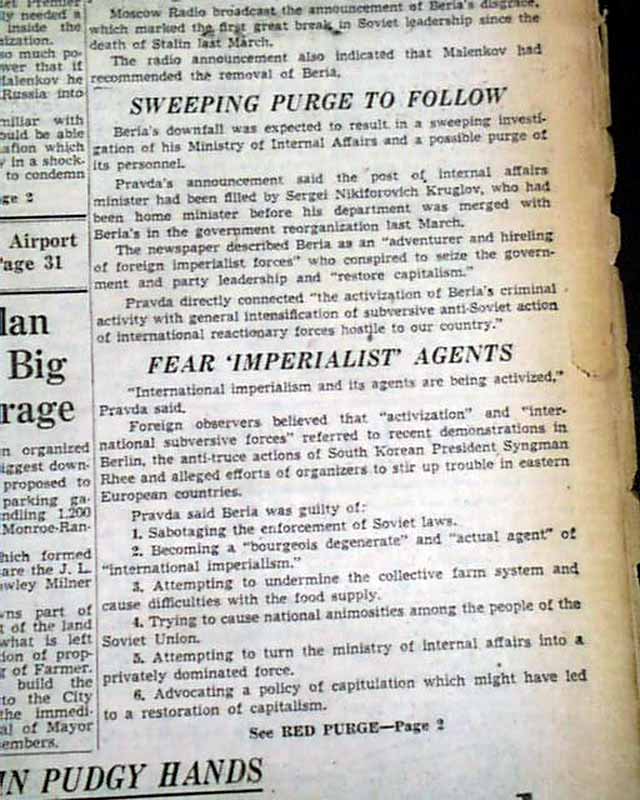
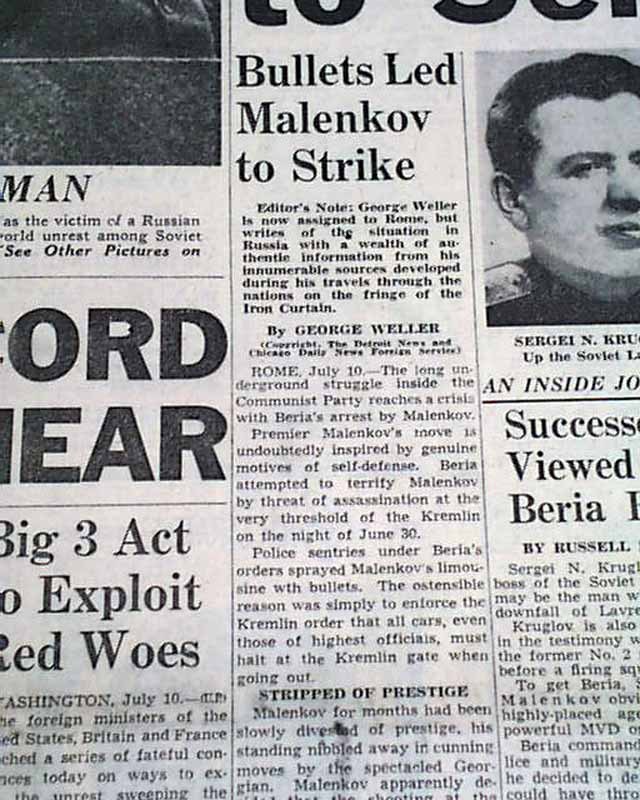
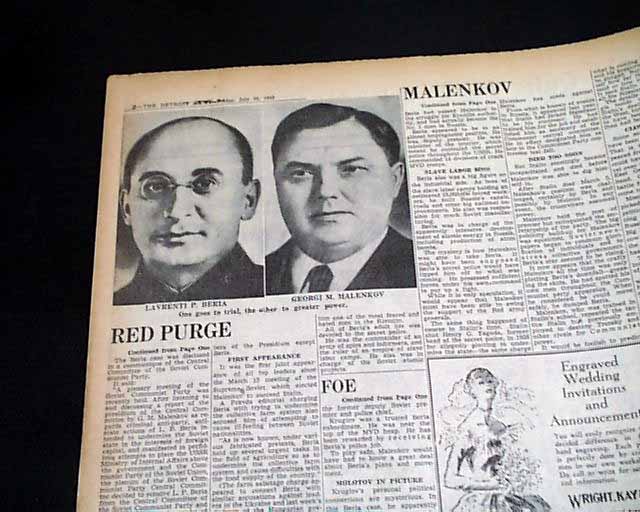
Lavrentiy Beria purged as Soviet traitor...
THE DETROIT NEWS, July 10, 1953
- Lavrentiy Beria ousted as traitor
- Marshal of the Soviet Union
- Joseph Stalin secret police chief
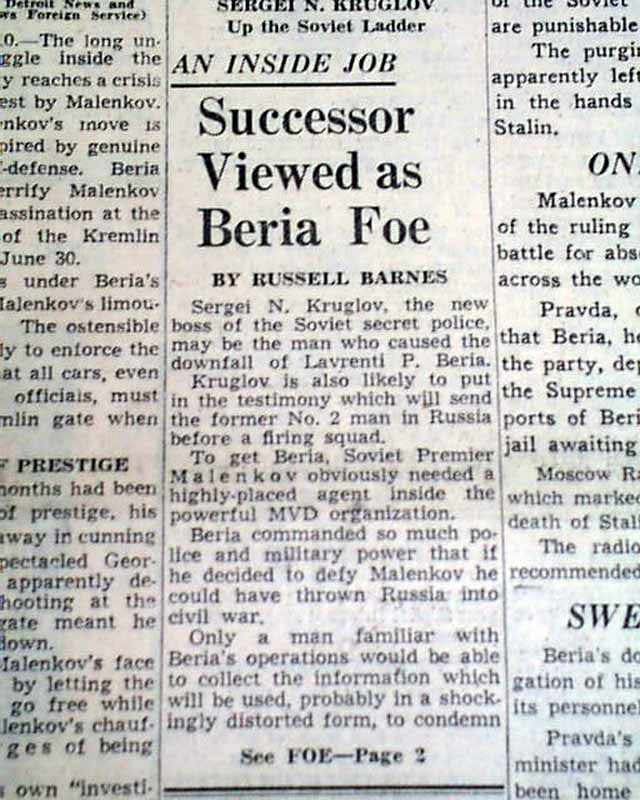
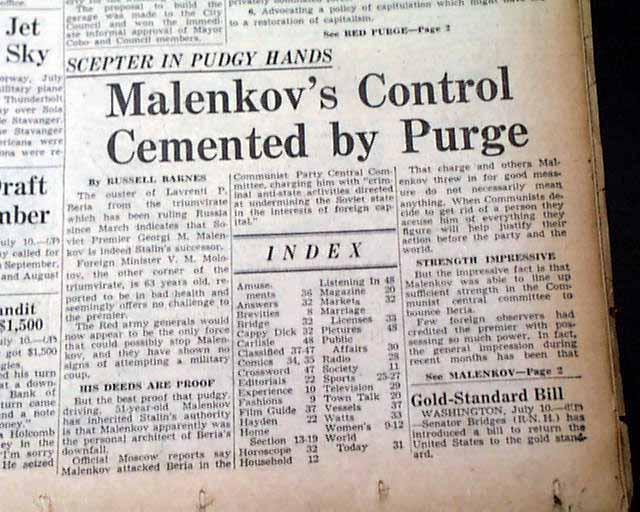
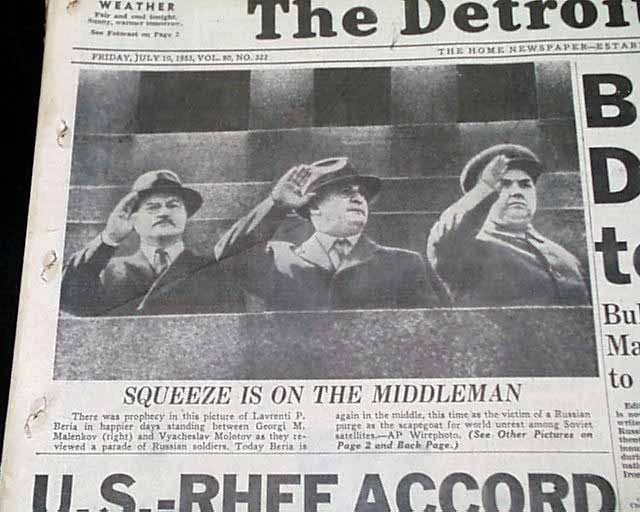
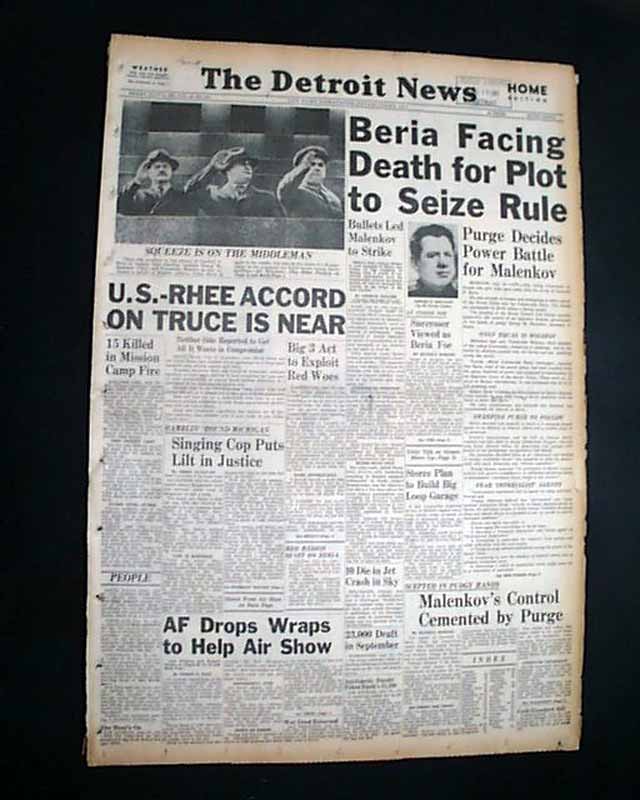
The top of the front page has a four column headline: "Beria Facing Death for Plot to Seize Rule" with subheads and small photo of Beria. (see images)
Complete with 46 pages, light toning and a little wear at the margins, small library stamp within the masthead, generally good.
Background: The arrest and subsequent branding of Lavrentiy Beria as a traitor in July 1953 represented a seismic shift in Soviet history, marking the end of the "Great Terror" era and the definitive conclusion of Stalinist-style rule by a single secret police chief. As the head of the NKVD, Beria wielded enough power to threaten the collective leadership; his downfall was a preemptive strike by Nikita Khrushchev and Georgy Malenkov to ensure that the security apparatus would henceforth be subordinate to the Communist Party rather than a tool for personal dictatorship. Historically, this event was significant not only for the "de-Stalinization" process it ignited—leading to the release of over a million GULAG prisoners through Beria's own paradoxical early reforms—but also for how it stabilized the Soviet elite by removing the constant threat of execution that had loomed over them for decades. By executing the "Last Knight of Stalin" on charges of being a British spy, the remaining leadership effectively signaled a move away from bloody internal purges as the primary method of political transition, setting the stage for the Khrushchev Thaw and a more bureaucratic, less lethal form of authoritarianism.
Other issues you may like
§ related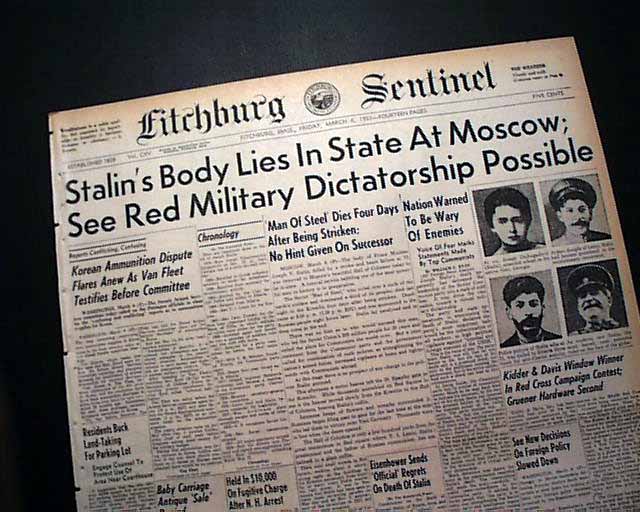
FITCHBURG SENTINEL, Fitchburg, Massachusetts, March 6, 1953
- Russian Premier, Joseph Stalin's death
This 14 page newspaper has a nice two line banner
...
LEOMINSTER DAILY ENTERPRISE, Massachusetts, March 6, 1953
- Russian Premier, Joseph Stalin's death
This 14 page newspaper has a five column headline on the
...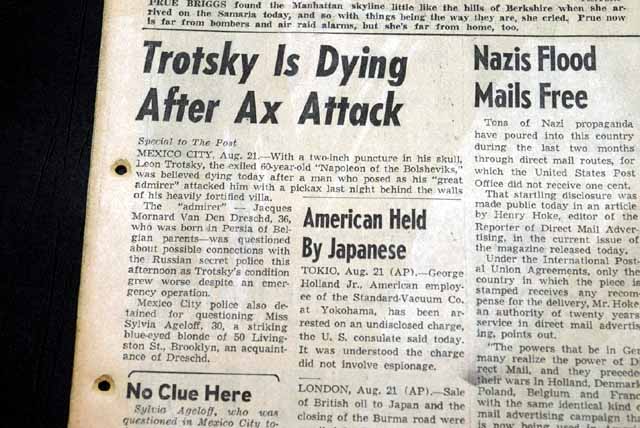
NEW YORK POST, August 21, 1940
- Leon Trotsky assassination (day of)
- Soviet Union Red Army founder
- Marxist Theorist
The front page has a two column heading:
...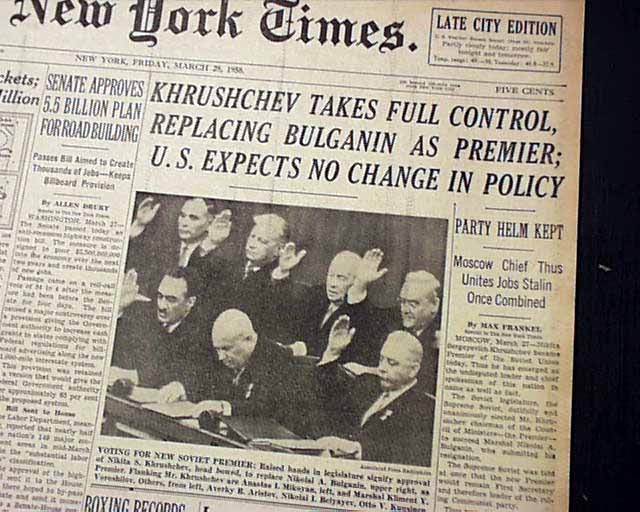
NEW YORK TIMES, March 28, 1958 The top of the front page announces: "KHRUSHCHEV TAKES FULL CONTROL, REPLACING BULGANIN AS PREMIER; U.S. EXPECTS NO CHANGE
...