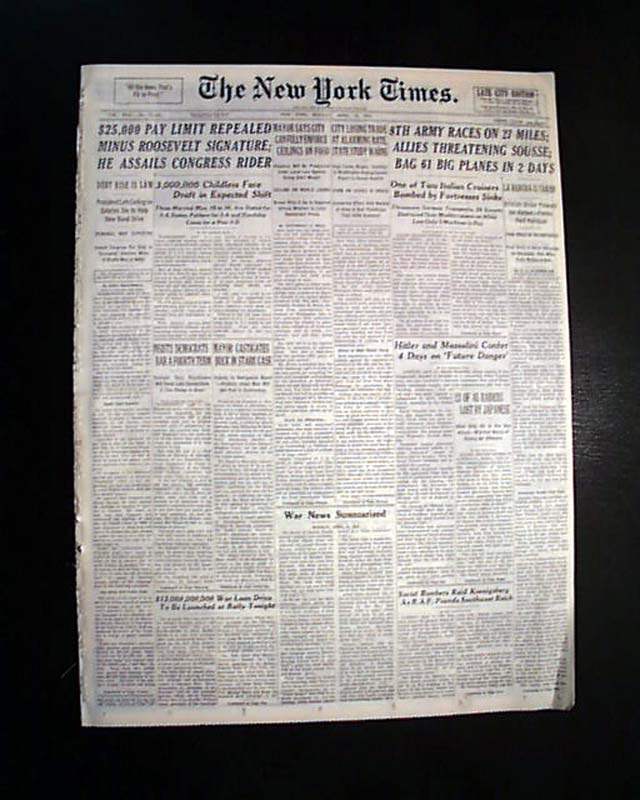
1943 liquidation of Polish ghettos (Jews)...
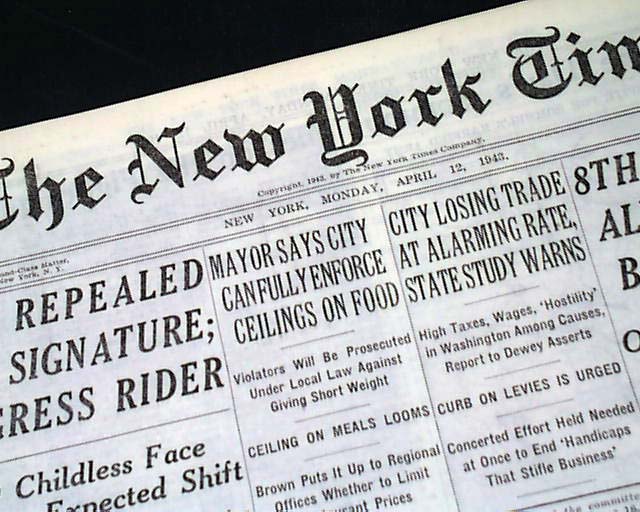
THE NEW YORK TIMES, April 12, 1943
- Krakow and Lodz ghettos erased
- Severe persecution of Polish Jews
- Jewish Holocaust heats up in Poland
- World War II - WWII Europe
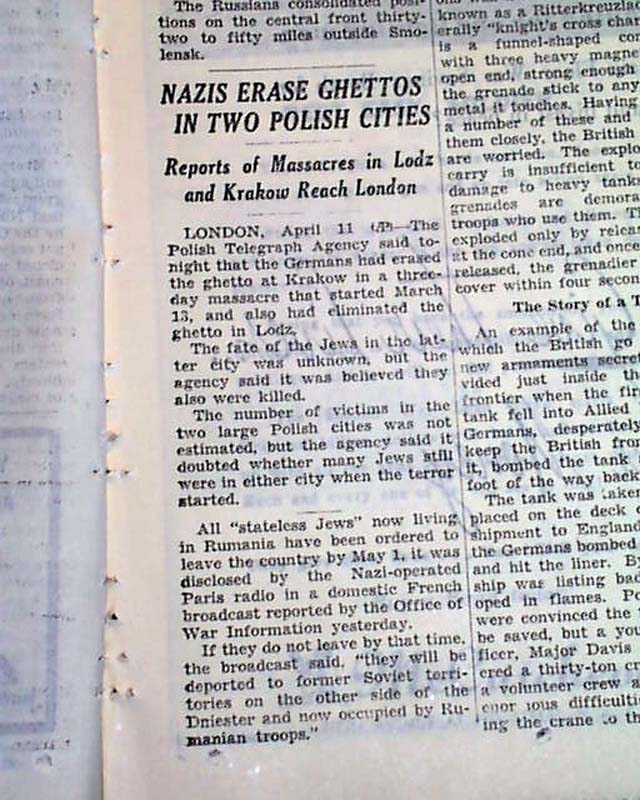
Near the bottom of page 5 is a one column heading: "Nazis Erase Ghettos In Two Polish Cities" with subhead. (see image)
Complete with all 42 pages, rag edition in very nice condition.
Background: The liquidation of the Kraków Ghetto in March 1943 and the industrial isolation of the Łódź Ghetto represent a critical shift in the Holocaust from ghettoization to total extermination, serving as a grim testament to the Nazi policy of "Productivity or Death." The erasure of the Kraków Ghetto was significant because it marked the end of centuries of Jewish life in a major cultural hub and the transition of survivors to the Płaszów concentration camp, a process that provided the world with some of the most harrowing documentation of the "Final Solution." Meanwhile, the continued existence of the Łódź Ghetto throughout 1943 highlighted the internal Nazi conflict between ideological fanaticism and the economic needs of the German war machine. Collectively, these events triggered a desperate wave of reports from the Polish Underground and the Government-in-Exile to the Allied powers, fundamentally changing global awareness of the genocide. This period remains historically pivotal as it solidified the blueprint for the mass deportations to gas chambers and demonstrated the chilling efficiency with which an entire segment of European society could be systematically removed from the physical and social landscape.
Other issues you may like
§ related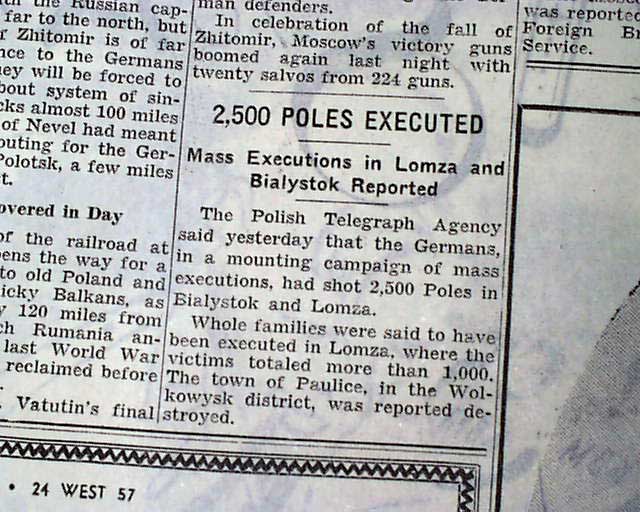
THE NEW YORK TIMES, November 14, 1943
- Jewish Holocaust being known for the 1st time
- Nazi-occupied Poland exterminations
- Lomza & Bialystok ghettos
Page 3 has
...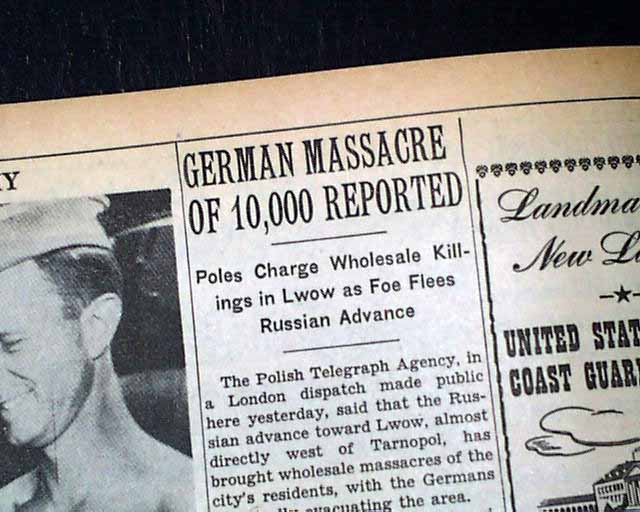
THE NEW YORK TIMES, March 14, 1944
- Jewish Holocaust becoming reality to the public
- Nazi-occupied Poland exterminations
This 36 page newspaper has one column
...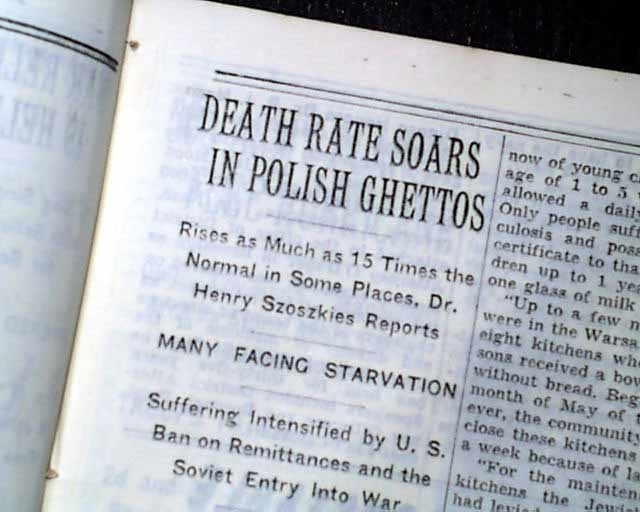
THE NEW YORK TIMES, September 14, 1941
- Jewish Holocaust becoming reality to the public
- Nazi-occupied Poland - Polish Ghettos
This 100+ page Sunday newspaper
...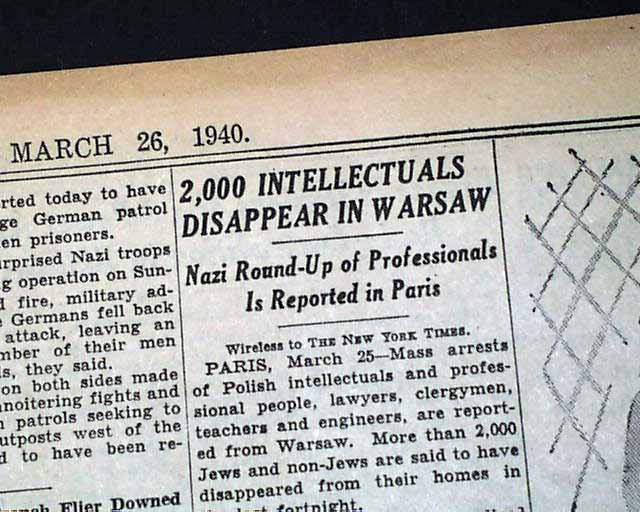
THE NEW YORK TIMES, March 26, 1940
- Jewish - Jews - Judaica
- Nazi-occupied Poland
This 44 page newspaper has one column headlines on page 3 that include: "2,000
...