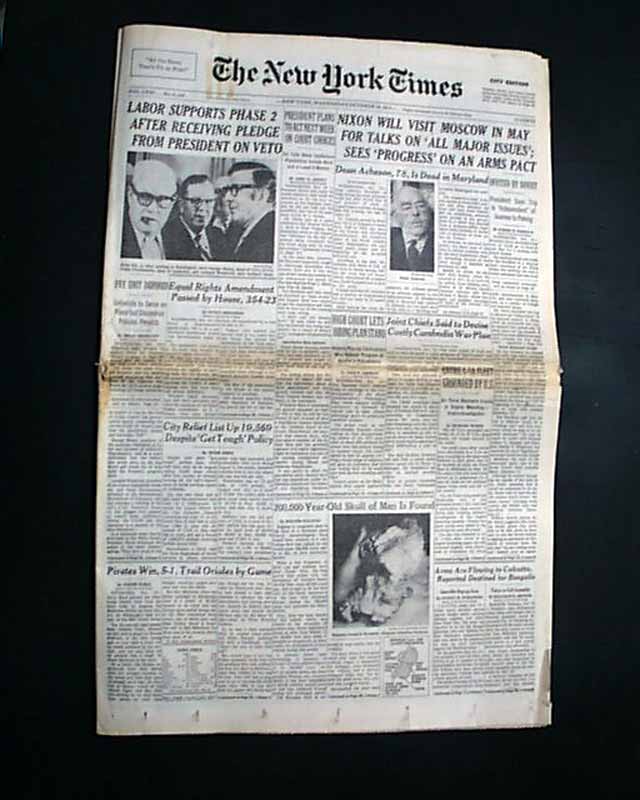
1971 "Jesus Christ Superstar" Broadway show backlash...
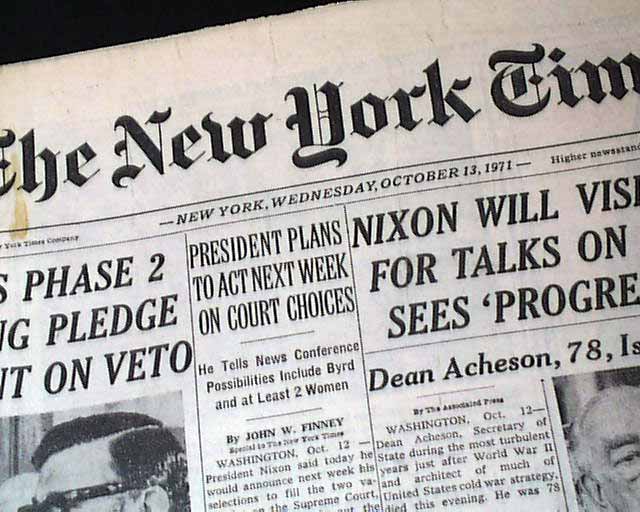
THE NEW YORK TIMES, Oct. 13, 1971
- "Jesus Christ Superstar" rock opera
- English composer Andrew Lloyd Webber
- Iconic Broadway show - performance
- Criticized by the Jewish faith - Jews
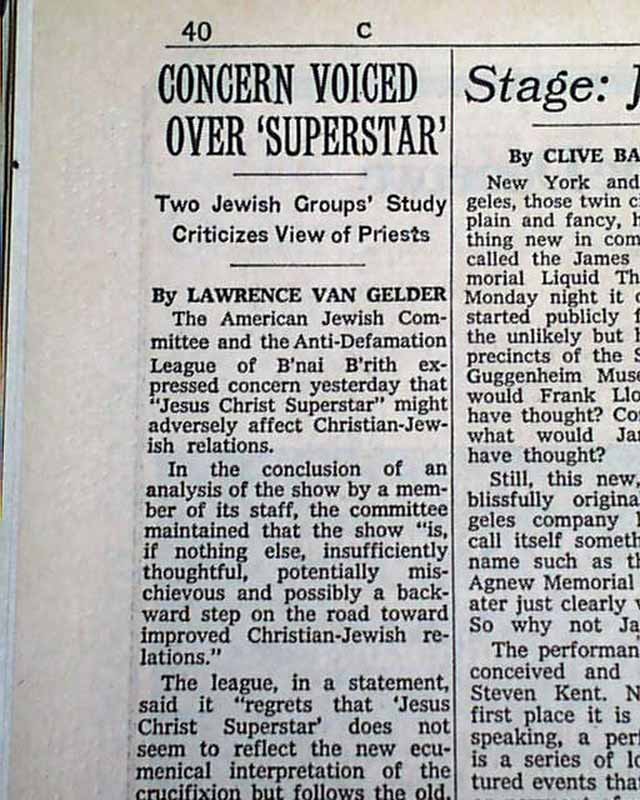
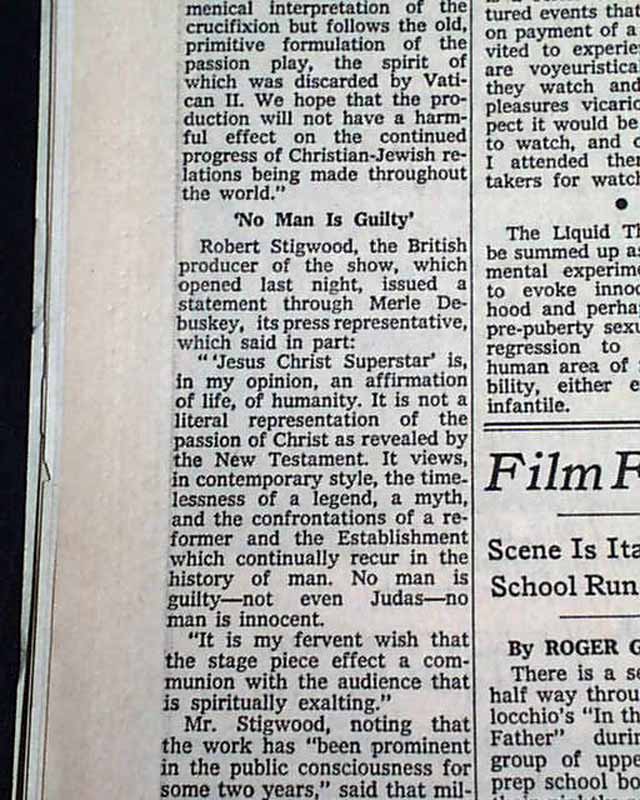
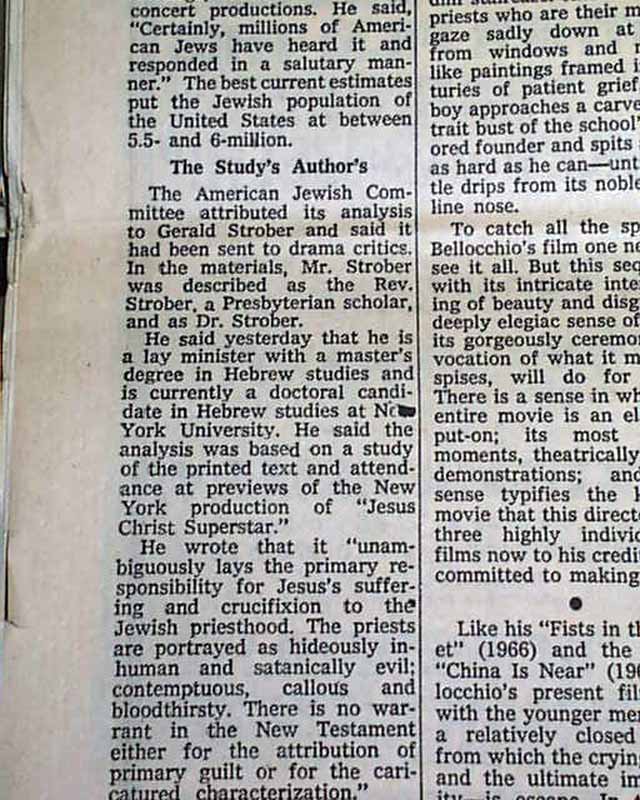
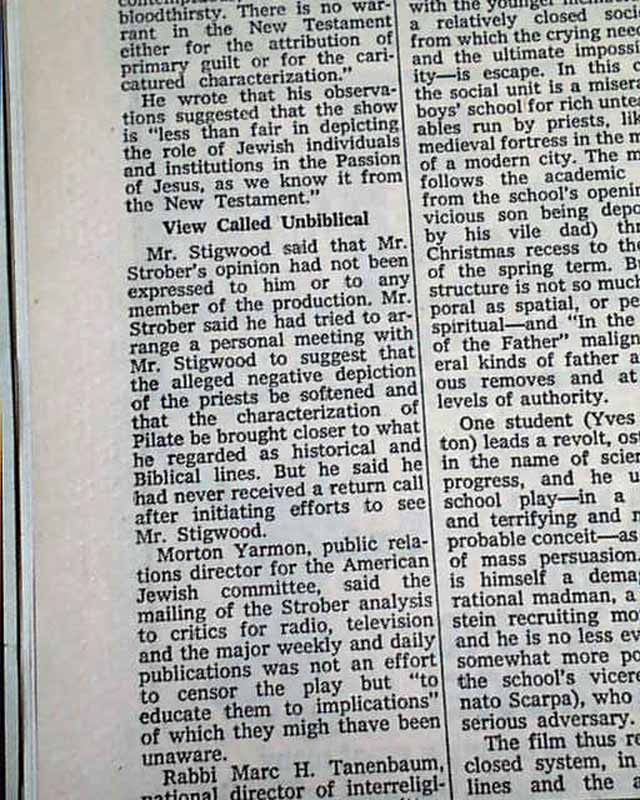
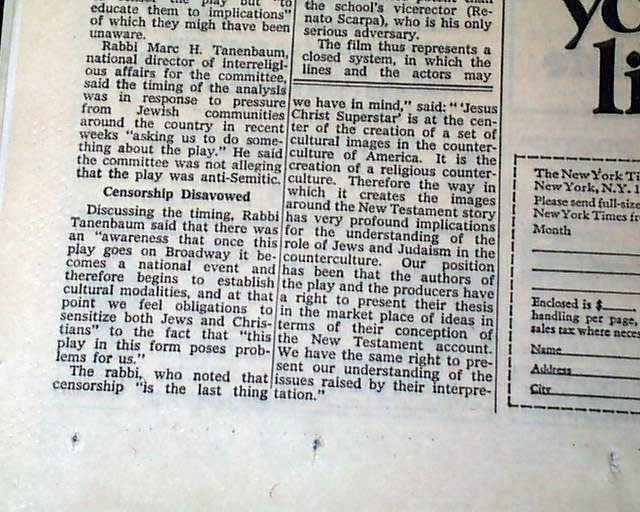
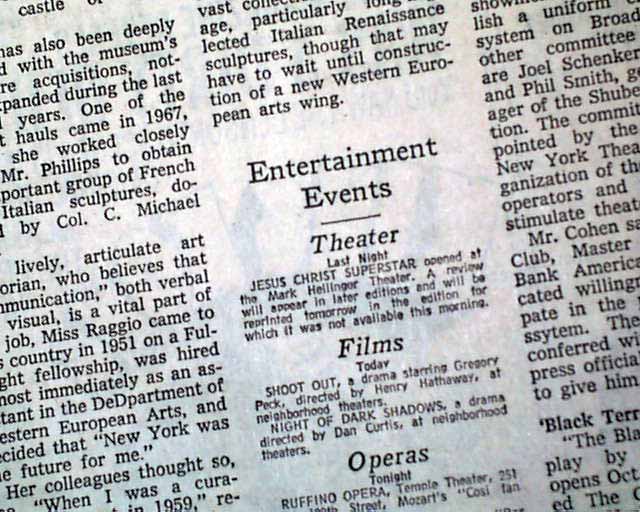
Page 40 has a report by Lawrence Van Gelder on "Jesus Christ Superstar" after it's opening night re. the Jewish reaction with a one column heading: "CONCERN VOICED OVER SUPERSTAR" with subhead. (see images)
This performance is considered the first high-profile Broadway rock opera that made a lasting mark.
I suspect this to be an extremely rare item because there was really no reason to save it at the time.
Complete with all 92 pages, very minor margin wear, nice condition.
Background: The historical significance of Lawrence Van Gelder’s 1971 article lies in its documentation of the volatile intersection between mass-market counterculture and ancient religious sensitivities during the "Jesus Revolution" of the early 1970s. By reporting on the formal protests from the American Jewish Committee and the Anti-Defamation League, Van Gelder captured a moment of profound anxiety regarding the "deicide" myth—the historically dangerous accusation that Jewish people were collectively responsible for the death of Jesus. The article detailed how the rock opera's dramatization of the Sanhedrin threatened to undermine the fragile progress made by the 1965 Nostra aetate, a landmark Vatican II declaration aimed at purging antisemitic tropes from Christian teaching. Furthermore, the event signaled a shift in Broadway’s role from mere entertainment to a battlefield for social and theological debate, illustrating that as rock music brought "hip" sensibilities to the New Testament, it also risked revitalizing medieval prejudices, ultimately forcing a public dialogue on the ethics of artistic license versus historical accountability.
Other issues you may like
§ related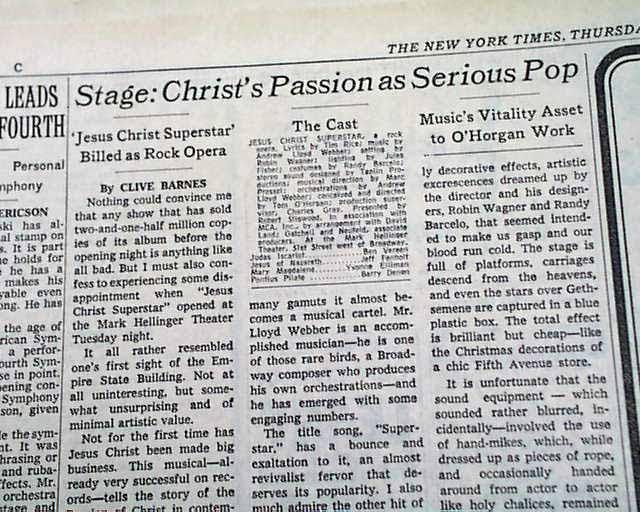
THE NEW YORK TIMES, Oct. 14, 1971
- "Jesus Christ Superstar" rock opera
- English composer Andrew Lloyd Webber
- Iconic Broadway show - performance
- Opening day
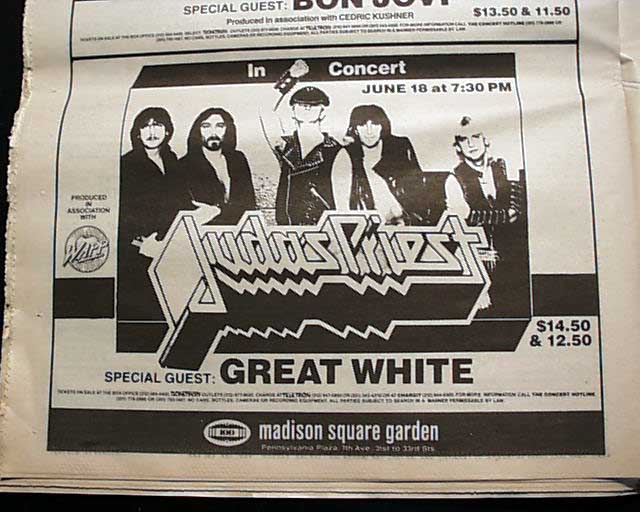
THE VILLAGE VOICE (weekly), Greenwich Village, New York City, June 5, 1984
- Judas Priest - Scorpions w/ Bon Jovi (early)
- English heavy metal & German hard
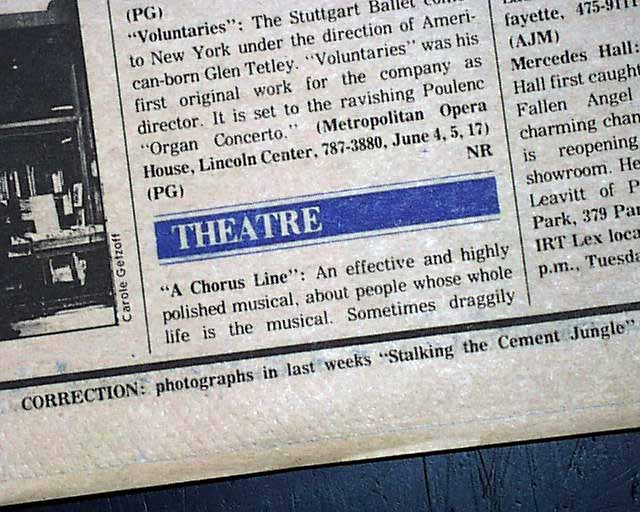
THE VILLAGE VOICE, New York, June 2, 1975
- A Chorus Line is Reviewed pre-Broadway
- Off-Broadway at the Public Theater
- Michael Bennett, Marvin Hamlisch, Nicholas
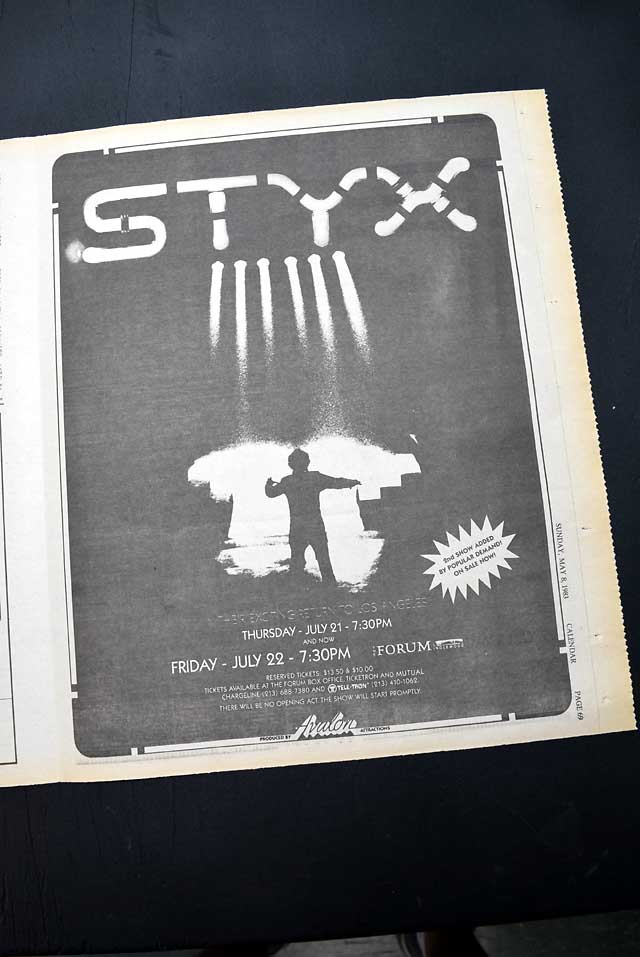
LOS ANGELES TIMES, May 8, 1983 (an original vintage newspaper leaf from the Calendar section) This offering consists of four complete pages (two
...