Bloody Sunday (1920)... Dublin, Ireland...
THE BETHLEHEM TIMES, Penn., Nov. 22, 1920
- Bloody Sunday - Dublin, Ireland
- Irish War of Independence - Cairo Gang
- Michael Collins - Irish Republican Army
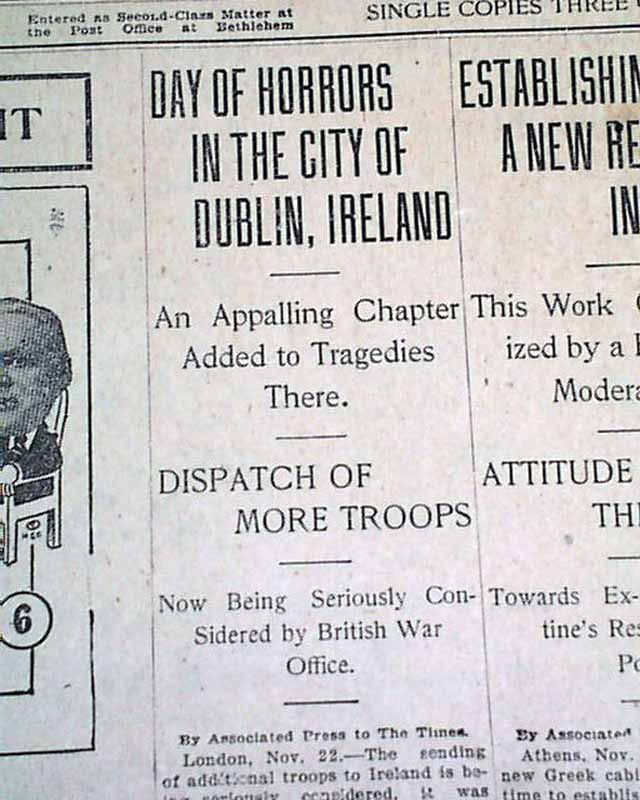
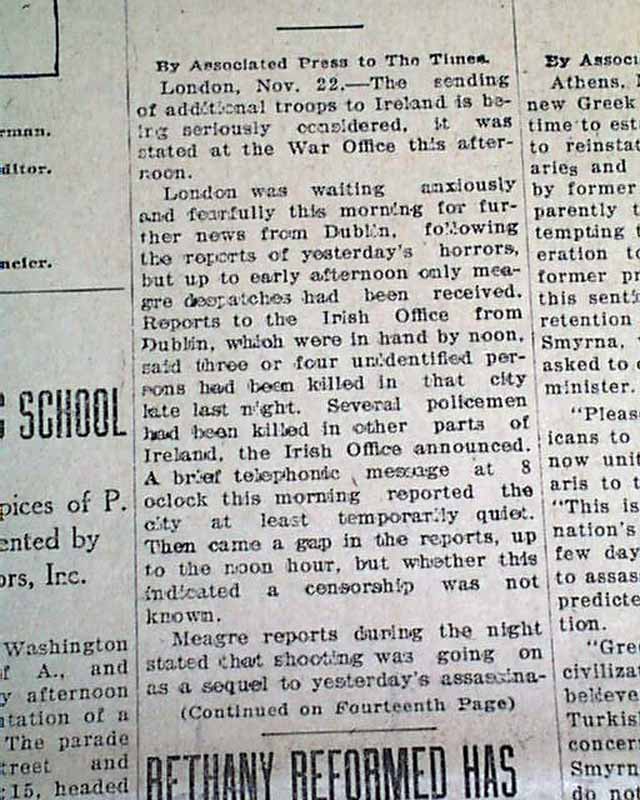
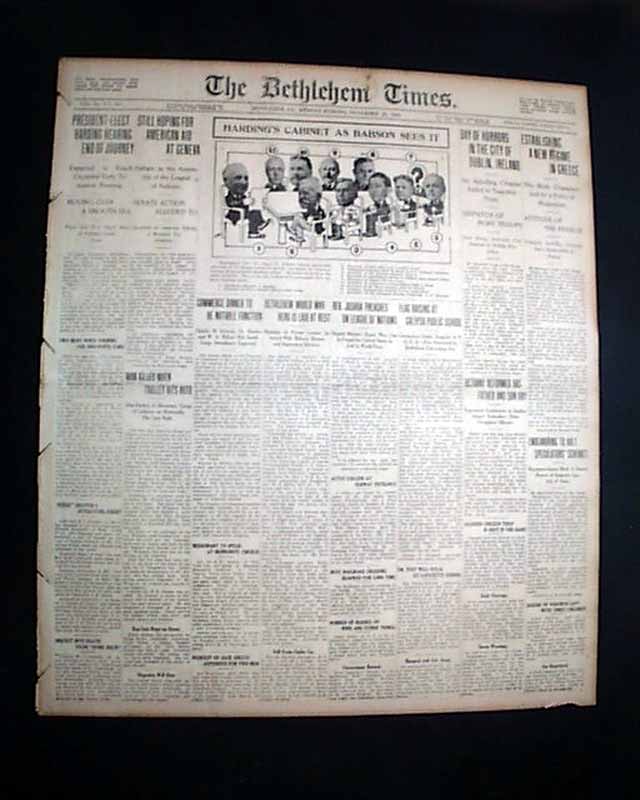
The top of the front page has one column heading: "DAY OF HORRORS IN THE CITY OF DUBLIN, IRELAND" with subheads. (see images)
Fourteen pages, light toning, a little wear at the margins, generally good. Should be handled with care.
NOTE: This issue comes with a free acid-free folder for protection.
Background: The events of November 21, 1920 (commonly associated with the Nov. 22 news cycle), represent a pivotal and blood-soaked turning point in the Irish War of Independence, signaling a total collapse of British intelligence and a shift toward more brutal, retaliatory warfare. The day began with a surgical strike by Michael Collins’s "Squad," which assassinated members of the Cairo Gang to dismantle the British spy network, an act that proved the IRA could penetrate the highest levels of British security. However, the subsequent Croke Park Massacre, where British forces opened fire on a civilian crowd during a Gaelic football match, transformed the conflict from a guerrilla insurgency into a matter of international outrage, galvanizing Irish public opinion against British rule and delegitimizing the "Black and Tans." By the evening, the suspicious deaths of Republican prisoners Dick McKee, Peadar Clancy, and Conor Clune in Dublin Castle further cemented the day's legacy as one of state-sanctioned vengeance. Collectively, these events forced the British government to realize that the "Irish Question" could not be settled through purely military or repressive means, ultimately accelerating the path toward the 1921 Truce and the eventual formation of the Irish Free State.
Other issues you may like
§ related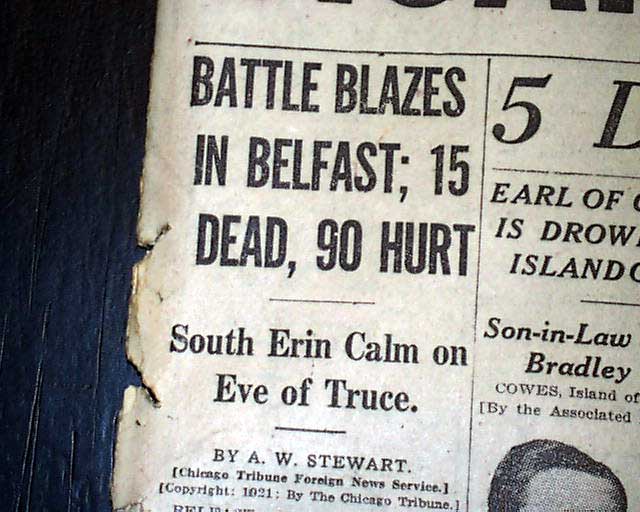
CHICAGO DAILY TRIBUNE, July 11, 1921
- Bloody Sunday - day of violence
- Belfast, Northern Ireland
- Irish War of Independence
The front page has a one column
...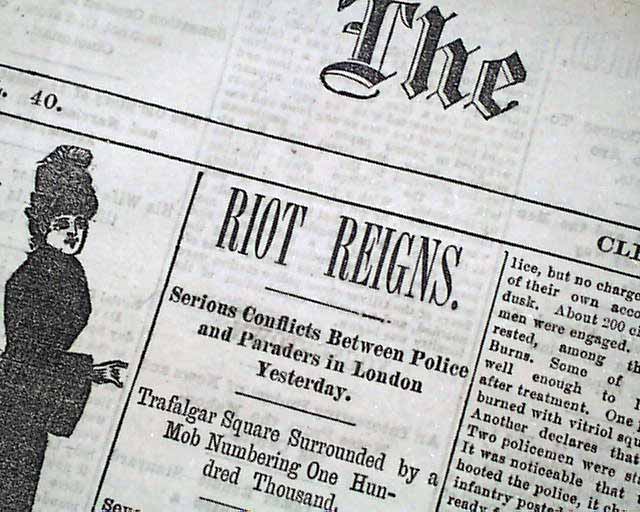
THE CLEVELAND LEADER, Cleveland, Ohio, November 14, 1887
- Bloody Sunday riot
- Trafalgar Square, London
- Coercion in Ireland
This 8 page newspaper has one column
...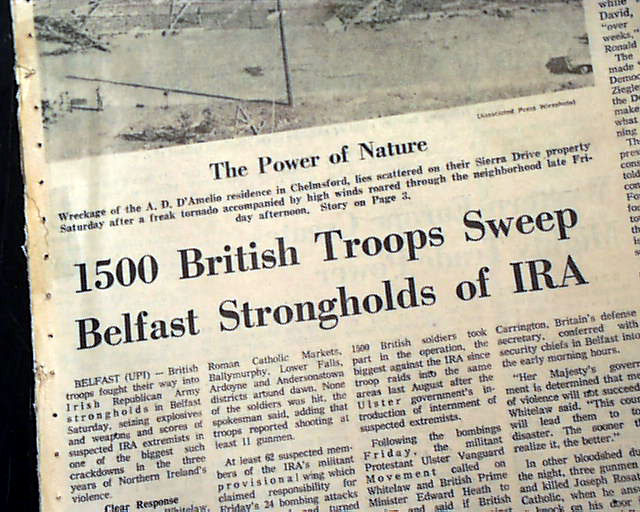
SPRINGFIELD SUNDAY REPUBLICAN, July 23, 1972
- Bloody Friday (1972)
- Provisional IRA car bombings
- Belfast, Northern Ireland
The front page has a four column
...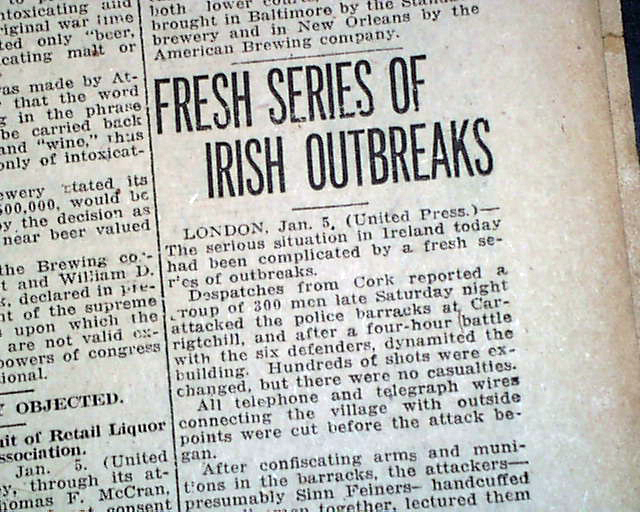
THE DAY, New London., Conn., Jan. 5, 1920
- Parnell Bridge Ambush - Cork, Ireland
- Irish War of Independence - IRA vs. RIC
- United States prohibition upheld
The
...